
2 min walk
Royal Ontario Museum
- Must see
- Museum
Language · 11 published
Museum · Toronto
Reviewed by Elena Voss · Roavina Travel Editor
| Monday | 10:00 – 18:00 |
|---|---|
| Tuesday | 10:00 – 18:00 |
| Wednesday | 10:00 – 21:00 |
| Thursday | 10:00 – 18:00 |
| Friday | 10:00 – 18:00 |
| Saturday | 10:00 – 17:00 |
| Sunday | 10:00 – 17:00 |
Checked 2026-08-31 · Source
Read from the OpenStreetMap access tags; anything not listed has no tag recorded.
Set the group type to family in the planner and the day window contracts to about three quarters of a solo day.
This place is a Museum. It opened in 1984.
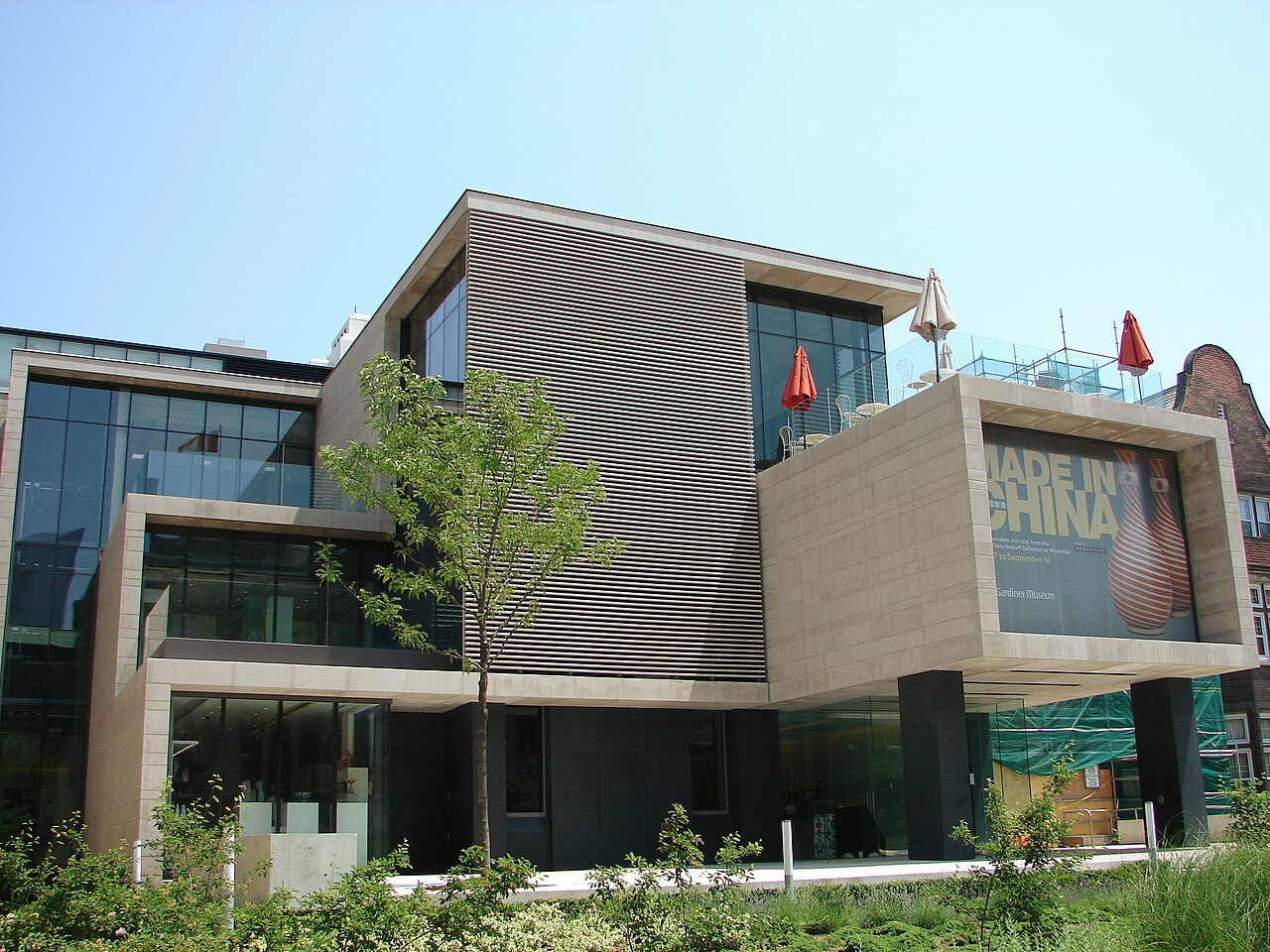
Gardiner Museum is Toronto’s specialist museum devoted to ceramics, where vessels and ceramic objects are the central subject rather than one category within a general collection. Beside Queen’s Park and across from the Royal Ontario Museum, it gives the city’s museum precinct a distinctly material focus. Read objects through clay, glaze, firing, shape, surface, construction, function, and cultural meaning. That combination makes this an attentive study visit, not a generic landmark stop. The exact place is the Gardiner Museum in Toronto, with its own collection identity and a purpose that should remain separate from the larger institutions around it.
Checked 2026-09-02 · Source
Build the visit around comparisons between ceramic objects. Start with overall form and scale, then examine glaze, colour, texture, firing evidence, construction marks, and the relationship between material choices and use. A narrow opening, thick wall, reflective surface, or irregular contour can change how a vessel communicates and how it would have been handled. Move between objects that differ in technique or cultural use so each contrast sharpens your reading. The specialist collection rewards a slower pace than a checklist museum. If a temporary exhibition or programme matters to your plan, confirm its availability with the museum before travelling.
Checked 2026-09-02 · Source
Allow roughly 90 to 120 minutes for a focused visit to Gardiner Museum. That window gives you time to orient yourself, study the ceramics collection without rushing, and compare form, material, technique, surface, construction, and cultural use. Stay longer if ceramics is a major interest, a temporary exhibition matters, or you want to revisit objects after seeing them in context. Include entry, coat handling, toilets, accessibility needs, photography decisions, and the transition to the next Toronto stop. A shorter visit can work when you choose one question before arrival, such as how glaze or vessel shape changes across displays.
Checked 2026-09-02 · Source
The recorded operator schedule is Monday, Tuesday, Thursday, and Friday from 10:00 to 18:00; Wednesday provides the longest regular window from 10:00 to 21:00; and Saturday and Sunday run from 10:00 to 17:00. Use Wednesday evening when you want more room around another central Toronto stop without compressing the ceramics visit. Whichever day you choose, arrive with enough time to settle into close looking rather than entering just before departure. Holiday closures or exceptional changes are not represented by these regular weekly rows, so verify the date-specific schedule before setting out.
Checked 2026-09-02 · Source
The recorded operator admission is CAD 18 per person. Use that amount when estimating the Toronto day, then consult the museum’s hours and admission page before purchase for concessions, eligibility-based rates, reservations, special events, or changed conditions. This is admission to a specialist ceramics museum, not a combined ticket for every institution in the surrounding precinct. If accessibility arrangements or a tightly timed itinerary matter, confirm those practical details with admission so the arrival plan matches the operator’s current rules.
Checked 2026-09-02 · Source
Gardiner Museum sits beside Queen’s Park and across from the Royal Ontario Museum, making the museum precinct a useful Toronto planning anchor. Navigate to the correct visitor entrance rather than relying only on the centre coordinate. Allow realistic time for transit transfers, station access, road crossings, queues, weather, and mobility needs. The Royal Ontario Museum, Bata Shoe Museum, and Queen’s Park are nearby candidates, but proximity does not remove transfer time or the need to sequence entrances. Longer city journeys may be simplest by transit; clustered stops can be linked on foot when the group’s pace and conditions allow.
Checked 2026-09-02 · Source
The main practical risk is allowing too little time for a collection that depends on close observation. Keep the ceramics collection as the fixed priority, and verify temporary exhibitions, events, programmes, or restricted areas before building them into the day. The operator records limited step-free access, accessible toilets, and toilets. Visitors with specific mobility or sensory requirements should still review the current accessibility page and ask the museum about the route they need. Keep circulation clear and follow staff instructions around displays and visitor movement.
Checked 2026-09-02 · Source
Use the Gardiner Museum exterior as an establishing frame, then make permitted visitor-area photographs that show ceramic shape, surface, scale, and display relationships. Detail images work best when they reveal differences in glaze, texture, profile, or construction rather than simply recording labels. Keep doorways and circulation routes clear, avoid blocking other visitors, and follow posted rules about flash, tripods, selfie sticks, commercial use, and particular displays. A concise sequence of exterior, contextual, and carefully chosen details will preserve the museum’s material character. Treat photography as a way to notice surfaces and forms, not as a reason to hurry through the collection.
Checked 2026-09-02 · Source
Gardiner Museum is Toronto’s specialist ceramics museum. Focus on how clay, glaze, firing, form, surface, construction, function, and cultural context differ between objects; that close comparison is the museum’s defining experience.
Plan roughly 90 to 120 minutes for a focused visit. Allow longer if ceramics is a major interest, a temporary exhibition matters, or you want to study changes in form, material, technique, surface, and cultural use slowly.
Recorded operator hours are Monday, Tuesday, Thursday, and Friday 10:00–18:00; Wednesday 10:00–21:00; and Saturday and Sunday 10:00–17:00. The weekly schedule is recorded from the museum’s hours page; holiday closures or exceptional changes may differ, so verify the date-specific information before visiting.
The recorded operator charge is CAD 18 per person. Confirm the museum’s hours and admission page before purchase for concessions, eligibility-based rates, reservations, special events, or updated conditions.
Prioritise comparisons between ceramic objects: look at form, scale, glaze, texture, construction, function, and cultural context. The specialist collection rewards close observation and deliberate contrasts more than a hurried attempt to cover every display equally.
The Royal Ontario Museum, Bata Shoe Museum, and Queen’s Park are nearby candidates. Confirm entrances and allow realistic time for crossings, queues, transit access, weather, mobility needs, and the slower pace of a focused ceramics visit.
Loading the interactive map…
The interactive map could not be loaded.

Last updated:
Source: OpenStreetMap contributors, Wikidata ·