2 min walk
Andrew Kim Taegon
- Notable
- Art and culture venue
Language · 11 published
Nature site · Macau
白鴿巢公園 Jardim Luís de Camões
Reviewed by Elena Voss · Roavina Travel Editor
| Monday | 06:00 – 00:00 |
|---|---|
| Tuesday | 06:00 – 00:00 |
| Wednesday | 06:00 – 00:00 |
| Thursday | 06:00 – 00:00 |
| Friday | 06:00 – 00:00 |
| Saturday | 06:00 – 00:00 |
| Sunday | 06:00 – 00:00 |
Checked 2026-08-31 · Source
Read from the OpenStreetMap access tags; anything not listed has no tag recorded.
Set the group type to family in the planner and the day window contracts to about three quarters of a solo day.
This place is a Park.
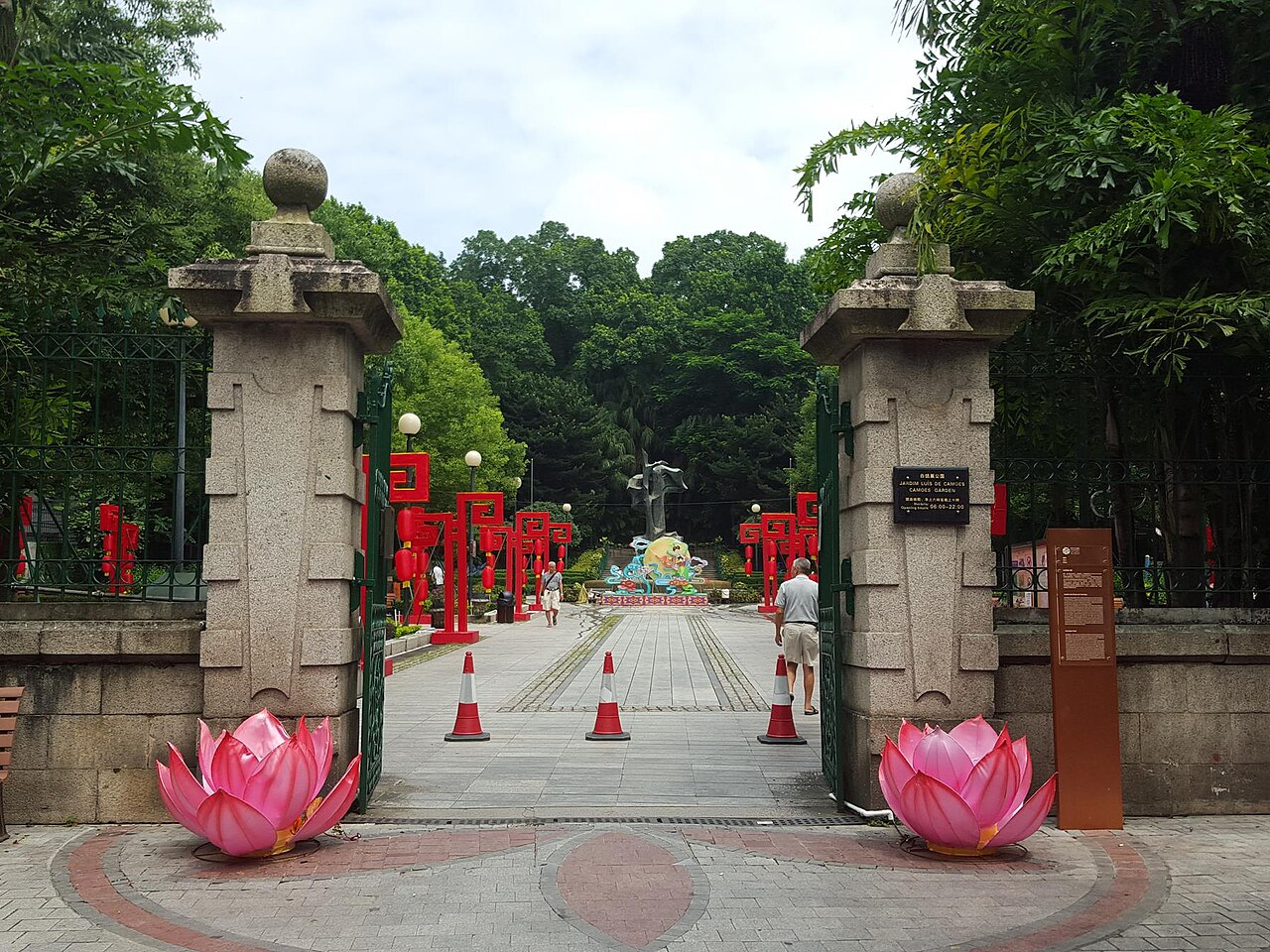
Camoes Garden, also known locally as 白鴿巢公園, is a public park on Macau’s peninsula. Its mature vegetation, hillside setting, and connection with Portuguese literary heritage give it a character distinct from Macau’s busier commercial streets. The garden is named after Luís de Camões, Portugal’s national poet. Local tradition connects him with a grotto within the grounds, making the park a useful stop for travelers interested in Macau’s Portuguese-Chinese cultural layers. It is also a relaxed urban space where residents spend time outdoors. Treat the garden as a compact heritage landscape and neighborhood park rather than as a large botanical attraction or formal museum.
Checked 2026-08-26 · Source
The main experience is a walk through established greenery on sloping ground. The garden contains a grotto associated with Camões, commemorative elements, winding paths, shaded areas, seating, and open spaces for informal recreation. Its atmosphere comes from the combination of vegetation, hillside movement, and historical associations rather than from a sequence of large exhibits. Travelers can pause beneath the mature trees, look for details connected with the poet, and use the park as a quieter contrast to Macau’s dense historic streets. The grounds are best enjoyed slowly, with attention to the relationship between the landscape and the surrounding former Portuguese cultural setting.
Checked 2026-08-26 · Source
Allow around thirty minutes to one hour for a straightforward visit. That is enough time to follow the principal paths, see the Camões grotto, notice the commemorative features, and pause in the shaded seating areas. Travelers who enjoy literary history, landscape details, or photography can stay longer without needing to cover a large area. The compact hillside layout also makes the garden easy to combine with other northern Macau stops. A short visit works well between heritage sites, while a slower visit suits anyone wanting a calm pause from the peninsula’s traffic and crowds.
Checked 2026-08-26 · Source
Morning and late afternoon are comfortable choices for walking through an outdoor hillside park, especially during Macau’s hot and humid periods. The mature vegetation provides shade, but the subtropical climate still makes midday conditions demanding for some travelers. Cooler winter weather can make an unhurried garden walk more pleasant. Rain can change the footing on paths and affect time spent outdoors, so build flexibility into a day that includes the park. Daylight also helps visitors read commemorative details and move confidently through the sloping grounds. The garden’s calm character is particularly valuable when paired with a busier heritage route.
Checked 2026-08-26 · Source
Camoes Garden is described as a public park, so the visit is centered on open-air recreation and heritage viewing rather than a ticketed exhibition. The available guide material identifies no admission arrangement, paid special access, guided-tour charge, or facility rental. Plan the stop as a simple park visit and devote attention to the grotto, greenery, paths, and commemorative setting. Any paid activity would be separate from the ordinary experience described here. Because there is no ticket detail to organize around, the garden works well as a flexible addition to a walking day on the Macau peninsula.
Checked 2026-08-26 · Source
The garden is in northern Macau on the peninsula, within a compact urban area served by established roads, buses, and taxis. Travelers already visiting nearby heritage streets can include it in a walking route. The hillside position means the final approach may involve an incline from surrounding streets, so comfortable shoes are useful. Bus services and taxis connect the northern peninsula with other parts of Macau, while ferry and border connections serve the wider territory. Use a current map for the final street-level approach, then expect a park setting rather than a large transport interchange at the entrance.
Checked 2026-08-26 · Source
The hillside terrain may include uneven surfaces and steps, making footwear and careful pacing important. Wet weather can make paths more slippery. Macau’s summer heat and humidity can become tiring during outdoor walking, even where shade is available; water and sun protection are sensible companions. Vegetated areas may contain insects. The park is a shared public space, so keep noise low, protect the plants, and leave the grotto and commemorative features undisturbed. Visitors with limited mobility should plan around the sloping character of the grounds. Personal belongings still deserve ordinary urban-park attention, particularly when the garden is busy.
Checked 2026-08-26 · Source
Camoes Garden offers several kinds of photographs: the Camões grotto, mature trees, shaded paths, seating areas, and hillside views through the greenery. Soft morning or late-afternoon light can bring out texture in the vegetation and commemorative details, while overcast weather suits the shaded character of the park. Compose carefully around the slope instead of treating the garden as one single viewpoint. Keep equipment unobtrusive in a public recreation space and give other visitors room. The historical atmosphere rewards close details and quiet scenes as much as broad views of the landscaped grounds.
Checked 2026-08-26 · Source
Camoes Garden is a public hillside park known for mature greenery, a grotto associated with Luís de Camões, and its connection with Macau’s Portuguese literary heritage.
The visit includes winding paths, established vegetation, shaded areas, seating, open recreational spaces, commemorative elements, and the grotto associated with Camões.
Plan for about thirty minutes to one hour. Literary-history enthusiasts and photographers may enjoy a longer pause in the shaded grounds.
Yes. Its mature trees, shaded seating areas, and open recreational spaces provide a calmer pause from Macau’s dense historic streets and busier visitor areas.
Comfortable shoes are useful on the hillside paths. During warm or humid weather, carry drinking water and sun protection for the outdoor walk.
The grotto, mature vegetation, winding paths, shaded areas, and hillside perspectives all provide subjects for personal photography. Keep equipment unobtrusive in this shared public space.
Loading the interactive map…
The interactive map could not be loaded.
Last updated:
Source: OpenStreetMap contributors, Wikidata ·