
2 min walk
Camoes Garden
- Must see
- Nature site
Language · 11 published
Place of worship · Macau
舊基督教墳場 Cemitério Protestante
Reviewed by Elena Voss · Roavina Travel Editor
| Monday | 08:30 – 17:30 |
|---|---|
| Tuesday | 08:30 – 17:30 |
| Wednesday | 08:30 – 17:30 |
| Thursday | 08:30 – 17:30 |
| Friday | 08:30 – 17:30 |
| Saturday | 08:30 – 17:30 |
| Sunday | 08:30 – 17:30 |
Checked 2026-08-31 · Source
Read from the OpenStreetMap access tags; anything not listed has no tag recorded.
Set the group type to family in the planner and the day window contracts to about three quarters of a solo day.
It carries the Heritage of Portuguese Influence heritage designation.
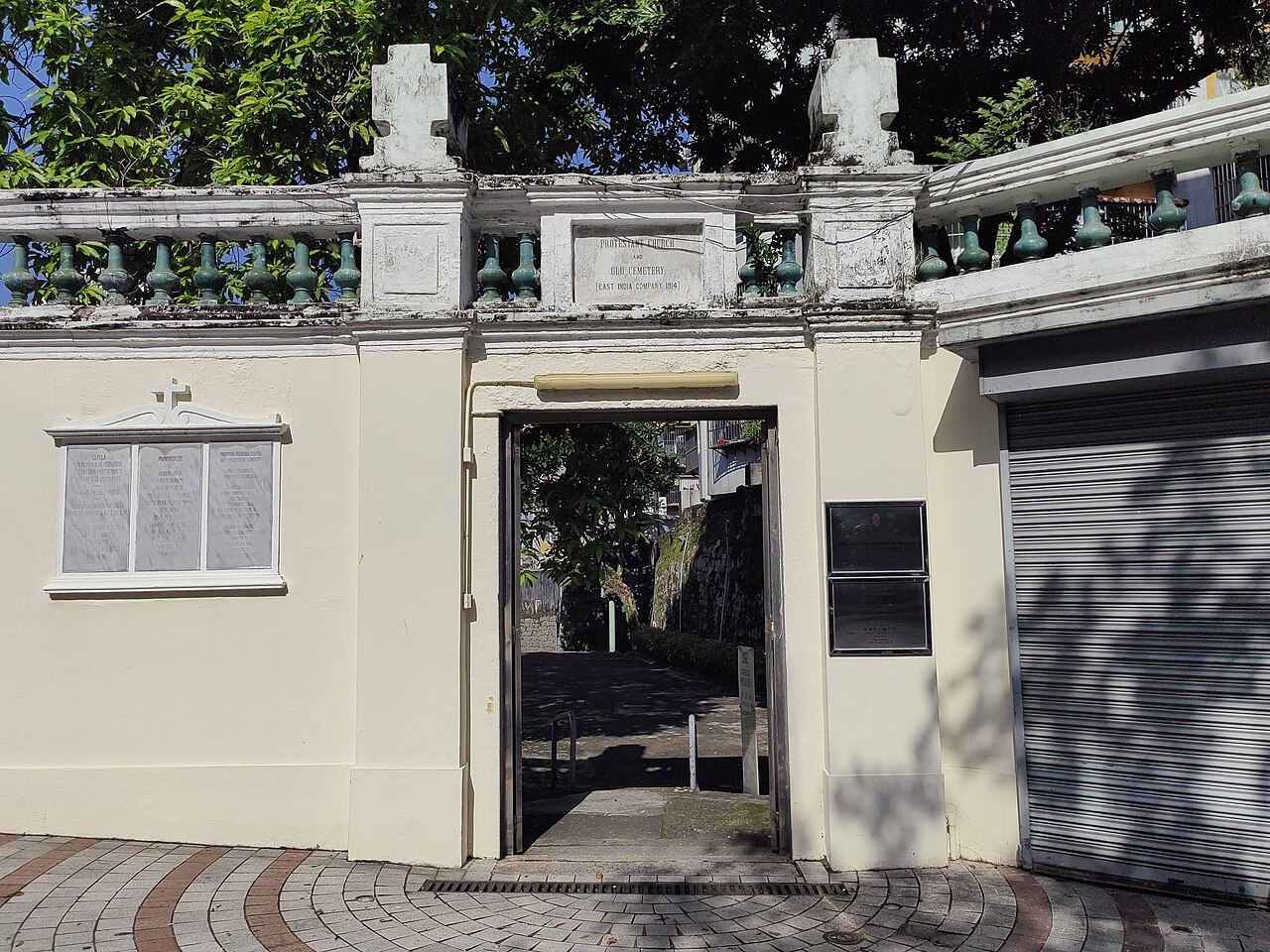
The Protestant Cemetery is a historic burial ground within Macau’s Historic Centre, part of the UNESCO World Heritage Site. Established in the early nineteenth century, it became a Christian burial place for non-Catholic foreigners during a period when Protestant burials faced restrictions elsewhere in Macau. The cemetery records the city’s role as a multicultural trading port through the graves of merchants, sailors, missionaries, and other expatriate residents. For travelers, it offers a concentrated view of Macau’s international past, with memorials that connect religious history, maritime commerce, migration, and the daily realities of foreign communities living in the former Portuguese colony.
Checked 2026-08-26 · Source
The grounds contain grave markers, tombs, and memorials arranged across terraced ground. Stone inscriptions in several languages reflect the multinational character of Macau’s foreign residents. The cemetery is associated with early Protestant missions and overseas trade, while the surrounding trees and vegetation give the site a quiet, shaded atmosphere. Visitors should focus on the inscriptions, monument forms, and the way the burial ground fits into the wider Historic Centre. It is a place for close observation rather than a large collection of objects. Read the stones carefully, move between the terraces respectfully, and allow the setting to communicate its history.
Checked 2026-08-26 · Source
A brief visit can take twenty minutes, while a more attentive circuit may take up to one hour. The compact grounds are manageable for travelers fitting the cemetery into a broader Historic Centre walk. Add time if you want to read inscriptions, compare monument styles, or reflect on the different communities represented by the graves. Photographers and visitors with genealogical or maritime-history interests may naturally linger longer. The site rewards a measured pace: moving too quickly reduces the value of the inscriptions, while a careful walk reveals how much historical information is concentrated within the terraces.
Checked 2026-08-26 · Source
Daylight is the practical setting for viewing inscriptions, recognizing monument details, and walking the terraced paths. Morning and late afternoon can bring more comfortable temperatures and softer light beneath the trees. Macau’s summer heat and humidity may make a short visit preferable during the middle of the day. Wet conditions deserve extra care on aged surfaces, and typhoon weather can affect outdoor plans across the territory. The cemetery fits naturally into a daytime heritage route, when its memorial details can be seen clearly and its quiet atmosphere can be appreciated without rushing.
Checked 2026-08-26 · Source
The cemetery is a heritage site within Macau’s Historic Centre, and the guide material gives no separate admission arrangement, special-access charge, or tour price. Organize the visit around the burial ground’s memorials, inscriptions, terraces, and historical setting rather than around a ticketed program. The compact site also works as a brief stop during a wider walking circuit through the UNESCO-listed area. Visitors should preserve the solemn character of the place and avoid treating the cemetery as a commercial attraction. Its value lies in the historical evidence preserved in the grounds and monuments.
Checked 2026-08-26 · Source
The cemetery lies within Macau’s walkable Historic Centre, where travelers can reach it on foot from nearby heritage attractions. Public buses serve the broader peninsula, and taxis can approach surrounding streets before the final walk. Build the cemetery into a pedestrian route rather than treating it as an isolated destination. Comfortable shoes help on the approach and across the terraced grounds. Macau’s compact historic core rewards linking several sites in sequence, so the cemetery can sit between churches, civic buildings, streets, and other reminders of the city’s Portuguese-Chinese and international past.
Checked 2026-08-26 · Source
The terraced layout and aged pathways require attention, particularly after rain when surfaces may be damp. Gravestones and monuments are historic artifacts: do not climb, lean on, touch unnecessarily, or use them as props. Some inscriptions are weathered, so reading them may require patience and careful positioning. The cemetery is also a place of burial, and quiet, respectful behavior matters. Vegetation can contain insects. Carry water for a longer heritage walk, since the grounds are intended for viewing memorials rather than for visitor services. Watch footing at changes in level and narrow passageways.
Checked 2026-08-26 · Source
Gravestone inscriptions, carved details, monument profiles, and the relationship between the terraces and surrounding trees provide strong subjects for thoughtful photography. Dappled shade can create uneven light, so close details may be easier to capture in softer morning or late-afternoon conditions. Keep the mood of the site in mind: quiet framing and restrained movement suit a cemetery better than elaborate staging. Give other visitors privacy, avoid climbing near monuments, and keep equipment clear of pathways. The most meaningful images often combine readable memorial details with the wider evidence of Macau’s multinational history.
Checked 2026-08-26 · Source
It is an early-nineteenth-century burial ground for non-Catholic foreigners and forms part of Macau’s Historic Centre UNESCO World Heritage Site.
The grounds contain terraced graves, stone markers, tombs, memorials, and inscriptions in several languages, surrounded by mature trees and vegetation.
Allow twenty minutes for a short circuit or up to one hour if you want to read inscriptions and study the memorial architecture.
Yes. Its location within the walkable Historic Centre makes it suitable for linking with nearby heritage attractions on the Macau peninsula.
Wear comfortable shoes because the grounds are terraced and some surfaces are aged or uneven. Extra care is useful after rain.
Keep voices low, avoid climbing or leaning on monuments, protect the historic fabric, and give other visitors privacy while reading or photographing graves.
Loading the interactive map…
The interactive map could not be loaded.

Last updated:
Source: OpenStreetMap contributors, Wikidata ·