Petit Palais
Petit Palais, Musée des beaux-arts de la Ville de Paris
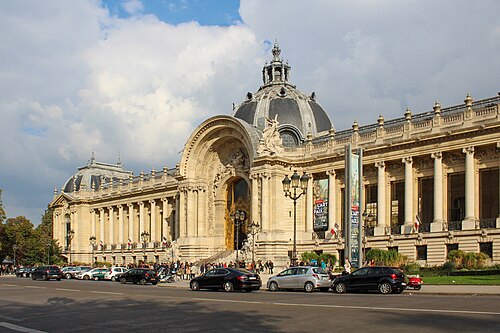
The Petit Palais was built for the 1900 World's Fair as an exhibition hall and has held the City of Paris's fine arts museum ever since.
- Must see
- Museum
- Paris 8e Arrondissement
City guide · France
Paris is 105.4 km² holding 2,047,602 people, wrapped in twenty arrondissements that spiral outward from the Louvre. Almost everything a visitor comes for is ins...
Photograph · Yann Caradec from Paris, France · CC BY-SA 2.0
Set your days, your pace and the hours you actually want to be out. The planner works around closing days and travel time, and leaves room to eat.
Editorial responsibility: Elena Voss · Roavina Travel Editor
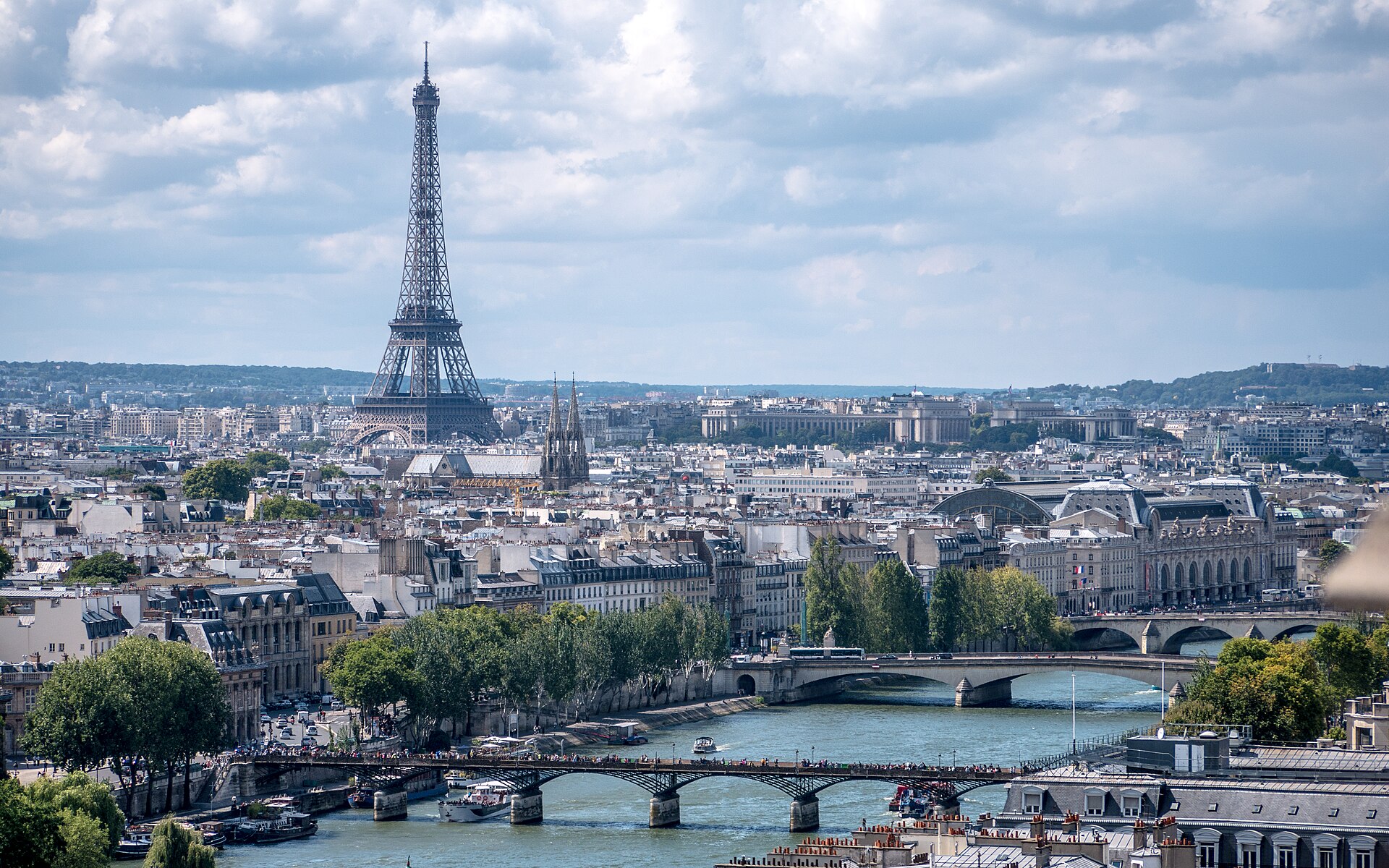
Paris is 105.4 km² holding 2,047,602 people, wrapped in twenty arrondissements that spiral outward from the Louvre. Almost everything a visitor comes for is inside that spiral, and most of it is walkable.
The Seine cuts the city in two and everything is described in relation to it. The Right Bank to the north holds the commerce and the great institutions; the Left Bank to the south holds the universities and the bookshops. Between them the Île de la Cité and the Île Saint-Louis are where the city started.
Checked 2026-08-23
November · November averages only 10.4°C by day in Paris, with 51.9 mm precipitation across about ten days.
Ranked by importance — sitelinks, pageviews and heritage status, not editor preference.
117 places match
Category
Typical visit duration
Good for
Petit Palais, Musée des beaux-arts de la Ville de Paris
The Petit Palais was built for the 1900 World's Fair as an exhibition hall and has held the City of Paris's fine arts museum ever since.
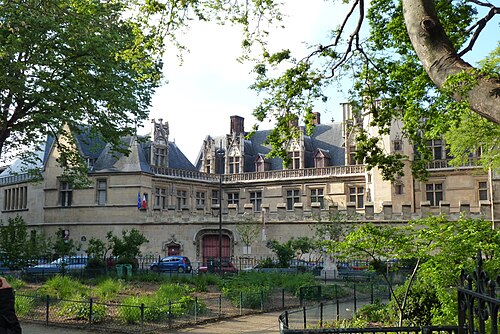
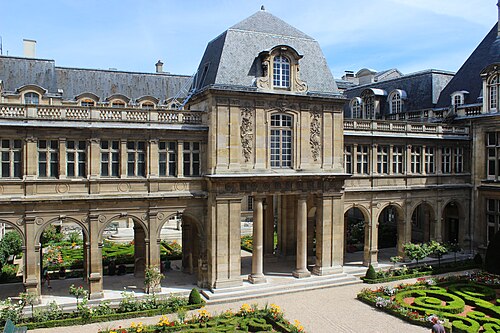
Musee Carnavalet is the museum of the history of Paris, occupying two adjoining Marais mansions: the Hotel Carnavalet, built in the 16th century and remodelled by Francois Mansart in 1655, and the neighbouring Hotel Le Peletier de Saint-Fargeau.
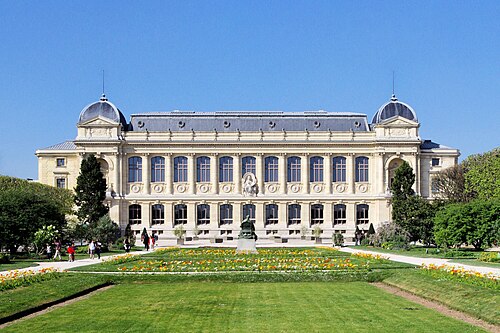
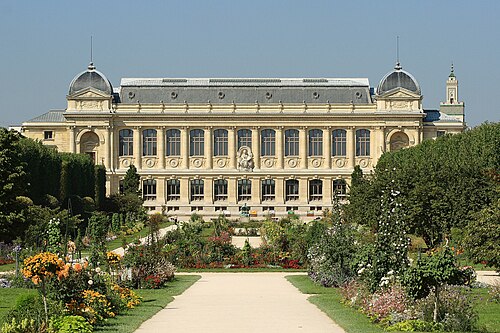
The Museum national d'histoire naturelle is France's national natural history museum, founded in 1793 out of the royal Jardin du Roi, and it occupies several linked sites across the Jardin des Plantes in the 5th arrondissement.
Jardin des Plantes
The Jardin des plantes is Paris's main botanical garden and the founding site of the Museum national d'Histoire naturelle, on the Left Bank in the 5th arrondissement, between the Seine and the Austerlitz rail yards.
Musée de Cluny, formally the Musée national du Moyen Âge, brings together Roman archaeology, a late-medieval residence and medieval art in one compact Latin Quarter site.
Musée Guimet
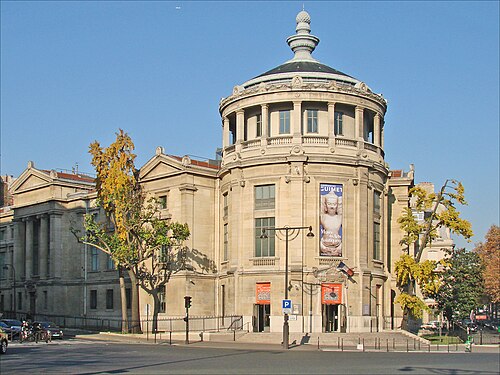
The Musee national des Arts asiatiques - Guimet holds the largest collection of Asian art outside Asia itself, spanning Afghanistan, Pakistan, India, Nepal, Tibet, China, Korea, Japan and Southeast Asia in one national museum.
Institut du Monde arabe
The Institut du Monde arabe is a cultural institute in Paris dedicated to the Arab world. It was established as a joint initiative between France and twenty Arab nations to promote cultural exchange and mutual understanding.
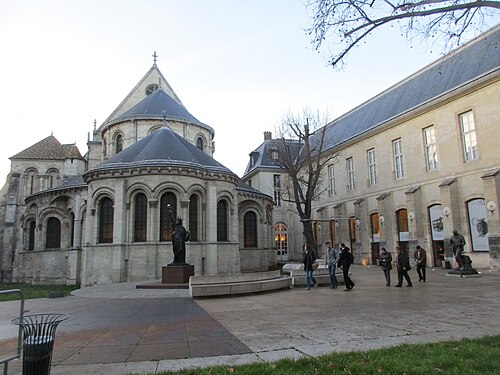
The Musée des Arts et Métiers is Europe's oldest technology museum, founded in 1794 to collect and preserve the machines and instruments of French industry, and it has occupied a former medieval priory ever since.
Palais Royal
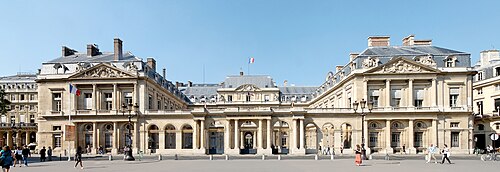
The Palais-Royal was a cardinal's house that became Europe's first shopping centre and then the place the Revolution started. Jacques Lemercier built it for Cardinal Richelieu between 1633 and 1639 as the Palais-Cardinal.
Place Vendôme
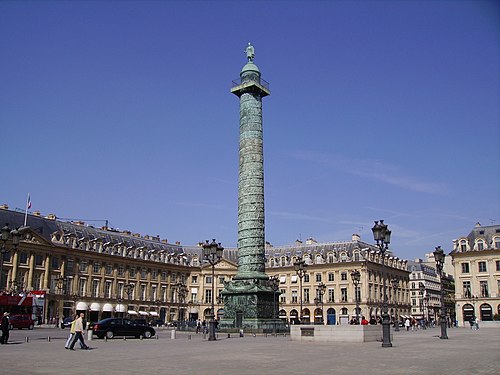
Place Vendôme is an octagon of uniform stone façades built as a single architectural composition, not a collection of separate buildings that happened to end up on the same square.
The Pont Neuf is the New Bridge and it is the oldest standing bridge in Paris, which has been the joke about it for four hundred years.
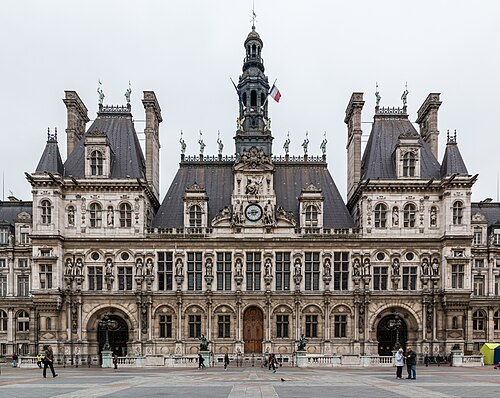
The Hôtel de Ville is Paris's city hall, seat of the mayor and the city council, on the square that carries its name.
Cavae des Arènes de Lutèce
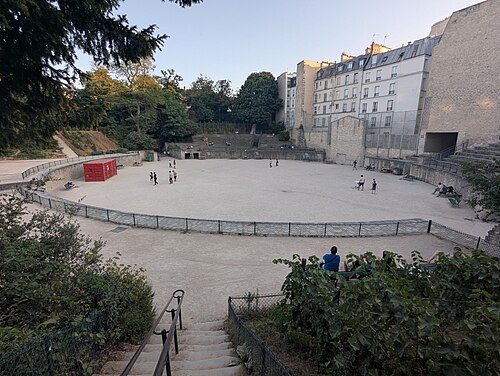
Arenes de Lutece is the surviving Roman amphitheatre of Lutetia, built in the 1st century AD on the slope of what is now the 5th arrondissement, and it once seated an estimated 15,000 people for gladiator contests and theatre.
Tour Montparnasse
Montparnasse Tower is a 210 m office block finished in 1973, and the reaction to it is the reason Paris has not built another skyscraper in its centre since.
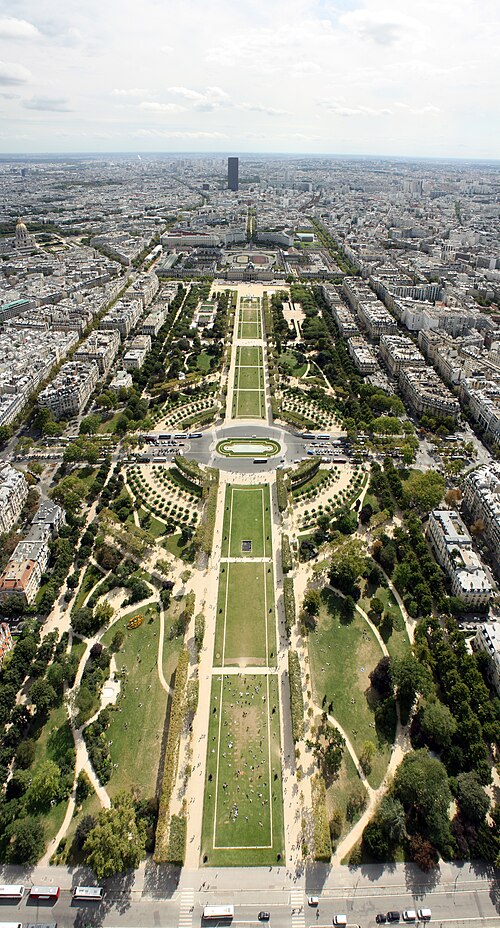
The Champ de Mars is a parade ground that became a lawn, and the Eiffel Tower stands at one end of it.
Grande Mosquée de Paris
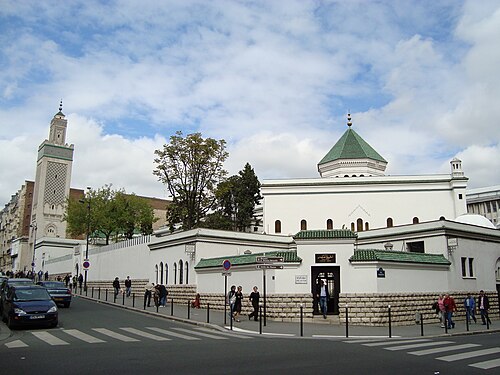
The Grand Mosque of Paris opened in 1926 as France's thanks to its Muslim soldiers, and it remains the city's central mosque a century later.
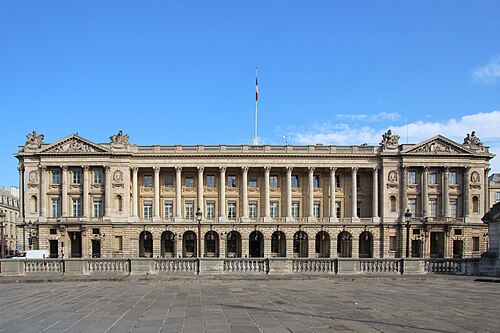
Hôtel de la Marine is a paid-ticket monument on Place de la Concorde, one of a matching pair of colonnaded palaces — its twin across the square today houses the Hôtel de Crillon — built between 1758 and 1774 to…
Ruines de la Bastille
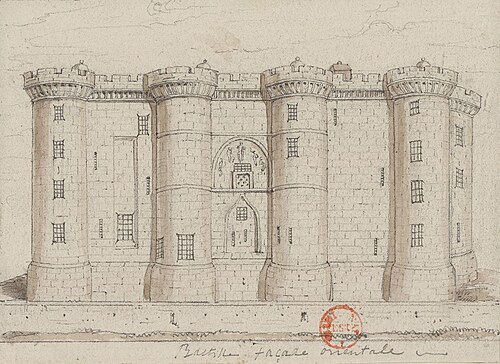
The Bastille is a square where a prison used to be, and the prison held seven people on the day it was stormed.
Assemblée nationale
The Palais Bourbon is where the National Assembly, the lower house of the French parliament, has sat since the Revolution turned a princess's private mansion into the seat of the republic's elected chamber.
Palais de l'Élysée
The Élysée Palace is where the President of France lives and works, and it is closed to visitors for all but one weekend a year.
Palais du Luxembourg
The Luxembourg Palace is the French Senate, and it was built because a widowed queen was homesick for Florence.
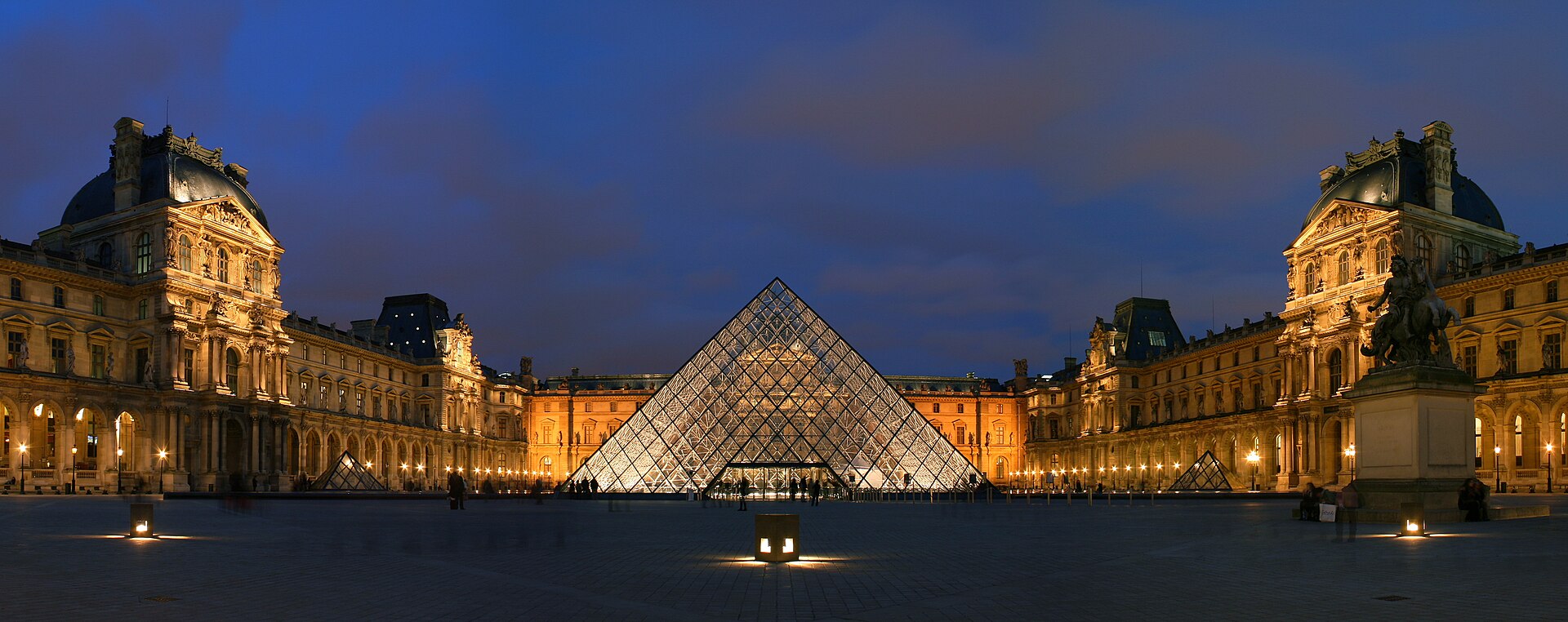
Pyramide du Louvre
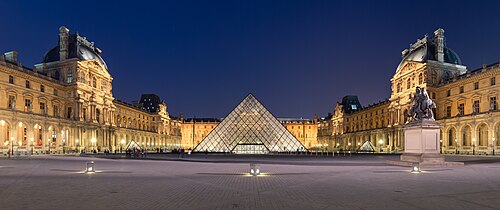
The Louvre Pyramid is the glass entrance structure built in the museum's main courtyard in the 1980s, and it is a part of the Louvre — its main entrance and one of the more argued-over additions to central Paris …
Université Paris 1 Panthéon-Sorbonne - Centre Sorbonne
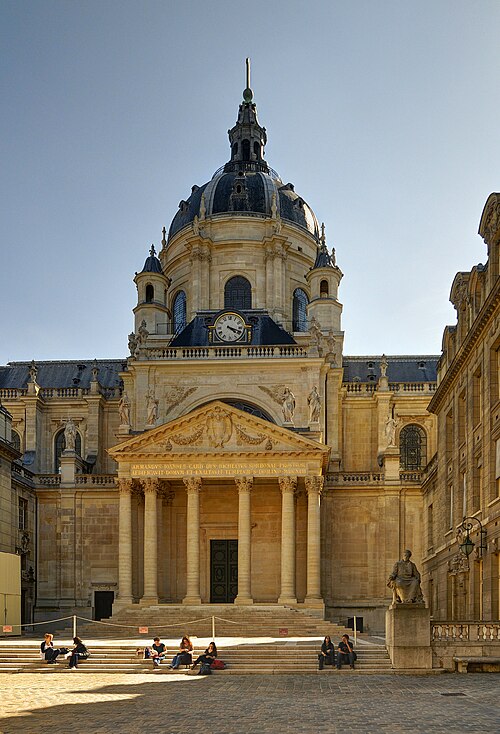
Behind the gate at Place de la Sorbonne sits a university with a name older than most nations: Robert de Sorbon founded a theology college here in 1257 under the patronage of Louis IX, and the word "Sorbonne" has meant…
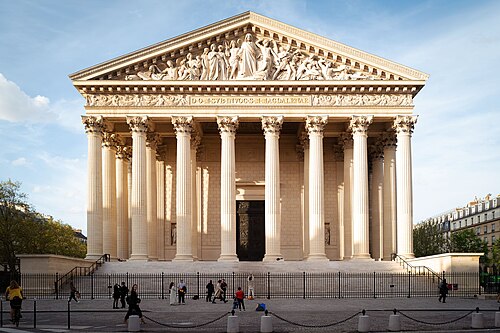
Église de la Madeleine
La Madeleine is a Greek temple in the middle of Paris, and it took seventy-nine years and several changes of mind to finish.
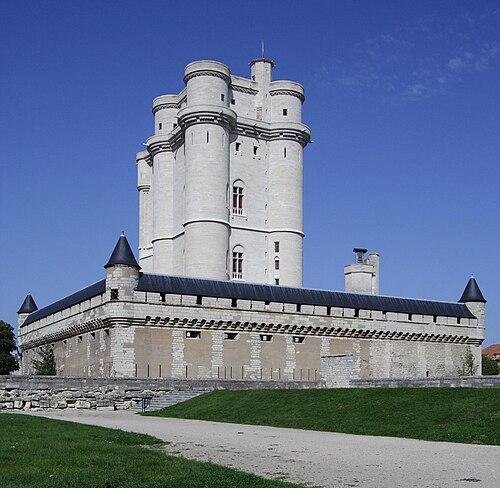
Château de Vincennes is a medieval fortress on the eastern edge of Paris, beside the Bois de Vincennes.
District boundaries come from OSM administrative relations, so a district page holds exactly the places inside it — plus, for the islands and the coast, the nearest district by proximity.
The arrondissements spiral clockwise from the centre: the 1st sits at the Louvre and the Île de la Cité, and the numbers wind outward to the 20th. Learning that shape is the single most useful thing a first-time visitor can do, because every address in the city carries its arrondissement and the number tells you roughly where you are.
The Right Bank — north of the Seine — is the 1st through 4th at the centre, then the grand avenues of the 8th and 16th to the west and Montmartre in the 18th to the north. The Louvre, the Champs-Élysées, the Opéra and Sacré-Cœur are all Right Bank.
The Left Bank — south — is the 5th, 6th and 7th: the Latin Quarter, Saint-Germain, the Panthéon, the Musée d'Orsay and the Eiffel Tower. It is the older-feeling half and the one with the bookshops.
The Périphérique, completed in 1973, rings the whole of it. Inside is Paris; outside is the metropolitan area of 13,320,752 people across 18,940.7 km², which is a different thing.
Checked 2026-08-23
The Métro, and then walking. Paris is small enough that the two together cover everything.
The Métro opened on 19 July 1900 during the World's Fair and now runs 16 lines — numbered 1 to 14 plus 3bis and 7bis — across 321 stations, 61 of which are interchanges. Stations sit 548 m apart on average, which is why a Métro journey of two stops is usually a walk. It carries 1.523 billion passengers a year, 4.17 million a day.
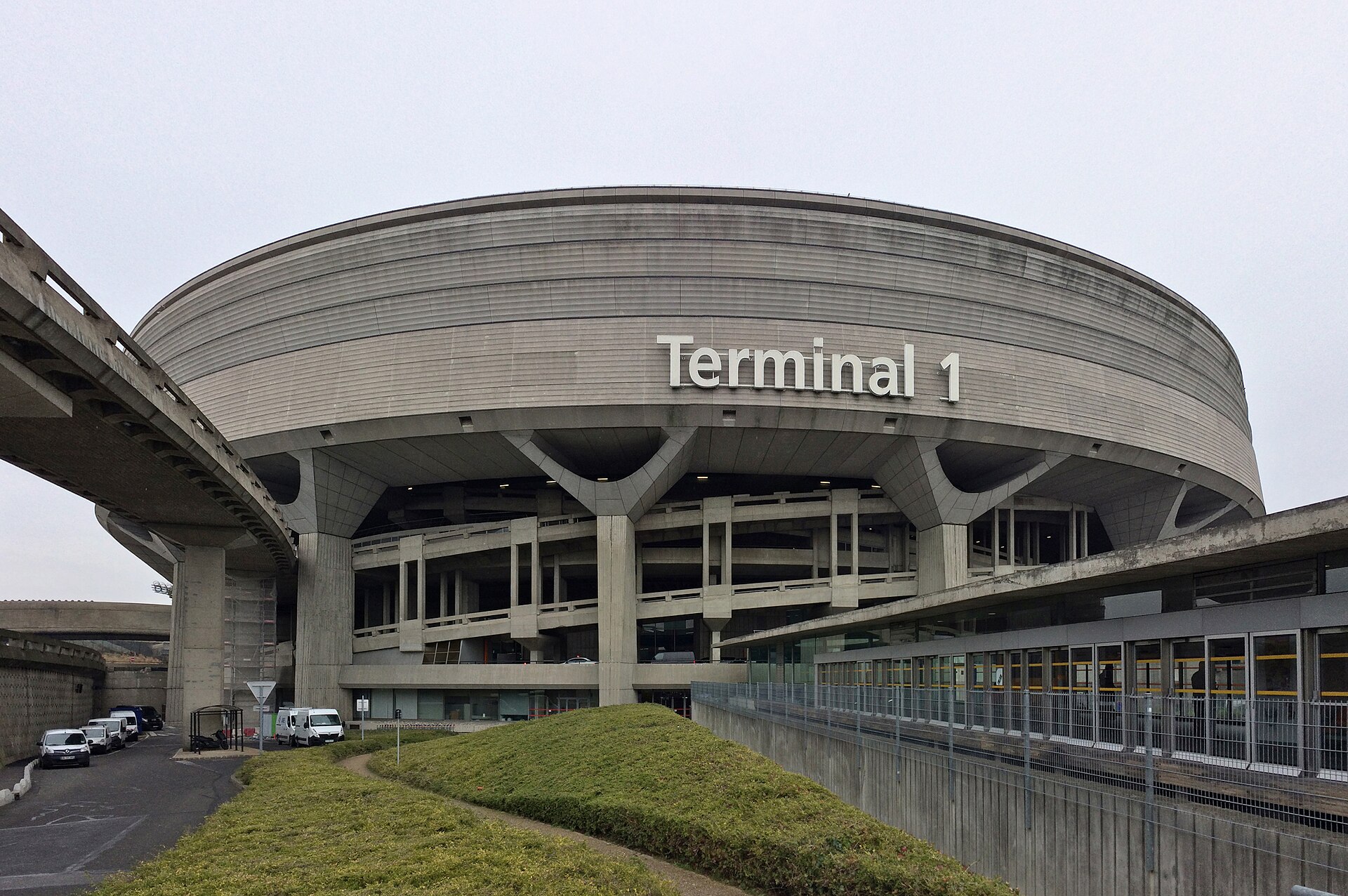
The RER extends further out into the suburbs and is what takes you to the airports and to Versailles. Châtelet–Les Halles, where five Métro lines meet three RER lines, is the largest interchange and the one to avoid at rush hour.
Single tickets and multi-use passes are both sold, and the Navigo Easy card is the contactless option.
Checked 2026-08-23
Suggested stay for a first visit: 4–5 days. Group the central landmarks across the first days, then leave separate time for a major museum and Montmartre or another Paris district. Versailles lies outside the city and needs an additional excursion day if chosen.
They spiral clockwise from the centre. The 1st is at the Louvre and the Île de la Cité and the numbers wind outward to the 20th. Every Paris address carries its arrondissement, so the number tells you roughly where something is.
The Seine. The Right Bank to the north holds the commerce and the great institutions — the Louvre, the Champs-Élysées, the Opéra, Montmartre. The Left Bank to the south holds the universities, the Latin Quarter, the Panthéon, the Musée d'Orsay and the Eiffel Tower.
For anything over a kilometre, yes. It opened on 19 July 1900 and runs 16 lines across 321 stations, with stations 548 m apart on average — which means a two-stop journey is usually faster on foot.
April to June and September to October. August is when Parisians leave and tourists arrive, which is the worst of both — shuttered restaurants and full museums.
The city proper is 105.4 km² with 2,047,602 people, ringed by the Périphérique completed in 1973. The metropolitan area outside it holds 13,320,752 people across 18,940.7 km².