Narikala
ნარიყალა
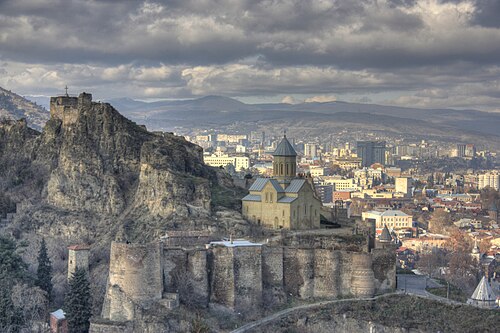
Narikala Fortress is an ancient citadel overlooking Tbilisi's old town from a steep ridge. Its origins trace to Persian and Arab periods, with substantial later Georgian and Russian modifications.
- Must see
- Historic monument
- Tbilisi
Language · 11 published
Country guide
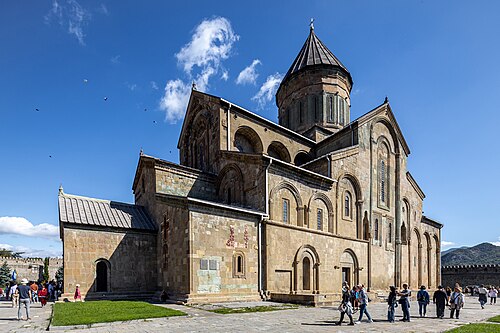
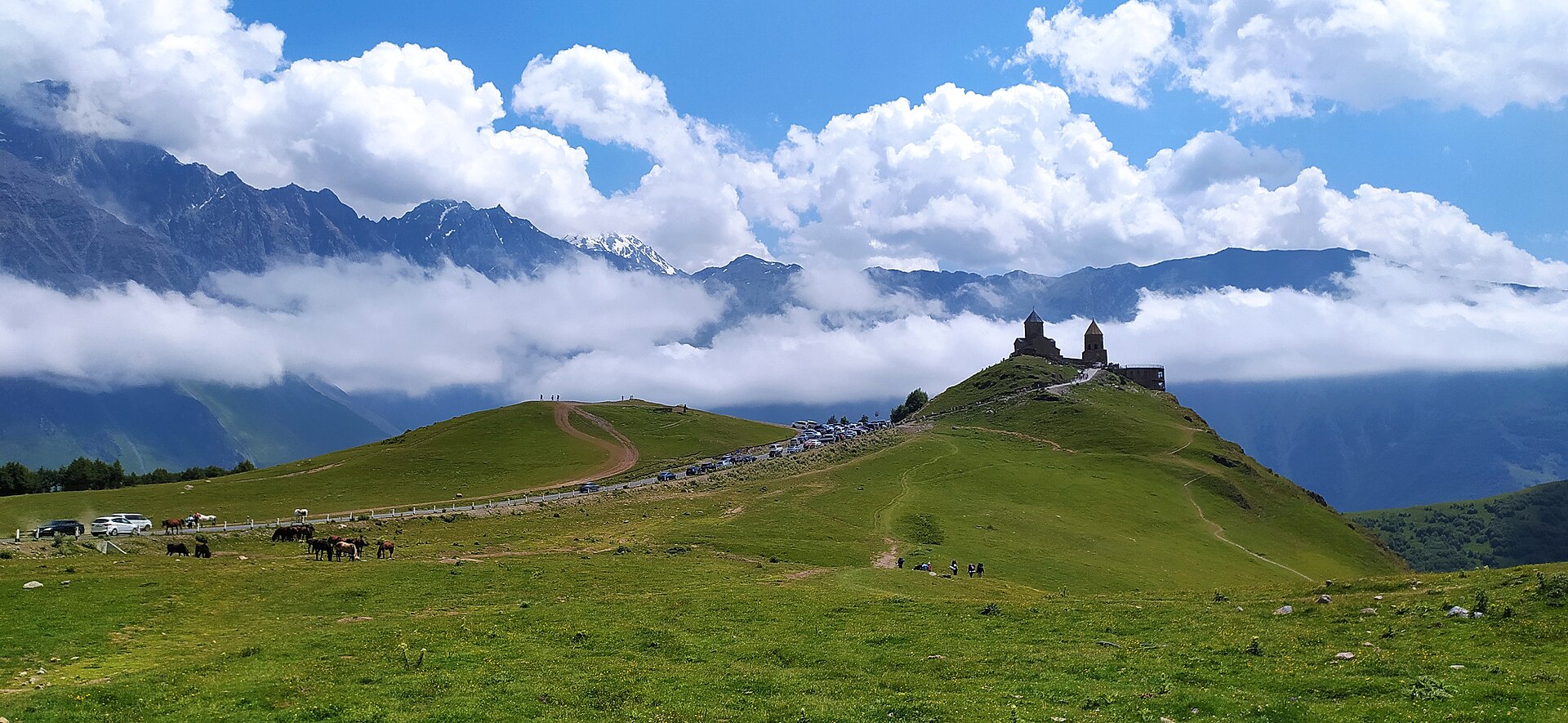
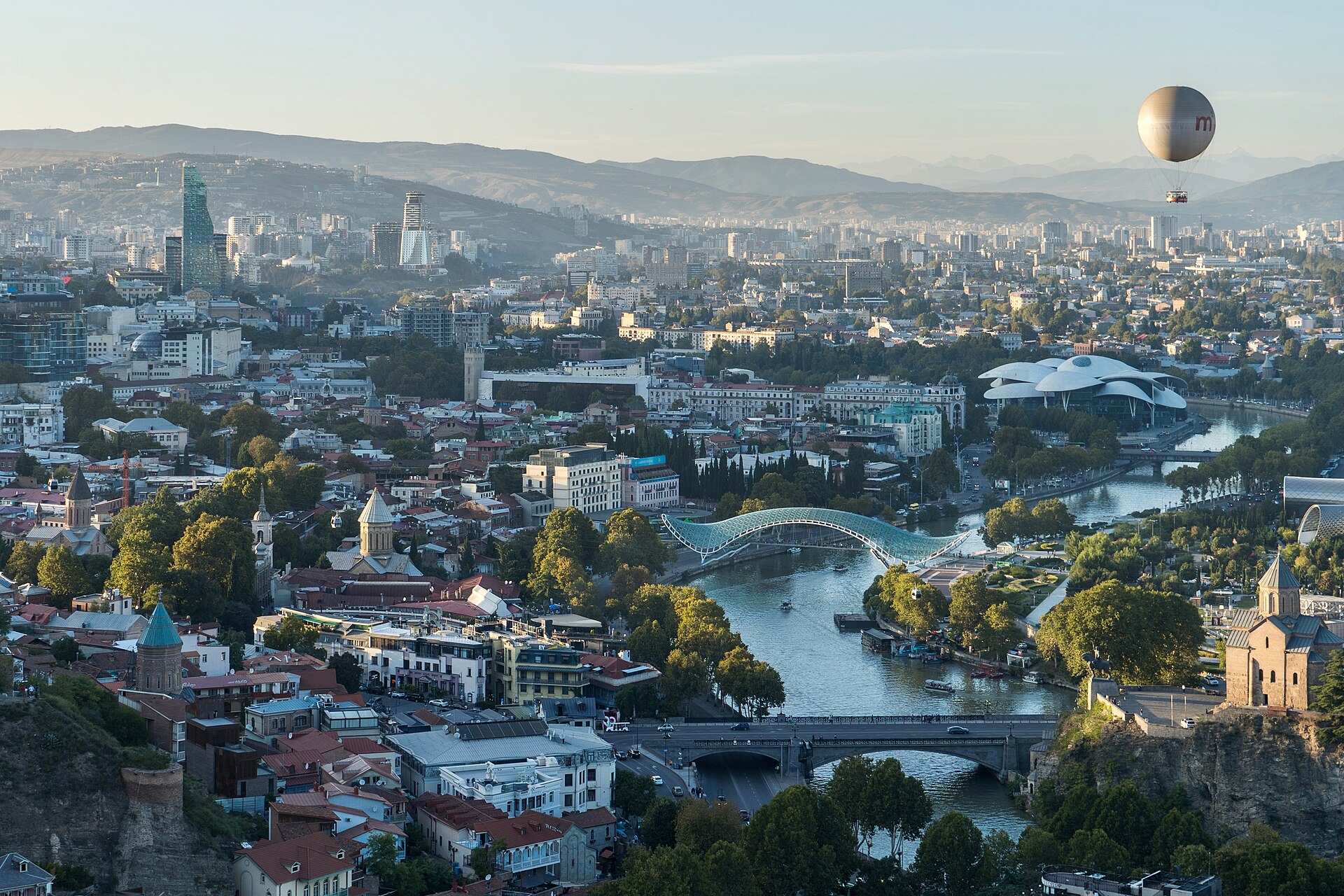
Georgia holds 3.9 million people and more than a third of them live in Tbilisi, so most visits begin in the capital and radiate out. The country sits on the east coast of the Black Sea, with Russia along the north, Turkey and Armenia to the south and Azerbaijan to the southeast, and the ground rises from beach to mountain village inside a single drive. Two things meet a first-time visitor immediately: Georgian, a Kartvelian language with no relation to any other language family in the world and its own alphabet to match, and wine, since the earliest known winemaking sites anywhere are here. Christianity arrived in the early fourth century, and the churches are correspondingly old.
Reviewed by Elena Voss · Roavina Travel Editor
Every city catalogued in this country so far, ranked by how much there is to see.
Photograph · Alexey Komarov · CC BY-SA 4.0
Ranked by importance — sitelinks, pageviews and heritage status, not editor preference.
13 places match
Category
Typical visit duration
Interests
ნარიყალა
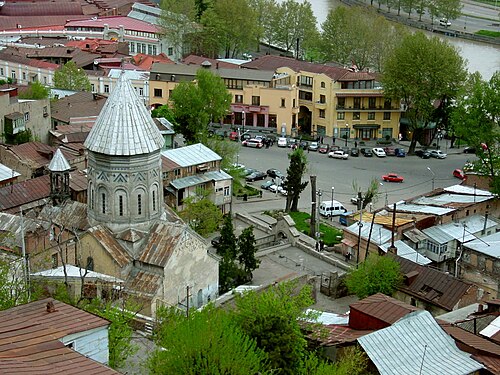
Narikala Fortress is an ancient citadel overlooking Tbilisi's old town from a steep ridge. Its origins trace to Persian and Arab periods, with substantial later Georgian and Russian modifications.
აბანოთუბანი
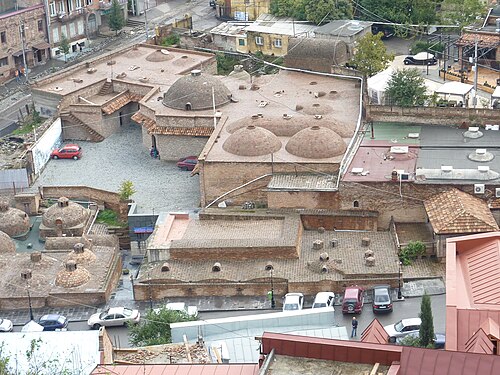
Abanotubani is the historic sulfur-bath district in Old Tbilisi, Georgia. Its distinctive brick domes rise from the banks of the Mtkvari River, marking the natural hot springs that have defined this location for centuries.
ეროვნული ბოტანიკური ბაღი
National Botanical Garden of Georgia occupies a deep gorge behind Narikala Fortress in central Tbilisi. The garden follows the Tsavkisistskali River valley, combining steep terrain, historic paths, cultivated botanical collections, and more naturalistic vegetation.
სიონის ღვთისმშობლის მიძინების ტაძარი
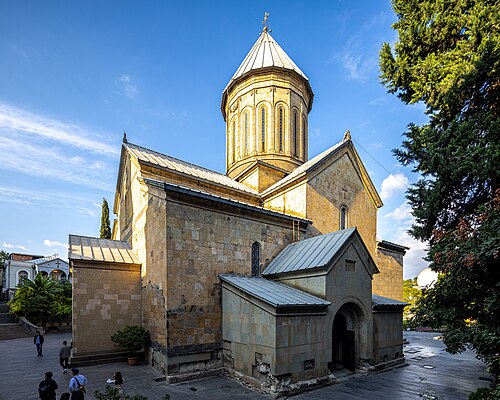
Sioni Cathedral, dedicated to the Dormition of the Mother of God, is a historic Georgian Orthodox cathedral in Tbilisi's Old Town. It remains a working place of worship, so its importance is both architectural and spiritual.
თავისუფლების მოედანი
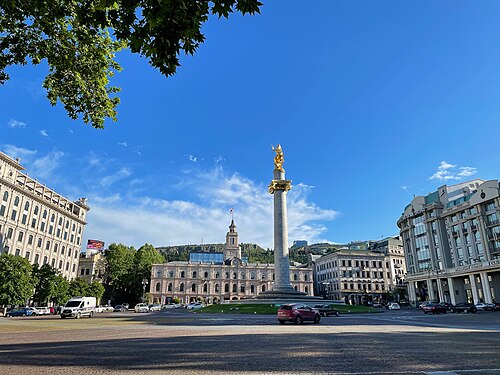
Freedom Square, or Tavisuplebis Moedani, is Tbilisi's principal civic square and a central meeting point between Rustaveli Avenue, Sololaki and the Old Town. A Saint George monument rises at the centre, while traffic circles the open plaza.
საქართველოს მატიანე
The Chronicle of Georgia is a monumental sculptural ensemble by Zurab Tsereteli on an elevated hillside above the Tbilisi Sea reservoir.
ვახტანგ გორგასლის მოედანი
Gorgasali Square, also called Vakhtang Gorgasali Square and Meidan, is a historic public square in Tbilisi’s old town. It works as a central meeting point where several important parts of the historic core come together.
ორბელიანის მოედანი
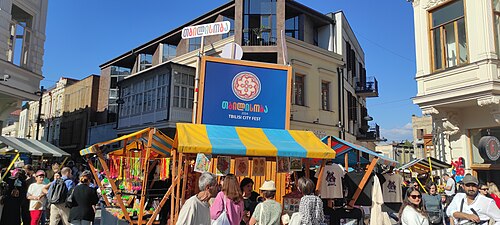
Orbeliani Square, known in Georgian as ორბელიანის მოედანი, is a rehabilitated public square at the northern edge of Tbilisi’s historic centre. It belongs to the flower-market quarter and links nineteenth-century façades with pedestrian lanes.
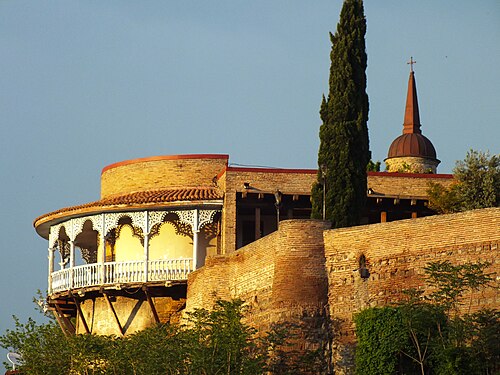
დარეჯანის სასახლე
Queen Darejan Palace is a surviving royal residence on elevated ground above Tbilisi’s Avlabari district.
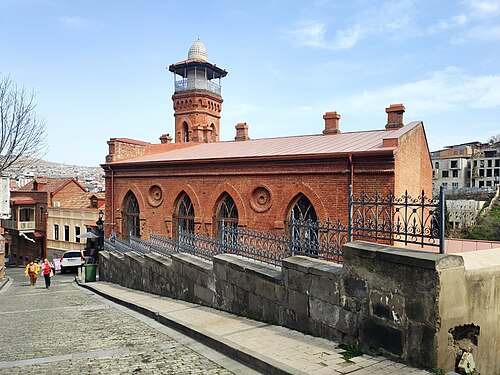
ჯუმა მეჩეთი
Juma Mosque is Tbilisi’s sole surviving mosque and an active place of worship in the old town. The mosque stands beside the bath district and the botanical-garden gorge, placing Islamic religious heritage within a predominantly Orthodox Christian city.
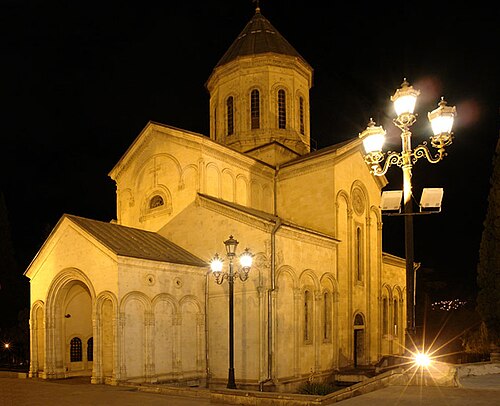
ქაშვეთის წმინდა გიორგის სახელობის ტაძარი
Kashveti Church is a stone church dedicated to Saint George on Rustaveli Avenue in central Tbilisi. The church stands directly opposite the Parliament of Georgia, making it one of the clearest landmarks on the capital’s main thoroughfare.
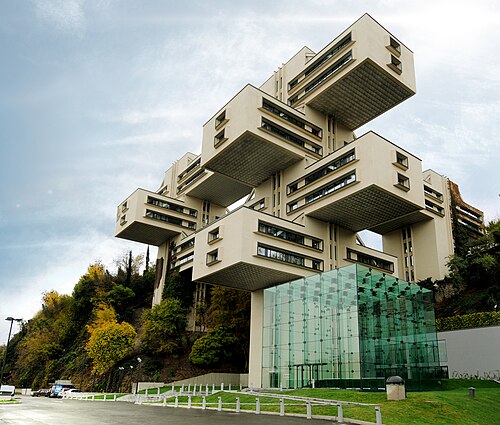
საქართველოს ბანკის სათავო ოფისი
Bank of Georgia Headquarters is one of Tbilisi’s most striking late-Soviet modernist landmarks.
სვეტიცხოვლის საკათდრო ტაძარი
Svetitskhoveli Cathedral is a Georgian Orthodox cathedral located in Mtskheta, the ancient capital near Tbilisi. Its local name is სვეტიცხოვლის საკათედრო ტაძარი.
Source: OpenStreetMap contributors, Wikidata ·
Seven to ten days supports Tbilisi plus Kakheti, Kazbegi or a western city without racing across the country. Combining Svaneti, the Black Sea and the capital needs additional nights because mountain and cross-country transfers consume substantial portions of a day.
Georgia’s official eVisa service explains whether advance permission applies to a particular passport. Confirm the permitted stay, entry route and documentation there, and consult current government guidance before any overland crossing rather than assuming every neighbouring border operates normally.
Tbilisi and Kutaisi are useful air gateways; trains serve a limited set of major corridors, and marshrutkas or hired vehicles reach many regional towns. Mountain itineraries need weather and road checks, while Tbilisi’s metro and buses handle most urban movements.
May to June and September to October are versatile for cities, wine regions and lower mountain routes. High passes may open later or close earlier, and Batumi has a wetter pattern, so one national forecast cannot settle dates for a multi-region journey.
Georgia uses the lari. Cards are common in Tbilisi, yet guesthouses, markets and mountain transport can still depend on cash; withdraw or exchange through recognised providers and confirm whether an quoted tour price includes regional transfers.
The emergency number is 112, with Type C and F sockets at 220 V. Tap-water guidance is Not recorded in this dataset; seek local confirmation, and keep official road or emergency alerts available when travelling into mountain districts.