
3 min walk
Ianos bookshop, Athens
- Notable
- Market
Activity · Athens
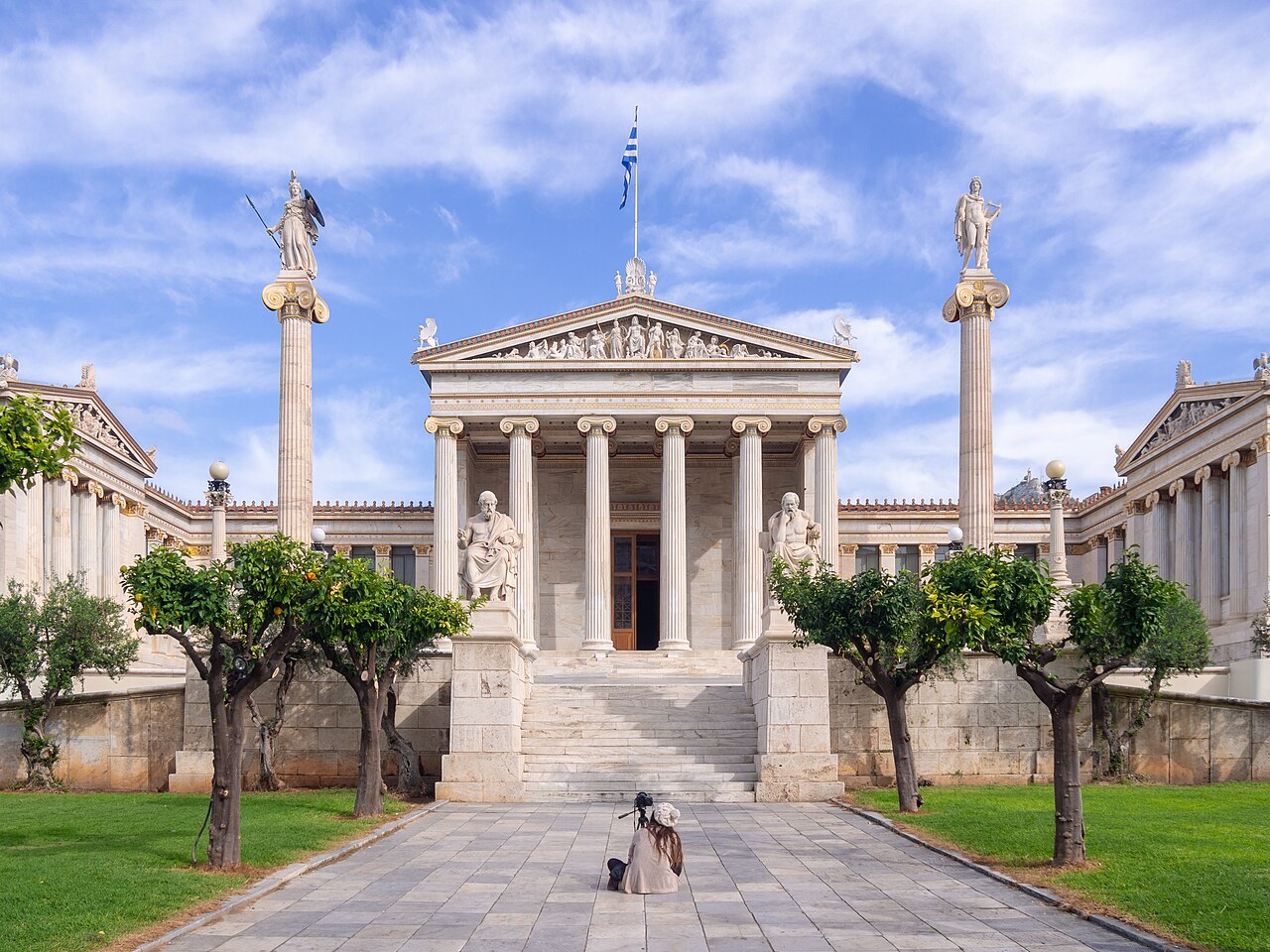
The Academy of Athens is a neoclassical landmark on Panepistimiou Street and one of the three buildings known as the Athenian Trilogy, together with the National Library and the University of Athens. Designed by Theophil Hansen and completed in 1885, it is Greece’s highest research institution. For most travellers, the attraction is the grand exterior, Corinthian columns, statues, and formal urban setting. The Academy of Athens is a neoclassical building located on Panepistimiou Street in central Athens, Greece. It forms part of the so-called Athenian Trilogy of neoclassical buildings, alongside the National Library and the University of Athens. The building was designed by the Danish architect Theophil Hansen and completed in 1885. It serves as the highest research establishment in Greece, though visitors are drawn primarily to its exterior architectural significance rather than interior access. The structure features prominent Corinthian columns and statues of Apollo and Athena. The building functions as Greece's national research academy. Interior access for casual tourism is not standard and would require special arrangement.
Checked 2026-08-26 · Source
The Academy functions as a working research institution rather than a regular museum. Its scholarly activities cover sciences and humanities, while the public-facing visual experience centres on the facade, portico, columns, and sculptural programme. Travellers should plan to admire the building from outside, where its architecture can be understood as part of the wider neoclassical composition along Panepistimiou Street. The interior of the Academy of Athens functions as a working research institution and is not generally open for public tourism. The building houses the offices and meeting spaces of Greece's national academy, where scholarly activities in sciences and humanities take place. Visitors should not expect museum-style exhibitions or regular public viewing areas. The main artistic and architectural interest lies in the exterior facade, including its sculptural program and columned portico. Interior access would require specific institutional invitation or special arrangement, which is not standard for casual visitors to Athens.
Checked 2026-08-26 · Source
Allow fifteen to thirty minutes for the Academy itself. That is enough time to view the facade, study the statues and columns, and make photographs from the surrounding pavement. Extend the walk by visiting the National Library and University of Athens nearby; together, the three buildings create a coherent architectural stop in central Athens without requiring a long indoor visit. A visit to the Academy of Athens is typically brief, as the site is primarily appreciated from the exterior. Most visitors allocate fifteen to thirty minutes to observe the neoclassical architecture, photograph the facade, and appreciate its position within the Athenian Trilogy.
Checked 2026-08-26 · Source
The exterior can be viewed from the public thoroughfare in every season and at any hour when you are walking through central Athens. Early morning and late afternoon are comfortable for lingering on the street, particularly during hot summer days. Evening illumination can give the facade a different mood. Time your visit around the wider Panepistimiou walk rather than expecting an interior museum schedule.
Checked 2026-08-26 · Source
Street-level viewing of the Academy is free because the facade stands beside a public thoroughfare. There is no ordinary museum ticket for looking at the exterior. The building is an institutional headquarters, so the practical visit is an architectural pause during a city walk. Focus your time on the facade, statues, columns, and its relationship with the two neighbouring buildings of the Athenian Trilogy.
Checked 2026-08-26 · Source
The Academy stands on Panepistimiou Street in central Athens. Panepistimio metro station on Line 2 serves the immediate area, and buses run along the central avenue. The building is also walkable from Syntagma Square and nearby archaeological and commercial districts. Its symmetrical neoclassical facade makes it easy to recognise while walking, and it fits naturally into a route through central Athens.
Checked 2026-08-26 · Source
The Academy is a functioning national institution, so keep the entrance and steps clear and maintain respectful behaviour. Panepistimiou Street carries busy traffic; use care when crossing and when choosing a position for photographs. The building itself is not a visitor centre with seating, refreshments, or a public restroom. Comfortable shoes and sun protection help when you continue along the open central avenue.
Checked 2026-08-26 · Source
The Academy rewards frontal and angled compositions that show the Corinthian portico, statues of Apollo and Athena, and the balanced facade. Include the National Library and University of Athens for a broader view of the Athenian Trilogy. Morning and late-afternoon light can reveal sculptural detail, while evening illumination adds contrast. Keep equipment compact on the pavement and concentrate on exterior street-level images.
Checked 2026-08-26 · Source
Yes. The main visitor experience is the exterior facade, which can be viewed from Panepistimiou Street as part of a central Athens walk.
Fifteen to thirty minutes is enough for the facade, columns, statues, and photographs. Add the National Library and University of Athens for a longer architectural walk.
No fee applies to observing the Academy from the public street. The exterior is part of the open urban streetscape of central Athens.
Panepistimio station on Metro Line 2 serves the immediate area. The Academy is also walkable from Syntagma Square and nearby central districts.
Early morning and late afternoon offer comfortable conditions and softer light. Evening illumination provides another way to photograph the neoclassical facade.
The Academy of Athens, the National Library, and the University of Athens form the Athenian Trilogy along Panepistimiou Street.
Loading the interactive map…
The interactive map could not be loaded.
Last updated:
Source: OpenStreetMap contributors, Wikidata ·