Roavina

City guide · Greece

Athens

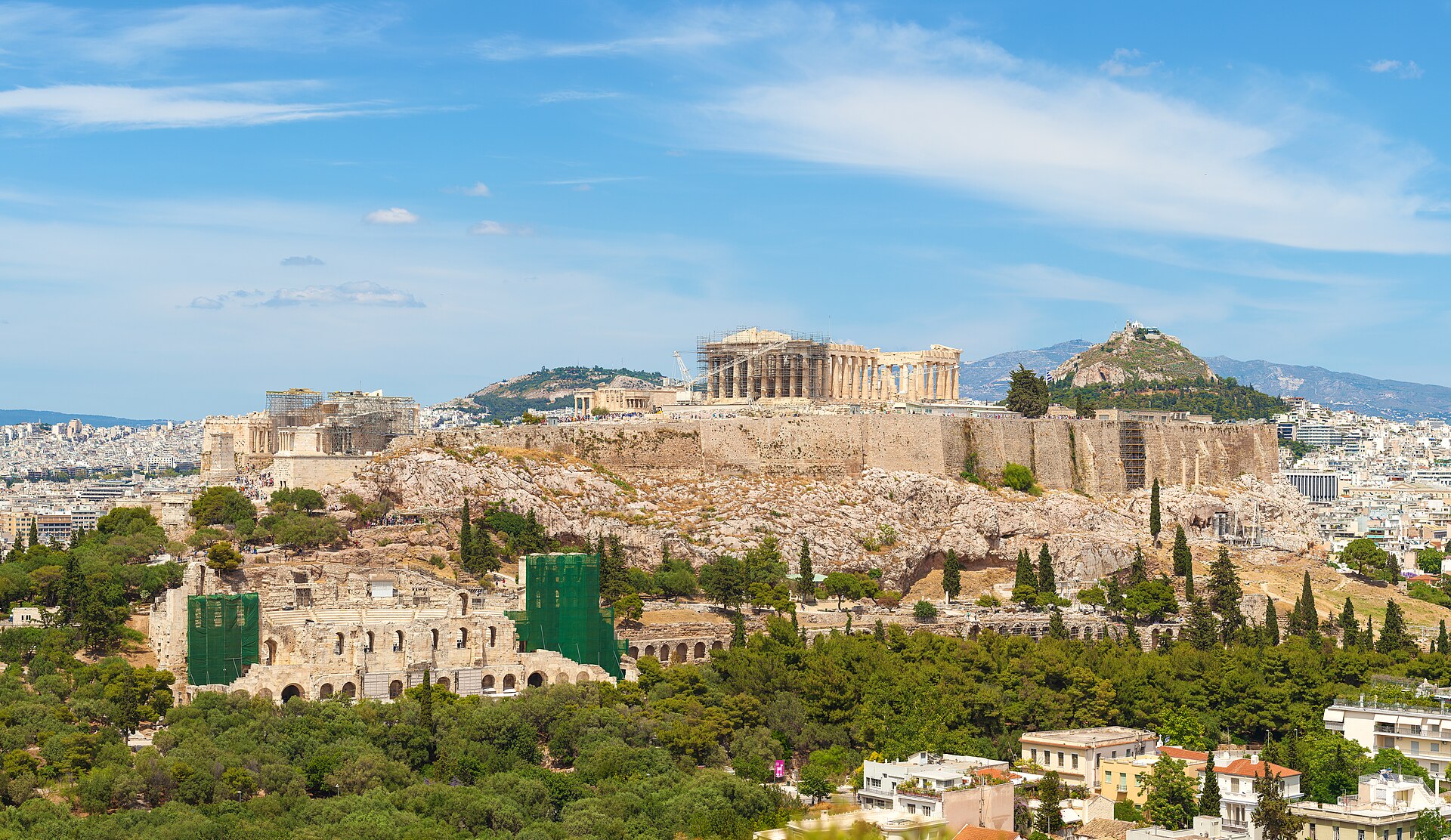
A photograph of Athens
Photograph · Thomas Wolf, www.foto-tw.de · CC BY-SA 3.0 de

Athens combines an ancient pedestrian core with a much larger modern city. The Acropolis, Plaka, Monastiraki and the Ancient Agora form the central visitor cluster. Syntagma and Kolonaki extend east, while the National Archaeological Museum lies north and the coast runs far to the south. Piraeus is a separate port city within the wider urban area and needs its own journey.

Reviewed by Elena Voss · Roavina Travel Editor

Practical information

Language spoken
Greek
National practical orientation; regional and minority languages may also be used
Dialling code
+30
International calling code; local area and mobile prefixes still apply
Currency
Euro (EUR)
Use the official local currency; card acceptance varies by place
Emergency number
112
Use only for an emergency; tourist assistance may use a separate number
Plug type
Type C and F · 230 V
Check that chargers support the recorded voltage before using an adapter
Tap water
Not recorded
No single verified statement covers the mainland and all islands

Turn this list into a plan

Set your days, your pace and the hours you actually want to be out. The planner works around closing days and travel time, and leaves room to eat.

Plan Athens

Planning a visit

Suggested stay
Not recorded
Getting around
Walk, metro, tram and bus
  1. January: viable with meaningful trade-offs
  2. February: viable with meaningful trade-offs
  3. March: good time to visit
  4. April: best time to visit
  5. May: best time to visit
  6. June: good time to visit
  7. July: recurring difficult conditions
  8. August: recurring difficult conditions
  9. September: good time to visit — current month
  10. October: best time to visit
  11. November: good time to visit
  12. December: viable with meaningful trade-offs
  • Best time
  • Good time
  • Viable with trade-offs
  • Difficult conditions

Sources

Top things to see

Ranked by importance — sitelinks, pageviews and heritage status, not editor preference.

  1. Roman Agora of Athens Roman Agora of Athens
    02 45 min

    Roman Agora of Athens

    Ρωμαϊκή Αγορά Αθηνών

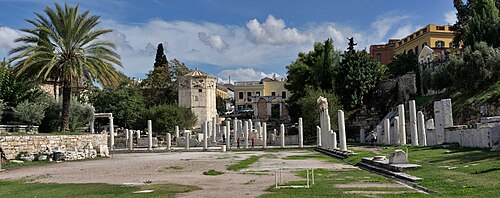
    The Roman Agora is an archaeological site in central Athens, located to the north of the Acropolis. It was constructed during the Roman period and served as a commercial and administrative centre, distinct from the earlier Classical Agora.

    • Must see
    • Historic monument
  2. Syntagma Square Syntagma Square
    03 45 min

    Syntagma Square

    Πλατεία Συντάγματος

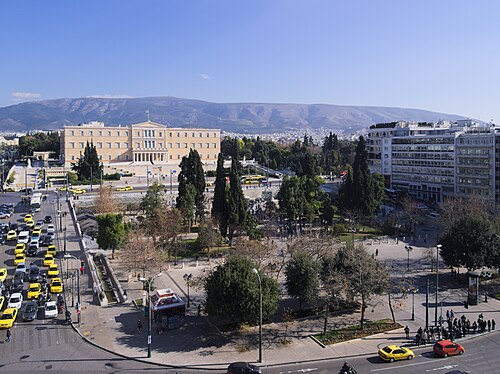
    Syntagma Square is the central plaza of Athens, Greece, serving as the political and geographic heart of the capital. It derives its name from the Greek constitution (syntagma) granted in 1843.

    • Must see
    • Historic monument
  3. Odeon of Herodes Atticus Odeon of Herodes Atticus
    04 45 min

    Odeon of Herodes Atticus

    Ωδείο Ηρώδου Αττικού

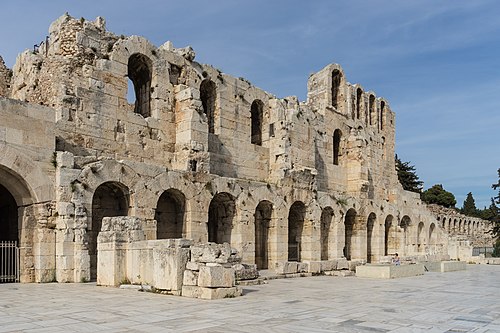
    The Odeon of Herodes Atticus is a stone Roman theatre structure on the southwest slope of the Acropolis in Athens, Greece.

    • Must see
    • Historic monument
  4. Kerameikos Kerameikos
    05 45 min

    Kerameikos

    Αρχαιολογικός Χώρος Κεραμεικού

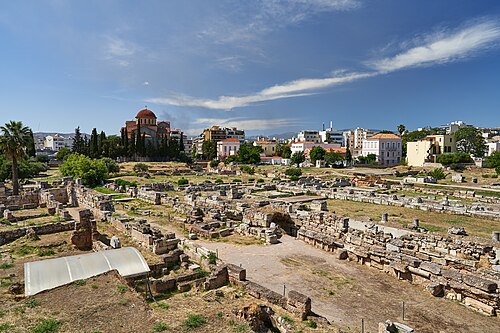
    Kerameikos is an ancient cemetery and archaeological site in Athens, located northwest of the Acropolis along the Eridanos River. The area served as the primary burial ground for the city from the 12th century BC through Roman times.

    • Must see
    • Historic monument
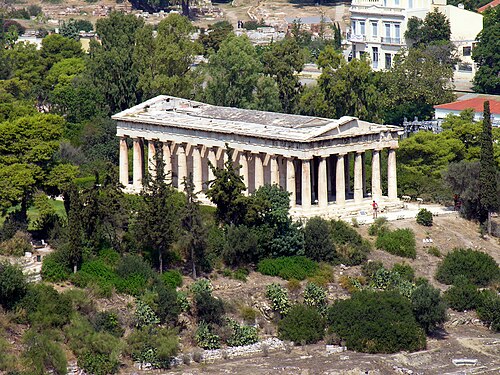
  5. Temple of Hephaestus Temple of Hephaestus
    06 45 min

    Temple of Hephaestus

    Ναός Ηφαίστου

    The Temple of Hephaestus stands in the Ancient Agora of Athens, a well-preserved Doric temple dedicated to Hephaestus, god of fire and metalworking. Constructed largely of Pentelic marble, it dominates the western side of the agora.

    • Must see
    • Historic monument
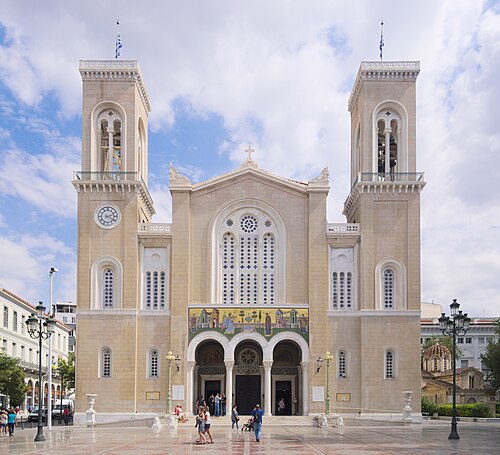
  6. Metropolitan Cathedral of Athens Metropolitan Cathedral of Athens
    07 30 min

    Metropolitan Cathedral of Athens

    Μητροπολιτικός Ναός Αθηνών

    The Metropolitan Cathedral of Athens, also known as the Cathedral of the Annunciation, is the principal cathedral of the Church of Greece in the capital.

    • Must see
    • Place of worship
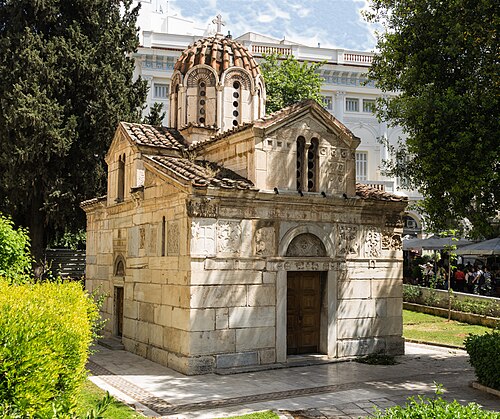
  7. Agios Eleftherios Church, Athens Agios Eleftherios Church, Athens
    08 30 min

    Agios Eleftherios Church, Athens

    Παναγία Γοργοεπήκοος και Άγιος Ελευθέριος

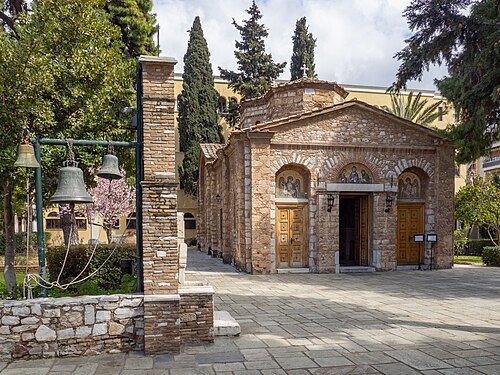
    Little Metropolis is a small Byzantine church situated in central Athens, near the Metropolitan Cathedral. The church is also known as the Church of St.

    • Must see
    • Place of worship
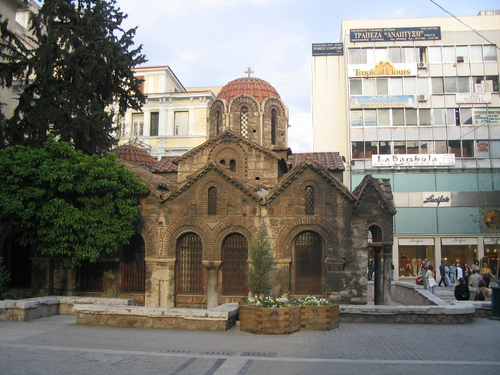
  8. Church of Panaghia Kapnikarea Church of Panaghia Kapnikarea
    09 30 min

    Church of Panaghia Kapnikarea

    Παναγία Καπνικαρέα

    The Church of Panagia Kapnikarea is a Byzantine-era church standing prominently on Ermou Street in central Athens. It dates to the 11th century, though portions may reflect earlier construction.

    • Must see
    • Place of worship
  9. Church of the Holy Apostles Church of the Holy Apostles
    10 30 min

    Church of the Holy Apostles

    Άγιοι Απόστολοι

    The Church of the Holy Apostles is a Byzantine-era church within Athens’s Ancient Agora archaeological site.

    • Must see
    • Place of worship
  10. Petraki Monastery Petraki Monastery
    11 30 min

    Petraki Monastery

    Ιερά Μονή Ασωμάτων - Πετράκη

    Petraki Monastery is a working Orthodox religious site in central Athens, offering a quieter encounter with the city’s ecclesiastical life than the Acropolis and its archaeological monuments.

    • Must see
    • Place of worship
  11. Philopappos Monument Philopappos Monument
    12 45 min

    Philopappos Monument

    Μνημείο Φιλοπάππου

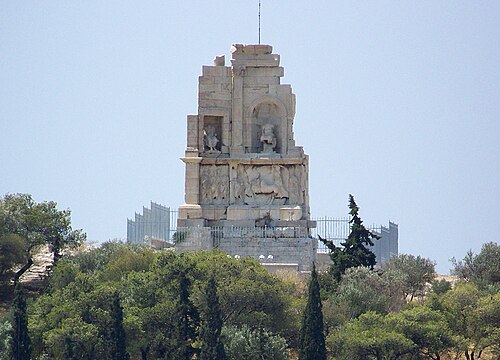
    The Philopappos Monument is an ancient funerary monument situated on Mouseion Hill, southwest of the Athenian Acropolis.

    • Must see
    • Historic monument

Source: OpenStreetMap contributors, Wikidata ·

How the city is laid out

Use the Acropolis as the central landmark. Plaka and Anafiotika sit on its northern and eastern slopes, Monastiraki and the Ancient Agora lie northwest, and Syntagma stands farther east. The National Garden links Syntagma with the Olympic and museum zone. Exarchia and the National Archaeological Museum are north of the centre, while coastal districts and Piraeus require metro, tram or bus connections.

Checked 2026-08-26

Getting around

Walk through the Acropolis-Plaka-Monastiraki core and use the integrated OASA network for longer journeys. Metro, tram, buses and trolleybuses cover Athens and its suburbs, with Line 3 connecting the airport and central city. The tram is useful for selected coastal routes, while Piraeus is best treated as a separate transport leg. Consult OASA for current routes and ticket products.

Checked 2026-08-26

Common questions

How many days should I spend in Athens?

A fixed duration is not recorded. Build the visit around the Acropolis core, central museums and neighbourhoods, then add the coast or Piraeus only when time permits.

Can I walk between the main ancient sites?

Yes. The Acropolis, Plaka, Monastiraki and the Ancient Agora form a practical central walking area. Use transit for the National Archaeological Museum, coast and Piraeus.

What public transport serves Athens?

The OASA network includes metro, tram, buses and trolleybuses. One integrated network connects the centre with suburbs, the airport corridor and major visitor districts.

How do I reach Athens from the airport?

OASA identifies Metro Line 3 and airport express buses as direct public transport options. Check the operator before travel because airport ticket products differ from ordinary urban journeys.

Is Piraeus part of the central Athens walking route?

No. Piraeus belongs to the wider urban area but is a separate port destination. Give it a dedicated metro or bus journey rather than adding it to an Acropolis walk.