
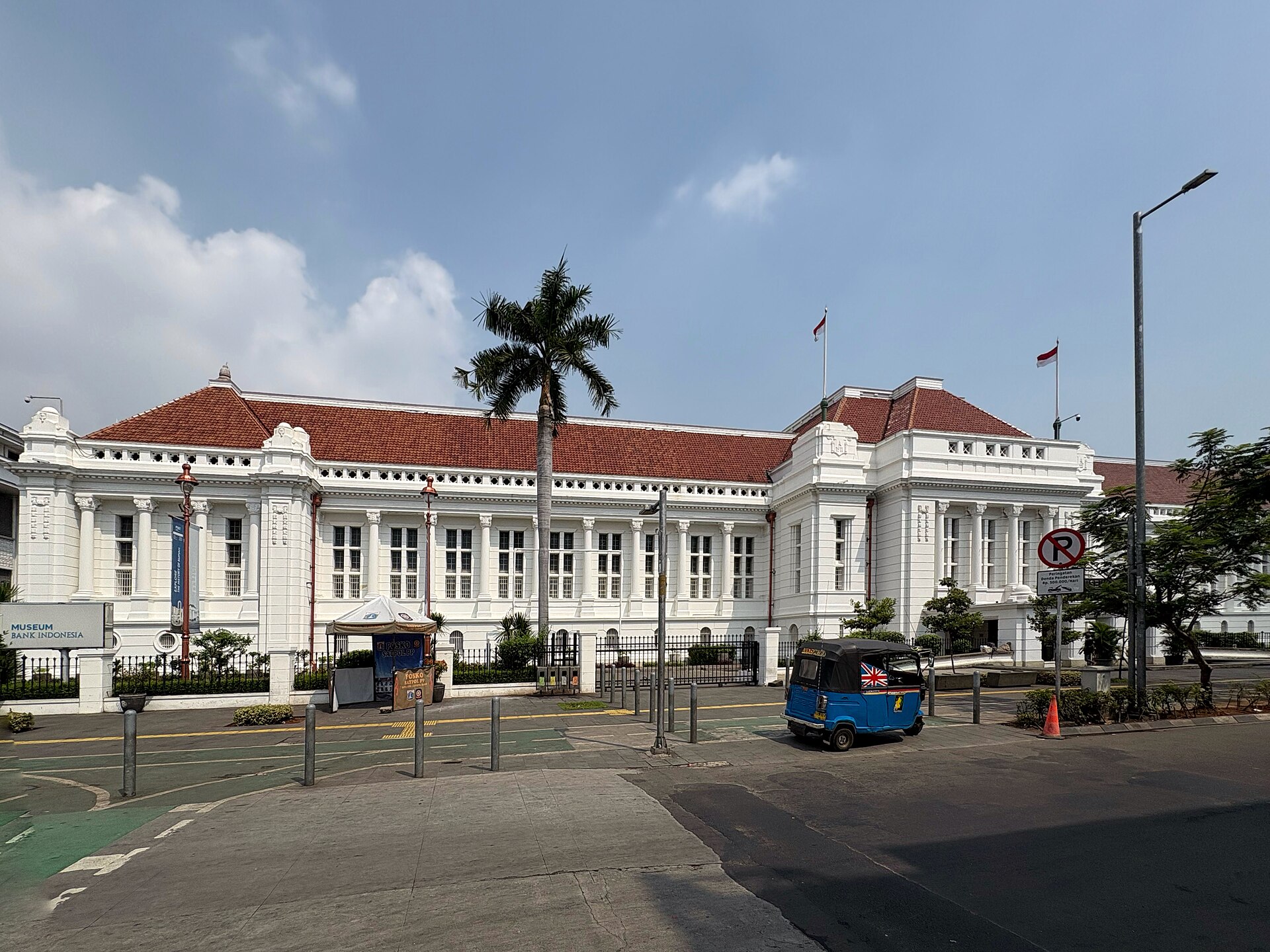
2 min walk
Museum Bank Indonesia
- Must see
- Museum
Language · 11 published
Museum · Jakarta
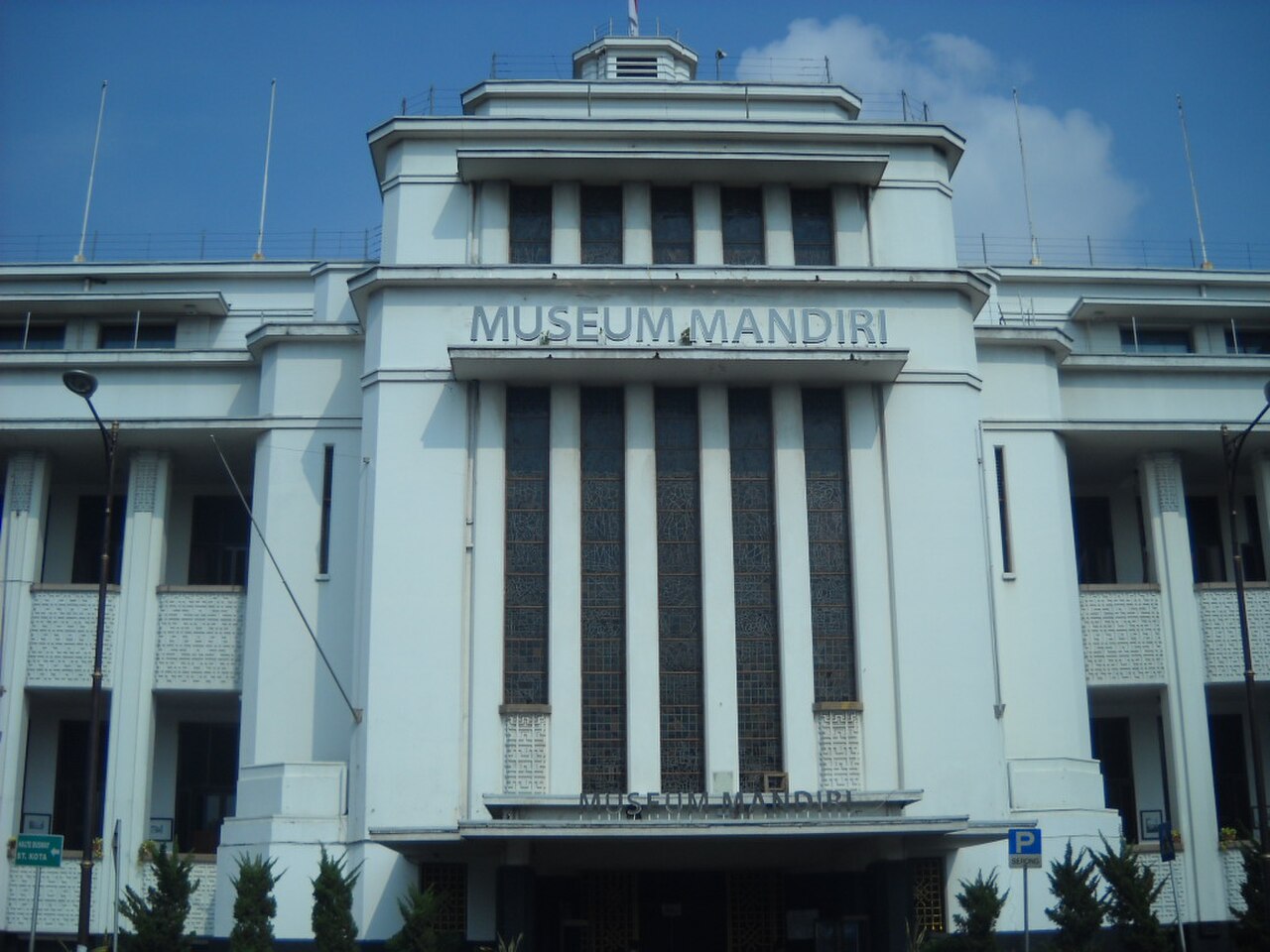
Museum Bank Mandiri
Reviewed by Elena Voss · Roavina Travel Editor
| Monday | Closed |
|---|---|
| Tuesday | 09:00 – 15:00 |
| Wednesday | 09:00 – 15:00 |
| Thursday | 09:00 – 15:00 |
| Friday | 09:00 – 15:00 |
| Saturday | 09:00 – 15:00 |
| Sunday | 09:00 – 15:00 |
Parsed from OpenStreetMap opening hours on 2026-09-09.
This place is a Museum. It was established in 1998.
Bank Mandiri Museum, or Museum Bank Mandiri, occupies a historic building in Jakarta and presents the city’s banking heritage. Its story follows Bank Mandiri and its predecessor institutions, placing financial development within Indonesia’s wider social and economic history. The building itself contributes to the visit through its colonial-era institutional architecture and preserved atmosphere. Bank Mandiri Museum, known locally as Museum Bank Mandiri, is a museum in Jakarta housed in a historic building. It forms part of the banking heritage institutions in Indonesia's capital city. The museum preserves and presents the history of Bank Mandiri and its predecessor banks, reflecting Indonesia's financial development. Located in the urban fabric of Jakarta, it contributes to the city's cultural and historical landscape. The building itself represents colonial-era architecture typical of financial institutions in the old city area. As a ranked visitor place in Jakarta's top 100 attractions, it draws interest from those exploring the city's institutional heritage.
Checked 2026-08-26 · Source
The museum’s collections include documents, photographs and artefacts connected with Bank Mandiri’s predecessor banks. Visitors encounter the material culture of banking alongside archival evidence of Indonesia’s financial development. Historic banking interiors, period fittings and the arrangement of the former institution help explain how the building functioned, turning the museum into both an architecture visit and a history visit. The museum contains collections related to banking history, including documents, photographs, and artifacts from Bank Mandiri's predecessor institutions. Visitors can expect displays of historical banking equipment, currency, and archival materials. The interior preserves the atmosphere of a historic financial institution. The building's architectural features, including its period fittings and spatial arrangements, form part of the visitor experience. The museum's holdings represent significant material for understanding Indonesia's economic and social history.
Checked 2026-08-26 · Source
Plan one to two hours for a measured visit through the banking-history displays and historic interiors. Visitors with a strong interest in archives, finance or Indonesian economic history may want more time to read and examine individual objects. For a wider Jakarta heritage day, the museum fits naturally as one focused stop within a longer sequence of cultural visits. Visitors typically allocate one to two hours for exploring the museum, depending on their level of interest in banking history and archival materials. Those with specialized interest in financial heritage or Indonesian economic history may wish to spend additional time examining documents and displays in detail. Casual visitors passing through as part of a broader Jakarta heritage itinerary may complete their visit more quickly.
Checked 2026-08-26 · Source
Jakarta is warm throughout the year, with a distinct wetter period and a generally drier period from May to October. Morning visits can make the journey and nearby walking more comfortable. Build extra flexibility into road travel because Jakarta traffic can be heavy, particularly around peak commuting times. Public holidays and weekends can bring more visitors to major cultural areas.
Checked 2026-08-26 · Source
The museum offers a focused cultural experience built around banking collections and historic architecture. When planning the day, treat it as a museum stop within Jakarta’s broader heritage landscape. Indonesian Rupiah is useful for incidental purchases and transport in the city. The visit suits travellers interested in institutions, archives and the material history of commerce rather than only monumental landmarks.
Checked 2026-08-26 · Source
Jakarta’s transport network gives visitors several ways to reach the museum, including taxis, ride-hailing services, TransJakarta and urban rail connections. Road journeys can take longer than the map distance suggests because congestion is a normal feature of the capital. Travellers staying or sightseeing in the historic Kota Tua area may be able to include the museum in a walking-based heritage route.
Checked 2026-08-26 · Source
Expect a busy metropolitan environment around the museum, including traffic, uneven pedestrian surfaces and tropical heat. Keep valuables secure and carry water for journeys between stops. Historic institutional buildings can present practical challenges for visitors with mobility needs. Inside, follow museum signs and staff directions, especially around displays, restricted areas and any rules governing photography or video.
Checked 2026-08-26 · Source
The historic banking halls and period architectural details make strong photographic subjects. Look for the building’s formal proportions, preserved fittings and the visual character of a former financial institution. Keep cameras unobtrusive and follow signs or staff directions regarding flash, video and restricted displays. Exterior photographs can complement interior views by showing the museum in its Jakarta setting.
Checked 2026-08-26 · Source
It presents the history of Bank Mandiri and its predecessor banks through banking documents, photographs, artefacts and a historic institutional interior.
The museum occupies a historic building with colonial-era architecture and the atmosphere of a former financial institution.
Allow approximately one to two hours, with extra time for close reading of archival material and detailed examination of the historic interior.
Yes. The museum works well as a focused cultural stop within a wider day devoted to Jakarta’s historic districts, museums and institutional heritage.
Taxis, ride-hailing services, TransJakarta and urban rail connections can all form part of a journey through Jakarta, although road traffic can extend travel time.
Look for banking archives, photographs, artefacts, period fittings and the spatial character of a historic financial institution.
Loading the interactive map…
The interactive map could not be loaded.

Last updated:
Source: OpenStreetMap contributors, Wikidata ·