
20 min walk
Museo del Calcio
- High · Heritage site
- Museum
Museum · Florence
Cenacolo Andrea del Sarto
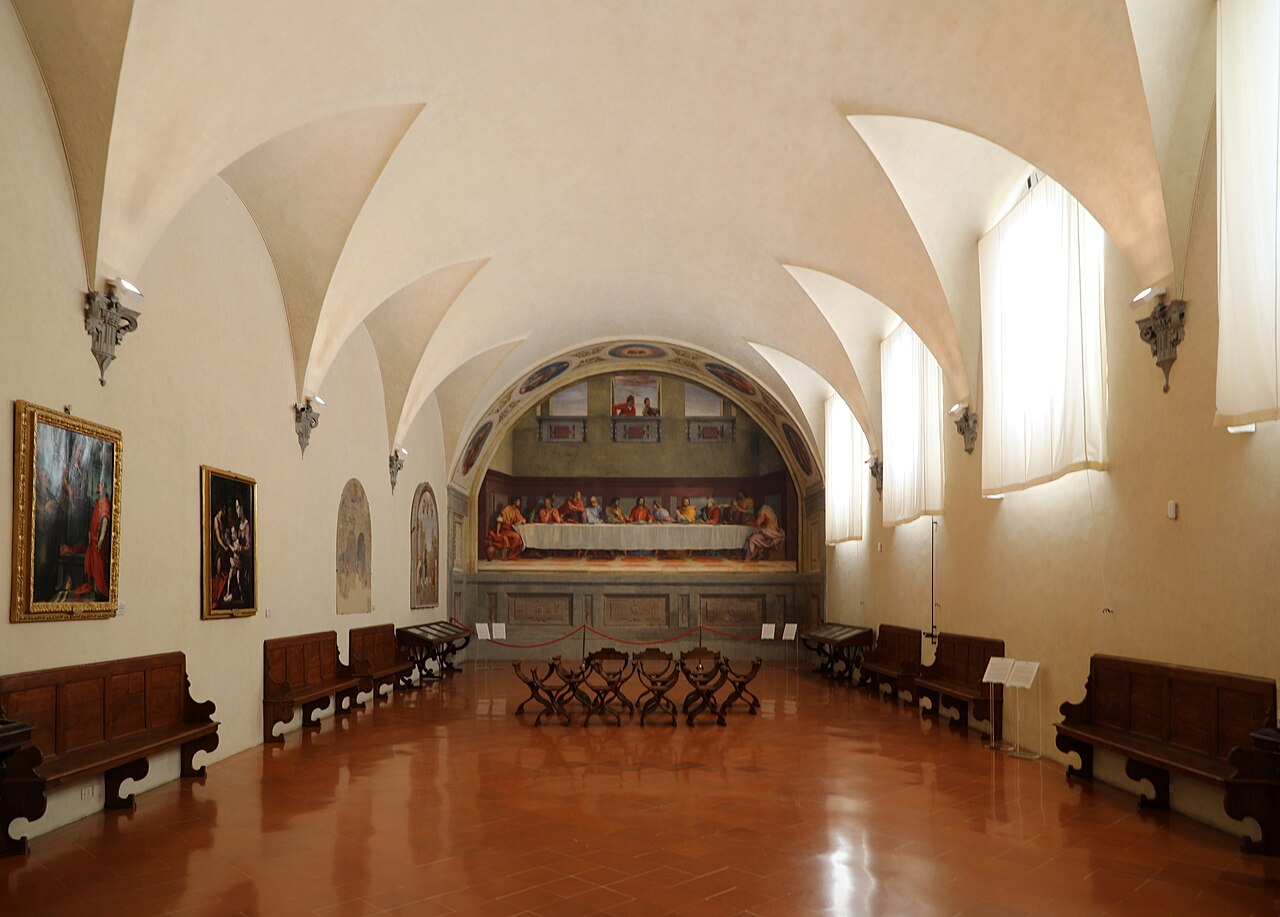
The Museum of the Last Supper of Andrea del Sarto, also called Cenacolo Andrea del Sarto, presents Andrea del Sarto’s Last Supper fresco in Florence. The painting belongs to the city’s tradition of monumental refectory scenes, where a religious subject was created for a communal dining space. The setting helps you read the fresco as part of a working devotional environment rather than as an isolated picture in a modern gallery. It is a focused stop for travelers interested in Florentine painting, Renaissance religious art, and the relationship between architecture and visual storytelling.
Checked 2026-08-26 · Source
The principal sight is Andrea del Sarto’s Last Supper, a large fresco organized around the meal of Christ and the apostles. Look at the balance between the figures, the arrangement of the table, and the way color gives the scene unity. Andrea del Sarto is associated with refined drawing, controlled composition, and a polished High Renaissance manner. The former convent refectory matters as much as the subject: its scale and walls frame the work in the kind of space for which such frescoes were intended. Treat the visit as a close study of one major work and its architectural surroundings.
Checked 2026-08-26 · Source
Allow around thirty to sixty minutes for the fresco and its setting. A shorter visit works if you are moving through Florence’s other Renaissance sights, while a longer stay suits anyone who enjoys comparing facial expressions, gestures, color relationships, and the painting’s placement within the refectory. Because the attraction has a concentrated focus, you do not need to reserve several hours unless you are building a wider art itinerary around Florentine cenacoli. Pause before moving on so the composition can be read as a whole, then return to individual figures and details.
Checked 2026-08-26 · Source
A visit fits well into a quieter morning or an afternoon devoted to smaller Florentine art sites. Spring and autumn are comfortable seasons for walking between neighborhoods, while summer requires more care with heat during outdoor travel. The fresco is an indoor sight, so it can also provide a useful cultural pause during unsettled weather. Plan the stop alongside other destinations rather than treating it as a full-day attraction. The refectory atmosphere rewards patient looking, especially when you can give the central scene your attention without rushing through the room.
Checked 2026-08-26 · Source
This is a specialist attraction centered on Andrea del Sarto’s fresco. The supplied place record gives no reliable ticket amount, discount category, pass inclusion, or reservation condition, so the guide does not assign a price or promise a ticketing arrangement. If you are planning a tightly timed museum day, leave flexibility around this stop. The main value lies in seeing the work in its refectory context, and the visit can complement Florence’s larger collections without requiring the same amount of time as a major museum.
Checked 2026-08-26 · Source
The museum is in Florence, and the visit is best approached as part of a walking route through the city’s historic neighborhoods. From a central base, combine it with nearby cultural stops and use a map for the final approach. Florence’s historic streets can be narrow and busy, so walking usually gives you the clearest sense of the surrounding urban fabric. Public transport and taxis serve the wider city, but the supplied record does not identify a specific stop, route, parking facility, or entrance. Keep the final navigation flexible around the exact mapped point.
Checked 2026-08-26 · Source
This is a focused fresco visit, not a large collection with many rooms. Historic religious buildings may include thresholds, steps, or surfaces that feel different from a modern museum, but the supplied record does not establish the site’s access arrangements. Give yourself time to enter, orient yourself, and view the painting at a respectful distance. The subject is devotional, so quiet behavior suits the setting. Pair the stop with food, rest, and other facilities elsewhere in your route rather than depending on this small attraction to provide a complete visitor infrastructure.
Checked 2026-08-26 · Source
The fresco is the natural photographic subject, but the supplied record does not establish the site’s camera policy. Follow any signs in the room and give priority to other visitors’ ability to experience the painting. Avoid flash unless it is expressly permitted, and do not bring a tripod into a confined refectory without permission. A quiet, steady viewing position is often more rewarding than photographing immediately. The room’s architecture, the scale of the wall painting, and the relationship between table and figures are useful details to notice even when photography is restricted.
Checked 2026-08-26 · Source
The main artwork is Andrea del Sarto’s Last Supper fresco, presented in a former convent refectory setting.
The refectory connects the fresco with the devotional and communal setting for which a Renaissance Last Supper scene was made.
Andrea del Sarto painted the fresco. He was a leading Florentine painter of the High Renaissance.
Andrea del Sarto’s work is a distinct Florentine High Renaissance interpretation, with attention to balanced figures, refined drawing, and color harmony.
Allow approximately thirty to sixty minutes for the fresco and the former refectory setting.
Look at the arrangement of the figures, the table, the gestures, the color relationships, and the way the painting works with the refectory wall.
Loading the interactive map…
The interactive map could not be loaded.

Last updated:
Source: OpenStreetMap contributors, Wikidata ·