
12 min walk
Oratorio dei Crociferi
- Must see
- Museum
Place of worship · Venice
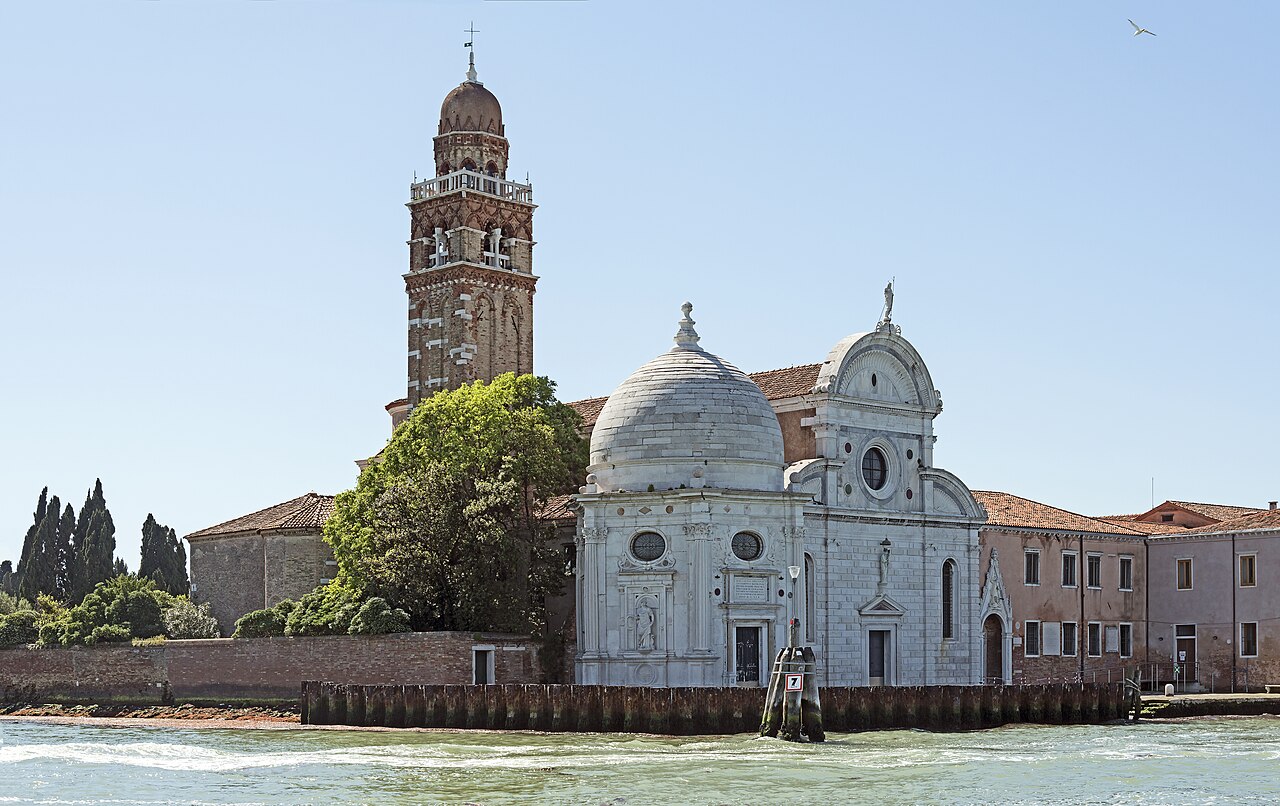
San Michele in Isola is a Renaissance church on the island of San Michele in the Venetian Lagoon. The island is Venice’s primary cemetery, making the church the architectural center of a place devoted to remembrance rather than ordinary city life. Mauro Codussi designed the church, whose construction began in 1469, and the building is regarded as one of the earliest Renaissance churches in Venice. Reaching San Michele by vaporetto creates a distinct transition from the dense streets of the historic center to open water and a quieter island setting. The destination combines architecture, cemetery landscape and lagoon travel in one excursion. Visitors come for Codussi’s clean Renaissance design, for the atmosphere of the burial grounds and for the chance to see a different side of Venice. San Michele is not a conventional sightseeing square: the island’s identity depends on respectful behavior, quiet movement and attention to the relationship between the church, tombs, memorials and surrounding water.
Checked 2026-08-26 · Source
The church interior expresses Mauro Codussi’s early Venetian Renaissance style through clean lines, measured proportions and classical organization. The surrounding cemetery extends the visit beyond the church, with paths, tombs and memorials creating a landscape of stone, planting and quiet enclosure. Graves of prominent international figures are part of the island’s cultural interest, although the cemetery should be approached as an active place of burial rather than a collection of attractions. The contrast between the disciplined church architecture and the varied memorial grounds gives San Michele its distinctive character. Look at the facade and interior as a unified Renaissance work, then walk through the cemetery slowly, observing how different monuments shape the paths and courtyards. The island’s lagoon setting remains visible throughout the experience and changes the quality of light around the pale stone surfaces. San Michele rewards visitors who are comfortable with a reflective, architectural visit rather than expecting entertainment or a dense program of galleries.
Checked 2026-08-26 · Source
Allow about one to two hours for the church and the cemetery grounds. The compact island makes a focused visit manageable, but travelers who want to examine architecture, memorials and the paths between burial areas should use the longer end of that range. The vaporetto crossing from Fondamente Nove adds travel time in both directions, so San Michele works best when treated as an excursion rather than a quick stop between central landmarks. The church can be seen relatively efficiently, while the cemetery invites a slower pace and quiet observation. Build flexibility into the return journey because the island experience depends on public water transport. A visit also benefits from leaving enough time at the landing to orient yourself before walking through the grounds. The most satisfying itinerary gives San Michele its own calm interval, then returns to Venice with time for a different district rather than trying to compress the island into a crowded sequence of central-city sights.
Checked 2026-08-26 · Source
Morning is a strong choice for San Michele in Isola because the lagoon crossing can begin the day with cooler air, softer light and a quieter mood. The exposed island has little protection from wind, sun or rain, so weather affects comfort more than it does at an indoor city museum. Daylight also helps with reading memorial inscriptions and understanding the relationship between the church and cemetery paths. The cemetery and church can have different access rhythms, while burials and maintenance remain part of the island’s daily purpose. Plan to move quietly and accept that some areas may be unavailable when cemetery activity requires privacy. Outside the busiest tourist periods, the water journey and grounds can feel especially peaceful. San Michele is best visited when you have time to pay attention to the landscape, not when you are trying to collect a landmark quickly before a scheduled activity elsewhere.
Checked 2026-08-26 · Source
The journey to San Michele uses ACTV vaporetto ticketing, while access to the church and cemetery belongs to the island visit itself. The available guide information does not establish a current church admission price, cemetery fee or combined arrangement, so no fare is stated here. Include the water transport in your planning and allow time for the return crossing. San Michele is not simply an extension of a central Venice museum route; the cost and timing of reaching an island should be treated as part of the excursion. The destination’s value lies in its Renaissance architecture, cemetery landscape and lagoon setting, so budget attention as well as money for the crossing. A transport pass may be useful for a wider Venice itinerary, but this guide does not assign it to church or cemetery entry. Keep the visit respectful and avoid treating burial grounds as a standard commercial attraction.
Checked 2026-08-26 · Source
Take ACTV vaporetto lines 4.1 or 4.2 from Fondamente Nove in Cannaregio toward the San Michele cemetery island stop. The crossing from Fondamente Nove takes approximately ten minutes, followed by walking on the island. There is no vehicular access, which helps preserve the quiet character of the cemetery. Check the direction of the boat before boarding because the two lines circulate through the lagoon in different ways. Leave margin for waiting and for the return service, especially when San Michele is one part of a larger day. Fondamente Nove itself is reached on foot through Cannaregio, so the complete route includes bridges and uneven city paving before the boat. Once ashore, follow the island paths toward the church and cemetery grounds. The water crossing is part of the experience: it gives a clear view of the separation between Venice’s dense historic center and this quieter memorial island.
Checked 2026-08-26 · Source
San Michele is an active cemetery, so quiet behavior, respectful clothing and distance from mourners are essential. Some paths may be uneven, and the island offers limited shelter from wind, rain and strong sun. Facilities for refreshments or rest may be limited, so prepare before leaving Venice. Cemetery activity, maintenance or burial arrangements can make parts of the grounds unavailable. Treat memorials and graves as places of remembrance, not as props for casual behavior. The water journey and exposed setting can feel cooler or windier than the city streets, especially outside summer. Photography inside the church may have restrictions, and the same consideration applies to people visiting graves. Plan the return vaporetto with time to spare. San Michele rewards calm attention, but it is not suited to a rushed itinerary, loud group behavior or an expectation of extensive visitor services.
Checked 2026-08-26 · Source
The church facade offers a clear Renaissance subject, especially when photographed from a position that includes the lagoon setting and the island’s open space. Inside, use the available light to record Codussi’s clean lines and classical proportions without disturbing worship or other visitors. The cemetery provides varied subjects in its tombs, walls, paths and memorial architecture, but photography must remain respectful toward mourners and the deceased. Follow signs and staff directions about cameras, flash and equipment. Early or late daylight can give the pale stone and lagoon atmosphere a gentle contrast, while changing weather adds a strong sense of place. Keep tripods and large equipment out of busy paths unless specifically permitted. The best photographs show San Michele as a complete environment: a Renaissance church, an active cemetery and an island separated from Venice by water.
Checked 2026-08-26 · Source
San Michele in Isola is a Renaissance church on San Michele island, Venice’s primary cemetery, in the Venetian Lagoon.
Mauro Codussi designed the church, whose construction began in 1469 and represents an early Venetian Renaissance achievement.
Yes. San Michele remains Venice’s primary cemetery, and visitors should behave quietly and respectfully throughout the island.
Take ACTV vaporetto lines 4.1 or 4.2 from Fondamente Nove in Cannaregio to the San Michele cemetery island stop.
Allow about one to two hours for the church and cemetery grounds, plus the vaporetto journey from Fondamente Nove and back.
The island combines Mauro Codussi’s early Renaissance church, Venice’s primary cemetery, memorial architecture and a quiet lagoon setting reached by vaporetto.
Loading the interactive map…
The interactive map could not be loaded.
Last updated:
Source: OpenStreetMap contributors, Wikidata ·