
3 min walk
大本山 南禅寺
- High
- Historic monument
Language · 11 published
Historic monument · Kyoto
蹴上インクライン
Reviewed by Elena Voss · Roavina Travel Editor
This place is a Attraction. It was established in 1890.
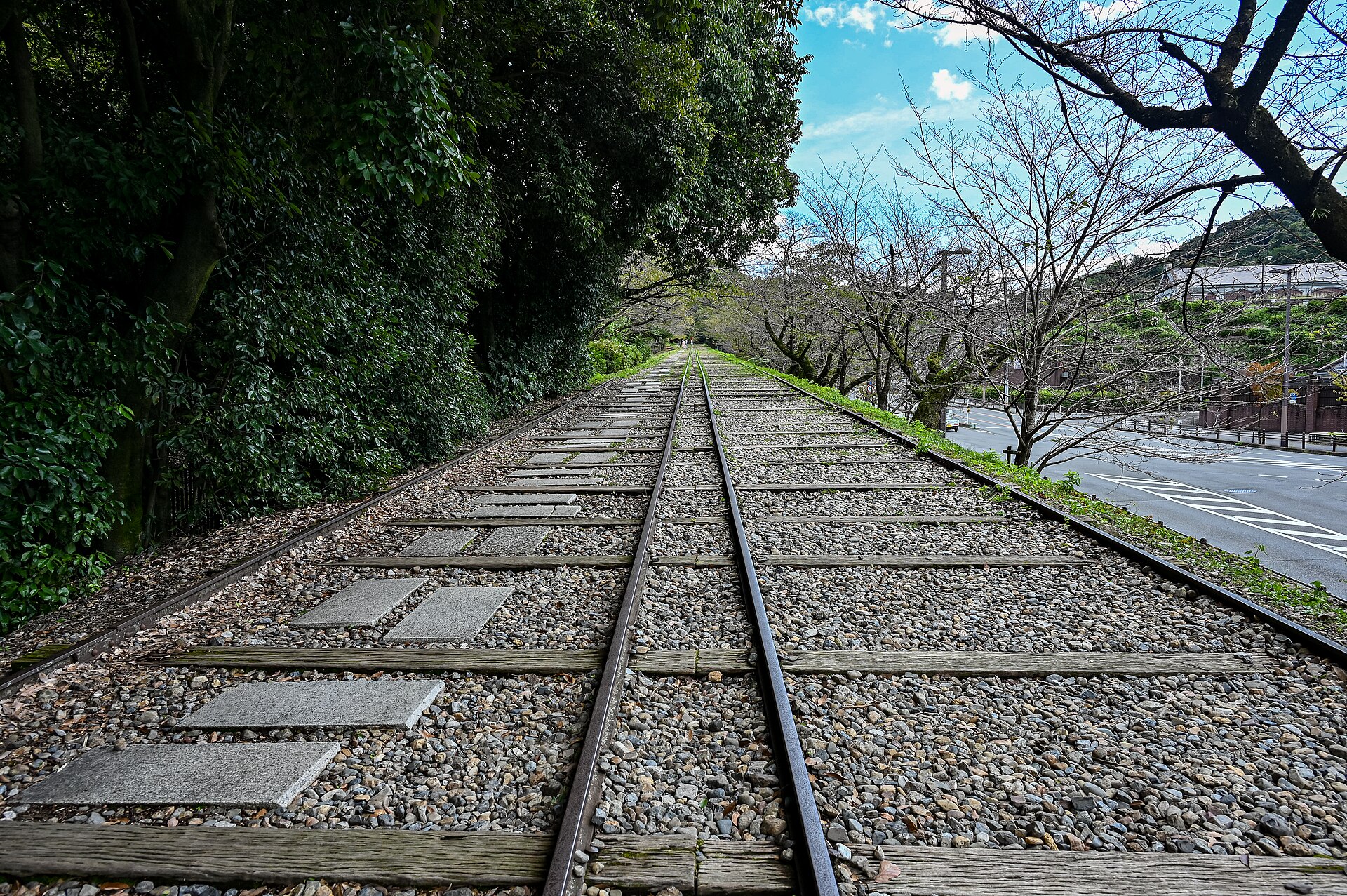
Keage Incline is a preserved railway incline in Kyoto’s Higashiyama area. It formed part of the Lake Biwa Canal system, where a funicular railway moved boats between different water levels. The railway no longer operates, and the tracks now form an open pedestrian route. Keage Incline combines industrial heritage with a tree-lined outdoor setting, making it different from Kyoto’s temples and traditional shopping streets. The surviving rails, embankment and slope show how water transport and engineering supported Kyoto’s modernisation during the Meiji period.
Checked 2026-08-26 · Source
The main feature is the inactive railway track running up the incline. Visitors walk beside and between the rails, observing the embankment, railway engineering and vegetation that frames the route. The open-air setting changes with the seasons: spring brings blossom, summer brings dense greenery, autumn adds foliage colour and winter leaves a more exposed industrial outline. Keage Incline has no enclosed gallery along the tracks. Nearby Nanzenji, the Philosopher’s Path and Lake Biwa Canal attractions provide a broader context for the waterway and the historic landscape.
Checked 2026-08-26 · Source
Allow 15 to 30 minutes to walk Keage Incline at a relaxed pace, with additional time for photographs and pauses beside the preserved rails. The incline is a short linear route, so the track itself does not require a full-day visit. Many travellers combine it with Nanzenji and the Philosopher’s Path, turning the stop into part of a longer Higashiyama walk. The slope and uneven rail surface can slow progress. Visitors interested in industrial history or seasonal scenery may spend longer examining the structure and its setting rather than simply crossing through.
Checked 2026-08-26 · Source
Keage Incline is an outdoor place with a different character in every season. Spring blossom makes the tree-lined track especially popular, while autumn foliage adds colour around the rails. Summer provides dense green cover but also heat and sun exposure; winter offers quieter conditions and a more visible industrial structure. Daylight is the practical time for walking because the incline has no lighting infrastructure described here. Wet weather affects the uncovered path and can make rails and uneven ground slippery. Early morning and late afternoon are generally calmer and provide softer light for photographs.
Checked 2026-08-26 · Source
Keage Incline functions as an open public pedestrian route, so the track walk itself is free. The nearby Lake Biwa Canal Museum and other attractions in the Nanzenji area are separate destinations with their own arrangements. Carrying money for transport, refreshments and nearby admission is useful because the incline itself is not a staffed ticketed gallery. The preserved rails are the attraction, and visitors can experience the route by walking along the outdoor track rather than buying access to a ride. The railway is historic infrastructure, not an operating passenger service.
Checked 2026-08-26 · Source
Keage Incline is close to Keage Station on Kyoto Municipal Subway’s Tozai Line, giving the site a straightforward approach from central Kyoto. The incline is also within walking distance of Nanzenji and the Philosopher’s Path, making it easy to combine with a temple and canal-area route. Bus services reach the surrounding Higashiyama district, although the final approach is on foot. The tracks are an outdoor pedestrian destination rather than a place to drive onto. Visitors should plan for a slope and uneven surface after leaving the station or nearby road.
Checked 2026-08-26 · Source
The rails, sleepers and uneven ground create tripping hazards, especially after rain. Walk carefully and leave room for other visitors on the narrow route. The incline is uncovered, so summer sun, heat and dehydration can affect the experience. Crossing roads near the site requires attention to traffic. The slope may be tiring for visitors with limited mobility, and the rail surface does not provide a smooth path. Night visits are unsuitable where lighting is absent. Blossom and foliage seasons bring heavier crowds. Keage Incline is a historic structure, so do not climb on, damage or treat the rails as play equipment.
Checked 2026-08-26 · Source
The parallel rails create strong leading lines, while the incline’s slope gives photographs depth and a clear sense of movement through the landscape. Spring blossom is the most recognisable seasonal setting, and autumn foliage changes the colour around the track. Early morning and late afternoon provide softer light and fewer people. Tripods can obstruct the narrow route, so use compact equipment and step aside before composing. Wet rails reflect light but increase slipping risk. Keep cameras and phones secure near the uneven edges, and remain considerate when other visitors are waiting for a clear frame.
Checked 2026-08-26 · Source
No. The railway is inactive, and the preserved tracks are now used as an outdoor pedestrian route.
A walk along the incline generally takes about 15 to 30 minutes, with extra time for photographs or a slower examination of the historic track.
Keage Incline is near Nanzenji, the Philosopher’s Path and Lake Biwa Canal attractions, so it fits naturally into a longer Higashiyama walking route.
The inactive tracks form an open pedestrian route, and visitors walk along the preserved railway incline while taking care around rails and uneven surfaces.
The rails, sleepers, slope and uneven ground create difficult conditions for wheelchairs and strollers. The route is best approached as an uneven historic track walk.
Spring brings blossom and autumn brings foliage around the rails. Early morning and late afternoon offer softer light and generally quieter conditions.
Loading the interactive map…
The interactive map could not be loaded.
Last updated:
Source: OpenStreetMap contributors, Wikidata ·