
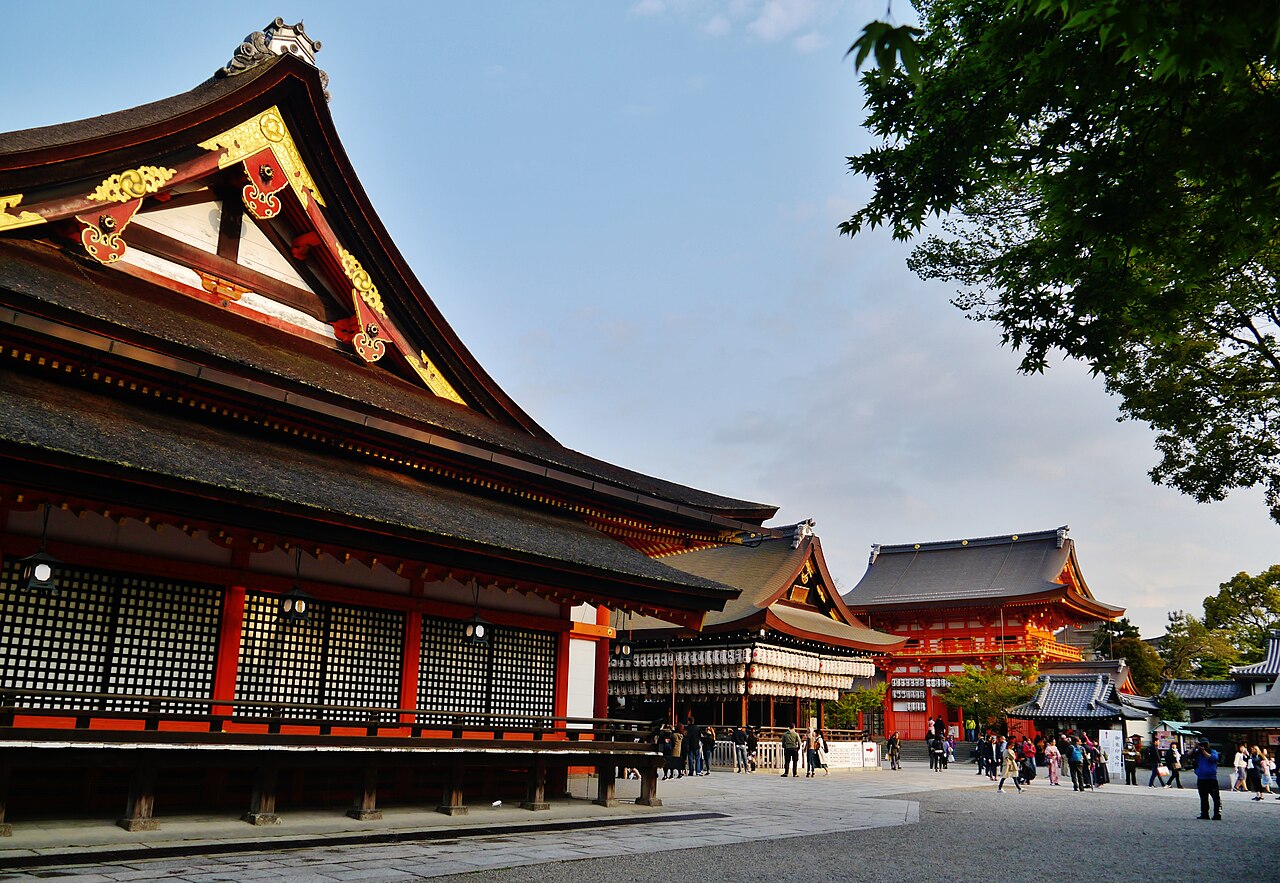
2 min walk
Yasaka Shrine
- Must see · Heritage site
- Place of worship
Language · 11 published
Historic monument · Kyoto
Reviewed by Elena Voss · Roavina Travel Editor
| Monday | 00:00 – 23:59 |
|---|---|
| Tuesday | 00:00 – 23:59 |
| Wednesday | 00:00 – 23:59 |
| Thursday | 00:00 – 23:59 |
| Friday | 00:00 – 23:59 |
| Saturday | 00:00 – 23:59 |
| Sunday | 00:00 – 23:59 |
Checked 2026-08-31 · Source
Read from the OpenStreetMap access tags; anything not listed has no tag recorded.
Set the group type to family in the planner and the day window contracts to about three quarters of a solo day.
Gion District is a historic entertainment quarter in eastern Kyoto, Japan. It developed as a pleasure district during the Edo period and remains one of the most famous geisha districts in the country. The area encompasses Hanamikoji Street and the streets around Shirakawa Canal. Gion preserves traditional wooden machiya townhouses and hosts ochaya teahouses where geiko and maiko perform. The district's cultural significance stems from its sustained role in Kyoto's performing arts heritage. Its value becomes clearer when the stop is compared with the surrounding streets and the other ranked places nearby. Yes. Shijo-dori and major lanes have level paved routes, but stone alleys, drainage channels, steps and inaccessible traditional buildings interrupt a complete accessible circuit. Yes. No regular gate hours apply. Photography is prohibited where local signs mark private property. No. No; formal performances require booked tickets. Gion-Shijo on Keihan. Public streets are accessible 24 hours daily. Shrines, temples, theatres, shops and restaurants keep separate hours; private-lane photography restrictions and crowd controls apply. Walking public streets is free; performances, gardens, food and guided experiences cost separately. Shijo-dori and major lanes have level paved routes, but stone alleys, drainage channels, steps and inaccessible traditional buildings interrupt a complete accessible circuit. Keihan Gion-Shijo and Hankyu Kyoto-Kawaramachi are the closest rail stations; Kyoto City Bus stops Gion at Yasaka Shrine. Yes. No regular gate hours apply. Photography is prohibited where local signs mark private property. No. No; formal performances require booked tickets. Gion-Shijo on Keihan. Public streets are accessible 24 hours daily. Shrines, temples, theatres, shops and restaurants keep separate hours; private-lane photography restrictions and crowd controls apply. Walking public streets is free;
Checked 2026-08-31 · Source
The district contains Shirakawa Canal lined with willow trees and traditional restaurants. Hanamikoji Street features preserved machiya architecture. Ichiriki Chaya stands as a prominent ochaya with centuries of history. Kennin-ji Temple, founded in 1202, occupies the southern edge. Gion Corner presents occasional cultural performances. Numerous kaiseki restaurants, bars, and exclusive establishments operate throughout. The area divides into Gion Kobu and Gion Higashi, with the former being larger. Small shrines and tucked-away gardens appear between buildings. No regular gate hours apply. Keihan Gion-Shijo and Hankyu Kyoto-Kawaramachi are the closest rail stations; Kyoto City Bus stops Gion at Yasaka Shrine.
Checked 2026-08-31 · Source
Visitors typically spend two to four hours exploring Gion's streets, though duration varies substantially by interest. A brief walk through Hanamikoji and along Shirakawa Canal requires under an hour. Those dining at kaiseki restaurants or attending performances should allocate additional time. Evening visits extend naturally as atmospheric lighting transforms the district. Some travelers return multiple times across days to experience different moods. Photography enthusiasts and architecture observers tend to linger longer than casual passersby. Photography is prohibited where local signs mark private property.
Checked 2026-08-31 · Source
Public streets are accessible 24 hours daily. Shrines, temples, theatres, shops and restaurants keep separate hours; private-lane photography restrictions and crowd controls apply. Keihan Gion-Shijo and Hankyu Kyoto-Kawaramachi are the closest rail stations; Kyoto City Bus stops Gion at Yasaka Shrine. Shijo-dori and major lanes have level paved routes, but stone alleys, drainage channels, steps and inaccessible traditional buildings interrupt a complete accessible circuit.
Checked 2026-08-31 · Source
Walking public streets is free; performances, gardens, food and guided experiences cost separately. Public streets are accessible 24 hours daily. Shrines, temples, theatres, shops and restaurants keep separate hours; private-lane photography restrictions and crowd controls apply. Shijo-dori and major lanes have level paved routes, but stone alleys, drainage channels, steps and inaccessible traditional buildings interrupt a complete accessible circuit.
Checked 2026-08-31 · Source
Keihan Gion-Shijo and Hankyu Kyoto-Kawaramachi are the closest rail stations; Kyoto City Bus stops Gion at Yasaka Shrine. Shijo-dori and major lanes have level paved routes, but stone alleys, drainage channels, steps and inaccessible traditional buildings interrupt a complete accessible circuit. Public streets are accessible 24 hours daily. Shrines, temples, theatres, shops and restaurants keep separate hours; private-lane photography restrictions and crowd controls apply.
Checked 2026-08-31 · Source
Shijo-dori and major lanes have level paved routes, but stone alleys, drainage channels, steps and inaccessible traditional buildings interrupt a complete accessible circuit. Yes. No regular gate hours apply. Photography is prohibited where local signs mark private property. Historic surfaces, crowds and security remain relevant. Public streets are accessible 24 hours daily. Shrines, temples, theatres, shops and restaurants keep separate hours; private-lane photography restrictions and crowd controls apply.
Checked 2026-08-31 · Source
Street photography captures machiya facades, canal reflections, and atmospheric alleyways effectively. Early morning and evening golden hours provide optimal natural lighting. Tripod use in narrow streets obstructs pedestrian flow and may draw intervention. Respectful distance from geiko and maiko remains essential; covert or aggressive photographing violates norms. Interior photography at restaurants and teahouses generally prohibited without explicit permission. The Shirakawa Canal willow-tree reflections offer iconic compositions. Rainy conditions create reflective street surfaces enhancing mood. Flash photography after dark disrupts establishment atmospheres. Walking public streets is free; performances, gardens, food and guided experiences cost separately.
Checked 2026-08-31 · Source
Yes.
No regular gate hours apply.
Photography is prohibited where local signs mark private property.
No.
No; formal performances require booked tickets.
Gion-Shijo on Keihan.
Loading the interactive map…
The interactive map could not be loaded.
Last updated:
Source: OpenStreetMap contributors ·