
6 min walk
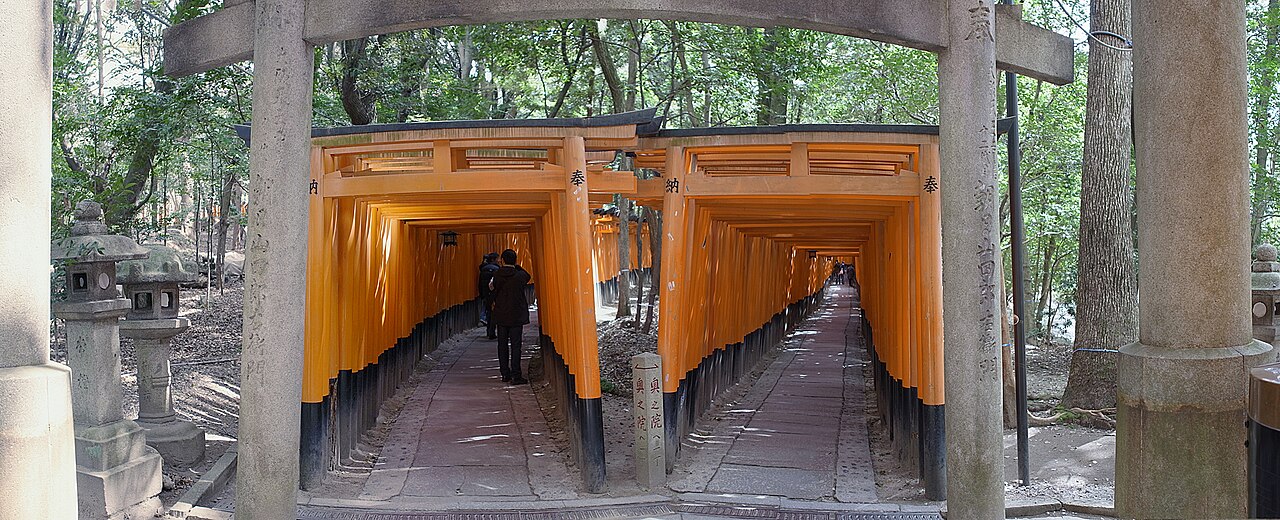
Senbon Torii (Thousand Torii Gates)
- Notable
- Viewpoint
Language · 11 published
Place of worship · Kyoto
伏見稲荷大社
Reviewed by Elena Voss · Roavina Travel Editor
| Monday | 00:00 – 23:59 |
|---|---|
| Tuesday | 00:00 – 23:59 |
| Wednesday | 00:00 – 23:59 |
| Thursday | 00:00 – 23:59 |
| Friday | 00:00 – 23:59 |
| Saturday | 00:00 – 23:59 |
| Sunday | 00:00 – 23:59 |
Checked 2026-08-31 · Source
Read from the OpenStreetMap access tags; anything not listed has no tag recorded.
Set the group type to family in the planner and the day window contracts to about three quarters of a solo day.
It was established in 711. It was built in the nagare-zukuri style. It carries the Important Cultural Property of Japan heritage designation.
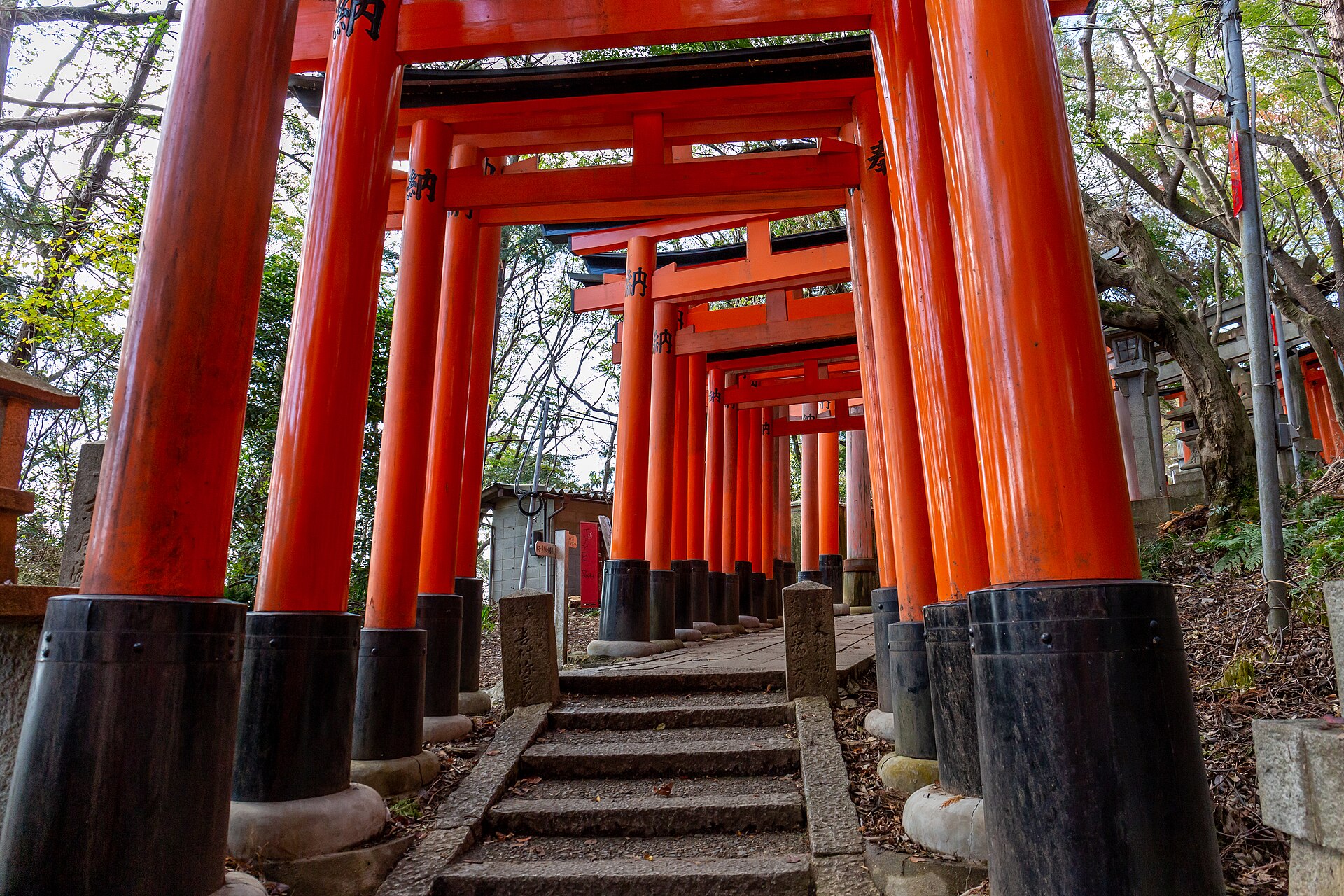
Fushimi Inari Taisha is a Shinto shrine located in Fushimi Ward, Kyoto. It serves as the head shrine of approximately 30,000 Inari shrines across Japan. The shrine is dedicated to Inari, the deity of rice, sake, fertility, and worldly success. Its most distinctive feature is the extensive network of vermilion torii gates forming pathways up Mount Inari. The shrine has ancient origins, with establishment traditionally attributed to the eighth century. It has long attracted worshippers seeking blessings for business prosperity and agricultural abundance. Yes. A step-free route reaches the lower shrine precinct and accessible toilets, but the famous mountain torii circuit uses long stairways, steep slopes and uneven stone. Yes. Yes, 24 hours. No. No. Allow roughly two to three hours for the full mountain loop. JR Inari. The shrine grounds and torii trails are open 24 hours daily. Prayer, amulet and office services generally operate about 08:30-16:30. Shrine grounds and Mount Inari trails are free; offerings, amulets and private prayer services cost separately. A step-free route reaches the lower shrine precinct and accessible toilets, but the famous mountain torii circuit uses long stairways, steep slopes and uneven stone. JR Inari station is directly opposite the main entrance; Keihan Fushimi-Inari station is about five minutes west. Yes. Yes, 24 hours. No. No. Allow roughly two to three hours for the full mountain loop. JR Inari. The shrine grounds and torii trails are open 24 hours daily. Prayer, amulet and office services generally operate about 08:30-16:30. Shrine grounds and Mount Inari trails are free; offerings, amulets and private prayer
Checked 2026-08-31 · Source
The shrine grounds contain multiple halls for worship, auxiliary shrines, and the famous Senbon Torii, comprising thousands of closely spaced torii gates creating tunnel-like corridors along the mountain trails. Stone fox statues, regarded as messengers of Inari, appear throughout the complex. Smaller sub-shrines dot the mountainside. Tea houses and rest spots offer respite for hikers. The summit features additional sacred structures. The gates vary in age and condition, with newer gates displaying donor inscriptions. The full circuit covers substantial elevation gain through forested terrain. Yes, 24 hours. JR Inari station is directly opposite the main entrance; Keihan Fushimi-Inari station is about five minutes west.
Checked 2026-08-31 · Source
Visitor duration varies considerably based on chosen route. Many visitors explore only the lower gate corridors, requiring approximately one to two hours. The complete ascent to Mount Inari's summit and return demands substantially more time, typically two to three hours or longer depending on pace and rest stops. Early morning visits may permit quicker passage with reduced crowding. Physical fitness and weather conditions affect timing. The path involves continuous uphill walking on uneven surfaces and stone steps. Photography enthusiasts should allocate additional time. No.
Checked 2026-08-31 · Source
The shrine grounds and torii trails are open 24 hours daily. Prayer, amulet and office services generally operate about 08:30-16:30. JR Inari station is directly opposite the main entrance; Keihan Fushimi-Inari station is about five minutes west. A step-free route reaches the lower shrine precinct and accessible toilets, but the famous mountain torii circuit uses long stairways, steep slopes and uneven stone.
Checked 2026-08-31 · Source
Shrine grounds and Mount Inari trails are free; offerings, amulets and private prayer services cost separately. The base amount and currency follow the operator tariff; premium products and separate institutions remain excluded unless named. Allow roughly two to three hours for the full mountain loop.
Checked 2026-08-31 · Source
JR Inari station is directly opposite the main entrance; Keihan Fushimi-Inari station is about five minutes west. A step-free route reaches the lower shrine precinct and accessible toilets, but the famous mountain torii circuit uses long stairways, steep slopes and uneven stone. The shrine grounds and torii trails are open 24 hours daily. Prayer, amulet and office services generally operate about 08:30-16:30.
Checked 2026-08-31 · Source
A step-free route reaches the lower shrine precinct and accessible toilets, but the famous mountain torii circuit uses long stairways, steep slopes and uneven stone. Yes. Yes, 24 hours. No. Historic surfaces, crowds and security remain relevant. The shrine grounds and torii trails are open 24 hours daily. Prayer, amulet and office services generally operate about 08:30-16:30.
Checked 2026-08-31 · Source
The torii gate corridors provide iconic photographic subjects, though capturing unobstructed views requires patience or off-peak timing. The contrasting orange vermilion against green forest canopy creates distinctive visual effects. Gate inscriptions offer textual detail for close examination. Summit viewpoints present panoramic potential subject to atmospheric conditions. Artificial lighting within gate tunnels challenges exposure settings. Tripod use may obstruct narrow pathways and inconvenience other visitors. Drone operation appears inappropriate given sacred context and crowded conditions. Early morning mist or filtered sunlight through gates produces atmospheric effects. Respect for worshippers must override photographic priorities. Shrine grounds and Mount Inari trails are free; offerings, amulets and private prayer services cost separately.
Checked 2026-08-31 · Source
Yes.
Yes, 24 hours.
No.
No.
Allow roughly two to three hours for the full mountain loop.
JR Inari.
Loading the interactive map…
The interactive map could not be loaded.
Last updated:
Source: OpenStreetMap contributors, Wikidata ·