
2 min walk
Gion District
- Must see
- Historic monument
Language · 11 published
Place of worship · Kyoto
八坂神社
Reviewed by Elena Voss · Roavina Travel Editor
| Monday | 00:00 – 23:59 |
|---|---|
| Tuesday | 00:00 – 23:59 |
| Wednesday | 00:00 – 23:59 |
| Thursday | 00:00 – 23:59 |
| Friday | 00:00 – 23:59 |
| Saturday | 00:00 – 23:59 |
| Sunday | 00:00 – 23:59 |
Checked 2026-08-31 · Source
Read from the OpenStreetMap access tags; anything not listed has no tag recorded.
Set the group type to family in the planner and the day window contracts to about three quarters of a solo day.
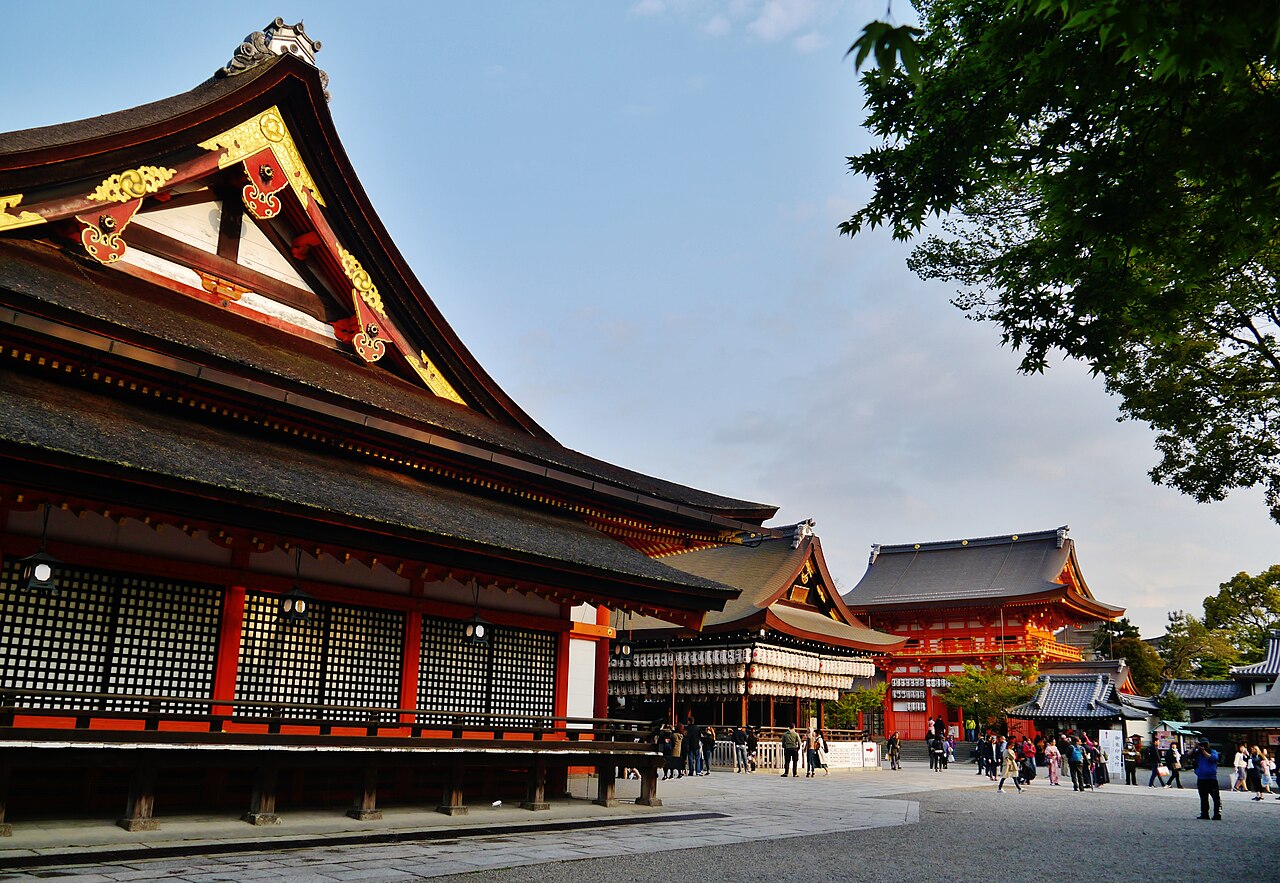
This place is a Place of worship. It was established in 656. It was built in the Gion-zukuri style. It carries the Important Cultural Property of Japan heritage designation.
Yasaka Shrine is a Shinto shrine located in Kyoto, Japan. It is also known as Gion Shrine. The shrine stands at the eastern end of Shijo-dori, a major thoroughfare in the city. It serves as a significant religious and cultural site within Kyoto's extensive network of temples and shrines. The shrine is particularly associated with the Gion district, one of Kyoto's most famous entertainment and geisha quarters. Yasaka Shrine has long been a focal point for local festivals and community gatherings. Yes. A step-free route enters from the south/east side and reaches the main precinct, but the landmark west gate has stairs and some subsidiary shrines have thresholds. Yes. Yes, 24 hours. No. No. Yes from the south/east approach. Gion. Shrine grounds are open 24 hours daily. The main office, amulet counters and formal prayer reception generally operate 09:00-17:00. Shrine grounds are free; amulets, offerings and formal prayer services cost separately. A step-free route enters from the south/east side and reaches the main precinct, but the landmark west gate has stairs and some subsidiary shrines have thresholds. Kyoto City Bus stops Gion beside the west gate; Keihan Gion-Shijo is about ten minutes west and Hankyu Kyoto-Kawaramachi about 15 minutes. Yes. Yes, 24 hours. No. No. Yes from the south/east approach. Gion. Shrine grounds are open 24 hours daily. The main office, amulet counters and formal prayer reception generally operate 09:00-17:00. Shrine grounds are free; amulets, offerings and formal prayer services cost separately. A step-free route enters from the south/east side and reaches the main precinct, but the landmark west gate has stairs and some subsidiary shrines have thresholds. Kyoto City Bus stops Gion beside the west gate; Keihan Gion-Shijo is about ten minutes west and Hankyu Kyoto-Kawaramachi about 15 minutes. Yes. Yes, 24 hours. No. No. Yes from the south/east approach. Gion. Shrine grounds are open 24 hours daily. The main office, amulet counters and formal prayer reception
Checked 2026-08-31 · Source
The shrine grounds contain multiple structures and features typical of important Shinto sites. Visitors can observe the main hall and various auxiliary buildings. The precinct includes torii gates marking sacred entrances. Stone lanterns and other traditional shrine elements are present throughout the grounds. The architectural style reflects conventional Japanese shrine construction. The shrine complex occupies a notable position within the urban landscape of eastern Kyoto. Yes, 24 hours. Kyoto City Bus stops Gion beside the west gate; Keihan Gion-Shijo is about ten minutes west and Hankyu Kyoto-Kawaramachi about 15 minutes.
Checked 2026-08-31 · Source
The duration of a visit to Yasaka Shrine depends on individual interests and purposes. Casual visitors typically spend a brief period walking through the grounds, offering prayers, and observing the architecture. Those participating in religious observances or attending festivals may remain longer. The compact nature of the shrine precinct suggests that standard visits are relatively short compared to extensive temple complexes elsewhere in Kyoto. Visitors should allocate time according to personal engagement with shrine activities, photography interests, and whether festival events coincide with their visit. No.
Checked 2026-08-31 · Source
Shrine grounds are open 24 hours daily. The main office, amulet counters and formal prayer reception generally operate 09:00-17:00. Kyoto City Bus stops Gion beside the west gate; Keihan Gion-Shijo is about ten minutes west and Hankyu Kyoto-Kawaramachi about 15 minutes. A step-free route enters from the south/east side and reaches the main precinct, but the landmark west gate has stairs and some subsidiary shrines have thresholds.
Checked 2026-08-31 · Source
Shrine grounds are free; amulets, offerings and formal prayer services cost separately. Shrine grounds are open 24 hours daily. The main office, amulet counters and formal prayer reception generally operate 09:00-17:00. A step-free route enters from the south/east side and reaches the main precinct, but the landmark west gate has stairs and some subsidiary shrines have thresholds.
Checked 2026-08-31 · Source
Kyoto City Bus stops Gion beside the west gate; Keihan Gion-Shijo is about ten minutes west and Hankyu Kyoto-Kawaramachi about 15 minutes. A step-free route enters from the south/east side and reaches the main precinct, but the landmark west gate has stairs and some subsidiary shrines have thresholds.
Checked 2026-08-31 · Source
A step-free route enters from the south/east side and reaches the main precinct, but the landmark west gate has stairs and some subsidiary shrines have thresholds. Yes. Yes, 24 hours. No. Historic surfaces, crowds and security remain relevant. Shrine grounds are open 24 hours daily. The main office, amulet counters and formal prayer reception generally operate 09:00-17:00.
Checked 2026-08-31 · Source
Photography at Yasaka Shrine is generally permitted in exterior areas, following common practices at Japanese shrines. Visitors should exercise judgment regarding appropriate subjects, avoiding intrusive documentation of worshippers engaged in private prayer. Tripod and professional equipment use may attract attention or intervention. Visitors must respect any posted restrictions or staff instructions encountered during their visit. Shrine grounds are free; amulets, offerings and formal prayer services cost separately.
Checked 2026-08-31 · Source
Yes.
Yes, 24 hours.
No.
No.
Yes from the south/east approach.
Gion.
Loading the interactive map…
The interactive map could not be loaded.
Last updated:
Source: OpenStreetMap contributors, Wikidata ·