
4 min walk
Ginza
- Must see
- Activity
Language · 11 published
Art and culture venue · Tokyo
歌舞伎座
Reviewed by Elena Voss · Roavina Travel Editor
Read from the OpenStreetMap access tags; anything not listed has no tag recorded.
Set the group type to family in the planner and the day window contracts to about three quarters of a solo day.
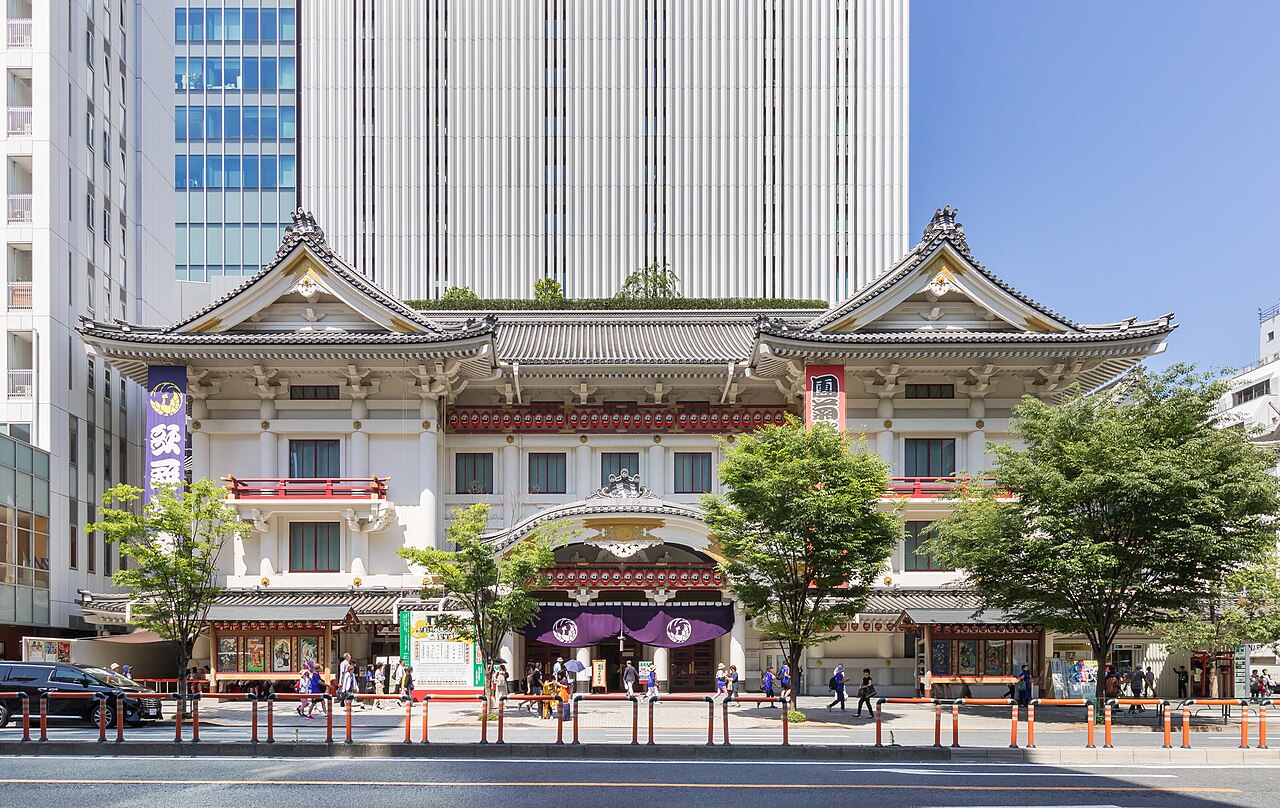
This place is a Theatre. It opened in 1889. It was built in the modern Japanese-style architecture style. It is run by Kabuki-za.
Kabuki-za is the principal kabuki theatre in Tokyo and the most important venue for this classical Japanese performing art form. Located in the Ginza district, it has served as the cultural heart of kabuki since its original construction in 1889. The current building represents the fifth iteration of the theatre, having been reconstructed multiple times due to various circumstances including wartime damage and modernization efforts. It stands as both a working performance venue and a symbolic institution preserving traditional Japanese theatre heritage for contemporary audiences.
Checked 2026-08-31 · Source
The theatre interior contains multiple audience levels including the main floor and various balcony sections characteristic of traditional kabuki architecture. A dedicated exhibition gallery on the upper floors displays costumes, props, and historical materials related to kabuki performance. The building incorporates modern facilities alongside traditional design elements. Retail spaces within the complex offer kabuki-related merchandise. The structure maintains the distinctive Japanese architectural style with its prominent tiled roof and ornamental details visible from the exterior, making it a recognizable landmark in the Ginza streetscape.
Checked 2026-08-31 · Source
A full kabuki performance traditionally extends across an entire day, with individual acts or segments available for separate attendance. Visitors should anticipate substantial time commitment for complete performances. The exhibition gallery can be explored independently of performance attendance, though duration varies by individual interest. Those attending single-act options should still allow adequate time for arrival, seating, and potential intervals. Visitors combining theatre attendance with gallery exploration should plan accordingly. The surrounding Ginza district offers additional attractions for those structuring longer visits around a Kabuki-za experience.
Checked 2026-08-31 · Source
The theatre box office operates 10:00–18:00 on performance days and 10:00–17:00 on no-performance days and outside performance periods. The main auditorium is between programs on 2026-08-31: the August run ended on August 26 and the September run begins on September 2. The September 2026 run has no performances on September 9 or 18. Auditorium doors normally open about 30 minutes before each performance. Kabuki performances follow a scheduled program that varies throughout the year, with different productions mounted in distinct monthly or seasonal runs. The exhibition gallery operates independently of performance schedules. Take the Tokyo Metro Hibiya Line or Toei Asakusa Line to Higashi-ginza Station; Exit 3 connects directly to Kabuki-za. Tokyo Metro identifies an elevator route from the Hibiya Line platform through the Central Gate to Exit 3. Alternatively, Ginza Station Exit A7 is about a five-minute walk, while Tokyo Station is about ten minutes away by taxi. Peak tourist seasons in Tokyo may affect availability and crowd levels. The theatre maintains year-round operations with varying content.
Checked 2026-08-31 · Source
Auditorium entry requires a performance ticket. For the September 2026 full program, the lowest general seat price is JPY 5,000 including tax for Upper Tier B; listed full-program seats range up to JPY 20,000. Ticket availability depends on the specific production, seating category, and whether full-day or single-act attendance is selected. Single-act tickets provide more accessible entry points for newcomers or those with limited time. Various seating tiers exist with corresponding price differentials. Same-day tickets may be available for certain performances, though popular productions sell in advance. The theatre offers accommodation for international visitors including subtitle devices.
Checked 2026-08-31 · Source
Take the Tokyo Metro Hibiya Line or Toei Asakusa Line to Higashi-ginza Station; Exit 3 connects directly to Kabuki-za. Tokyo Metro identifies an elevator route from the Hibiya Line platform through the Central Gate to Exit 3. Alternatively, Ginza Station Exit A7 is about a five-minute walk, while Tokyo Station is about ten minutes away by taxi. This is the named approach for an independent visit. Kabuki-za occupies a prominent position in Ginza, accessible via multiple Tokyo Metro stations. Higashi-Ginza Station on the Asakusa and Hibiya lines provides direct proximity. Ginza Station, served by the Ginza, Marunouchi, and Hibiya lines, requires a short walk through the district. The location benefits from Ginza's pedestrian-friendly street planning. Surface transport options include bus routes serving the area. The theatre's distinctive architecture assists visual identification when approaching on foot.
Checked 2026-08-31 · Source
Higashi-ginza Station Exit 3 connects directly to the theatre’s basement level 2; elevators provide access toward ground level and the main entrance. The theatre has elevators and an accessible toilet. Dedicated wheelchair viewing spaces are available for a maximum of two wheelchair users and must be reserved by the day before the performance. Loan wheelchairs are available, and guide and assistance dogs are admitted. Captioning tablets at Kabuki-za support Japanese, English and Chinese. The access description applies to the documented visitor route. Kabuki performance conventions differ substantially from Western theatre traditions, including vocal styles, musical accompaniment, and audience participation customs. First-time attendees may benefit from preparatory research or program notes. Photography and recording are prohibited during performances. Food and beverage policies follow standard theatre protocols. The traditional performance style involves stylized movement and makeup that may require adjustment for unaccustomed viewers.
Checked 2026-08-31 · Source
Interior photography during performances is prohibited to preserve artistic integrity and audience experience. The distinctive exterior architecture permits photography from public thoroughfares, though visitor judgment should consider pedestrian flow and commercial district norms. The exhibition gallery may have specific photography policies for displayed artifacts. Visitors should observe posted restrictions and staff guidance regarding image capture. The building's prominent facade and traditional roof elements offer recognizable photographic subjects from exterior vantage points. Evening illumination enhances visual documentation opportunities. Respect for ongoing performances and fellow visitors should guide all photography decisions.
Checked 2026-08-31 · Source
A matinee or evening full program usually lasts about four hours; individual acts vary in length.
Yes, when seats remain. Same-day tickets are sold at the box office on basement level 2.
Children aged four and older need a ticket. Children aged three and under may sit on an adult’s lap without a ticket, but they need a ticket if they occupy a seat.
English captioning is available at Kabuki-za. It costs JPY 1,500 cash for a full program or JPY 1,000 cash for a single act.
There is no cloakroom, but coin-operated lockers are available; valuables should remain with the visitor.
Food and drink may be consumed in the auditorium or lobby during intermissions, but eating is prohibited while a performance is in progress.
Loading the interactive map…
The interactive map could not be loaded.

Last updated:
Source: OpenStreetMap contributors, Wikidata ·