
4 min walk
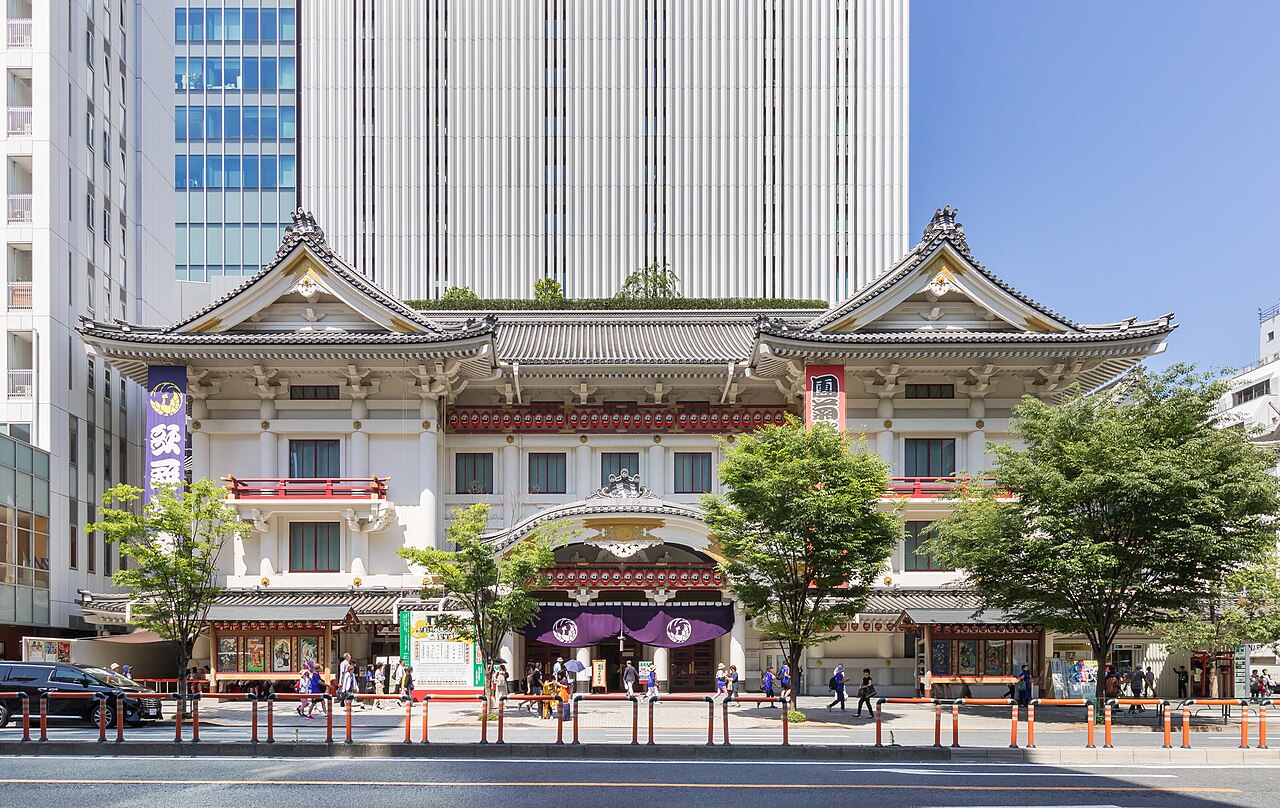
Kabuki-za
- Must see
- Art and culture venue
Language · 11 published
Activity · Tokyo
銀座
Reviewed by Elena Voss · Roavina Travel Editor
| Monday | 00:00 – 23:59 |
|---|---|
| Tuesday | 00:00 – 23:59 |
| Wednesday | 00:00 – 23:59 |
| Thursday | 00:00 – 23:59 |
| Friday | 00:00 – 23:59 |
| Saturday | 00:00 – 23:59 |
| Sunday | 00:00 – 23:59 |
Checked 2026-08-31 · Source
Read from the OpenStreetMap access tags; anything not listed has no tag recorded.
Set the group type to family in the planner and the day window contracts to about three quarters of a solo day.
It was established in 1612.
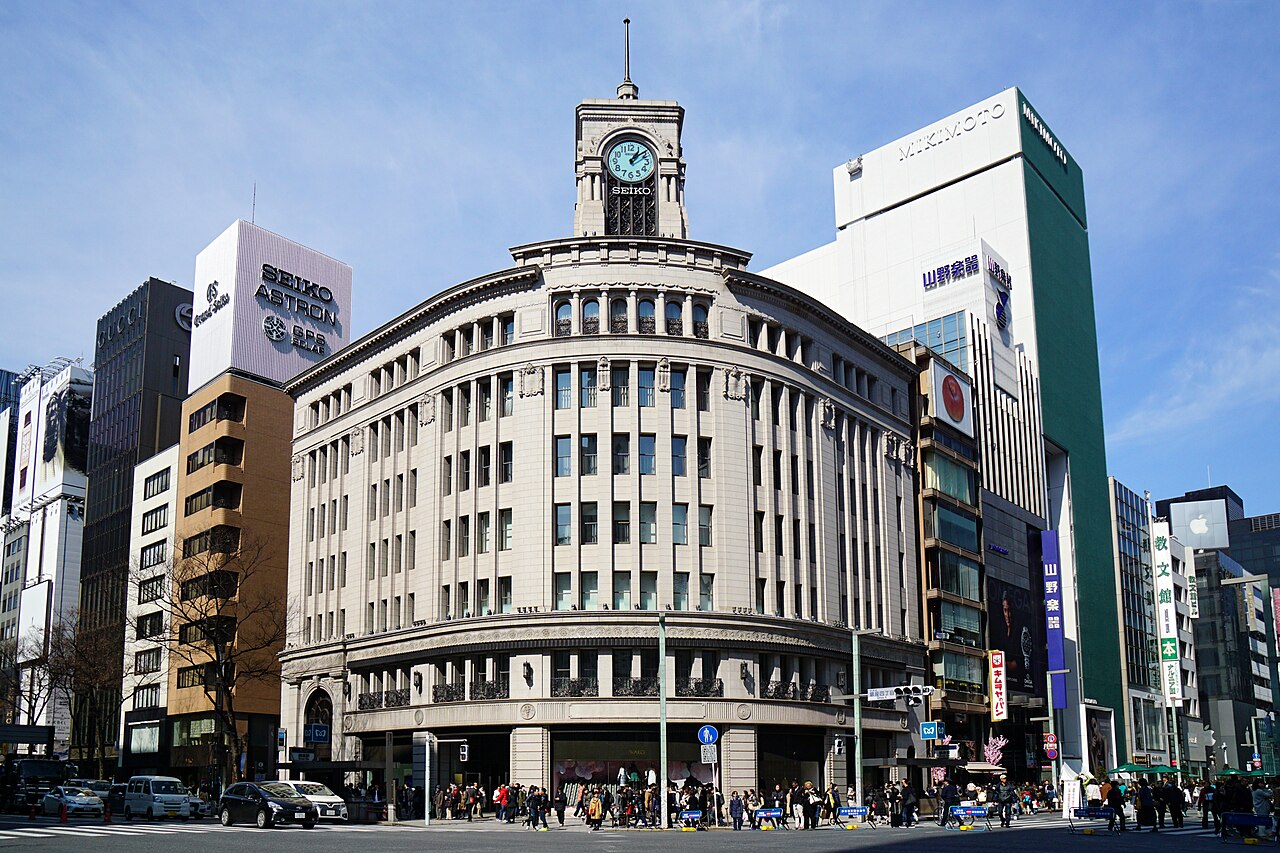
Ginza is a prominent upscale shopping and entertainment district in central Tokyo, Japan. Its local name is 銀座. The area developed significantly following the Meiji Restoration and became a symbol of Japanese modernization and Western influence. Today it remains one of Tokyo's most prestigious commercial zones, characterized by flagship stores of international luxury brands, major Japanese department stores, and numerous restaurants. The district extends roughly from Shimbashi to Kyobashi, with Chuo-dori as its central thoroughfare.
Checked 2026-08-31 · Source
Ginza contains numerous high-end retail establishments including flagship boutiques for international fashion houses and Japanese department stores such as Mitsukoshi and Matsuya. The area features art galleries, upscale dining establishments, and traditional specialty shops. The Kabuki-za theatre, dedicated to kabuki performances, stands as a significant cultural institution. Various side streets and alleys contain smaller retailers, restaurants, and bars. Recent redevelopment has introduced additional commercial and cultural facilities. The district's character varies between the main avenues and narrower backstreets.
Checked 2026-08-31 · Source
Visitor time in Ginza varies substantially based on individual interests. Shoppers exploring multiple flagship stores and department stores may spend several hours to a full day. Those focusing on specific retailers or dining experiences might require less time. Theatre attendance at Kabuki-za typically involves performances of several hours. Evening visits for dining or entertainment extend the duration. The compact, walkable nature of the district allows flexible itineraries. Window shopping along Chuo-dori can be accomplished relatively quickly.
Checked 2026-08-31 · Source
Public streets have no site-wide opening or closing time. The Ginza-dori pedestrian zone operates Saturdays, Sundays, and public holidays, 12:00–18:00 from April through September and 12:00–17:00 from October through March. Ginza is a public district with no regular closure day. Police may suspend the pedestrian zone for weather or year-end/New Year conditions; individual shops, galleries, and other venues set their own hours and closure days. Ginza can be visited throughout the year. The district maintains active commercial operations across seasons. Sundays see Chuo-dori pedestrianized, creating a different atmosphere for walking. Seasonal decorations appear during major Japanese holidays and year-end periods. Summer brings heat and humidity typical of Tokyo. Winter offers generally clear, dry conditions. Cherry blossom season in spring attracts increased visitor numbers. Individual store and restaurant hours vary independently. A flexible visit lets travellers connect Ginza with the rest of the day without treating one room, viewpoint or photograph as the whole experience.
Checked 2026-08-31 · Source
Free: there is no admission charge or ticket for entering and walking through the public Ginza district. Individual shops, museums, theatres, and events may charge separately. Access to Ginza as a district requires no admission fee. Individual attractions, stores, and restaurants set their own pricing structures. Kabuki-za theatre performances require purchased tickets, with pricing varying by seating section and performance type. Department stores and retail establishments operate as standard commercial venues. Dining costs range broadly depending on venue selection.
Checked 2026-08-31 · Source
Use Ginza Station for the Tokyo Metro Ginza Line (G09), Marunouchi Line (M16), or Hibiya Line (H09). Higashi-ginza Station serves the Hibiya Line (H10) and Toei Asakusa Line (A11) on the eastern side of the district. JR Yurakucho Station, served by the Yamanote Line (JY30) and Keihin-Tohoku Line (JK25), approaches Ginza from the northwest; use its Ginza Exit. This is the named approach for an independent visit. Ginza is accessible via multiple Tokyo Metro and JR lines. Ginza Station serves the Ginza, Marunouchi, and Hibiya subway lines. Yurakucho Station on the JR Yamanote Line and Yurakucho Subway Line provides nearby access. Higashi-Ginza Station on the Asakusa and Hibiya lines serves the eastern portion. Tokyo Station lies within walking distance to the south. Numerous bus routes traverse the area. The district's central location facilitates connections to major Tokyo destinations. Walking from nearby stations is straightforward given the flat terrain.
Checked 2026-08-31 · Source
Ginza Station provides at least one step-free route from street to platform on the Ginza, Marunouchi, and Hibiya lines. For the Ginza Line, elevators connect the platform and Ginza-yonchome Intersection Gate, then reach street level at Exit A7 or time-limited Exit B2. For the Hibiya Line, street-level elevator access uses Exit B2 or B8 during their published operating hours. Accessible toilets are available outside the Marunouchi Line Yurakucho Gate and inside the Hibiya Line mezzanine; Ginza Official also maps multifunctional toilets across 1-chome through 8-chome. Access remains limited overall because elevator availability depends on the selected line, exit, and operating time, while individual buildings maintain their own access arrangements. The access description applies to the documented visitor route. Chuo-dori pedestrianization occurs on Sundays, altering traffic patterns and creating different walking conditions. Weekday afternoons bring heavy pedestrian traffic, particularly near major intersections.
Checked 2026-08-31 · Source
Ginza presents varied photographic subjects including modern architecture, historic facades, and street scenes. Chuo-dori offers wide avenue perspectives, particularly effective during Sunday pedestrianization when traffic is absent. Night photography benefits from extensive building illumination and signage. Individual stores may restrict interior photography; visitors should observe posted policies and staff guidance. The Kabuki-za exterior provides distinctive traditional architectural imagery. Side streets offer more intimate, less crowded compositions. Weather and seasonal conditions significantly affect lighting and atmosphere. Respect for private property and commercial spaces should guide photographic practice.
Checked 2026-08-31 · Source
On Saturdays, Sundays, and public holidays, from 12:00 to 18:00 in April–September and from 12:00 to 17:00 in October–March. The controlled section runs along Chuo-dori from the Ginza-dori Entrance intersection to the Ginza 8-chome intersection.
No. Cycling is prohibited while the pedestrian zone is operating; bicycles must be dismounted and pushed.
The Tokyo Metro Ginza, Marunouchi, and Hibiya lines stop there, using station codes G09, M16, and H09.
Yes. Toei records two elevators, a completed step-free route, and a wheelchair-accessible toilet at Higashi-ginza Station on the Asakusa Line; the station also connects with the Tokyo Metro Hibiya Line.
Ginza Official lists lockers near exits A1, A7, B2, C1, C2, C6, and B10; the B2 lockers are beside the elevator.
No. Chuo City prohibits street smoking and cigarette-butt littering throughout Ginza, including heated-tobacco products. Smoking is restricted to designated smoking areas.
Loading the interactive map…
The interactive map could not be loaded.


Last updated:
Source: OpenStreetMap contributors, Wikidata ·