4 min walk
Edo-Tokyo Museum
- Must see
- Museum
Activity · Tokyo
両国国技館
Read from the OpenStreetMap access tags; anything not listed has no tag recorded.
Set the group type to family in the planner and the day window contracts to about three quarters of a solo day.
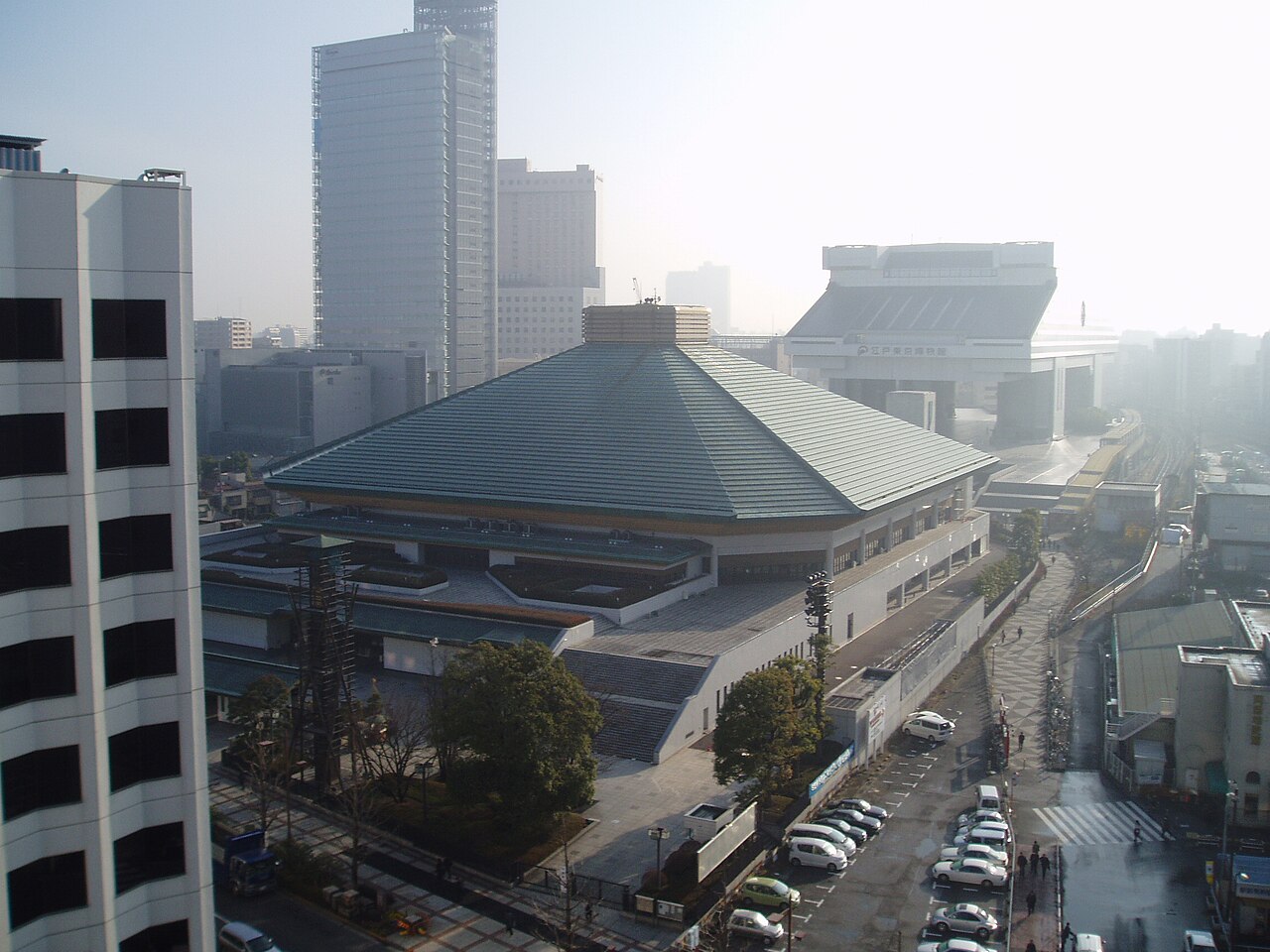
Ryōgoku Kokugikan is the principal indoor arena for professional sumo wrestling in Tokyo, located in the Ryōgoku district. The facility serves as headquarters for the Japan Sumo Association and hosts three of the six annual honbasho tournaments. The building stands as a recognizable landmark in an area deeply associated with sumo culture, with nearby streets reflecting this heritage through chanko restaurants and wrestler stables. The current structure replaced earlier versions destroyed during wartime.
Checked 2026-08-31 · Source
The interior features a competition dohyō ring at center, surrounded by tiered spectator seating that includes traditional floor cushions and Western-style chairs. The venue contains exhibition spaces displaying sumo-related artifacts and historical materials. A small museum or gallery area presents tournament memorabilia, ceremonial aprons, and portraits of past champions. The basement level reportedly houses practice facilities and training areas. The building also accommodates administrative offices for sumo governance. Visitor amenities include basic concessions and merchandise outlets.
Checked 2026-08-31 · Source
A typical visit for tournament spectators spans several hours, as individual bouts occur throughout the day with the most prominent matches scheduled in late afternoon. Non-tournament visits to exhibition areas may require substantially less time. Visitors should anticipate extended durations if attending the full competition program, which traditionally progresses from lower-ranked wrestlers toward headline matches. Those exploring the surrounding Ryōgoku neighborhood for related cultural sites may wish to allocate additional hours. Personal pacing depends entirely on interest level and schedule constraints.
Checked 2026-08-31 · Source
The arena has no regular sightseeing hours and opens for ticketed events. The first-floor Sumo Museum normally opens Monday–Friday 10:00–16:30, with last entry at 16:00; during Tokyo Grand Sumo tournaments it opens daily 12:30–16:00 for tournament ticket holders. On 2026-08-31 the Sumo Museum was closed for an exhibition change from 2026-08-21 through 2026-09-12. Its regular closure days are Saturdays, Sundays, national holidays, the year-end/New Year period and exhibition-change closures; Tokyo tournament days are an exception. A museum visit does not include entry to the arena. These tournament periods represent peak visitation when advance planning becomes essential. Outside tournament dates, the building may offer limited public access or operate primarily as an administrative facility. The Ryōgoku district remains accessible year-round, with the exterior architecture visible regardless of interior accessibility. Seasonal considerations for Tokyo generally apply.
Checked 2026-08-31 · Source
There is no walk-in sightseeing admission to the arena; entry requires an event ticket. For the September 2026 Tokyo Grand Sumo Tournament, the lowest listed general ticket was Chair C at JPY 3,500 on weekdays or JPY 4,000 on weekends and national holidays; the tournament was sold out on 2026-08-31. The Sumo Museum is free on ordinary open days, but a Grand Sumo ticket is required during Tokyo tournament dates. Seating categories traditionally range from general admission to premium reserved areas with substantial price differentiation. Same-day tickets may be available in limited quantities for certain sections, but this cannot be guaranteed. Advance purchase through official channels is strongly recommended during tournament periods given high demand. Non-tournament access policies and any associated costs should be confirmed directly with venue management.
Checked 2026-08-31 · Source
JR Sobu Line local trains: Ryogoku Station West Exit, about 2 minutes on foot. Toei Oedo Line: Ryogoku Station Exit A3, about 5 minutes on foot. Tokyo Mizube Line river service: Ryogoku landing, about 3 minutes on foot. The venue has no general visitor parking. This is the named approach for an independent visit. The venue sits in Ryōgoku, accessible via JR East lines at Ryōgoku Station and Toei Oedo Line at nearby stations. The area lies east of central Tokyo across the Sumida River. Walking from either station requires modest time through neighborhood streets. The district connects to broader Tokyo transit networks, though specific journey durations depend on origin point. Visitors unfamiliar with Tokyo rail systems should consult current route planners.
Checked 2026-08-31 · Source
Dedicated wheelchair seating is available for Grand Sumo, but advance telephone reservation is required. The wheelchair user enters with their companion through the front wheelchair entrance; the companion sits directly behind rather than beside the wheelchair user. Wheelchairs 65 cm or wider must be declared when booking, and the venue does not lend wheelchairs. The official arena plan marks wheelchair seating, elevators and accessible toilets. Limited wheelchair-user parking is available only by advance reservation and on a first-come basis. The access description applies to the documented visitor route. The venue enforces behavioral expectations consistent with sumo tradition, including respectful conduct during matches. Photography restrictions apply during competitions, with specific rules varying by seating location. Food and beverage policies may limit outside items. The floor seating areas require removing footwear, and visitors should prepare accordingly.
Checked 2026-08-31 · Source
Photography policies differ substantially between tournament and non-tournament periods. During active competitions, restrictions typically prohibit flash photography and may limit camera equipment types permitted in seating areas. Professional-grade equipment often faces prohibition without prior authorization. Non-tournament visits to exhibition spaces may permit more flexible photography, though specific rules should be verified on-site. The exterior architecture and surrounding Ryōgoku streets generally allow unrestricted photography. Visitors should observe posted signage and staff instructions without assumption. Respect for active competitors and ceremonial proceedings takes precedence over documentation. Drone operation would face standard Japanese aviation regulations and urban restrictions.
Checked 2026-08-31 · Source
No. The museum occupies the first floor of Ryōgoku Kokugikan, but museum admission does not include access to the arena.
The three Tokyo tournaments run January 11–25, May 10–24 and September 13–27, 2026.
The September tournament runs September 13–27, 2026, and the Japan Sumo Association listed it as sold out on August 31.
Doors open at 08:45 on days 1–12, 10:30 on days 13–14 and 10:00 on the final day.
Yes. Visitors aged four and older require their own admission ticket.
Yes. One re-entry is allowed per day, and the ticket stub must be retained for inspection.
Loading the interactive map…
The interactive map could not be loaded.
Last updated:
Source: OpenStreetMap contributors, Wikidata ·