
8 min walk
Kanda-myōjin
- Must see · Heritage site
- Place of worship
Language · 11 published
Activity · Tokyo
秋葉原
Reviewed by Elena Voss · Roavina Travel Editor
| Monday | 00:00 – 23:59 |
|---|---|
| Tuesday | 00:00 – 23:59 |
| Wednesday | 00:00 – 23:59 |
| Thursday | 00:00 – 23:59 |
| Friday | 00:00 – 23:59 |
| Saturday | 00:00 – 23:59 |
| Sunday | 00:00 – 23:59 |
Checked 2026-08-31 · Source
Read from the OpenStreetMap access tags; anything not listed has no tag recorded.
Set the group type to family in the planner and the day window contracts to about three quarters of a solo day.
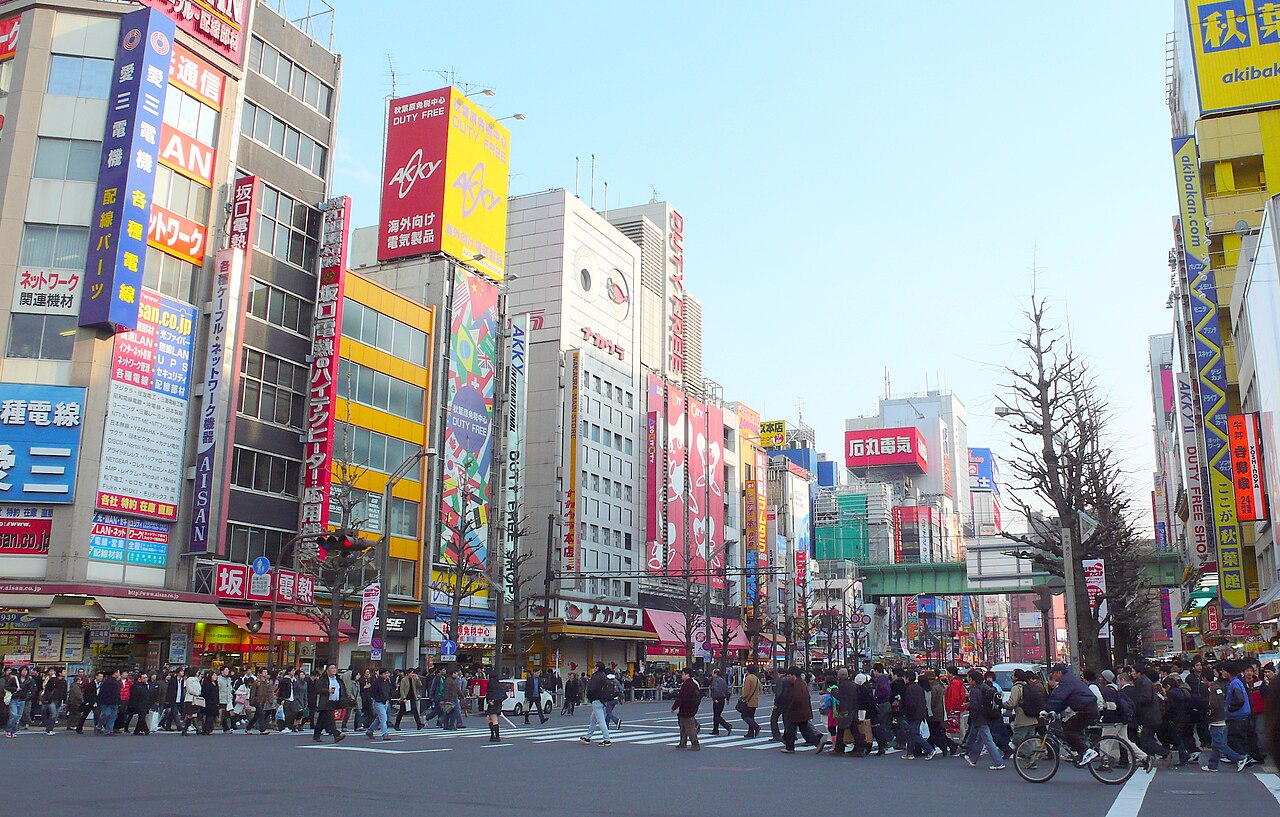
Akihabara is a district in central Tokyo known for electronics retail and otaku culture. The area developed from a post-war black market for radio parts into a major commercial hub. It occupies a portion of Chiyoda Ward, with the main retail strip concentrated along Chuo-dori avenue and the side streets radiating from the station area. The district's identity has shifted substantially over decades, from household appliance dominance in the twentieth century to anime, manga, and gaming specialisation in recent years.
Checked 2026-08-31 · Source
The area contains numerous electronics stores of varying scales, from large multi-floor retailers to small component vendors. Specialty shops dedicated to anime, manga, and related merchandise occupy substantial retail space. Maid cafes and themed dining establishments operate throughout the district. Game arcades and pachinko parlours are present in significant numbers. Second-hand goods stores trade in collectibles and vintage electronics. Some establishments cater to adult-oriented content, a characteristic visitors should be aware of when exploring side streets and upper floors.
Checked 2026-08-31 · Source
A brief circuit of the main retail streets can be completed in under one hour. Visitors with specific shopping interests typically allocate half a day to explore relevant stores thoroughly. Those engaging with hobby shops, arcades, and themed cafes may extend their visit across a full day. The dense concentration of businesses means that even short visits yield substantial visual exposure to the district's commercial character. Return visits are common for those tracking merchandise releases or seasonal promotional events tied to specific product cycles.
Checked 2026-08-31 · Source
Public streets are accessible daily; shops, floors, and individual facilities set their own opening hours. There is no district-wide closure day. On Sundays, the 570-metre section of Chuo-dori between Sotokanda 5-chome and Manseibashi becomes pedestrian-only from 13:00 to 18:00 in April–September and 13:00 to 17:00 in October–March. The pedestrian zone is cancelled for rain, strong winds, storms, or expected severe weather. Akihabara operates as a commercial district without unified opening or closing times. Individual businesses set their own schedules, with electronics retailers typically opening mid-morning and operating into evening hours. Some establishments, particularly restaurants and entertainment venues, operate late into the night. Sundays see partial pedestrianisation of Chuo-dori, facilitating movement.
Checked 2026-08-31 · Source
Free to enter and walk around Akihabara. Individual shops, cafés, and attractions set their own prices. Akihabara itself requires no admission fee as it is a public urban district. Individual attractions, stores, arcades, and cafes set their own pricing structures. Some merchandise outlets operate on fixed retail pricing; others, particularly second-hand goods vendors, use variable pricing. Maid cafes typically charge cover fees or set menu minimums. Arcade gaming requires per-play payment. Visitors should carry sufficient cash, as not all establishments accept card payments, particularly smaller vendors and older businesses.
Checked 2026-08-31 · Source
Use Akihabara Station, served by the JR Yamanote, Keihin-Tohoku, and Sobu lines, the Tokyo Metro Hibiya Line, and the Tsukuba Express. The Electric Town Exit leads toward the principal electronics and pop-culture shopping area. GO TOKYO gives journey times of about 4 minutes from Tokyo Station on the JR Yamanote Line and 18 minutes from Shinjuku Station on the JR Sobu Line. This is the named approach for an independent visit. Akihabara Station serves as the primary access point, with JR Yamanote, Keihin-Tohoku, and Chuo-Sobu lines stopping there. The Tokyo Metro Hibiya line also connects at this station. Multiple bus routes serve the surrounding area. The station features multiple exits; the Electric Town exit provides the most direct access to the main retail concentration. On foot, the district connects reasonably with neighbouring areas including Kanda and Okachimachi. Signage in Japanese and English assists navigation from station platforms to street level and toward major retail clusters.
Checked 2026-08-31 · Source
Tokyo Metro Akihabara Station has at least one continuous elevator route between street level, the ticket gates, and the Hibiya Line platforms. Elevators connect the JR Akihabara Station-side ticket gate with street-level Exit 3. A wheelchair-accessible toilet with ostomate facilities is outside the gates beside the station office. The confirmed step-free information covers the station arrival route, not every independently operated shop or venue in the district. The access description applies to the documented visitor route. Street solicitation for maid cafes and similar establishments occurs frequently in the main pedestrian areas. Visitors should exercise standard caution regarding aggressive touting. Some retail spaces occupy multi-floor buildings with narrow staircases and limited accessibility provisions. Crowd density increases substantially on weekends and during major product release periods. Electrical standards and voltage differ from many countries; purchasing electronics requires attention to compatibility.
Checked 2026-08-31 · Source
The dense signage and architectural layering create visually distinctive streetscapes. Storefront displays, particularly for anime and gaming merchandise, present colourful subjects. Photography inside commercial establishments is frequently prohibited or restricted; signage typically indicates policy, though Japanese-language notices may predominate. Staff may intervene if visitors photograph products or displays without authorisation. Street-level photography of building exteriors and general district atmosphere generally encounters fewer restrictions. Night photography benefits from the substantial artificial illumination. Drone operation would face substantial regulatory constraints in this dense urban environment and is not advisable without proper permits.
Checked 2026-08-31 · Source
Akihabara is Tokyo's principal electronics and otaku-culture district, with specialist shops for computers, electronic parts, anime, manga, games, figures, and retro gaming.
Akihabara Station is served by the JR Yamanote, Keihin-Tohoku, and Sobu lines, the Tokyo Metro Hibiya Line, and the Tsukuba Express.
Use the Electric Town Exit for the principal electronics, anime, manga, and hobby-shopping streets.
Chuo-dori becomes pedestrian-only on Sundays from 13:00 to 18:00 between April and September and from 13:00 to 17:00 between October and March; severe weather can cancel it.
It covers approximately 570 metres of Chuo-dori between the Sotokanda 5-chome intersection and the Manseibashi intersection.
Riding bicycles, street selling, performances, and street concerts are prohibited within the pedestrian-only section.
Loading the interactive map…
The interactive map could not be loaded.
Last updated:
Source: OpenStreetMap contributors, Wikidata ·