
7 min walk
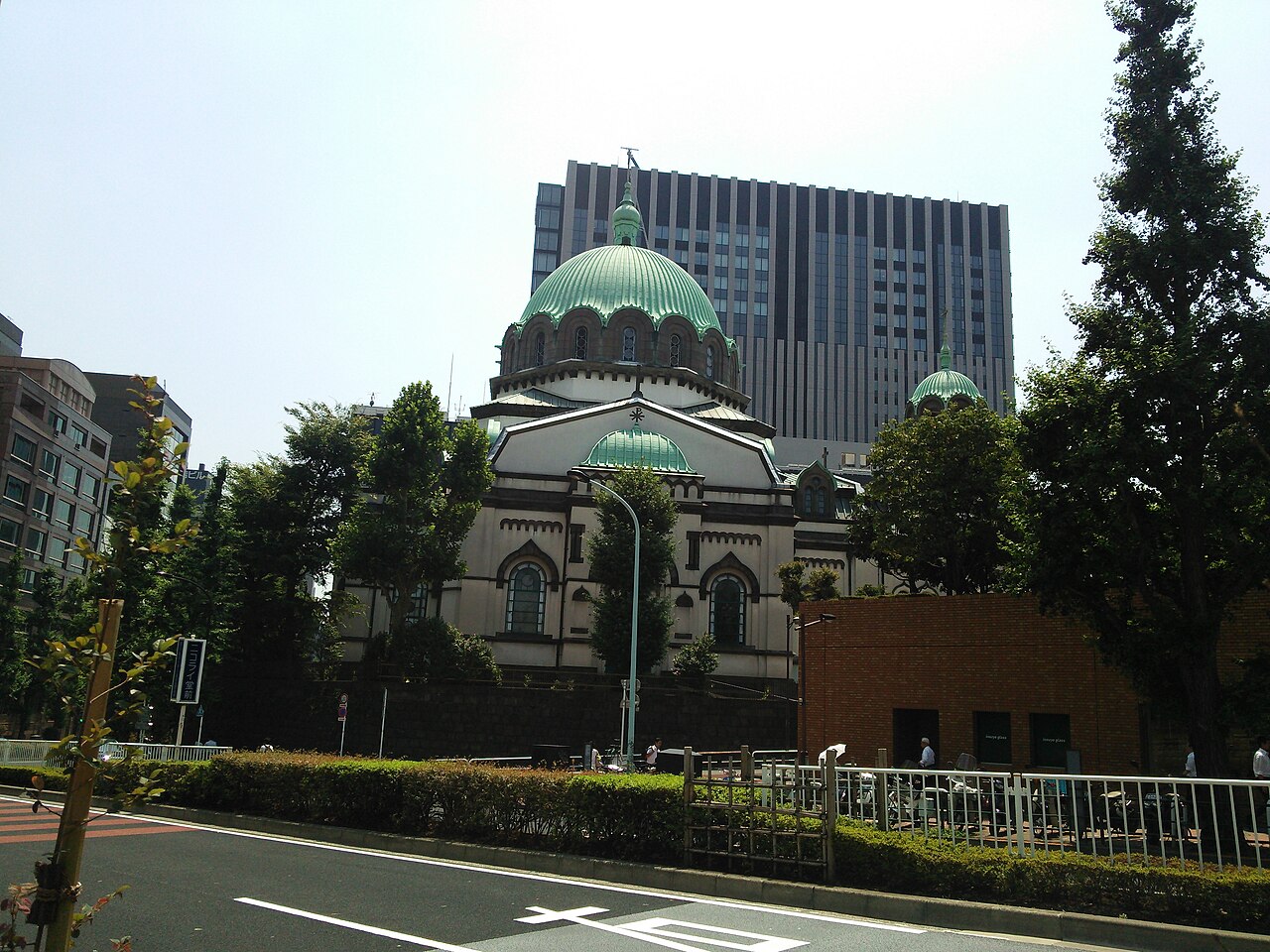
Holy Resurrection Cathedral
- High · Heritage site
- Place of worship
Language · 11 published
Place of worship · Tokyo
神田明神
Reviewed by Elena Voss · Roavina Travel Editor
This place is a Place of worship. It was established in 730. It was built in the Ishi-no-ma-zukuri style. It is built of concrete. It carries the Registered Tangible Cultural Property of Japan heritage designation.
Kanda Shrine, also called Kanda Myojin, is an active Shinto shrine in Tokyo. The shrine has served as an important religious site for generations and is associated with protecting Edo, the former name for Tokyo. Travelers can experience it as both a place of worship and a cultural landmark in the city center. Its significance comes from the continuity of religious practice, the shrine’s relationship with Tokyo’s history, and the way sacred grounds remain part of a busy metropolitan environment. Visit with curiosity, but let worship remain the priority. Many Shinto shrines in Japan do not charge general admission, but visitors should verify current policy independently.
Checked 2026-08-26 · Source
The shrine grounds follow the familiar visual language of Shinto architecture. A torii marks the approach, while the main hall forms the central place for prayer and ceremony. Auxiliary structures, gates, ritual spaces, offerings, and decorative details complete the precinct. Visitors can observe the progression from the outer entrance toward the inner sanctuary, where kami are enshrined and honored. The layout is meaningful as a sequence, not only as a collection of buildings. Move slowly enough to notice the transition from Tokyo’s streets into the shrine’s more formal and sacred setting.
Checked 2026-08-26 · Source
The compact urban grounds make a brief visit possible, especially for travelers stopping to offer a prayer and observe the architecture. Allow longer if you want to follow the approach carefully, notice the gates and ritual elements, watch the activity of an active shrine, or spend time understanding its connection with Edo and Tokyo. The right pace is respectful rather than hurried. Kanda Shrine also fits well between nearby central Tokyo destinations, so it can serve as a focused cultural stop within a wider day rather than requiring a separate excursion.
Checked 2026-08-26 · Source
Kanda Shrine can be meaningful at any time of year because it remains an active place of worship. The shrine has particular importance during Kanda Matsuri, one of Tokyo’s major traditional celebrations, when the connection between the shrine and the city becomes especially visible. Outside festival periods, a quieter visit gives more space for observing the precinct, architecture, and worshippers. Weather in Tokyo changes across the seasons, but the central urban location makes the shrine easy to include in many itineraries. Leave room for ceremonies and prayer when choosing how long to stay.
Checked 2026-08-26 · Source
The main reason to visit Kanda Shrine is access to its sacred grounds, architecture, and continuing religious life. General shrine visits in Japan commonly focus on prayer and observation rather than a museum-style admission experience. Visitors may also encounter shrine services, omamori protective charms, ema votive plaques, or ceremonies connected with Shinto practice. Treat these as part of the cultural setting, and participate only when you understand what you are choosing. A respectful visit does not require rushing through the grounds; the value lies in seeing a living shrine within central Tokyo.
Checked 2026-08-26 · Source
Kanda Shrine is in central Tokyo near the Kanda and Ochanomizu districts, an area served by the city’s extensive train and subway network. Plan the shrine as a walkable stop from nearby transit points and place it between other central Tokyo destinations. The urban approach changes quickly as streets lead toward the shrine precinct, where the torii and gates create a clear shift in atmosphere. Because the shrine sits in a well-connected central area, it fits naturally into a day focused on Tokyo’s historic, commercial, and cultural neighborhoods.
Checked 2026-08-26 · Source
Kanda Shrine is an active religious site, so keep voices low, avoid interrupting prayers or ceremonies, and follow the movement and customs of worshippers. Use purification facilities appropriately and treat sacred objects, offerings, and buildings with care. Dress respectfully and remember that the grounds are not simply a backdrop for tourism. Tokyo’s central streets can be busy around the approach, while weather changes may make outdoor walking uncomfortable. Give ceremonies priority over sightseeing, and choose behavior that leaves worshippers undisturbed.
Checked 2026-08-26 · Source
The torii, gates, main hall, auxiliary structures, decorative details, and approach provide strong architectural subjects at Kanda Shrine. Photograph the precinct as a sacred environment, keeping a respectful distance from worshippers and avoiding intrusive images of prayers or ceremonies. Look for the contrast between traditional forms and the surrounding central Tokyo setting. Let posted signs and staff guidance determine where photography is appropriate. A quiet, restrained approach is better than chasing a dramatic image, especially when other visitors are using the grounds for religious reasons.
Checked 2026-08-26 · Source
Kanda Shrine is an active Shinto shrine associated with protecting Edo, the former name for Tokyo, and with the Kanda Matsuri festival.
The precinct includes a torii, gates, the main hall, auxiliary structures, ritual spaces, offerings, and Shinto decorative elements.
Kanda Matsuri is a major traditional celebration connected with Kanda Shrine and is one of Tokyo’s important festivals.
Keep quiet, respect worshippers and ceremonies, use ritual spaces appropriately, and treat the shrine as an active place of worship.
The compact grounds support a brief visit, while prayer, careful observation, ceremonies, and cultural interest can make the visit longer.
The torii, gates, main hall, traditional architecture, decorative details, and contrast between the shrine and central Tokyo are suitable subjects.
Loading the interactive map…
The interactive map could not be loaded.
Last updated:
Source: OpenStreetMap contributors, Wikidata ·