

07
45 min
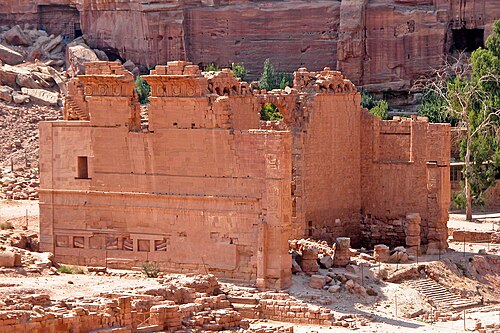
Qasr al-Bint
قصر البنت
Qasr al-Bint, meaning Palace of the Daughter or Maiden, stands as one of Petra's most significant freestanding ancient structures.
- Must see
- Historic monument
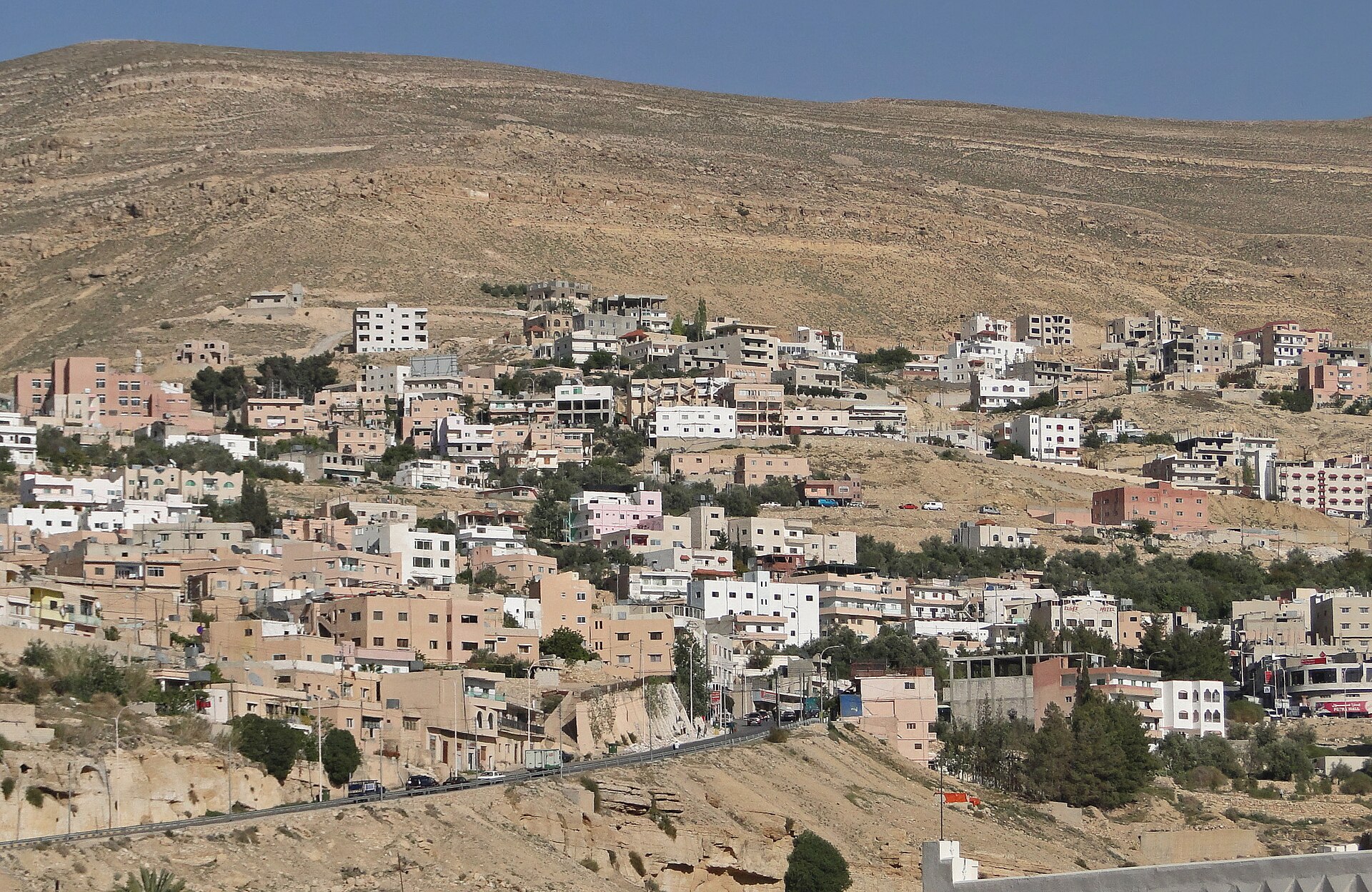
- Wadi Musa
Country guide
Jordan is 89,342 km2 and held 11,484,805 people in 2023, and for a visitor the country is arranged along one line. It runs south from Amman, the most populous c...
Photograph · Diego Delso · CC BY-SA 3.0
Reviewed by Elena Voss · Roavina Travel Editor
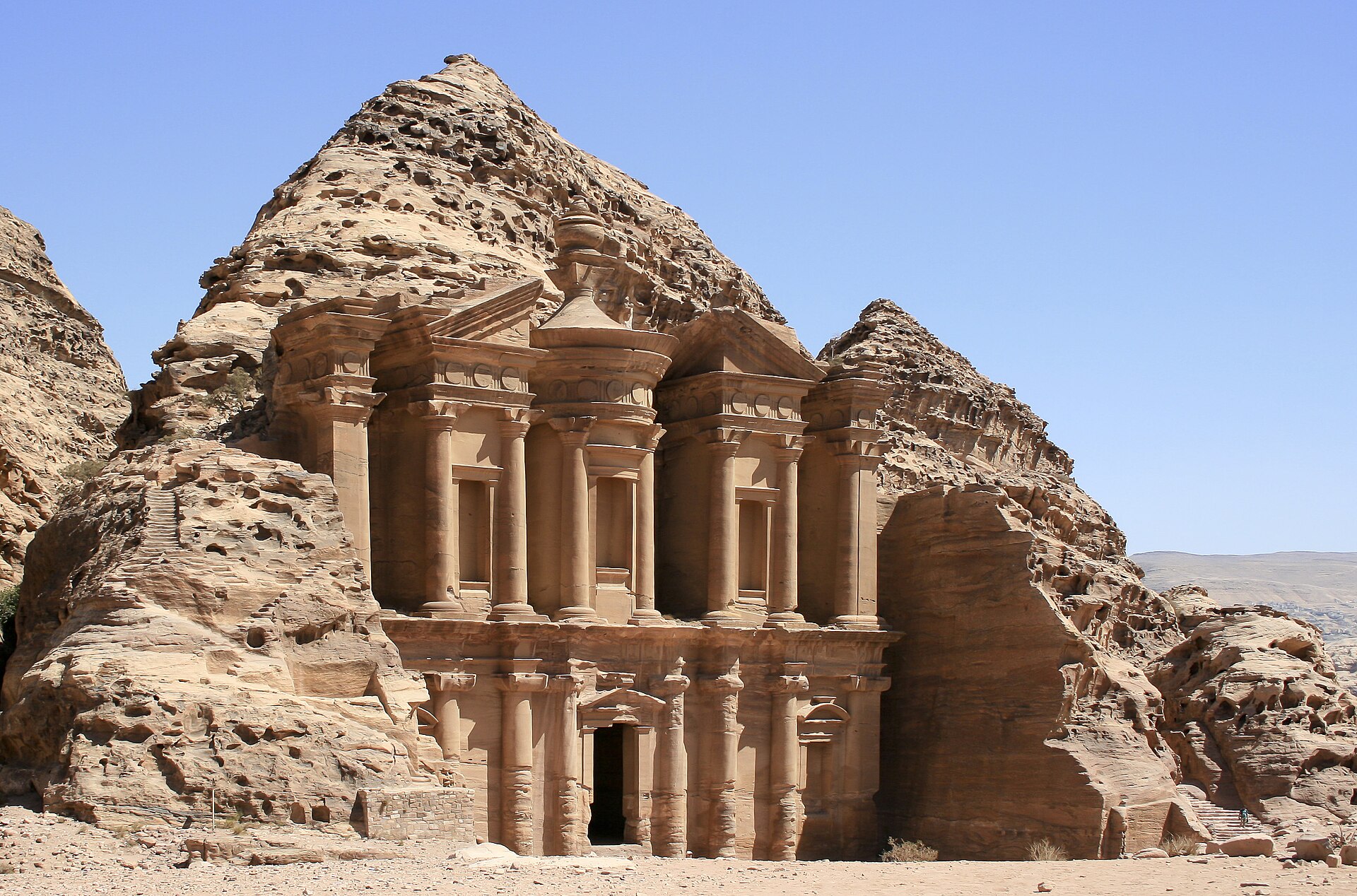
Jordan is 89,342 km2 and held 11,484,805 people in 2023, and for a visitor the country is arranged along one line. It runs south from Amman, the most populous city in the Levant, through the Jordan Rift Valley and past the Dead Sea to Petra, then ends at the short stretch of Red Sea coast in the far south-west. Petra, one of the New 7 Wonders of the World, is the reason most people come, and it is a long drive from the capital rather than an excursion from it. East of that line the country is semi-arid and thinly settled.
Checked 2026-08-25
Every city catalogued in this country so far, ranked by how much there is to see.
Photograph · Bernard Gagnon · CC BY-SA 3.0
Ranked by importance — sitelinks, pageviews and heritage status, not editor preference.
39 places match
Category
Typical visit duration
Interests
قصر البنت
Qasr al-Bint, meaning Palace of the Daughter or Maiden, stands as one of Petra's most significant freestanding ancient structures.
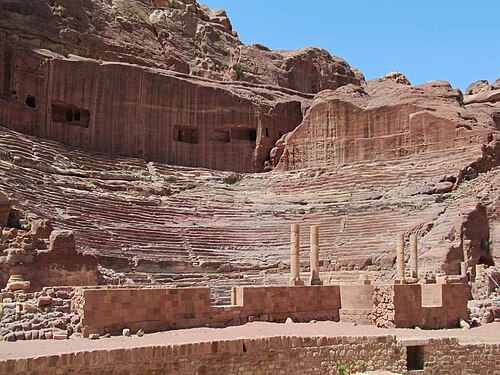
The Theater
Petra Theatre is a major archaeological monument within the ancient Nabataean city of Petra, Jordan. Carved partially into rock and built with freestanding masonry, this theatre represents one of the most significant surviving structures of Nabataean engineering.
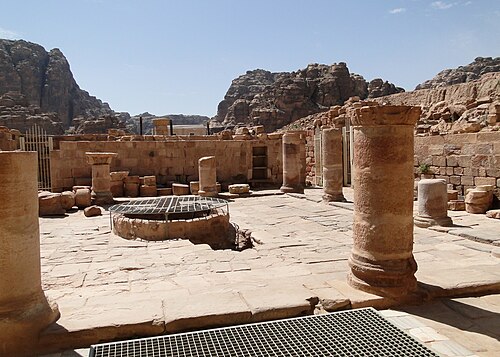
Byzantine Church
The Byzantine Church at Petra is a late-antique religious structure situated within the ancient Nabataean city in southern Jordan. Archaeological evidence indicates the church was constructed during the Byzantine period, after Petra's decline as a major trade center.
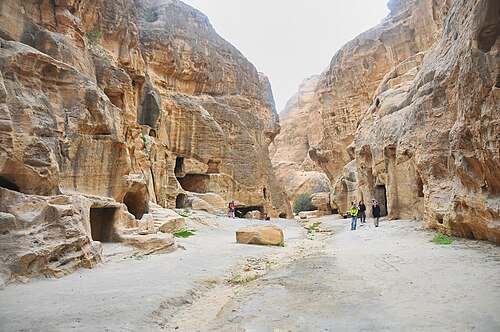
البتراء الصغيرة
Little Petra, also called Siq al-Barid, is a Nabataean archaeological site north of the main Petra complex in southern Jordan. Its name refers to the cool, narrow canyon through which visitors enter.
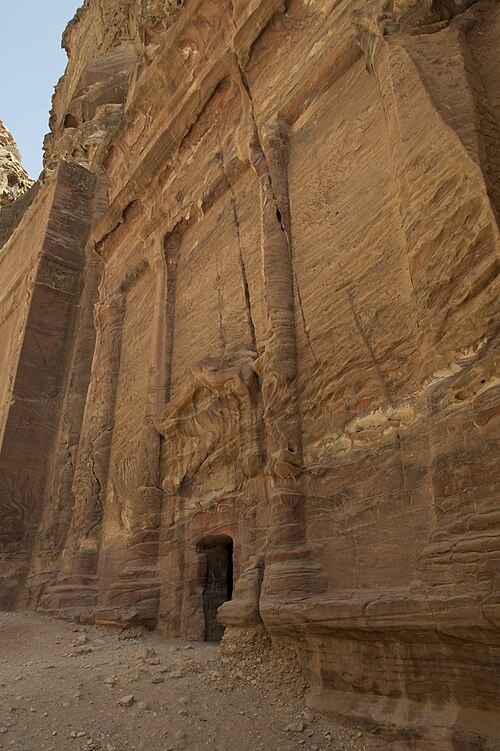
The Street of Facades is a dense corridor of rock-cut tomb fronts inside Petra’s archaeological park. It follows the route beyond the Siq and presents a sequence of sandstone facades in different sizes and styles.
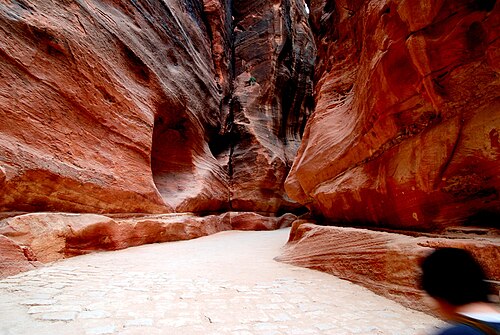
The Colonnaded Street is a major ancient thoroughfare within the Petra archaeological site in Jordan. It represents a significant urban feature of the Nabataean and later Roman city, serving as a principal processional and commercial route.
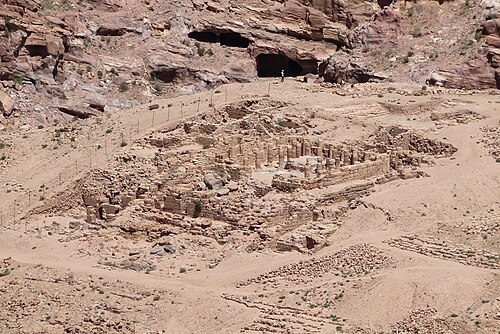
The Temple of the Winged Lions is a Nabataean religious complex within Petra’s archaeological park. Its name comes from winged lion figures carved on the capitals of its columns.
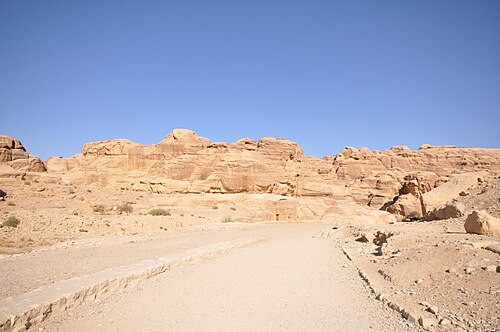
Bab al-Siq is the gateway entrance to the Siq, the narrow gorge that serves as the main approach to the ancient Nabataean city of Petra in southern Jordan.
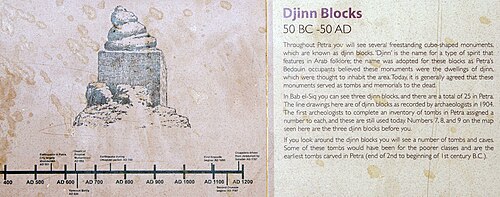
Djinn Blocks are among the oldest surviving monuments at Petra, predating the elaborate Nabataean rock-cut facades that made the city famous. These simple, cube-shaped stone structures stand near the park entrance and represent an early phase of Nabataean funerary architecture.
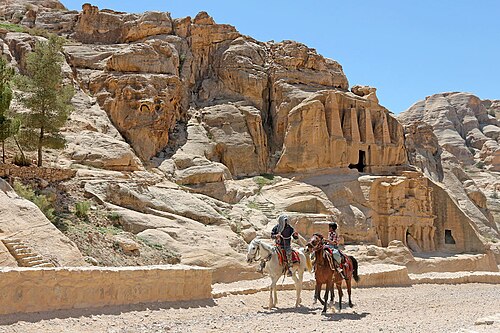
The Obelisk Tomb stands at the entrance to the Siq, the narrow gorge leading into Petra. It is among the first monuments visitors encounter when approaching the ancient Nabataean city.
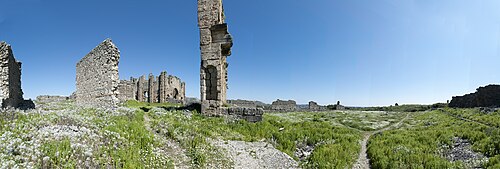
Nymphaeum is a monumental fountain on Petra’s main colonnaded street in southern Jordan. It belongs to the central urban area, where public architecture, movement and water management once came together.
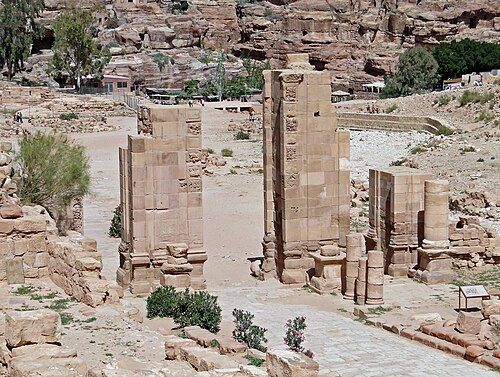
Temenos Gate is a monumental gateway within the Petra archaeological park in southern Jordan. It stands as a significant architectural feature along the ancient processional route through the city.
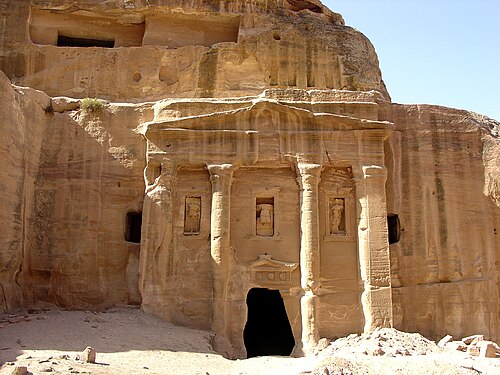
Roman Soldier's tomb
The Tomb of the Roman Soldier is a rock-cut burial monument within the Petra archaeological park in southern Jordan.
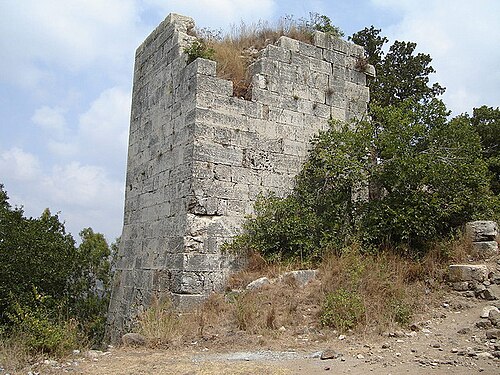
Crusaders Castle
Al-Habis Crusader Fort, also known as Jebal el Habis, is a medieval hilltop fortification within the Petra landscape.
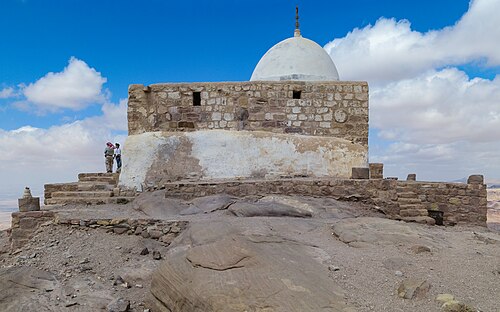
ضريح النبي هارون
The Tomb of Aaron is a small shrine on Jabal Harun near Petra, traditionally associated with Aaron, the brother of Moses.
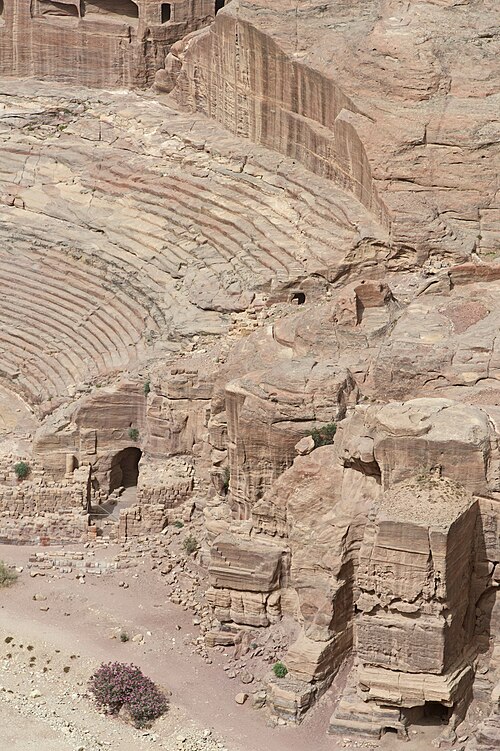
Jebel Khabtha
Jabal Khabathah is a named mountain in the Petra area, identified locally with the Arabic name جبل خباثة- الخبزة. It belongs to the rugged sandstone landscape surrounding the archaeological park and offers a topographic counterpoint to Petra’s carved monuments.
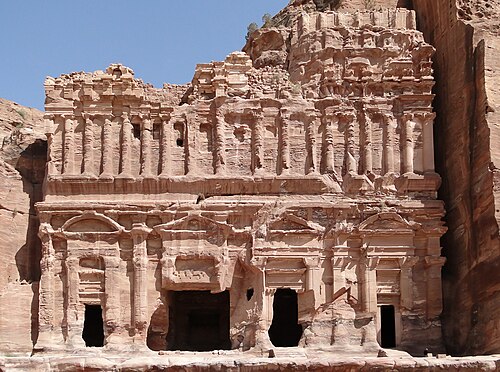
Sextius Florentinus Tomb
The Tomb of Sextius Florentinus is a rock-cut funerary monument within Petra’s extensive archaeological park. Its name connects the tomb with Sextius Florentinus, a Roman official, illustrating the layered history of a Nabataean city that later came under Roman influence.
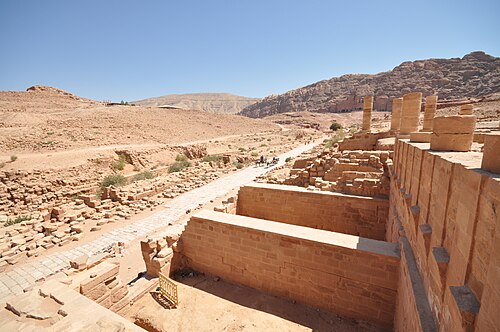
Garden and Pool Complex
Petra Pool and Garden Complex is an archaeological feature within Petra’s ancient city in southern Jordan. The name points to the relationship between water and cultivated space, two elements that were especially significant in a dry landscape.
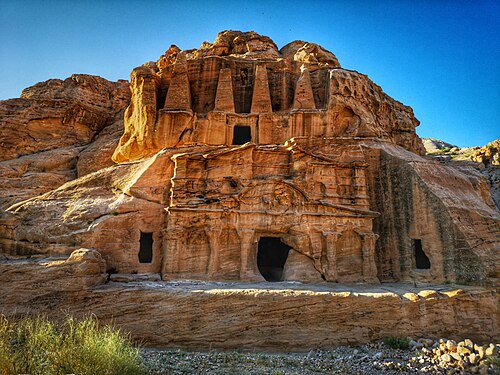
Bab al-Siq Triclinium
Bab al-Siq Triclinium is a named Nabataean rock-cut dining chamber in Petra, set in the Bab al-Siq approach before the route narrows into the Siq.
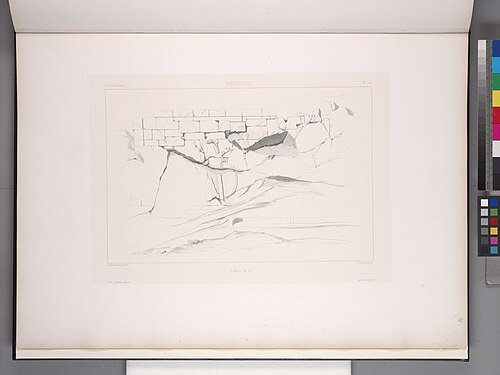
The Unfinished Tomb is a rock-cut monument within the Petra archaeological park in southern Jordan. It demonstrates Nabataean craftsmanship interrupted mid-process, with visible chisel marks and partially carved facades revealing ancient construction techniques.
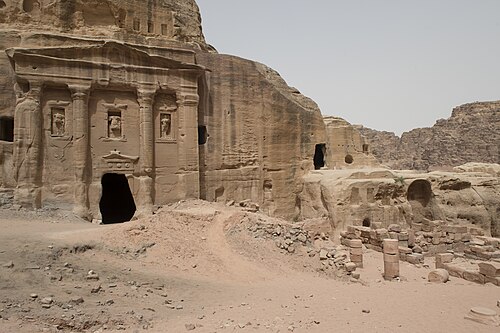
Renaissance Tomb is a named monument within Petra's archaeological park in southern Jordan. It belongs to the city's collection of rock-cut tombs and facades, where sandstone cliffs were shaped into funerary architecture.
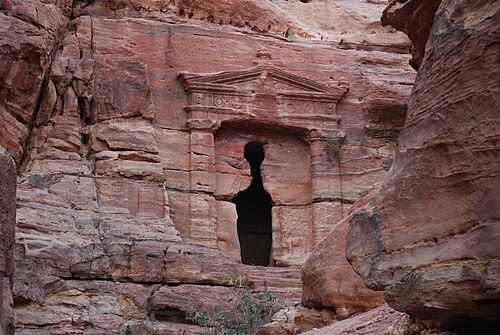
Lion Triclinium
The Lion Triclinium is a rock-cut monument within the Petra archaeological park in southern Jordan. It takes its name from two eroded lion sculptures that flank its entrance.
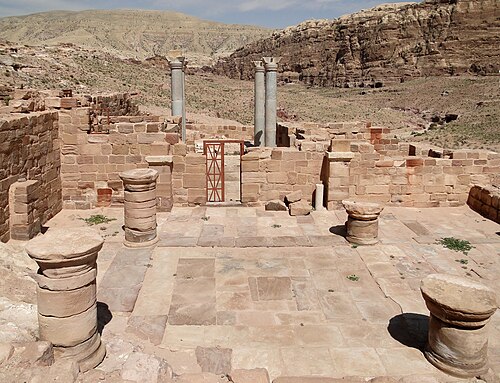
Blue Chapel
The Blue Chapel is a named monument within the Petra archaeological park in Jordan. It derives its name from the blue-toned Egyptian granite columns that distinguish it from other structures in the ancient Nabataean city.
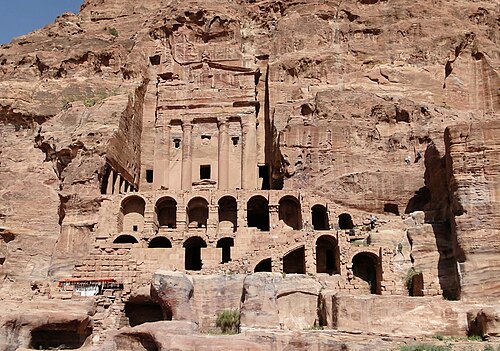
Urn Tomb
Urn Tomb is one of Petra's major rock-cut funerary monuments. Its name comes from the urn that crowns the facade, while its elevated position gives it a commanding relationship with the valley below.

Snake Monument is a named feature within Petra's archaeological park in southern Jordan. Its name gives the stop a distinctive identity among the ancient city's carved facades, tombs, trails and natural sandstone formations.
Seven to ten days allows Amman, Petra, Wadi Rum and the Dead Sea to form a workable north-to-south route. Give Petra at least two nights in Wadi Musa if the visit should extend beyond the Treasury approach, and treat Wadi Rum as a separate stay.
Jordan’s Ministry of Interior e-services should be checked for the passport, entry point and intended stay. Visa-on-arrival assumptions are risky because eligibility can depend on nationality and border crossing; confirm the rule before purchasing a land or air connection.
Queen Alia Airport serves the main arrival flow. Scheduled coaches link several visitor centres, but a rental car, licensed driver or organised transfer provides more control for Petra, Wadi Rum and the Dead Sea; Amman itself relies on road transport.
Spring and autumn reduce the temperature extremes between Amman, Petra and Wadi Rum. Winter nights in the highlands and desert can be cold, while summer exposure is severe at archaeological sites, so choose dates around the longest outdoor day.
Jordanian dinar is the recorded currency. Carry dinars for small purchases and road stops, verify whether Petra or tour products are prepaid, and use banks or authorised exchange counters rather than relying on an informal quoted conversion.
Save 911 for emergencies; Jordan’s recorded sockets include Types C, F and G at 230 V. Tap-water guidance is Not recorded, so obtain current advice from the accommodation or local authority, particularly when moving between Amman, Wadi Musa and desert camps.