El Badi Palace
Palais El Badi قصر البديع
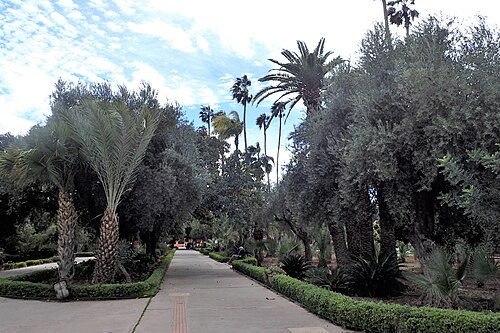
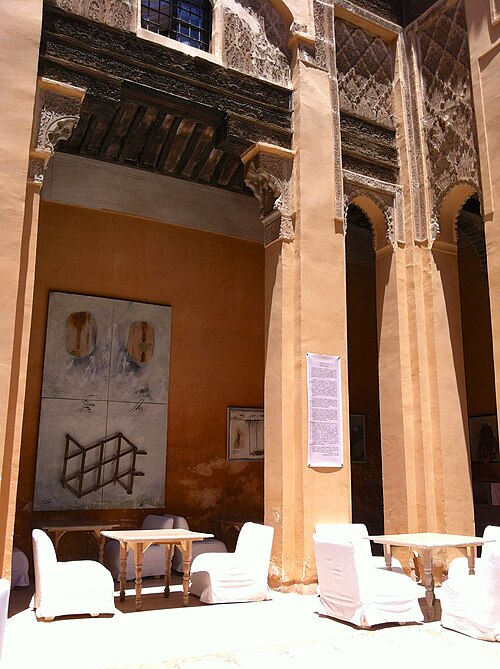
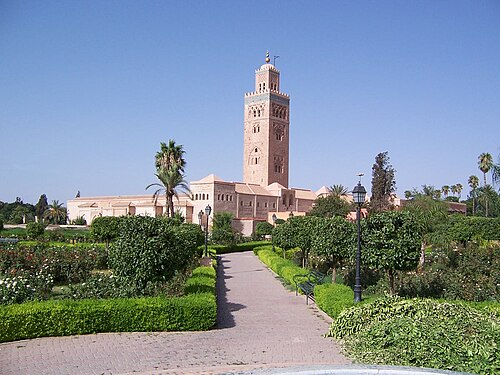
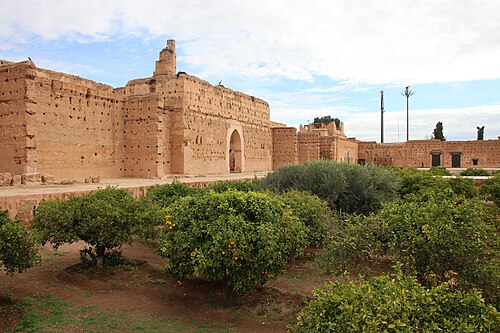
El Badi Palace is a ruined palace complex in Marrakesh, Morocco, commissioned by Sultan Ahmad al-Mansur of the Saadian dynasty in the late sixteenth century.
- Must see
- Historic monument
- Marrakesh
Country guide
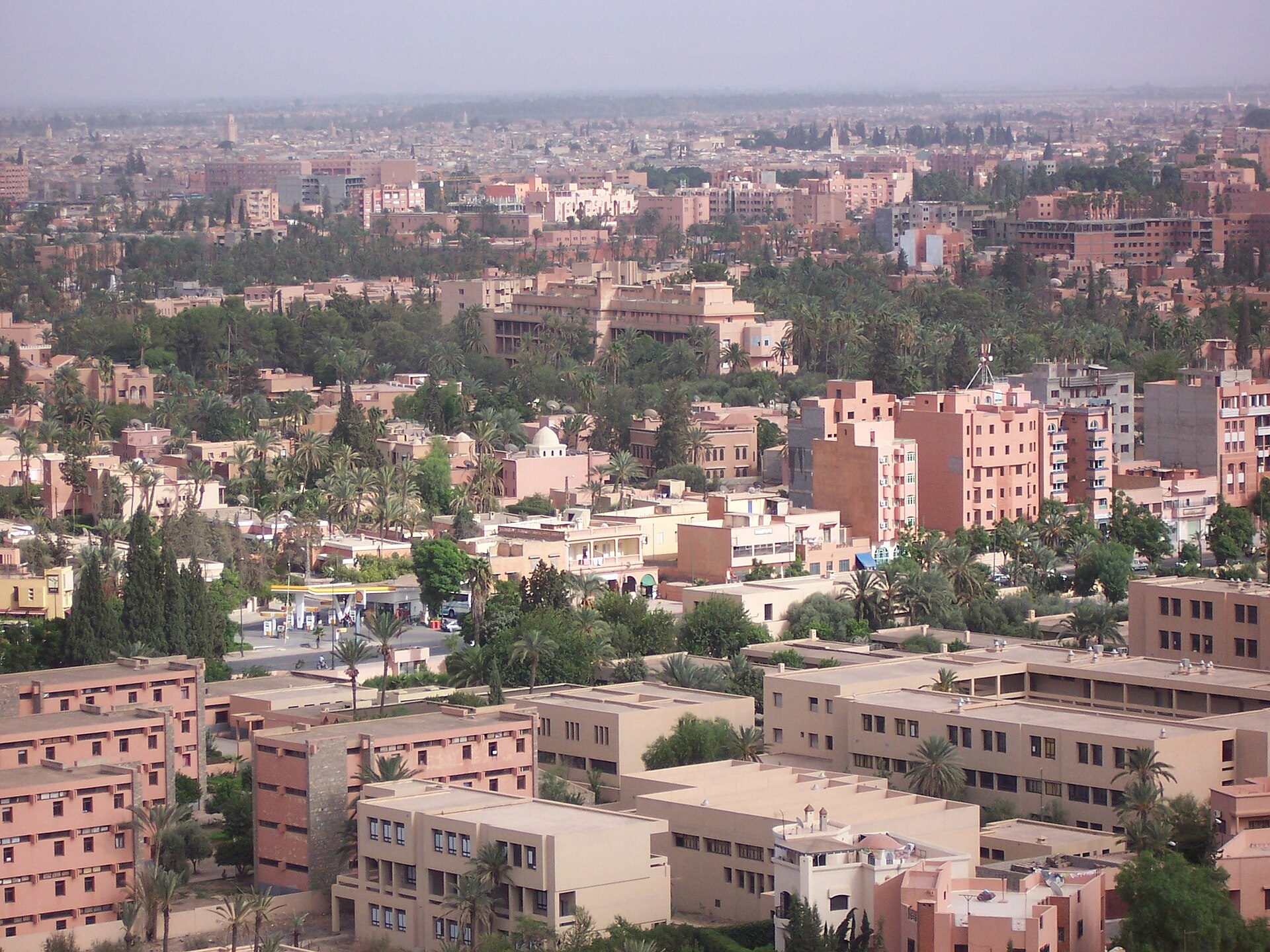
Morocco is 446,550 km2 with two coastlines, Mediterranean along the north and Atlantic down the west, and the 2024 census counted 36,828,330 people. Rabat is th...
Photograph · Petar Milošević · CC BY-SA 4.0
Reviewed by Elena Voss · Roavina Travel Editor
Morocco is 446,550 km2 with two coastlines, Mediterranean along the north and Atlantic down the west, and the 2024 census counted 36,828,330 people. Rabat is the capital and Casablanca the largest city, but neither is usually what a visitor books. The trip is normally built around the former capitals, Fes and Marrakesh, whose walled old towns are the point of coming and are covered on foot because nothing wider fits down them. Tangier faces Spain across the strait and is the shortest way in from Europe. The Atlas range separates all of it from the desert south.
Checked 2026-08-25
Every city catalogued in this country so far, ranked by how much there is to see.
Photograph · CS.D. · CC BY-SA 3.0
Ranked by importance — sitelinks, pageviews and heritage status, not editor preference.
35 places match
Category
Typical visit duration
Interests
Palais El Badi قصر البديع
El Badi Palace is a ruined palace complex in Marrakesh, Morocco, commissioned by Sultan Ahmad al-Mansur of the Saadian dynasty in the late sixteenth century.
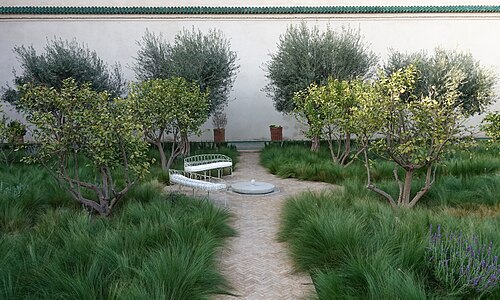
Le Jardin Secret is a restored historic riad garden situated within the medina of Marrakesh. It exemplifies traditional Islamic garden design principles, incorporating geometric layouts, water features, and vegetation arranged according to classical patterns.
Maison de la Photographie de Marrakech is a museum in Marrakesh's medina dedicated to historic Moroccan photography. It preserves and displays visual archives documenting Morocco from the late nineteenth century through the mid-twentieth century.
Almoravid Koubba القبة المرابطية
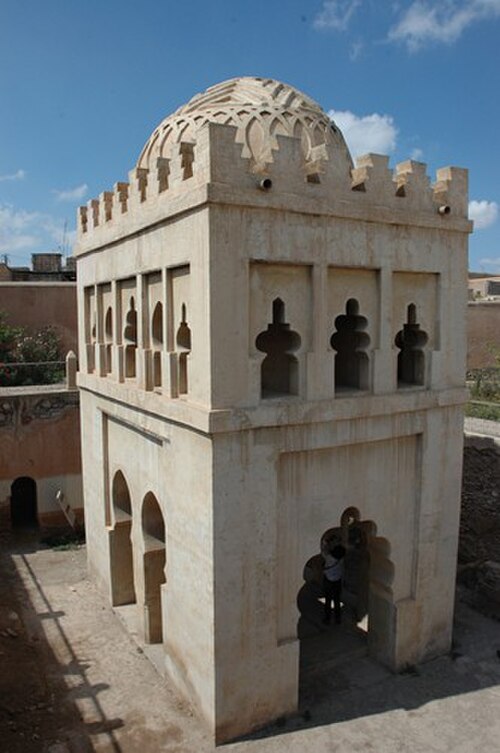
The Almoravid Qubba, known locally as Qoubba Ba'adiyn, is a small domed structure in Marrakesh, Morocco. It is one of the few surviving monuments from the Almoravid dynasty, which ruled Morocco in the 11th and 12th centuries.
The Menara Gardens constitute a historic olive grove and garden complex situated to the west of Marrakesh's medina. Established during the Almohad period in the twelfth century, the site represents one of Morocco's oldest surviving garden landscapes.
Jardin de l'Agdal
The Agdal Gardens, known locally as Jardins de l'Agdal, constitute a vast historic orchard and water landscape situated south of the medina of Marrakesh.
Bab Agnaou is a historic fortified gate in Marrakesh, Morocco, forming part of the medina's defensive walls. Constructed in the 12th century during the Almohad period, it served as a principal entrance to the royal kasbah district.
Cyber Parc Arsat Moulay Abdeslam is a restored historic garden located in central Marrakesh, positioned between the medina and the Hivernage district.
Palmeraie de Marrakech is a historic palm grove situated on the northeastern edge of Marrakesh, Morocco. It forms part of a protected cultural landscape recognized by UNESCO, standing in marked contrast to the dense urban fabric of the medina.
Anima Garden is a botanical garden and cultural space located outside Marrakesh, created by Austrian artist André Heller. The garden combines extensive plantings with integrated artworks and sculptures by international artists.
Dar Cherifa is a restored sixteenth-century riad in Marrakesh’s medina, now used as a cultural and literary venue. Its traditional Moroccan domestic form is organised around an interior courtyard, making the building itself the main attraction.
Koutoubia Gardens, or Jardins de la Koutoubia, is open green space at the base of Marrakesh’s famous Koutoubia Mosque minaret. It creates a natural pause beside Jemaa el-Fnaa and links the old medina with newer districts.
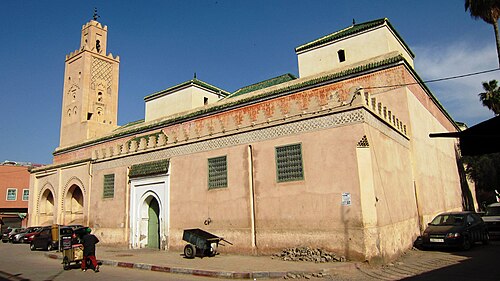
Bab Doukkala Mosque is a major sixteenth-century mosque located in the northwestern quarter of Marrakesh's medina. It stands as a significant religious and architectural landmark, giving its name to the surrounding Bab Doukkala neighbourhood and market quarter.
Bab el Khemis is a historic gate in the northern ramparts of Marrakesh’s ancient medina. Its name recalls the Thursday market associated with the area.
Bab Debbagh is a historic gate on the eastern side of Marrakesh’s medina walls. It is associated with the traditional tannery district and shows how the defensive wall system also organized movement, trade, and craft quarters.
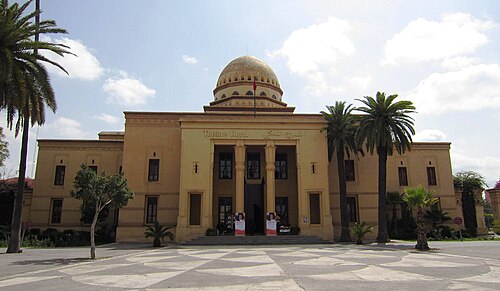
Théâtre Royal
The Royal Theatre, or Théâtre Royal de Marrakech, is a modern performing-arts venue opposite Marrakesh railway station in the Gueliz district.
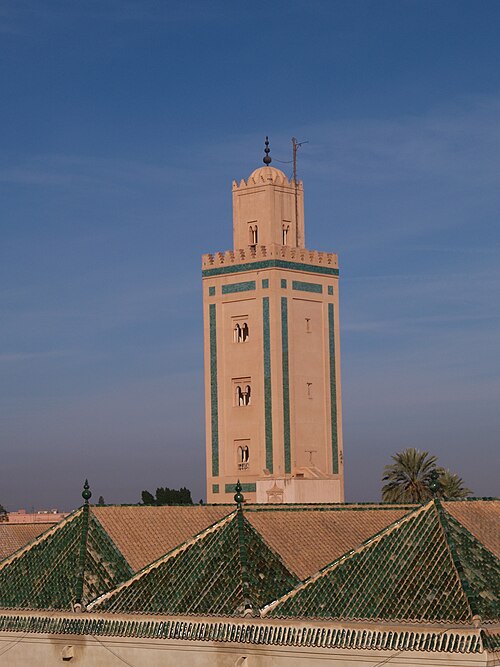
Ben Youssef Mosquée مسجد ابن يوسف
Ben Youssef Mosque is a major Almoravid-era religious landmark in Marrakesh's medina. It stands beside the famous Ben Youssef Madrasa, forming an important historical and spiritual complex in the old city.
Place du 16 Novembre is a central civic square in Gueliz, Marrakesh's modern new town. It functions as a key urban landmark and gathering point where the planned colonial-era grid meets contemporary city life.
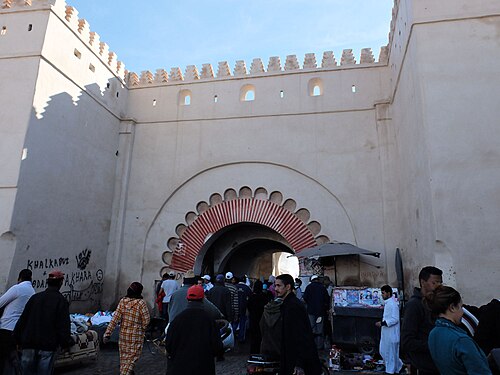
Bab Aylan is a historic gate on the eastern side of Marrakesh’s medina. It is part of the old walled city’s working urban fabric, connecting the outside streets with residential lanes, workshops, and local commerce.
Cimetière Juif Miaara
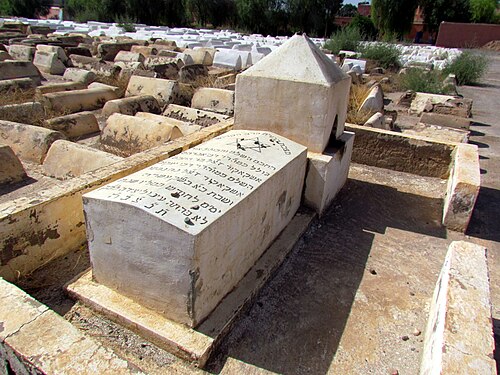
Miaara Jewish Cemetery is the principal Jewish burial ground of Marrakesh's historic Mellah. Its whitewashed tombs form a dense field of memory within the old Jewish quarter, where generations of Moroccan Jewish families were laid to rest.
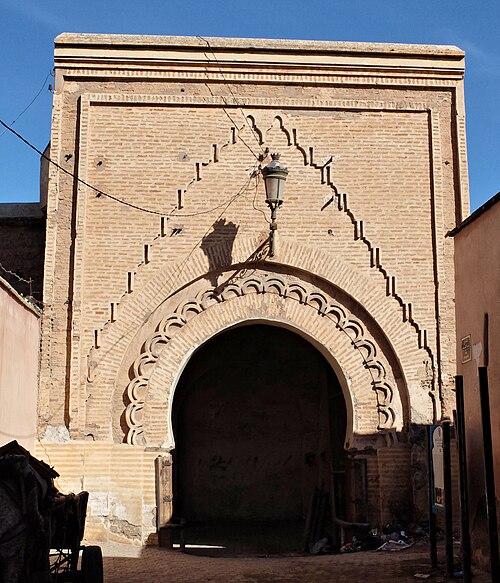
Bab Ksiba is a surviving gate of the Marrakesh medina, the historic walled old city that forms the core of visitor interest in this major Moroccan destination.
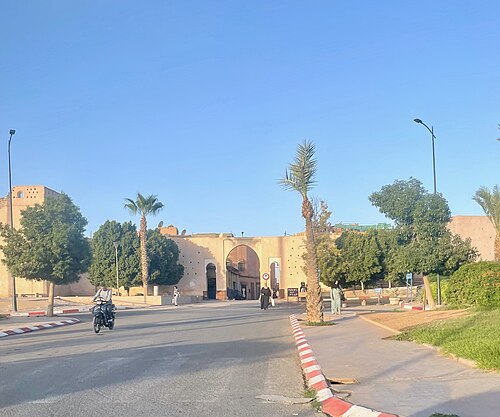
Bab Hmar
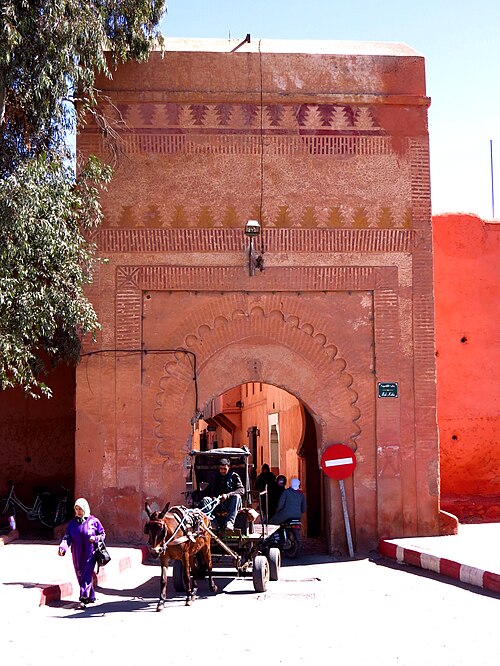
Bab Hmar is a historic city gate in Marrakesh, Morocco. The name translates to Red Gate, reflecting the distinctive ochre-colored architecture typical of the city.
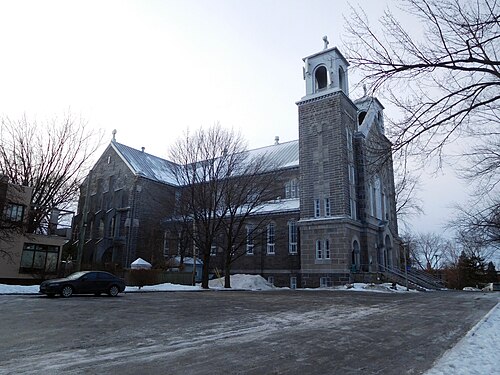
The Church of the Holy Martyrs, known locally as Eglise des Saints Martyrs, stands as a central twentieth-century church in Marrakesh's Gueliz district.
Arset El Bilk is a public garden beside Jemaa el-Fnaa in the historic core of Marrakesh. It gives pedestrians a small green pause between the square's performers, food stalls, traders, and the dense lanes of the medina.
Bab el Khemis Garden, also known locally as Jardin de Bab el Khemis, is a public green space beside Bab el Khemis gate on the northern side of Marrakesh’s ancient medina.
Eight to twelve days can join Marrakesh with one Atlantic, imperial-city or Atlas route. A desert extension needs dedicated road time and should replace, not simply be added to, another distant region.
Morocco’s Accès Maroc service is the government channel for electronic visa and travel-authorisation checks. Eligibility is passport-specific; verify the required route through that portal before committing to transport.
Casablanca and Marrakesh are the largest air gateways. ONCF trains serve the main northern and Atlantic cities, whereas mountain, desert and smaller-town journeys depend on coaches, cars or organised transfers.
March to May and September to November avoid the strongest heat on many city and inland routes. Atlas conditions, Atlantic weather and desert temperature swings require separate checks for the planned circuit.
Moroccan dirhams (MAD) are the local currency. This record does not state nationwide card coverage or exchange costs; agree the amount and method before a taxi, market or remote accommodation transaction.
Morocco distinguishes 19 for city police, 177 for the gendarmerie and 15 for fire or ambulance. Power is 220 V through Type C and E sockets, while tap-water guidance is Not recorded.