2 min walk
Gran Teatro Nacional
- High
- Art and culture venue
Museum · Lima
Museo de la Nación
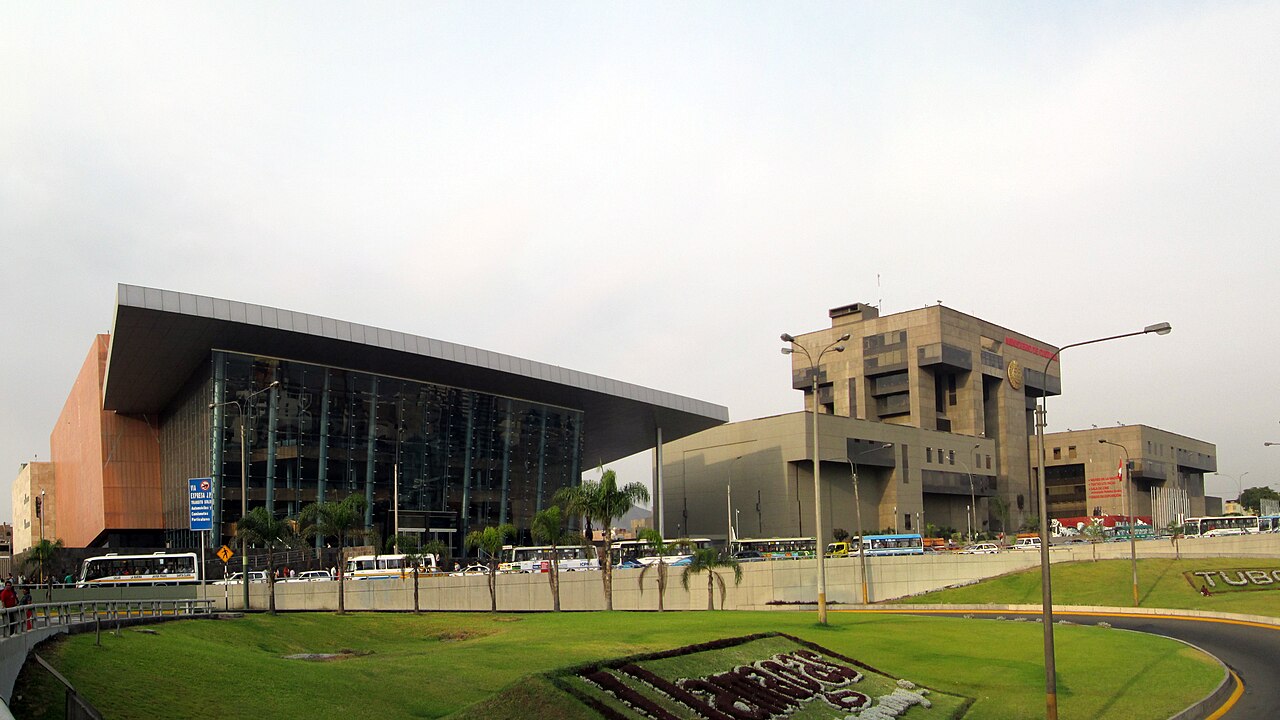
The Museo de la Nación was an archaeological museum and one of the largest in Peru, created by supreme decree under President Alan García. It occupied the Complejo Administrativo del Sector Público Pesquero, a brutalist building by the architects Miguel Cruchaga, Miguel Rodrigo and Emilio Soyer, commissioned in 1970 through a public competition to house the Ministry of Fisheries and later the seat of the Banco de la Nación until 1986. Its collection held more than 12,500 pre-Hispanic pieces and over 2,500 colonial and republican works of art.
Checked 2026-11-10 · Source
The museum's collection was closed permanently on 8 July 2014, officially for a remodelling that never took place. The building has since hosted international events such as the 2016 APEC summit and houses administrative offices of the Ministry of Culture, together with the ministry's Centro de la Cultura and the Armando Robles Godoy cinema hall. The archaeological pieces were moved to the Museo Nacional de Arqueología, Antropología e Historia del Perú in Pueblo Libre, and other pieces are to be shown at the Museo Nacional del Perú in Lurín.
Checked 2026-11-10 · Source
No. The museum's collection closed permanently on 8 July 2014; the building now houses Ministry of Culture offices.
The archaeological pieces went to the Museo Nacional de Arqueología, Antropología e Historia del Perú in Pueblo Libre; other pieces are to be shown at the Museo Nacional del Perú in Lurín.
The architects Miguel Cruchaga, Miguel Rodrigo and Emilio Soyer, whose brutalist design won a 1970 public competition.
Loading the interactive map…
The interactive map could not be loaded.
Last updated:
Source: OpenStreetMap contributors, Wikidata ·