.JPG)
2 min walk · Stari Grad
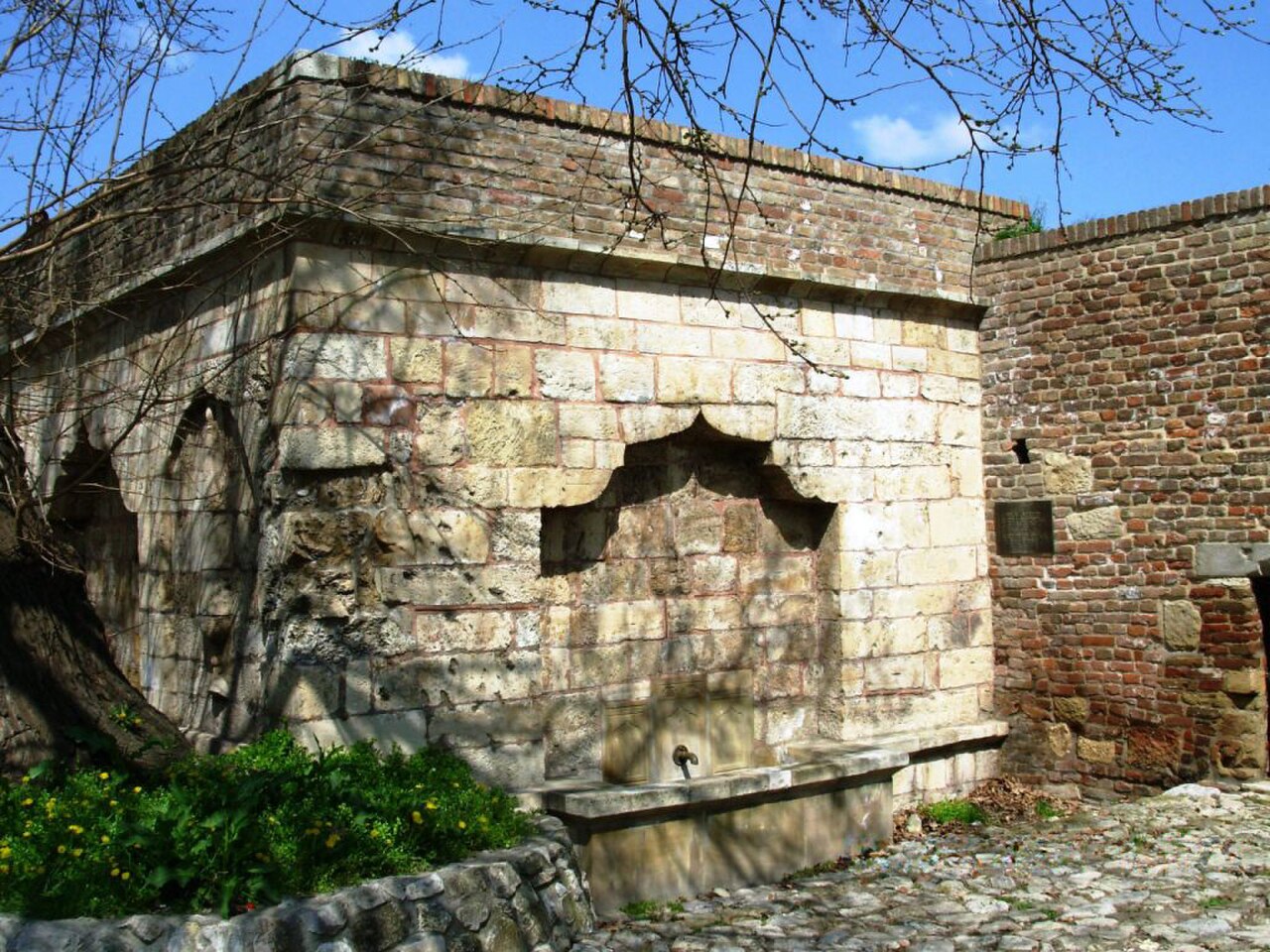
Mehmed Paša Sokolović's Fountain
- Must see
- Historic monument
Historic monument · Stari Grad, Belgrade
Дамад Али-пашино турбе
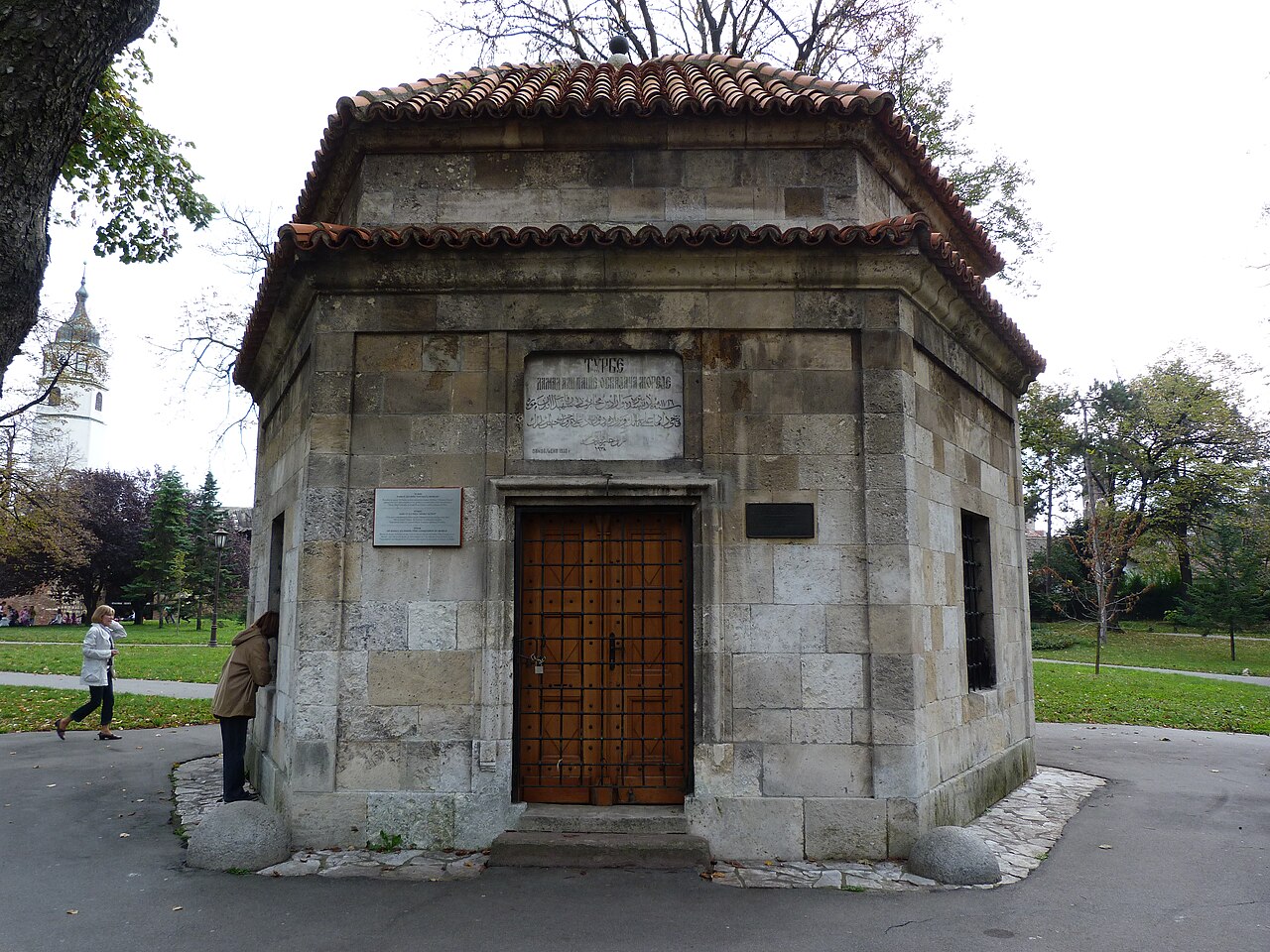
Damat Ali-Paša's Turbeh is a compact hexagonal Ottoman mausoleum in the Upper Town of Belgrade Fortress, near the remains of the former Sultan Suleiman Mosque. It is a funerary monument rather than a museum, and its importance comes from the people commemorated there and its survival within the fortress's layered landscape. The present structure was erected in 1784 over the grave of Izet Mehmed-Pasha, Belgrade's commander, who died that year. Dedicated to Damad Ali-Pasha, an Ottoman grand vizier and military commander who died in the 1716 Battle of Petrovaradin, the turbeh preserves a distinct Ottoman funerary presence in central Belgrade.
Checked 2026-09-02 · Source
The monument itself is the subject, rather than an interior museum sequence or exhibition. Begin with the six-sided Ottoman form and compact funerary architecture, then connect that shape to the people associated with the site. The turbeh is dedicated to Damad Ali-Pasha, while the mausoleum also contains the remains of Selim-Pasha, buried here in 1847, and Hasan-Pasha, buried here in 1850. Nearby remains of the former Sultan Suleiman Mosque place the building within the Ottoman layer of the Upper Town. The relationship between the modest mausoleum and the open fortress ground around it shows how a small memorial can retain historical weight amid later military and civic structures.
Checked 2026-09-02 · Source
Allow approximately 20 to 30 minutes for the turbeh and its immediate surroundings. This gives enough time to walk around the exterior, study the compact hexagonal silhouette, read available historical information and look towards the remains of the former Sultan Suleiman Mosque. The turbeh is one stop within the much larger Upper Town, so add time for fortress walls, gates and viewpoints if they form part of the same outing. A visitor following a compact Kalemegdan route can treat the mausoleum as a short heritage pause. Someone concentrating on Ottoman and fortress history may linger longer to compare this monument with nearby remains and the successive layers of Belgrade's fortified centre.
Checked 2026-09-02 · Source
The operator publishes no separate opening hours or closure days for Damat Ali-Paša's Turbeh. Its visitor information distinguishes schedules for enclosed facilities, and those facility schedules do not create a separate timetable for this outdoor monument. The same information describes 24-hour physical and technical security for the fortress grounds, but that statement is not a turbeh-specific admission or access guarantee. Daylight is the useful choice because it reveals the masonry and the relationship with the Upper Town. Earlier daylight may feel calmer, while later daylight pairs naturally with a wider fortress walk and nearby viewpoints. Choose a dry period if you want the surrounding historic paths to be more comfortable.
Checked 2026-09-02 · Source
The operator distinguishes this outdoor monument from enclosed facilities elsewhere in the fortress complex, so prices for museums, towers or galleries must not be presented as a price for the mausoleum. Any enclosed facility added to the same outing is a separate part of the visit and may have its own admission arrangements. This guide therefore makes no turbeh-specific ticket or fee claim: the research simply does not provide one for this monument. That absence should not be converted into a claim that every part of Belgrade Fortress is free.
Checked 2026-09-02 · Source
The turbeh stands in the centre of the Upper Town of Belgrade Fortress. Approach through Kalemegdan Park, then continue on foot into the fortress. The historic layout makes the final approach pedestrian rather than a vehicle drop-off beside the monument. Inside the complex, follow Upper Town routes towards the area near the remains of the former Sultan Suleiman Mosque, using the surrounding fortress fabric as orientation.
Checked 2026-09-02 · Source
The Upper Town is a historic landscape with uneven surfaces and inclines, not a uniformly level modern attraction. The supplied accessibility research discusses Belgrade Fortress generally, but does not verify step-free access for this exact turbeh, so no exact amenity claim is made here. Expect walking through Kalemegdan Park and fortress grounds, with possible slopes, paved sections and rougher historic surfaces. The monument's compact size does not indicate the length of the approach from public transport stops. Allow time for the route and wear shoes with a secure grip, while leaving the passage clear for other visitors. The final conditions may differ along the route through the wider fortress complex.
Checked 2026-09-02 · Source
Use the turbeh's compact hexagonal form as the starting point for photographs, then widen the frame to include the Upper Town setting. The nearby remains of the former Sultan Suleiman Mosque can provide context for an image about Belgrade's Ottoman traces. Daylight is the clearest option for reading the exterior masonry and surrounding fortress fabric. Keep a respectful distance from the mausoleum and leave the walking route open for other visitors. A close view can emphasise the six-sided silhouette; a wider composition shows how this small funerary monument sits within the open, layered landscape of the fortress.
Checked 2026-09-02 · Source
It is a small hexagonal Ottoman mausoleum in the Upper Town of Belgrade Fortress, one of the few preserved Turkish buildings in Belgrade.
The present building was erected in 1784 over the grave of Izet Mehmed-Pasha, who died there as Belgrade's commander that year.
It is dedicated to Damad Ali-Pasha, an Ottoman grand vizier and military commander who died in the 1716 Battle of Petrovaradin.
The mausoleum also contains the remains of Selim-Pasha, buried there in 1847, and Hasan-Pasha, buried there in 1850.
It stands in the Upper Town of Belgrade Fortress, near the remains of the former Sultan Suleiman Mosque.
Reconstruction and restoration works were carried out in 2017 under a project by the Institute for the Protection of Cultural Monuments of the City of Belgrade.
Loading the interactive map…
The interactive map could not be loaded.
Last updated:
Source: OpenStreetMap contributors, Wikidata ·