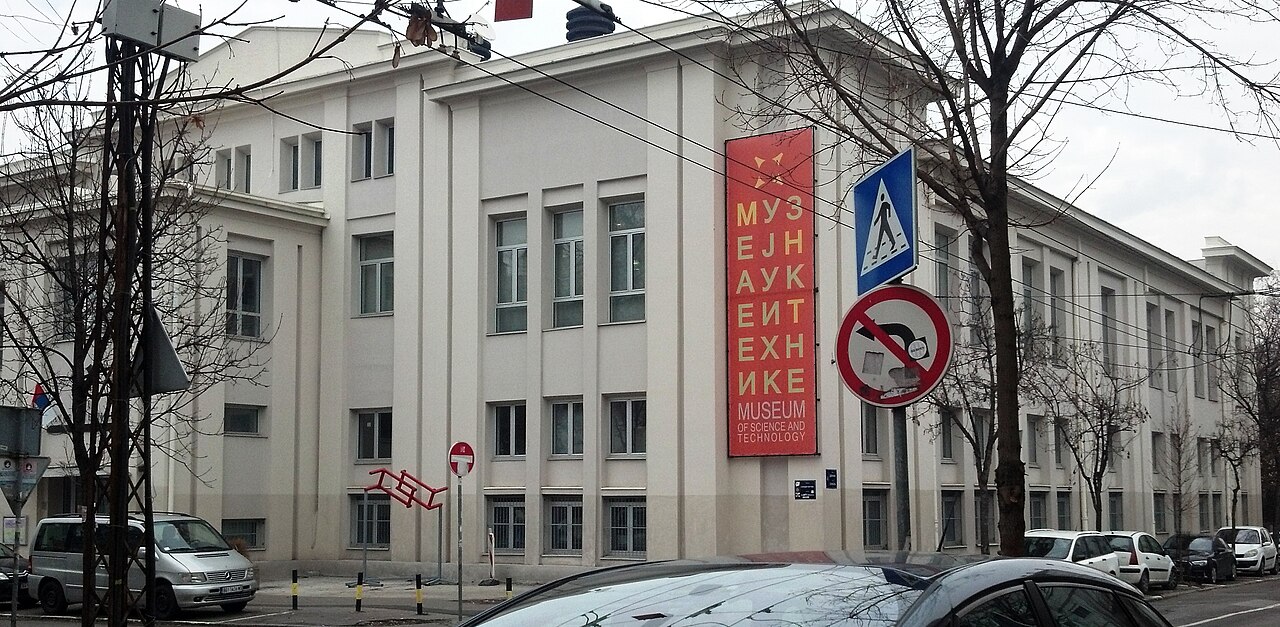
The Museum of Science and Technology Belgrade is a specialist museum at Skenderbegova 51, devoted to the material history of science, technology and everyday technical life. Its displays bring together machines, instruments, tools, appliances and other objects that reveal how people once solved practical problems. Rather than presenting Belgrade through paintings or monuments, the museum follows the mechanisms behind work, communication, travel and domestic routines. The result is a place for visitors who like seeing how familiar systems were built, operated and gradually replaced. Its central location makes it a distinctive cultural stop in the Stari Grad and Dorćol area.
Inside, the museum’s scientific and technological heritage is encountered through physical objects rather than an abstract history. Look closely at instruments, mechanisms, transport-related technology, industrial equipment, communications devices and domestic appliances. Details such as dials, wheels, casings, linkages and control panels help explain what each object was designed to do. The collection gives adults, engineering enthusiasts, families with older children and generally curious visitors several ways to engage. A useful approach is to compare objects that performed similar tasks but belonged to different technical periods, noting how design changed as needs, materials and systems changed.
Allow about 60 to 90 minutes for a focused visit through the museum’s principal displays. Visitors who read labels carefully, compare related objects or discuss the exhibits with children may prefer closer to two hours. Start with a complete pass through the rooms so the collection’s range is clear, then return to the instruments, machines or devices that deserve closer attention. The museum works well as one substantial stop in a central Belgrade day, especially when paired with walking in Stari Grad or Dorćol. A very short photo stop will not leave much time for the small mechanical details that make the collection rewarding.
The operator publishes visiting hours of 10:00 to 18:00 from Tuesday through Sunday, with the museum closed on Monday. Plan around that weekly rhythm if your Belgrade stay is short, because Monday is not an available museum day. Opening time is useful for visitors who want to examine labels and mechanisms without compressing the visit before closing. The continuous published span also makes a mid-afternoon stop practical between other central-city activities. Keep enough time for a complete circuit rather than arriving near the end of the day and expecting to see every display quickly.
Treat the museum as a planned cultural visit whose entry details are separate from the descriptions of its collection and location. This keeps the practical guide from presenting an unsupported price as current. The museum’s identity, opening pattern and transport information can still be used to place it accurately in a Belgrade itinerary. If admission arrangements are important to your plan, use the museum’s own current visitor information before setting aside a specific amount.
The Museum of Science and Technology Belgrade is at Skenderbegova 51, 11158 Belgrade. The museum’s contact page lists tram lines 2, 5 and 10, and bus lines 26 and 79, as public-transport connections. Use the full street address when navigating, particularly for a first visit through central Belgrade. The museum fits naturally into a Stari Grad or Dorćol route, where it can be combined with nearby walking stops. Public-transport routes and stops can change temporarily, so identify the address first and use the listed lines as the operator’s starting point for planning your approach.
The main scheduling point is the Monday closure: the museum is open on the other six days listed by the operator, from 10:00 to 18:00. Give the visit enough time for labels, mechanisms and object details instead of treating the museum as a quick exterior stop. Families should allow for different attention spans, since children may pause at particular devices while adults follow the broader history of technical change. Inside, keep circulation clear around displays, respect exhibition notices and follow staff directions.
Technical exhibits make strong photographic subjects because their visual interest lies in construction as much as in overall form. Try close views of a dial, wheel, linkage, casing, control panel or other feature that explains how an object worked. A wider frame can establish the room and the relationship between displays, while detail images show the engineering more clearly. Photograph without blocking labels or another visitor’s view, especially where display cases narrow circulation. Let the object’s surfaces, controls and mechanical connections guide the composition, and follow any exhibition-specific instructions displayed in the museum.