
1 min walk · Stari Grad
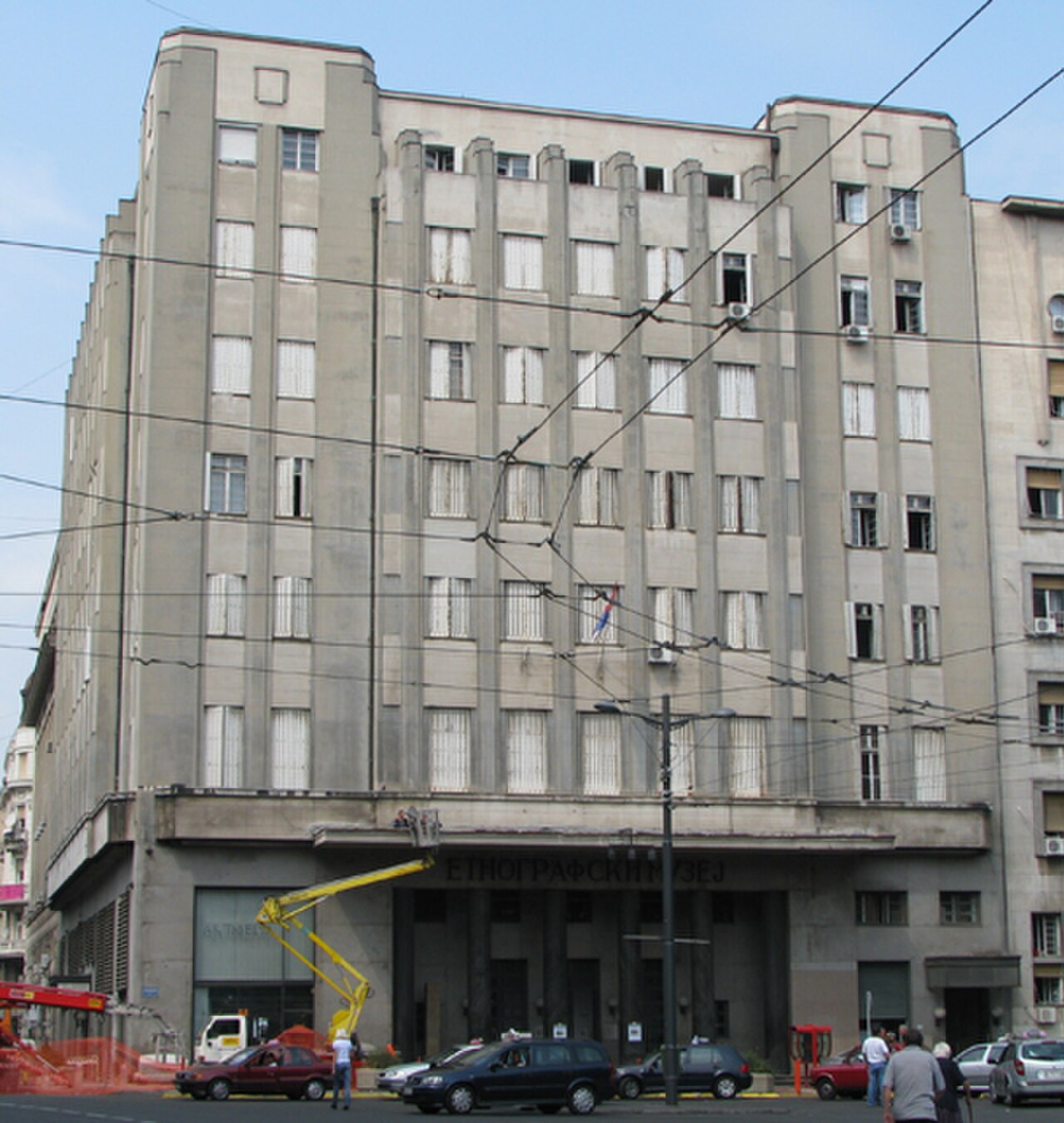
Ethnographic Museum
- Must see · Heritage site
- Museum
Entertainment venue · Stari Grad, Belgrade
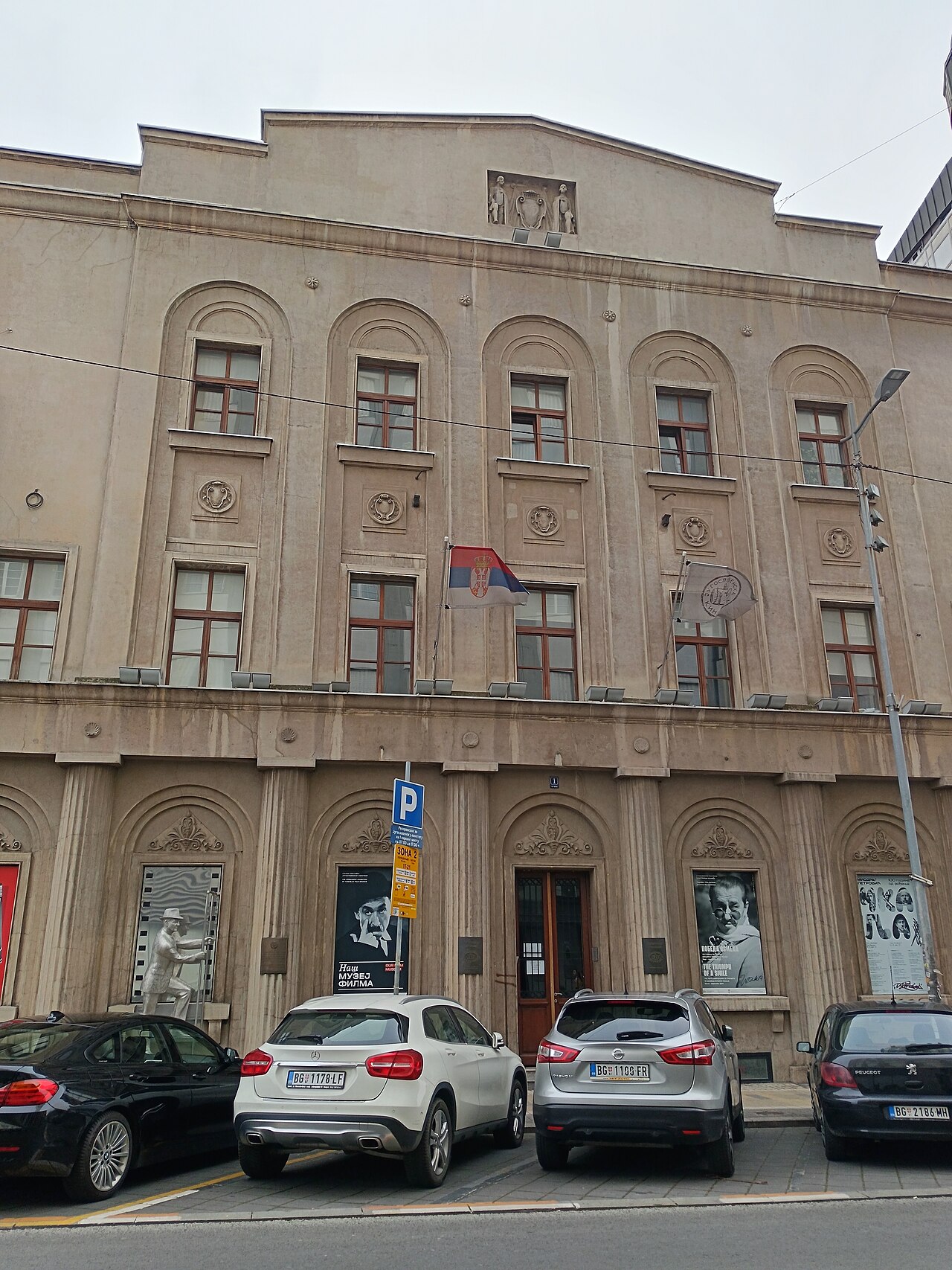
Југословенска кинотека
| Monday | Closed |
|---|---|
| Tuesday | 10:00 – 20:00 |
| Wednesday | 10:00 – 20:00 |
| Thursday | 10:00 – 20:00 |
| Friday | 10:00 – 20:00 |
| Saturday | 10:00 – 20:00 |
| Sunday | 10:00 – 20:00 |
Checked 2026-09-02 · Source
Read from the OpenStreetMap access tags; anything not listed has no tag recorded.
Set the group type to family in the planner and the day window contracts to about three quarters of a solo day.
At Uzun Mirkova 1 beside Student Square, the Yugoslav Film Archive brings together a permanent museum exhibition and a working cinema institution. Founded in 1949 by the Cinema Committee of the Federal People’s Republic of Yugoslavia, it preserves the moving-image history of the former Yugoslav space while making that history visible to visitors. The public exhibition, Our Film Museum, follows film from its prehistory through the end of the 20th century. The same address also houses the Makavejev Hall, so a visit can connect museum objects with an active programme of archival screenings. It is a place where film preservation, display and public cinema meet in one central Belgrade building.
Checked 2026-09-02 · Source
Our Film Museum covers the prehistory and history of film through the end of the 20th century. Its displays include an original Lumière brothers camera from 1896, a magic lantern, the head of an Edison kinetoscope, a Lifka studio camera and an Edison phonograph. Together, these objects show how moving images were created, displayed and accompanied as cinema developed. The archive behind the museum is equally substantial, holding more than 100,000 film copies, including over 10,000 nitrate copies made between 1896 and 1953. The exhibition offers a compact public encounter with a much larger preservation story.
Checked 2026-09-02 · Source
Allow about 45 to 75 minutes for the permanent exhibition if you want to read the explanatory material and examine the cameras, projection-era equipment and other objects closely. A quicker visit can work in roughly half an hour, especially if you already know the broad outline of film history. Add the running time of a screening when combining the museum with a film, because the archive also operates cinema halls and the Makavejev Hall is at the same Uzun Mirkova 1 address. Screening length depends on the programme, so treat the exhibition and cinema as two separately timed parts of a visit. Arriving before a screening gives you room to see the museum without rushing.
Checked 2026-09-02 · Source
The permanent exhibition is open Tuesday through Sunday from 10:00 to 20:00 and closed to visitors on Mondays. The operator’s contact information lists a separate box-office pattern: 10:00–15:00 and 17:00–21:00 on operating days, with Monday excluded. For a straightforward museum visit, daytime is the least complicated choice because it sits wholly inside the exhibition schedule. Late afternoon can suit visitors combining the exhibition with an evening screening, but the exhibition itself closes at 20:00. The box office’s midday closure matters when your visit depends on cinema arrangements.
Checked 2026-09-02 · Source
A cinema-screening amount mentioned in the research is not sufficient evidence for a universal museum ticket, so no price is recorded here. Plan the exhibition and any screening as separate visitor experiences because their admission arrangements may not be identical. The operator does publish box-office hours of 10:00–15:00 and 17:00–21:00 on operating days, excluding Mondays; those windows are useful for cinema planning even though no general admission charge is verified.
Checked 2026-09-02 · Source
The venue is at Uzun Mirkova 1 beside Student Square, in central Belgrade. Tram lines 2, 11 and 13 stop at Pariska. Student Square is served by buses 31 and 22L and trolleybuses 29 and 41. A wider set of services reaches Trg Republike, including buses 26, 27, 27E, 32E, 35, 37, 43, 44 and 96, plus minibuses 24, E2 and E8. The venue has no private parking. Drivers can consider nearby Rajićeva Shopping Centre Garage, Obilićev venac Garage or the Politika car park, then continue on foot to Uzun Mirkova 1.
Checked 2026-09-02 · Source
Plan around two different schedules: the permanent exhibition runs Tuesday–Sunday, 10:00–20:00, while the box office has a 10:00–15:00 and 17:00–21:00 pattern on operating days. The building is accessible to wheelchair and stroller users on all floors, but visitors who cannot use stairs should request lift assistance from security staff. With no private parking, public transport or a nearby garage is the simpler arrival plan.
Checked 2026-09-02 · Source
The strongest visual subjects are the historical objects in Our Film Museum: the 1896 Lumière brothers camera, the magic lantern, the Edison kinetoscope head, the Lifka studio camera and the Edison phonograph. Photographing details can help you remember the sequence from early optical devices to established cinema technology, while wider images can convey how the museum connects individual objects with the archive’s broader history. Be considerate inside the exhibition and follow any signs or staff instructions about photography. If you attend a screening as well, treat the cinema programme as a separate experience and avoid letting photography distract from the film itself.
Checked 2026-09-02 · Source
The Yugoslav Film Archive was founded in 1949 by the Cinema Committee of the Federal People’s Republic of Yugoslavia.
The public building with the permanent exhibition is at Uzun Mirkova 1, 11000 Belgrade, beside Student Square.
The permanent exhibition is called Our Film Museum and presents objects from the prehistory and history of film through the end of the 20th century.
The displays include an original Lumière brothers camera from 1896, a magic lantern, an Edison kinetoscope head, a Lifka studio camera and an Edison phonograph.
The archive holds more than 100,000 film copies, including more than 10,000 nitrate copies made between 1896 and 1953.
Yes. The archive operates cinema halls, including the Makavejev Hall at Uzun Mirkova 1, with programmes drawn from the archive’s holdings.
Loading the interactive map…
The interactive map could not be loaded.
Last updated:
Source: OpenStreetMap contributors, Wikidata ·