

2 min walk
El Xampanyet
- Restaurant or café
Language · 11 published
Historic monument · Barcelona
Reviewed by Elena Voss · Roavina Travel Editor
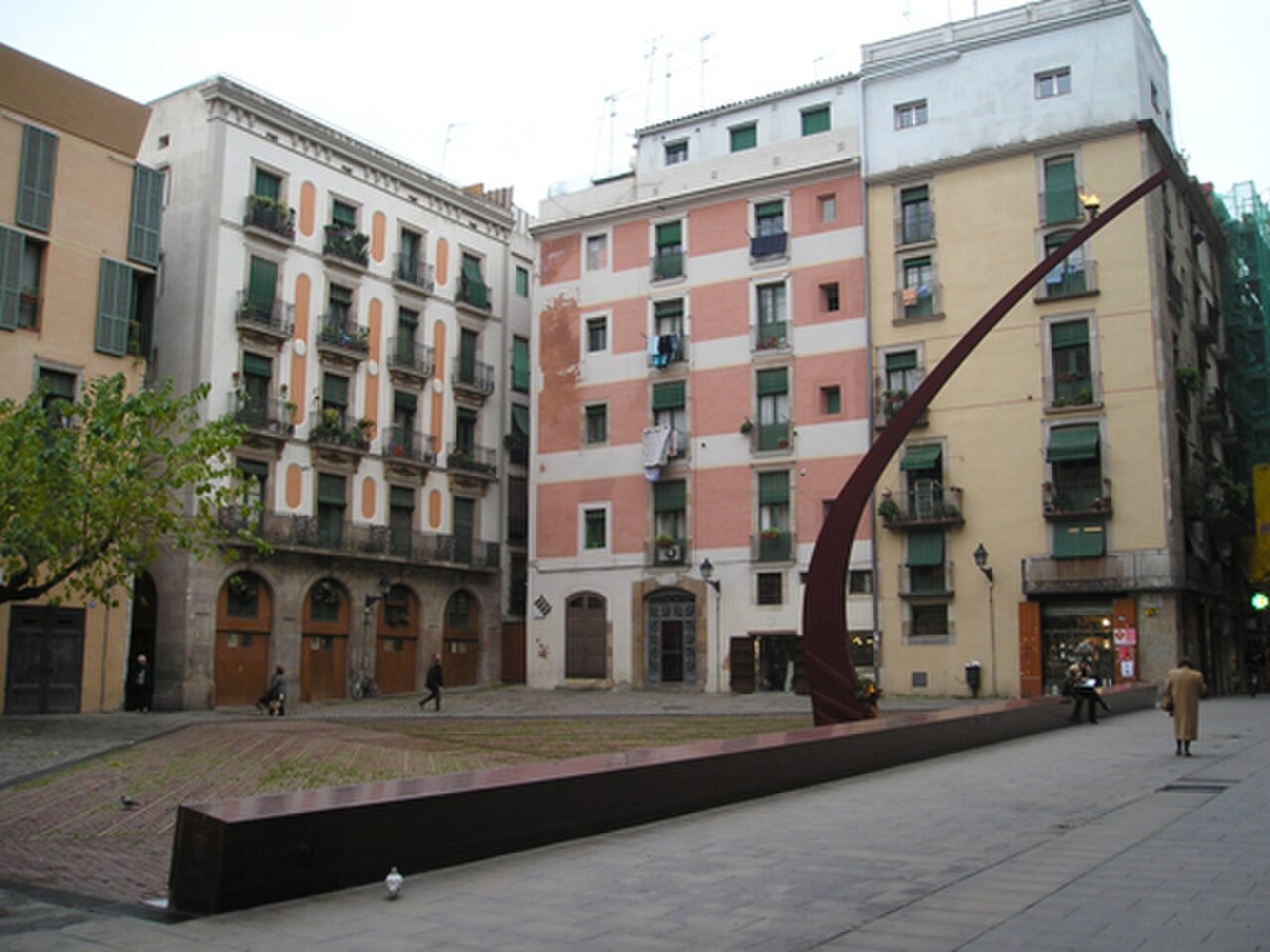
This place is a Memorial. It carries the bien de interés cultural heritage designation.
Fossar de les Moreres is a memorial square beside the Basilica of Santa Maria del Mar in Barcelona’s El Born district. The ground was once a cemetery where defenders of Barcelona were buried after the Siege of Barcelona in 1714 during the War of the Spanish Succession. The present square commemorates those deaths and remains an important place of Catalan historical memory. Its meaning comes from the contrast between a compact urban space and the events remembered there. Fossar de les Moreres is a memorial square in Barcelona, located beside the Santa Maria del Mar basilica in the El Born district. The site occupies the ground of a former cemetery where defenders of the city were buried after the Siege of Barcelona in 1714. The memorial honours those who fell resisting the Bourbon troops during the War of the Spanish Succession. An eternal flame burns at the monument, symbolising the enduring memory of the fallen. The site holds deep significance for Catalan identity and historical memory. No. The name refers to a former cemetery where 1714 siege victims were buried. The current site is a memorial square, not an active burial ground.
Checked 2026-08-26 · Source
The memorial’s central feature is an eternal flame set within a sculptural composition unveiled in 2001. Architect Carme Fiol and sculptor Francesc Cardoner created the monument, which incorporates poetry associated with the site. Verses by Frederic Soler and an inscription by Salvador Espriu form part of the memorial language. Paving, low walls, the basilica’s stone exterior, and surrounding historic buildings define the open square; there is no enclosed exhibition space. The central feature is a monument with an eternal flame, designed by architect Carme Fiol and sculptor Francesc Cardoner, unveiled in 2001.
Checked 2026-08-26 · Source
Ten to twenty minutes is enough to stand beside the flame, read the inscriptions, and take in the relationship with Santa Maria del Mar. Fossar de les Moreres is a reflective stop rather than a large attraction with many rooms. It fits naturally into a walk through El Born with the basilica, the Born Cultural Centre, and nearby historic streets. Give the square longer if you want to sit quietly with its historical and political meaning.
Checked 2026-08-26 · Source
The square is most atmospheric in the evening, when the eternal flame stands out against the darker surroundings and El Born remains lively. Daytime offers clearer views of the inscriptions and the basilica wall. Summer brings more visitors and stronger heat on the paving, while rain can change the feel of the open space. Include Fossar de les Moreres during a neighbourhood walk so the memorial is experienced alongside the streets and buildings that surround it.
Checked 2026-08-26 · Source
Fossar de les Moreres is an open civic memorial square, so entering the space requires no ticket or admission procedure. Visitors approach directly from the surrounding streets and can pause beside the monument. The nearby Basilica of Santa Maria del Mar and other attractions are separate places with their own arrangements. Plan the memorial as a free outdoor element of an El Born route rather than as a ticketed museum visit.
Checked 2026-08-26 · Source
Jaume I metro station on line L4 is about a five-minute walk from the memorial. The square is also reachable on foot from Barcelona’s historic centre and lies within a practical El Born walking route. Via Laietana carries buses nearby, while Arc de Triomf and its rail connections are farther away to the northeast. Narrow medieval streets surround the square, so walking is the simplest final approach and dedicated parking is not associated with the memorial.
Checked 2026-08-26 · Source
Treat Fossar de les Moreres as a memorial, not as a casual photo prop. The eternal flame is hot, so keep children and belongings away from its immediate edge. Wet paving can become slippery, and El Born’s narrow streets grow crowded at popular times and during local events. Evening visits can feel quieter than daytime, so use normal urban awareness. The site carries strong emotional and political significance; quiet, respectful behaviour is appropriate.
Checked 2026-08-26 · Source
The eternal flame is the clearest photographic subject, especially after dusk when it contrasts with the stone surroundings. Frame it with Santa Maria del Mar to show the memorial’s setting, or concentrate on the paving, inscriptions, and sculptural forms for a closer composition. The compact square does not need a very wide lens. Keep a respectful distance, avoid blocking people passing through, and let the memorial’s quiet atmosphere guide the pace of photography.
Checked 2026-08-26 · Source
It is a memorial square beside Santa Maria del Mar, on the site of a former cemetery associated with those who died defending Barcelona in 1714.
The flame commemorates those who died defending Barcelona during the Siege of Barcelona in 1714 and represents continuing remembrance.
No. The site is a present-day memorial square on the ground of a former cemetery, not an active burial ground.
The memorial is beside the Basilica of Santa Maria del Mar in El Born, with Jaume I metro station on line L4 nearby.
Yes. The memorial square is an open urban space, and the eternal flame is particularly distinctive after dark. Use normal city awareness during an evening visit.
Most visitors need ten to twenty minutes to read the inscriptions, view the flame, and understand the square’s connection with Santa Maria del Mar.
Loading the interactive map…
The interactive map could not be loaded.
Last updated:
Source: OpenStreetMap contributors, Wikidata ·