

8 min walk
Jardí Botànic de Barcelona
- High · Heritage site
- Nature site
Language · 11 published
Historic monument · Barcelona
Castell de Montjuïc
Reviewed by Elena Voss · Roavina Travel Editor
| Monday | 10:00 – 20:00 |
|---|---|
| Tuesday | 10:00 – 20:00 |
| Wednesday | 10:00 – 20:00 |
| Thursday | 10:00 – 20:00 |
| Friday | 10:00 – 20:00 |
| Saturday | 10:00 – 20:00 |
| Sunday | 10:00 – 20:00 |
Checked 2026-08-31 · Source
Read from the OpenStreetMap access tags; anything not listed has no tag recorded.
Set the group type to family in the planner and the day window contracts to about three quarters of a solo day.
This place is a Attraction. It was established in 1641. It carries the bien de interés cultural heritage designation.
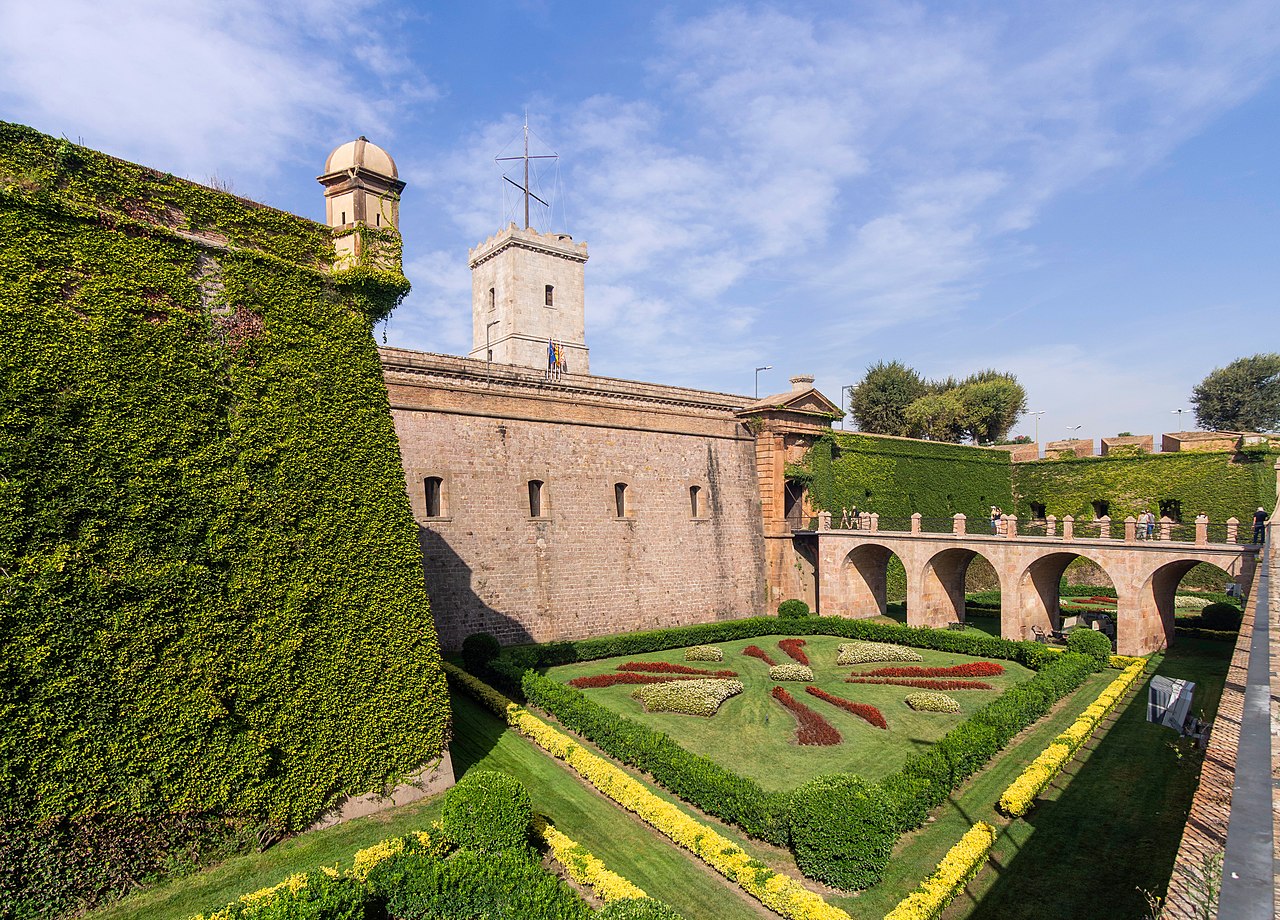
Montjuïc Castle, known locally as Castell de Montjuïc, is a historic fortress situated atop Montjuïc hill overlooking Barcelona and its port. The military structure occupies a strategic position that has been fortified since the 17th century. It has served various purposes throughout its existence, including as a military stronghold, a prison, and now as a municipal facility. 1 March–31 October: daily 10:00–20:00, including public holidays. 1 November–28 February: daily 10:00–18:00, including public holidays. Closed on 1 January and 25 December. Tickets are sold until 30 minutes before closing. General admission: €12.
Checked 2026-08-31 · Source
The castle interior contains historical military architecture including bastions, walls, and courtyard spaces that reflect its defensive purpose. Visitors can explore the grounds and structures that remain from its military past. The site includes exhibition spaces that present aspects of its history. The castle also features a lighthouse element on its grounds. The interior spaces have been adapted for contemporary use while preserving structural elements that demonstrate its original function as a coastal defense installation and later military prison. Closed on 1 January and 25 December. Tickets are sold until 30 minutes before closing.
Checked 2026-08-31 · Source
A visit to Montjuïc Castle typically requires between one and two hours to appreciate the main areas, though individual pacing varies considerably. Those interested in historical details and panoramic photography may extend their stay longer. The expansive grounds and multiple viewpoints encourage unhurried exploration. Visitors should account for additional time needed to reach the castle from central Barcelona, as the hilltop location involves transit time. General admission: €12. Visitors with reduced mobility and their companions receive priority in entrance queues. Mobility devices required by visitors with reduced mobility are permitted inside.
Checked 2026-08-31 · Source
The castle's elevated position makes it susceptible to weather variations, and morning visits may offer clearer atmospheric conditions for viewing the city and sea. Seasonal daylight patterns affect both accessibility and photographic opportunities. 1 March–31 October: daily 10:00–20:00, including public holidays. 1 November–28 February: daily 10:00–18:00, including public holidays. Take Metro L2 or L3 to Paral·lel, then the Montjuïc Funicular and either the Montjuïc Cable Car or bus 150. Bus 150 also runs from Plaça d’Espanya directly to the castle; buses 50 and 55 connect with the cable car or bus 150.
Checked 2026-08-31 · Source
Admission policies and any applicable fees should be verified through official Barcelona municipal sources prior to visiting. The castle has historically operated under various access arrangements, and current ticketing structures may include categories for different visitor types. Free admission periods or special conditions may apply on designated occasions, though specific dates and eligibility requirements require confirmation. General admission: €12. Visitors with reduced mobility and their companions receive priority in entrance queues. Mobility devices required by visitors with reduced mobility are permitted inside. Accessible toilets and one reserved accessible parking space are listed.
Checked 2026-08-31 · Source
Montjuïc Castle occupies a hilltop position accessible by several routes from central Barcelona. The Montjuïc Cable Car provides aerial access from near the port area, though operational status should be confirmed. Public bus services serve the upper hill area. Take Metro L2 or L3 to Paral·lel, then the Montjuïc Funicular and either the Montjuïc Cable Car or bus 150. Bus 150 also runs from Plaça d’Espanya directly to the castle; buses 50 and 55 connect with the cable car or bus 150. Mobility devices required by visitors with reduced mobility are permitted inside.
Checked 2026-08-31 · Source
The castle's exposed hilltop location creates conditions of strong sun and wind that visitors should anticipate. Comfortable footwear is essential given uneven historical surfaces and inclines. The military architecture includes unguarded edges and drops that require caution, particularly for children. Summer heat can be intense with limited shade in open areas. Visitors should carry adequate water. Visitors with reduced mobility and their companions receive priority in entrance queues. Accessible toilets and one reserved accessible parking space are listed. The dungeons and barracks included in restricted-space tours are not accessible to visitors with reduced mobility.
Checked 2026-08-31 · Source
The castle offers exceptional vantage points for photographing Barcelona's skyline, port, and Mediterranean horizon. The elevated position provides unique perspectives unavailable from street level. Early morning and late afternoon light enhances dimensional quality across the urban landscape. The historical stone structures themselves present textural photographic subjects. Interior spaces may present challenging light conditions requiring appropriate equipment. The juxtaposition of military architecture against modern city and sea creates compelling compositional opportunities for visitors prepared to work with changing natural illumination. The dungeons and barracks included in restricted-space tours are not accessible to visitors with reduced mobility.
Checked 2026-08-31 · Source
Tickets may be purchased until 30 minutes before the castle closes.
Children under 14 must be accompanied by an adult throughout their visit.
Yes. The general ban on animals does not apply to visitors whose mobility depends on a guide dog.
Photography is permitted, but flash is prohibited in exhibition rooms; tripods and professional equipment require express authorisation.
Free lockers are available for personal items, and everything must be collected before closing.
A bicycle may be pushed through the outdoor space but cannot enter exhibition rooms or other interiors; an interior bicycle-parking area is provided.
Loading the interactive map…
The interactive map could not be loaded.
Last updated:
Source: OpenStreetMap contributors, Wikidata ·