
1 min walk
San Pablo
- High
- Historic monument
Language · 11 published
Place of worship · Madrid
Catedral de la Almudena
Reviewed by Elena Voss · Roavina Travel Editor
| Monday | 10:00 – 20:00 |
|---|---|
| Tuesday | 10:00 – 20:00 |
| Wednesday | 10:00 – 20:00 |
| Thursday | 10:00 – 20:00 |
| Friday | 10:00 – 20:00 |
| Saturday | 10:00 – 20:00 |
| Sunday | 10:00 – 20:00 |
Checked 2026-08-31 · Source
Read from the OpenStreetMap access tags; anything not listed has no tag recorded.
Set the group type to family in the planner and the day window contracts to about three quarters of a solo day.
This place is a Place of worship. It opened in 1993. It was built in the Romanesque Revival architecture style. It was designed by Francisco de Cubas. It is built of granite.
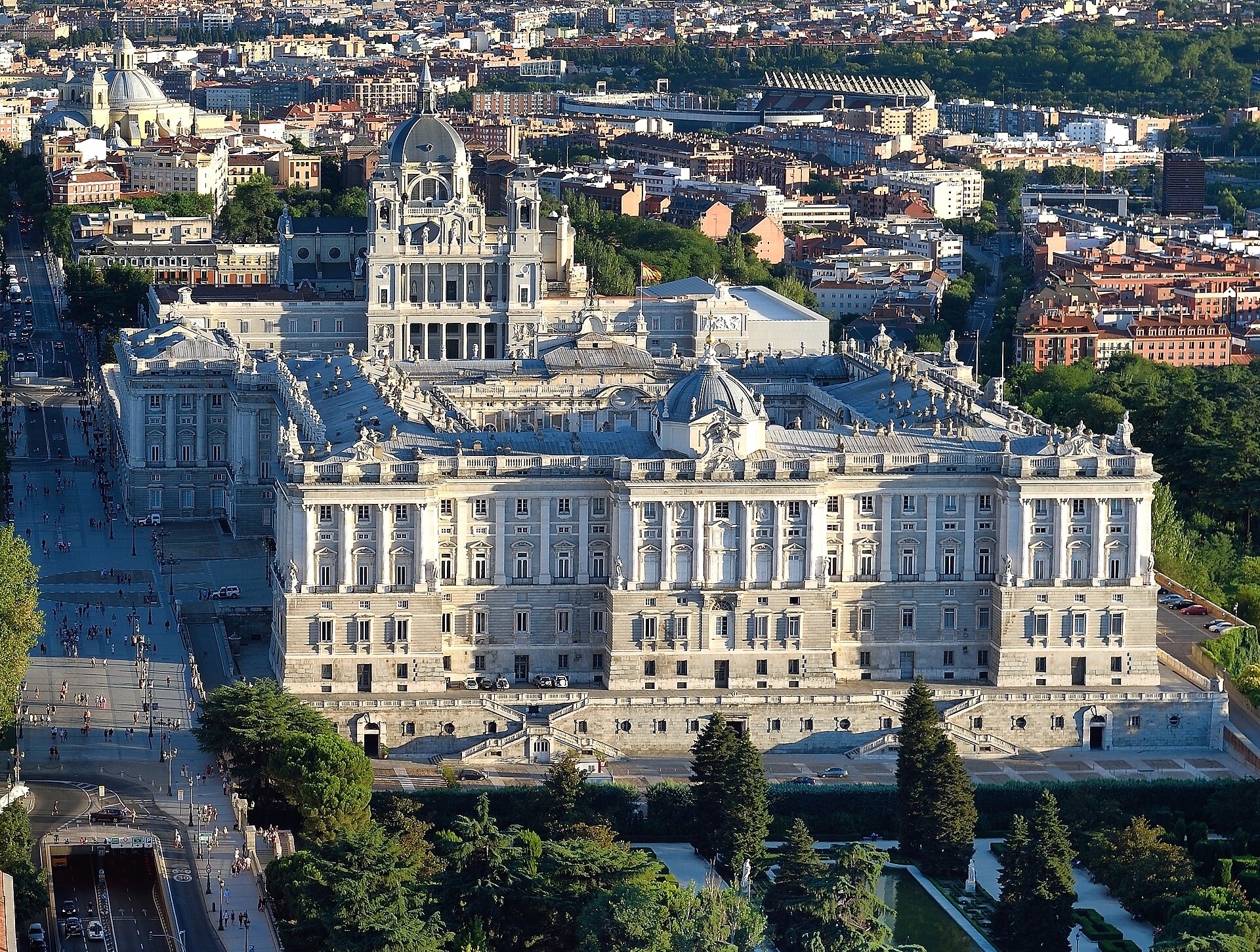
Almudena Cathedral is Madrid’s principal Roman Catholic cathedral, facing the Royal Palace across Plaza de la Armería. Construction began in the late nineteenth century and Pope John Paul II consecrated the cathedral in 1993. For current planning, the operator publishes four concrete visitor facts. Cathedral daily about 10:00-20:00; museum Monday-Saturday 10:00-14:30. Cathedral requests EUR 1 donation; museum and dome EUR 7. The cathedral’s position is part of its identity: its main facade answers the Royal Palace across Plaza de la Armería, linking the modern diocesan seat with Madrid’s former royal centre. The relatively recent 1993 consecration also explains why the building combines historicising exterior forms with unmistakably modern colour and decoration inside.
Checked 2026-08-31 · Source
The main church, cathedral museum, dome viewpoint and crypt are distinct visitor elements. The museum explains the diocese and the city’s patrons, the Virgin of Almudena and San Isidro, while the dome route adds a high view over historic Madrid. The arrival and access information is also specific. Ópera Metro. Accessible routes serve principal areas, but historic stairs, thresholds or operational constraints limit the complete circuit. The visit is not a single undivided circuit. The principal nave and chapels form the worship space, the museum interprets the Madrid diocese and its patron saints, the dome route provides the elevated view, and the crypt below Calle Mayor has its own entrance and a contrasting neo-Romanesque interior.
Checked 2026-08-31 · Source
Allow roughly one hour for the main cathedral and longer when adding the separately scheduled museum, dome or crypt; liturgy can interrupt a sightseeing circuit without closing the religious building for worship. The ordinary admission product does not include premium additions. No. Special tours, exhibitions and upgrades use separate tickets. A focused circuit through the nave and side chapels can fit within an hour, while the museum, dome and crypt turn the stop into a longer sequence. Because each component has its own circulation and the cathedral remains active for worship, visitors should decide which elements matter before joining a ticket or security line.
Checked 2026-08-31 · Source
Cathedral daily about 10:00-20:00; museum Monday-Saturday 10:00-14:30. Timed events, ceremonies, maintenance and security measures can alter ordinary access. The cathedral publishes opening from 10:00 to 20:30 Monday through Sunday, while the museum lists 10:00 to 14:30 Monday through Saturday. Religious celebrations take precedence, so confirm the day’s worship schedule before treating those hours as uninterrupted sightseeing access. Operational changes remain possible even within the published schedule. Yes. Events, ceremonies, maintenance and security can change ordinary access. The difference between church and museum schedules matters in practice: a late-afternoon arrival can suit the main cathedral but miss the museum and dome, whose published day ends earlier.
Checked 2026-08-31 · Source
Cathedral requests EUR 1 donation; museum and dome EUR 7. Special tours, exhibitions and upgrades use separate tickets. The official English homepage does not record a complete current admission table for every element. What are the regular hours? Cathedral daily about 10:00-20:00; museum Monday-Saturday 10:00-14:30. The requested one-euro contribution at the cathedral is not the same product as the paid museum-and-dome route. The published seven-euro museum price therefore belongs in a separate budget line, particularly for a group. The crypt and any guided activity should also be treated as distinct elements rather than assumed to be bundled.
Checked 2026-08-31 · Source
Ópera Metro. This named stop or station is the clearest public-transport reference for an independent visit. The cathedral is at Calle Bailén 10. The operator identifies Ópera station on Metro lines 2 and 5 and the Ópera–Príncipe Pío branch, plus bus routes 3 and 148 at Calle Bailén and Calle Mayor. What is base admission? Cathedral requests EUR 1 donation; museum and dome EUR 7. Ópera is the useful rail reference because it sits east of the palace-cathedal pair and serves Metro lines 2 and 5 as well as the branch to Príncipe Pío. From the station, the final approach crosses the historic centre on foot; buses 3 and 148 provide the named surface alternative on Bailén and Mayor.
Checked 2026-08-31 · Source
Accessible routes serve principal areas, but historic stairs, thresholds or operational constraints limit the complete circuit. The access description applies to the principal visitor route rather than every historic or operational space. This is an active cathedral, not only a monument. Is the complete route step-free? Accessible routes serve principal areas, but historic stairs, thresholds or operational constraints limit the complete circuit. Step-free access to principal areas does not make every part of the complex equivalent. The dome route, crypt entrance, museum circulation and active liturgical zones present different constraints. Staff directions take priority during services, and visitors should keep the central aisle, chapels and clergy routes clear even when ordinary sightseeing access continues.
Checked 2026-08-31 · Source
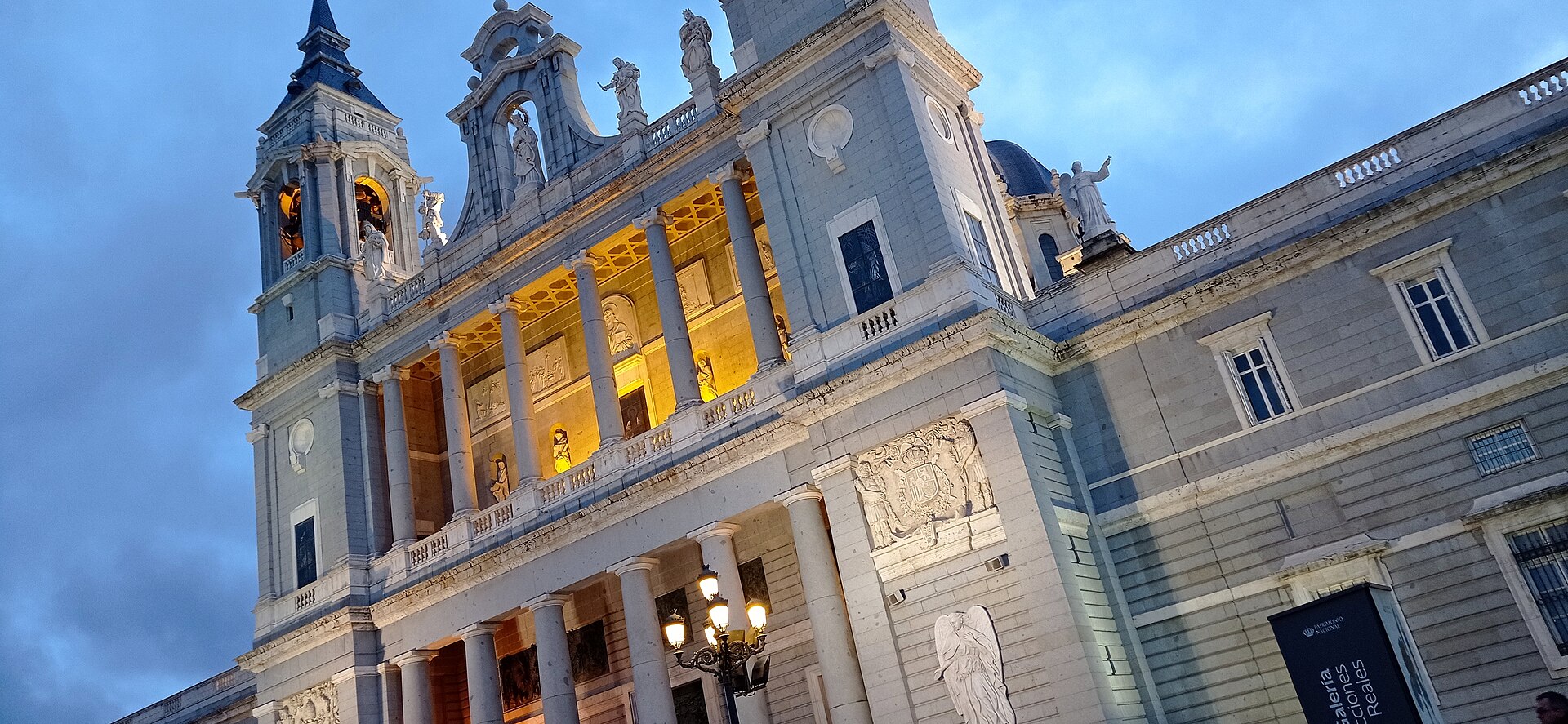
The grey-and-white palace-facing facade and the colourful modern interior ceiling provide sharply different compositions. Which public transport is named? Ópera Metro. The strongest exterior comparison is available from Plaza de la Armería, where the cathedral facade and palace can share one frame. Inside, the geometric ceiling and pale nave create the defining contrast, but worship takes priority over photography. Handheld work from the edges of the circulation route is less intrusive than stopping in the central aisle.
Checked 2026-08-31 · Source
Cathedral daily about 10:00-20:00; museum Monday-Saturday 10:00-14:30.
Cathedral requests EUR 1 donation; museum and dome EUR 7.
Accessible routes serve principal areas, but historic stairs, thresholds or operational constraints limit the complete circuit.
Ópera Metro.
Yes. Events, ceremonies, maintenance and security can change ordinary access.
No. Special tours, exhibitions and upgrades use separate tickets.
Loading the interactive map…
The interactive map could not be loaded.
Last updated:
Source: OpenStreetMap contributors, Wikidata ·