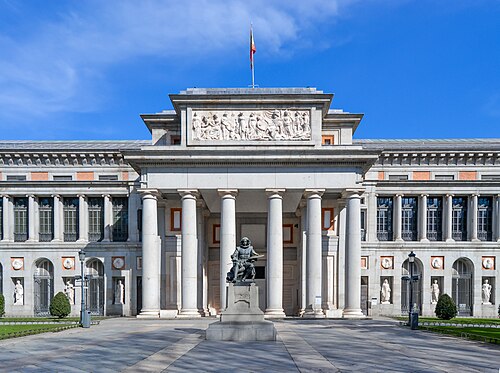
Museo del Prado
The Prado is Spain's national painting museum, and the building it occupies was never meant to hold pictures. Juan de Villanueva designed it in 1785 for a Natural History Cabinet, on the orders of Charles III.
- Must see
- Museum
City guide · Spain
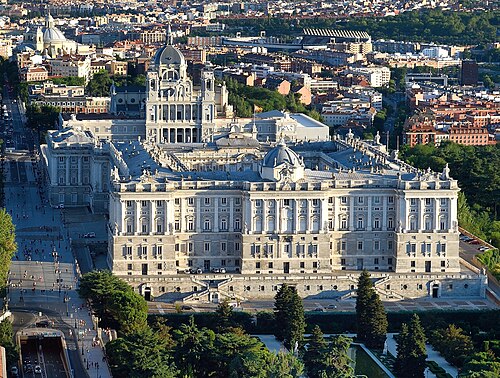
Madrid is Spain's capital, set on the central plateau and organised around a dense historic and cultural core rather than a major riverfront. The oldest royal q...
Photograph · Dmitry Dzhus from London · CC BY 2.0
Set your days, your pace and the hours you actually want to be out. The planner works around closing days and travel time, and leaves room to eat.
Editorial responsibility: Elena Voss · Roavina Travel Editor
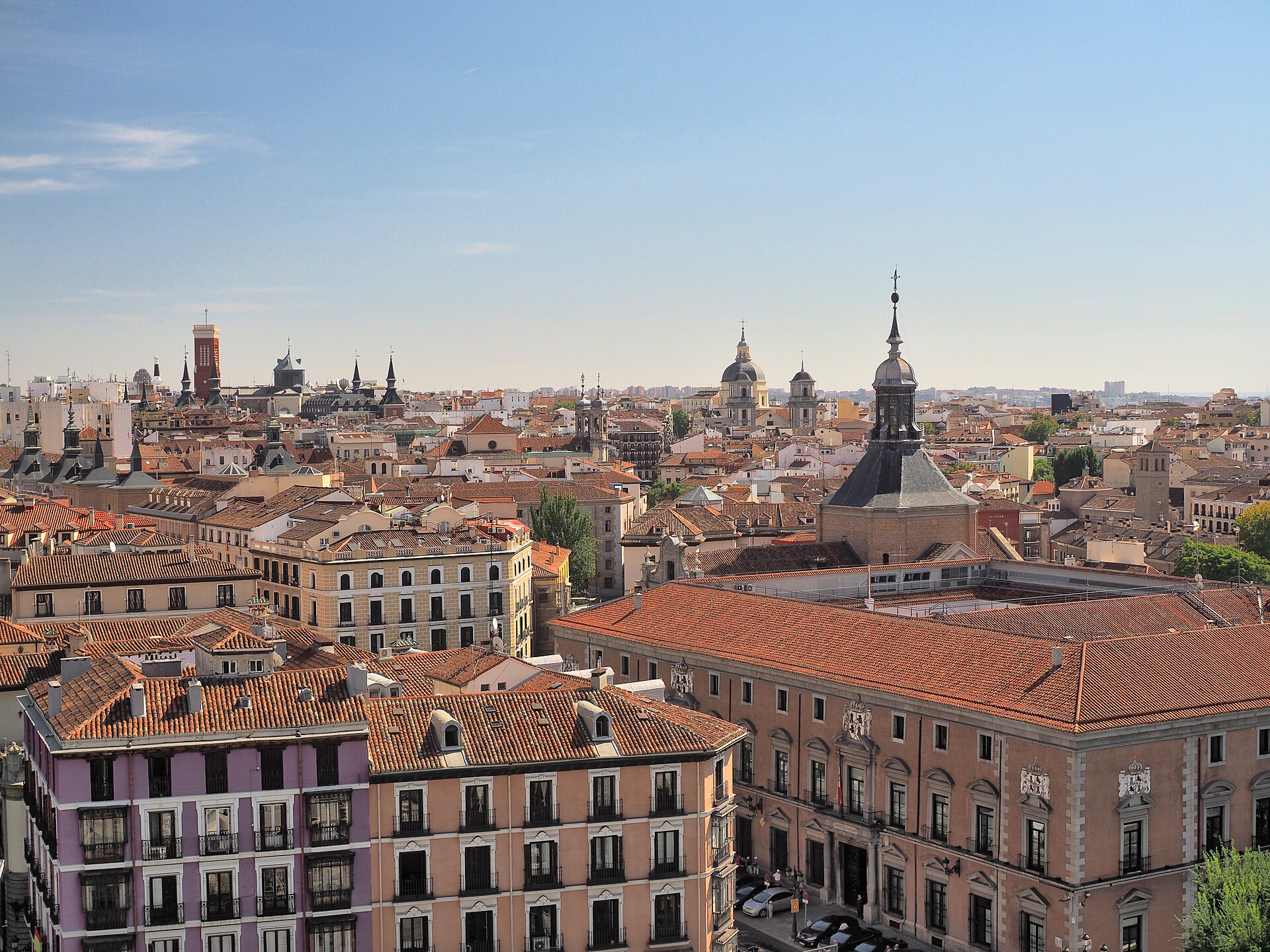
Madrid is Spain's capital, set on the central plateau and organised around a dense historic and cultural core rather than a major riverfront. The oldest royal quarter, known as Madrid de los Austrias, runs between the Royal Palace and Plaza Mayor. East of Puerta del Sol, Gran Vía, the Literary Quarter and the Paseo del Arte carry the principal commercial streets and art museums. Neighbourhoods such as La Latina, Lavapiés, Malasaña, Chueca, Chamberí and Salamanca then form distinct dining, nightlife and residential clusters around that centre.
Checked 2026-08-26
November · November is cooler in Madrid at 14.8°C by day, with 49 mm of rain and 4.1°C nights.
Ranked by importance — sitelinks, pageviews and heritage status, not editor preference.
87 places match
Category
Typical visit duration
Good for
Interests
The Prado is Spain's national painting museum, and the building it occupies was never meant to hold pictures. Juan de Villanueva designed it in 1785 for a Natural History Cabinet, on the orders of Charles III.
Palacio Real de Madrid
The Royal Palace of Madrid stands on the ridge above the Manzanares where the medieval Alcazar stood until fire destroyed it on Christmas Eve 1734.
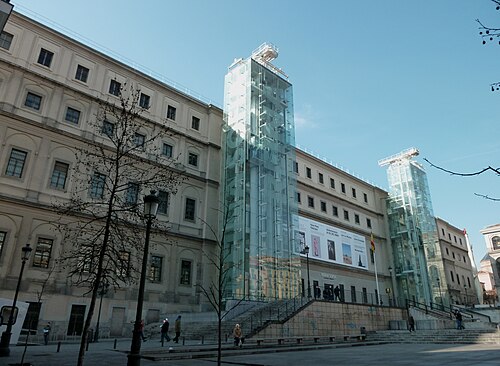
The Reina Sofia is Spain's national museum of modern and contemporary art, and the building most visitors enter is a former hospital.
Parque del Retiro
El Retiro is the historic municipal garden that fills the ground east of the Paseo del Prado, and it is the only part of central Madrid large enough to lose an afternoon in.
The Paseo del Prado is one of Madrid's main boulevards.
Museo Thyssen-Bornemisza
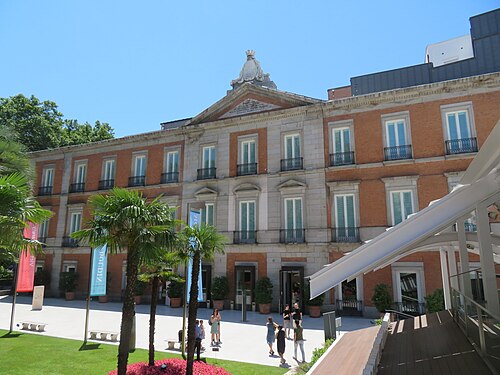
The Thyssen-Bornemisza is the private-collection third of Madrid's Paseo del Arte, standing on Paseo del Prado at number 8 in the Villahermosa palace, a few minutes' walk from the Prado and the Reina Sofia.
Plaza Mayor
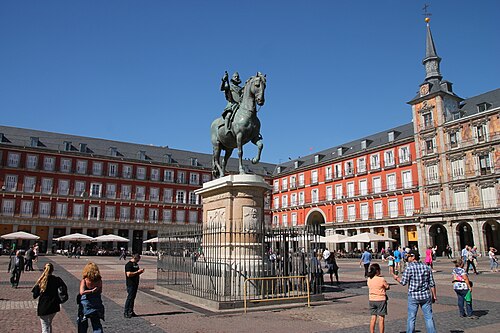
Plaza Mayor is the enclosed rectangular square at the centre of Hapsburg Madrid, the oldest quarter of the city, and it is a piece of deliberate town planning rather than a space that grew by accident.
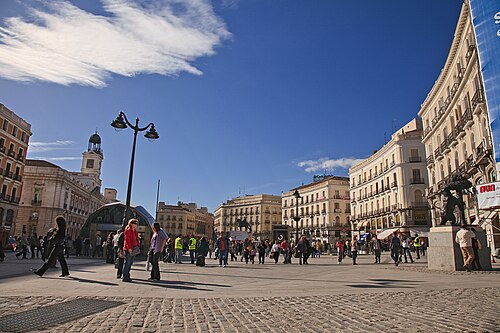
Puerta del Sol is a semi-circular public square in the exact centre of Madrid, and it is a junction before it is a monument.
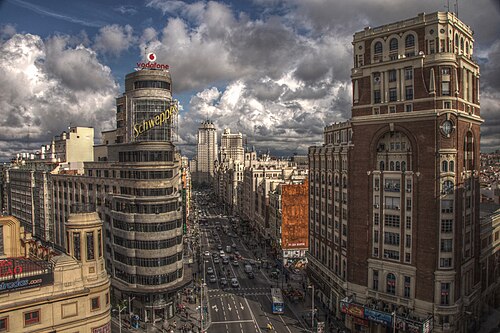
Gran Vía is a major thoroughfare and prominent street in central Madrid, Spain. It stretches from Calle de Alcalá near Plaza de Cibeles to Plaza de España.
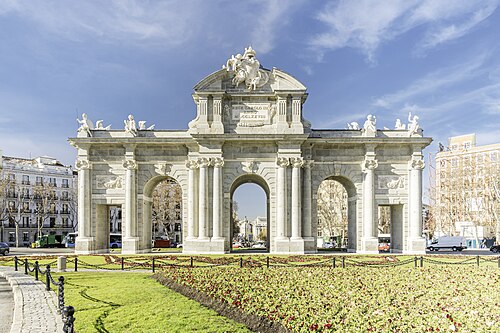
Puerta de Alcalá
Puerta de Alcalá is a neoclassical monument standing at Plaza de la Independencia in Madrid. This five-arched gate was one of several historic entrances to the city.
Galería de las Colecciones Reales
The Royal Collections Gallery (Galería de las Colecciones Reales) is an art museum in Madrid run by Patrimonio Nacional.
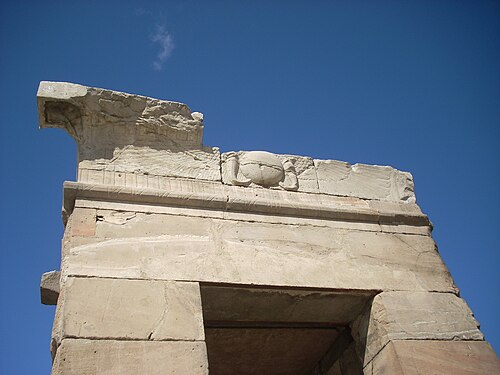
Templo de Debod is an ancient Egyptian temple standing in Madrid’s Parque del Oeste, where pharaonic stone architecture occupies an elevated position inside a modern Spanish park.
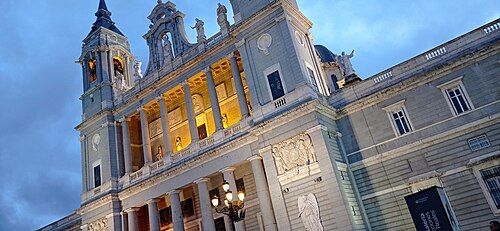
Catedral de la Almudena
Almudena Cathedral is Madrid’s principal Roman Catholic cathedral, facing the Royal Palace across Plaza de la Armería. Construction began in the late nineteenth century and Pope John Paul II consecrated the cathedral in 1993.
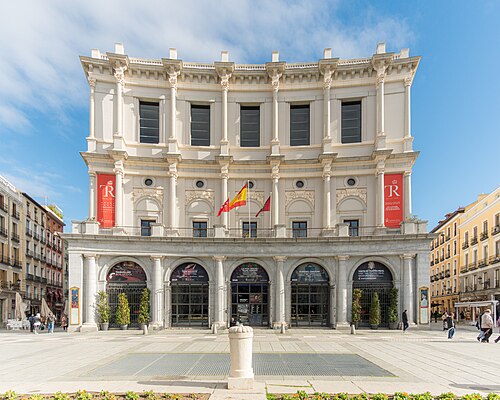
Teatro Real is the principal opera house of Madrid, Spain. Located at Plaza de Isabel II in the city centre, it stands opposite the Royal Palace.
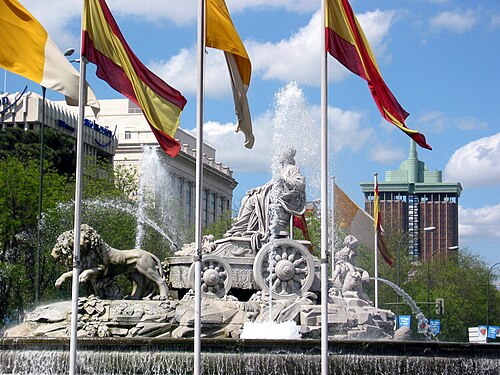
The Fuente de Cibeles is a prominent neoclassical fountain situated at the intersection of Calle de Alcalá and Paseo del Prado in central Madrid. It depicts the Greek goddess Cybele seated on a chariot drawn by two lions.
Palacio de Cibeles - Ayuntamiento de Madrid
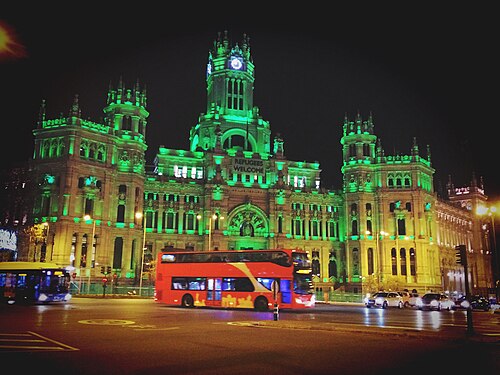
Palacio de Cibeles is Madrid’s former communications palace and a present civic and cultural building on Plaza de Cibeles.
Fuente de Neptuno
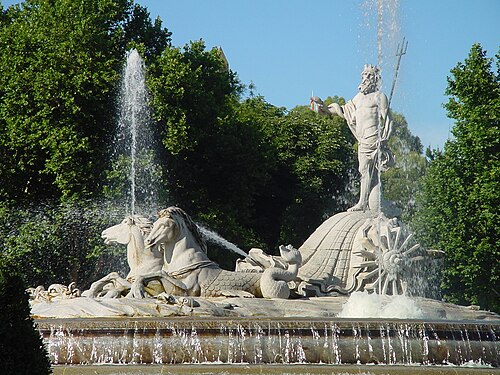
The Fountain of Neptune, or Fuente de Neptuno, is a neoclassical monument in central Madrid. Its sculptural group presents Neptune, the Roman god of the sea, on a shell-shaped chariot drawn by two hippocampi.
Real Jardín Botánico de Madrid
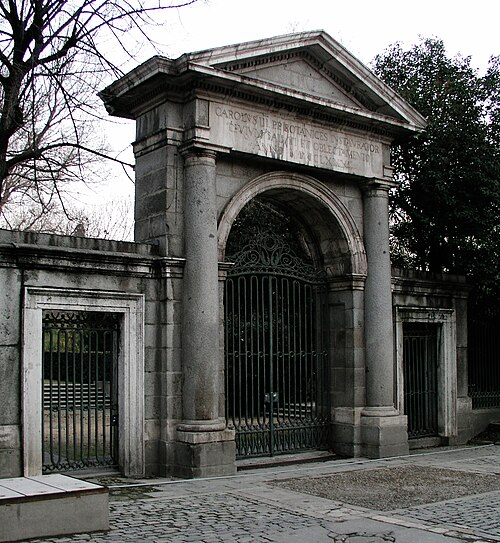
The Real Jardín Botánico is a working research institute of the CSIC, Spain's national research council, that happens to be open to the public.
Mercado de San Miguel
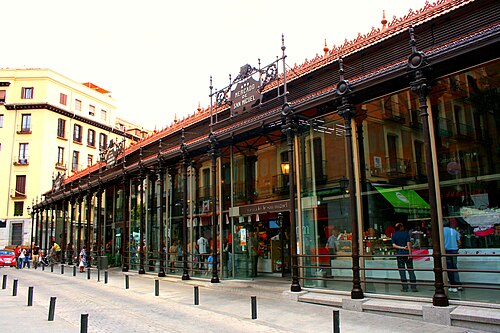
The Mercado de San Miguel is a historic market building located near Madrid's Plaza Mayor. Originally constructed in the early twentieth century, the iron and glass structure represents a significant example of cast-iron architecture in Spain.
Estadio Santiago Bernabéu
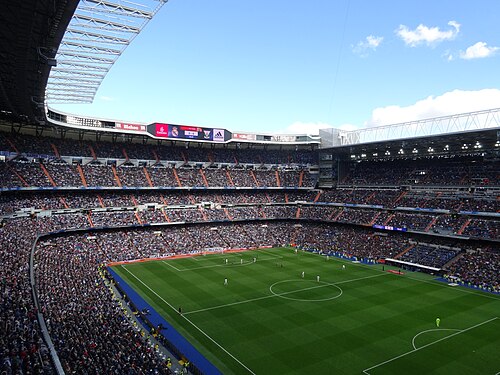
Estadio Santiago Bernabéu is Real Madrid's home ground and a working match venue, not simply a football museum. It opened as Nuevo Chamartín on 14 December 1947 with a match against Os Belenenses and took Santiago Bernabéu's name in 1955.
Plaza de Toros de Las Ventas
The Plaza de Toros de Las Ventas, known simply as Las Ventas, is the largest bullring in Spain, in the Guindalera quarter of Madrid's Salamanca district.
The Barrio de las Letras (Literary Quarter), also called the quarter of the Literati and the Muses, is an area in Madrid's Centro district.
Museo Arqueológico Nacional
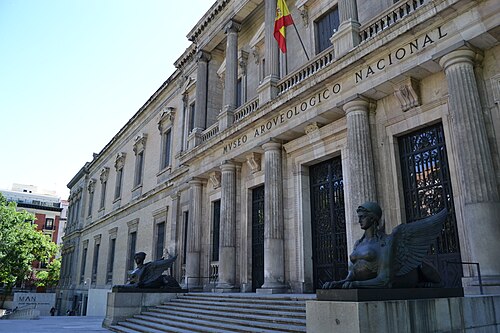
The Museo Arqueológico Nacional is Spain's principal institution dedicated to archaeological collections. Located in Madrid, it houses extensive holdings spanning prehistoric times through the medieval period.
The Royal Academy of Fine Arts of San Fernando is a working academy on Calle de Alcalá that happens to keep one of the best picture collections in Spain on its upper floors.
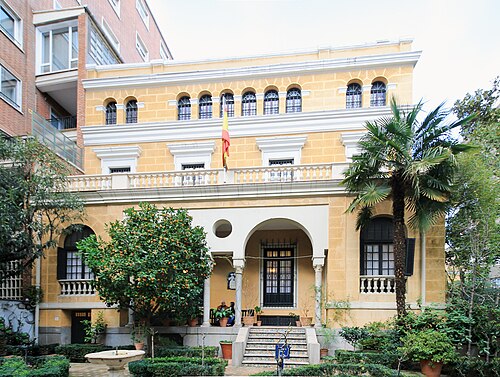
Museo Sorolla
The Sorolla Museum is a museum in Madrid dedicated to the work of Joaquín Sorolla, a prominent Spanish painter known for his luminous beach scenes and portraits.
Puerta del Sol is the practical centre for orientation. Westward lie Plaza Mayor, the Austrias quarter and the Royal Palace; eastward, Gran Vía leads toward Cibeles while the Paseo del Arte runs south past the major museums and Retiro. La Latina and Lavapiés sit south of the old core, with Malasaña and Chueca to the north. Salamanca lies east of Retiro, and the Castellana axis continues north toward the business district and the Bernabéu. Casa de Campo and Madrid Río are separate green corridors west of the centre.
Checked 2026-08-26
Walk between the Austrias quarter, Sol, Gran Vía and the Paseo del Arte, then use public transport for longer links. Madrid's official tourism service lists metro, city buses and Cercanías suburban trains among the ways to move around the capital. Cercanías also connects Madrid with towns in the region, including El Escorial and Aranjuez. Consult the current official maps and service information before travel because routes, works and ticket conditions can change.
Checked 2026-08-26
Suggested stay for a first visit: 3–4 days. Plan the Austrias and Sol core, the Paseo del Arte and Retiro, then add neighbourhood time or a regional excursion according to your priorities.
Use Puerta del Sol as the central reference. Plaza Mayor, the Austrias quarter and the Royal Palace extend west, while Gran Vía and the museum axis extend east.
Walk within the central neighbourhoods and use the metro for longer connections. The official network reaches the major museums, shopping streets, traditional quarters and northern visitor areas.
They cluster along the Paseo del Arte east of the historic core and close to Retiro. Treat this as one walking district rather than crossing the city between individual museum visits.
No. It lies north along the Castellana axis in a separate modern district. Metro is the practical connection from Sol, Gran Vía or the museum area.