

2 min walk
Thyssen-Bornemisza Museum
- Must see
- Museum
Historic monument · Madrid
Fuente de Neptuno
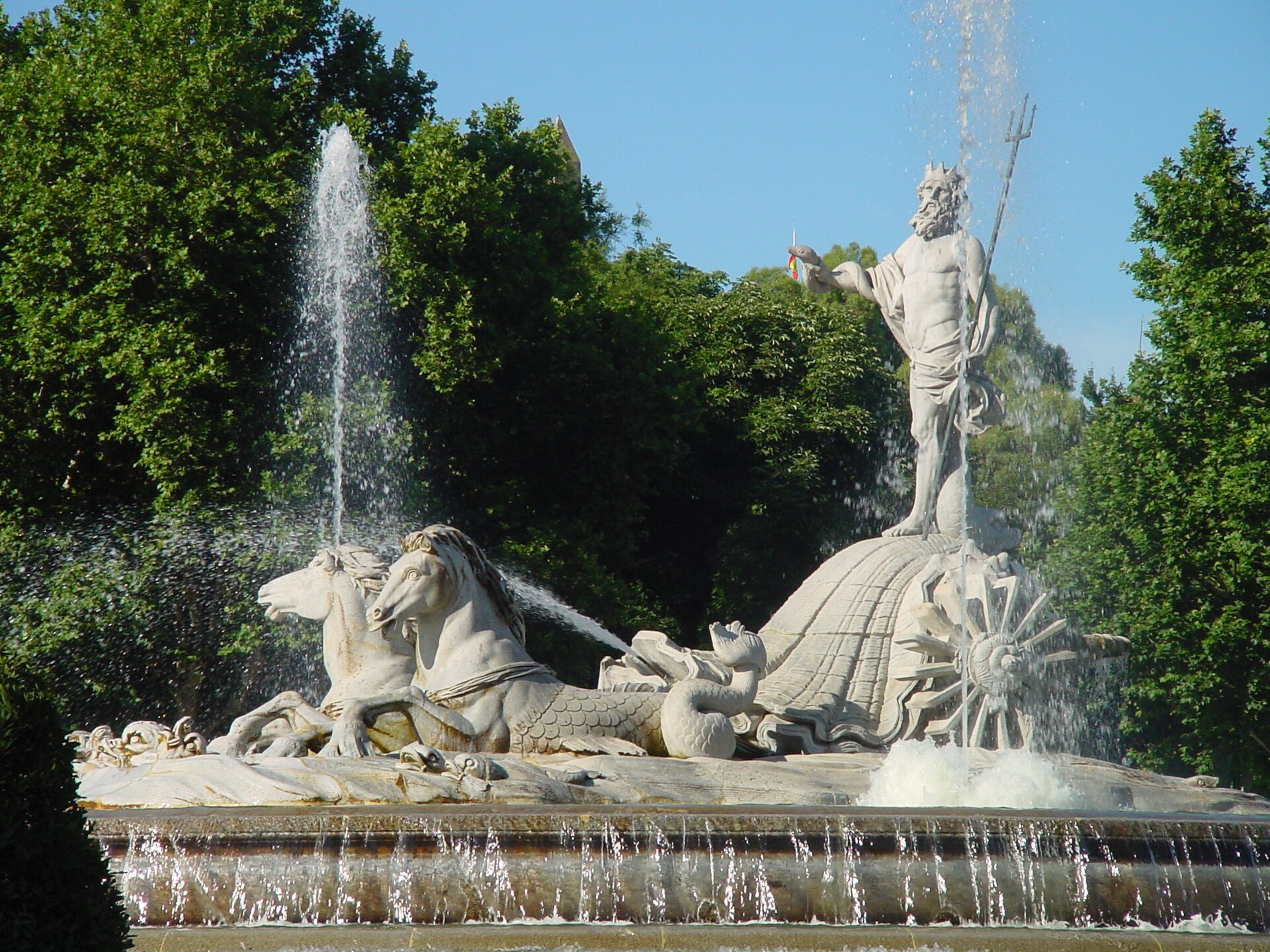
The Fountain of Neptune, or Fuente de Neptuno, is a neoclassical monument in central Madrid. Its sculptural group presents Neptune, the Roman god of the sea, on a shell-shaped chariot drawn by two hippocampi. The fountain is an outdoor civic landmark and an easy addition to a walking route through Madrid’s monumental centre, especially for travellers interested in sculpture and urban history. The Fountain of Neptune, known locally as Fuente de Neptuno, is a prominent neoclassical monument situated in Madrid. It depicts the Roman god of the sea, Neptune, standing upon a chariot drawn by sea horses. The fountain occupies a significant position within the urban landscape of the Spanish capital, serving as both a sculptural artwork and a recognizable civic landmark. Its placement reflects the historical importance of public monuments in Madrid's city planning and cultural identity. No. The Fountain of Neptune is an outdoor public monument situated in a plaza. It requires no indoor access and has no enclosed visitor facilities.
Checked 2026-08-26 · Source
There is no interior to explore. Focus on the bronze Neptune figure, his trident, the shell-like chariot, the sea-horse forms and the stone basin beneath the group. The surrounding plaza lets you view the monument from different distances, first taking in its place within the city and then moving closer to study the neoclassical sculptural details. The fountain features a bronze sculpture of Neptune holding a trident, positioned atop a shell-shaped chariot pulled by two hippocampi, or sea horses with fish tails. The sculptural group rests upon a stone basin with decorative elements. The monument's design embodies neoclassical artistic principles popular during its era of construction. The surrounding plaza provides pedestrian access for viewing the monument from multiple angles.
Checked 2026-08-26 · Source
Allow fifteen to thirty minutes for the monument itself. A quick stop is enough for a full view and a few photographs, while a longer pause lets you examine the figures and observe the fountain within its busy urban setting. Most visitors combine it with a broader central Madrid walk rather than travel across the city for this single outdoor landmark. Visitors typically spend approximately fifteen to thirty minutes at the Fountain of Neptune, depending upon individual interest in photographic documentation and appreciation of sculptural details. The monument functions as an outdoor public installation without enclosed spaces requiring extended exploration. Many travelers incorporate the fountain into broader itineraries covering the surrounding district. The duration of visit may extend for those choosing to rest in the adjacent plaza or observe the fountain's interaction with its urban context during different lighting conditions throughout the day.
Checked 2026-08-26 · Source
Daylight gives the clearest view of the bronze and stone details, while evening brings a different atmosphere as the surrounding city becomes more active. Madrid’s summer heat can make the open plaza tiring at midday, so morning or late afternoon is comfortable for a longer look. The monument remains part of the public streetscape rather than a timed indoor visit.
Checked 2026-08-26 · Source
Viewing the Fountain of Neptune is a public outdoor experience without a museum-style admission process. Build it into a central Madrid walking route and reserve your budget for transport, food or other attractions visited during the same outing. Because the monument stands in an open plaza, you can stop briefly for the sculpture or remain longer to study its relationship with the surrounding streets.
Checked 2026-08-26 · Source
The fountain is in central Madrid and fits naturally into an urban walking itinerary. Madrid Metro and municipal buses serve the city centre, while visitors already exploring the surrounding monumental district can approach on foot. Central traffic and pedestrian movement shape the experience, so walking usually gives the clearest sense of how the fountain functions as part of Madrid’s public space.
Checked 2026-08-26 · Source
The plaza can be busy, especially when central Madrid is crowded. Stay aware of pedestrians and traffic near the monument, and keep children from climbing on the basin or touching the sculpture. Water may leave nearby surfaces damp. Summer sun can be intense, while winter visits may feel cold in the open space. Respect the monument as public artwork and leave the basin unobstructed.
Checked 2026-08-26 · Source
Photograph the fountain from several distances: a wide view places Neptune in Madrid’s civic landscape, while a closer composition isolates the trident, chariot and hippocampi. Morning or late-afternoon light can reveal more texture than hard midday sun. Evening images bring out the urban atmosphere. Allow pedestrians to pass, avoid blocking circulation and use patience when the plaza is busy.
Checked 2026-08-26 · Source
No. It is an outdoor public monument in a central Madrid plaza, with no enclosed visitor interior.
It depicts Neptune, the Roman god of the sea, standing on a shell-shaped chariot drawn by two hippocampi, or sea horses with fish tails.
Fifteen to thirty minutes is enough to view the monument, study its details and take photographs. It is commonly combined with a longer walk through central Madrid.
No. Keep off the basin and sculpture, maintain a respectful distance and leave the public artwork clear for other visitors and pedestrians.
It stands in central Madrid, within the city’s monumental urban district and close to routes that visitors commonly explore on foot.
Use a wide view for the monument and its plaza, then move closer for Neptune, the trident, chariot and hippocampi. Morning and late-afternoon light can show the sculptural texture clearly.
Loading the interactive map…
The interactive map could not be loaded.
Last updated:
Source: OpenStreetMap contributors, Wikidata ·