
1 min walk
Temple of Debod
- Must see · Heritage site
- Museum
Language · 11 published
Historic monument · Madrid
Reviewed by Elena Voss · Roavina Travel Editor
| Monday | Closed |
|---|---|
| Tuesday | 10:00 – 20:00 |
| Wednesday | 10:00 – 20:00 |
| Thursday | 10:00 – 20:00 |
| Friday | 10:00 – 20:00 |
| Saturday | 10:00 – 20:00 |
| Sunday | 10:00 – 20:00 |
Checked 2026-08-31 · Source
Read from the OpenStreetMap access tags; anything not listed has no tag recorded.
Set the group type to family in the planner and the day window contracts to about three quarters of a solo day.
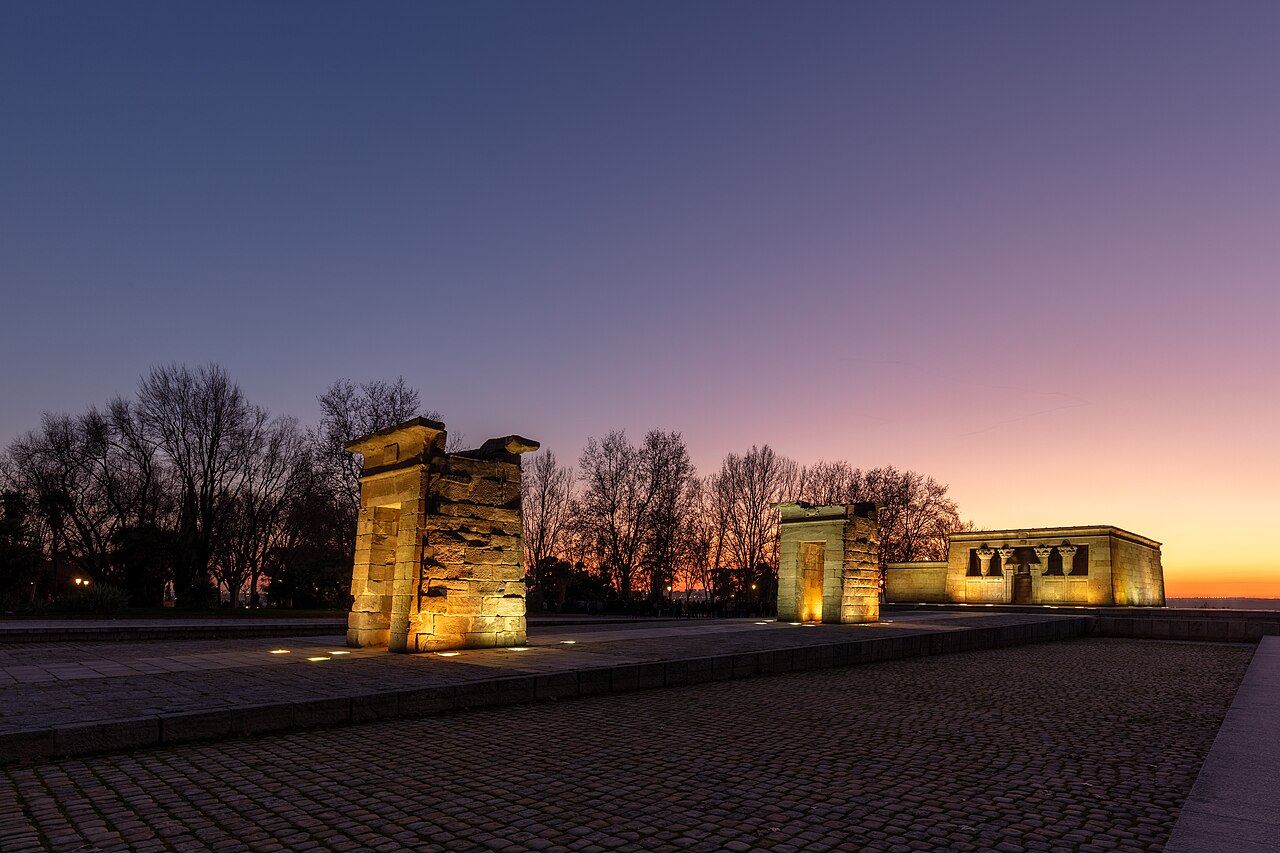
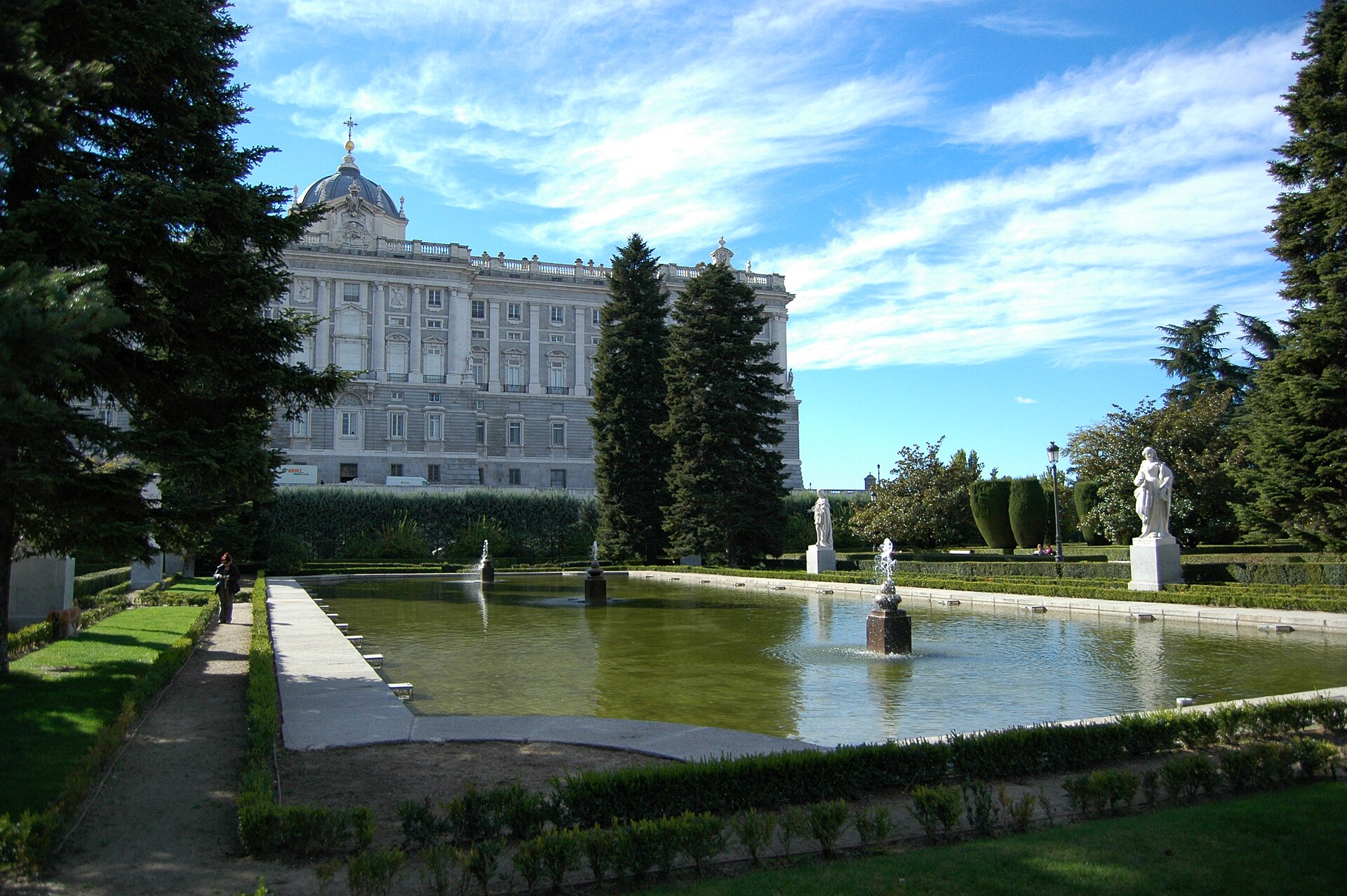
Templo de Debod is an ancient Egyptian temple standing in Madrid’s Parque del Oeste, where pharaonic stone architecture occupies an elevated position inside a modern Spanish park. Egypt donated the monument to Spain in 1968 after Spanish assistance with the rescue of the Abu Simbel temples during construction of the Aswan High Dam. The temple was dismantled near Aswan, transported and reconstructed in Madrid. Its location gives the visit a distinctive character: the monument’s Egyptian origin, Madrid’s western skyline and the surrounding park are part of the same experience.
Checked 2026-09-02 · Source
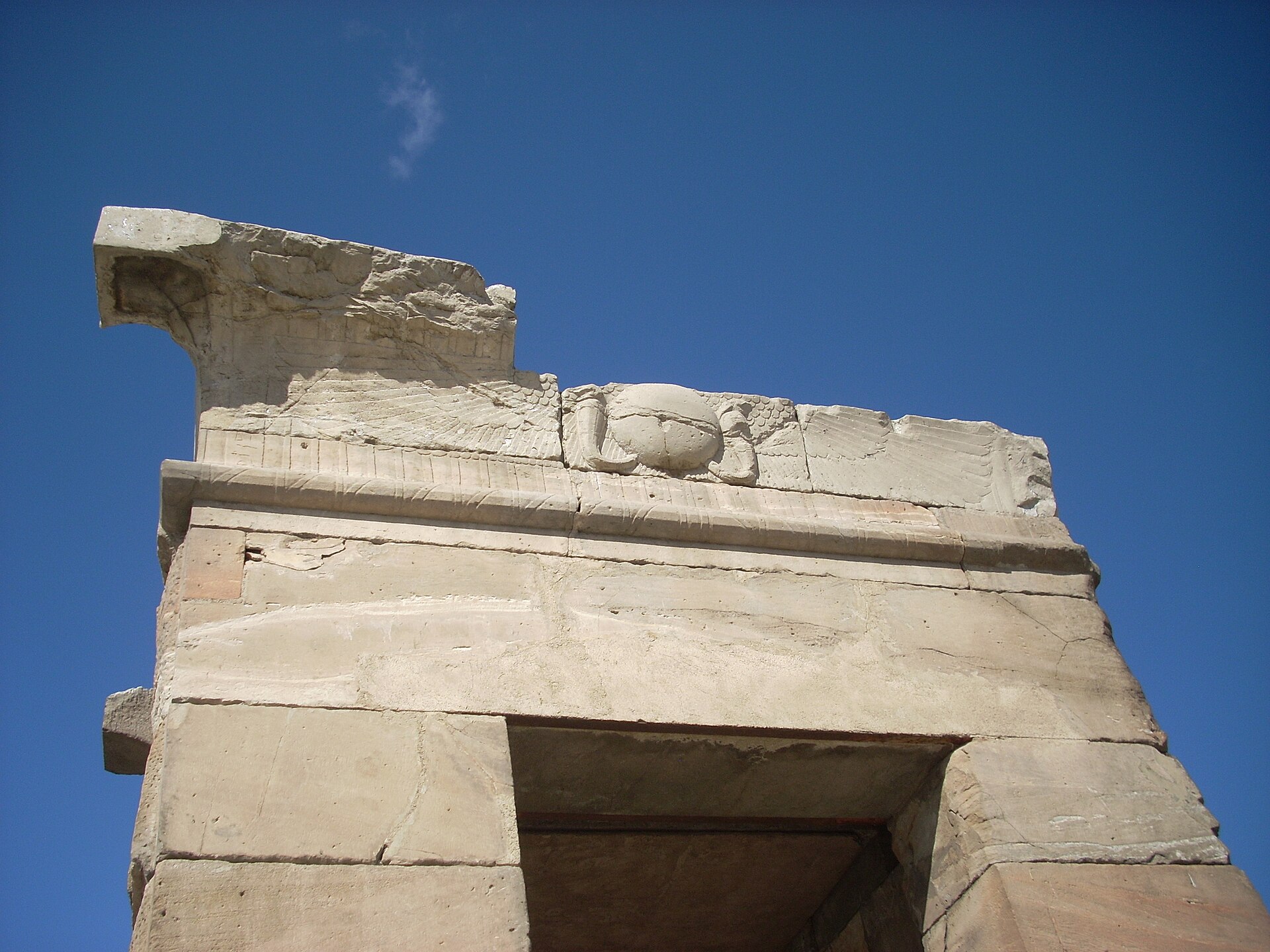
The temple complex presents surviving stone architecture arranged around an entrance approach, gateway, courtyard and inner rooms. Hieroglyphic inscriptions and carved reliefs preserve links to ancient Egyptian religious imagery, including representations associated with deities and pharaohs. The reconstructed arrangement allows visitors to understand how the separate architectural elements were brought together as one monument in Madrid. Interior rooms are compact and more enclosed than the exterior setting suggests. Look closely at the carved surfaces, then step outside to compare the temple’s ancient forms with the greenery and open views of Parque del Oeste.
Checked 2026-09-02 · Source
Allow approximately 30 minutes to one hour for Templo de Debod itself. That timeframe covers the exterior stonework, accessible interior areas and a short circuit around the immediate park setting. The compact monument does not require the same time as a large museum, but visitors interested in inscriptions, architectural reconstruction or ancient Egyptian history may want to linger over details. Add time if the temple is one stop in a Parque del Oeste walk, or if you are waiting for sunset light and the changing views across Madrid from the elevated site.
Checked 2026-09-02 · Source
The recorded regular schedule is 10:00-20:00 from Tuesday through Sunday, with Monday closed. Sunset is the most atmospheric period for exterior views because the elevated western setting combines warm light, the temple’s stone surfaces and Madrid’s skyline. It is also a busy period, particularly for photography. Seasonal daylight and temperature change the comfort of the park approach, while rain can affect outdoor paths. Events, ceremonies, maintenance and security arrangements may alter ordinary access, so the published weekly pattern should not be treated as an absolute guarantee for every visit.
Checked 2026-09-02 · Source
General admission to Templo de Debod is free, including the temple and the surrounding park setting. The recorded base charge is EUR 0 per person, so ordinary entry does not require a paid ticket. Capacity may be controlled, meaning free admission does not guarantee immediate access during busy periods. Special tours, exhibitions or educational programmes with separate conditions should be treated as distinct offerings rather than added to the base admission record. Visitors should also remember that reaching the park may still involve the normal cost of Madrid public transport.
Checked 2026-09-02 · Source
The clearest named public-transport references are Plaza de España and Ventura Rodríguez Metro stations. From either station, continue on foot through the streets and pathways leading into Parque del Oeste; signage within the park helps direct visitors towards the temple’s prominent position. Several bus routes serve the surrounding streets. Walking from central Madrid is feasible for visitors comfortable with a moderate rise and park paths. Parking around the park is limited, making public transport the simpler option for an independent visit. Bicycle and scooter rentals offer additional approaches, but the final route still involves reaching the monument through the park setting.
Checked 2026-09-02 · Source
Accessible routes serve principal visitor areas, but the complete historic circuit is limited by stairs, thresholds or operational constraints. Recorded amenities include toilets, while accessible toilets and pushchair access are limited. The surrounding park has uneven paths, and the monument offers little shelter from strong sun, rain or winter cold. Sunset crowds can narrow movement and reduce clear sightlines. Access to particular rooms or areas may change for preservation, ceremonies or security reasons. Keep away from the stonework and do not touch carved surfaces: the archaeological fabric is the reason this unusual monument can be experienced in Madrid.
Checked 2026-09-02 · Source
Templo de Debod is particularly photogenic during golden hour, when low western light picks out the ancient stonework and the elevated site opens views towards Madrid. Sunset offers the strongest atmosphere but also attracts visitors seeking the same viewpoints, so arrive earlier if you need room for a careful composition. Wide photographs can include the temple, park and skyline; closer images can isolate gateways, reliefs and inscriptions while respecting the protected surfaces. After dark, illumination creates a different contrast between the ancient monument and the city beyond. Tripods or equipment that obstructs circulation may attract attention in busy periods.
Checked 2026-09-02 · Source
The recorded schedule is 10:00-20:00 from Tuesday through Sunday. Templo de Debod is closed on Mondays.
General admission is free. The recorded charge is EUR 0 per person, although capacity control may affect immediate entry at busy times.
No. Accessible provision serves principal areas, but stairs, thresholds and operational constraints can limit the complete historic circuit. Pushchair access is also limited.
The operator information names Plaza de España and Ventura Rodríguez Metro stations. Both require a further walk through routes leading into Parque del Oeste.
Yes. Events, ceremonies, maintenance and security arrangements can change ordinary access, even when the regular Tuesday-Sunday schedule remains published.
General admission is free, but special tours, exhibitions or educational programmes with separate conditions should be treated as distinct offerings rather than part of the base entry record.
Loading the interactive map…
The interactive map could not be loaded.
Last updated:
Source: OpenStreetMap contributors ·