This place is a Attraction.
It was established in 1911.
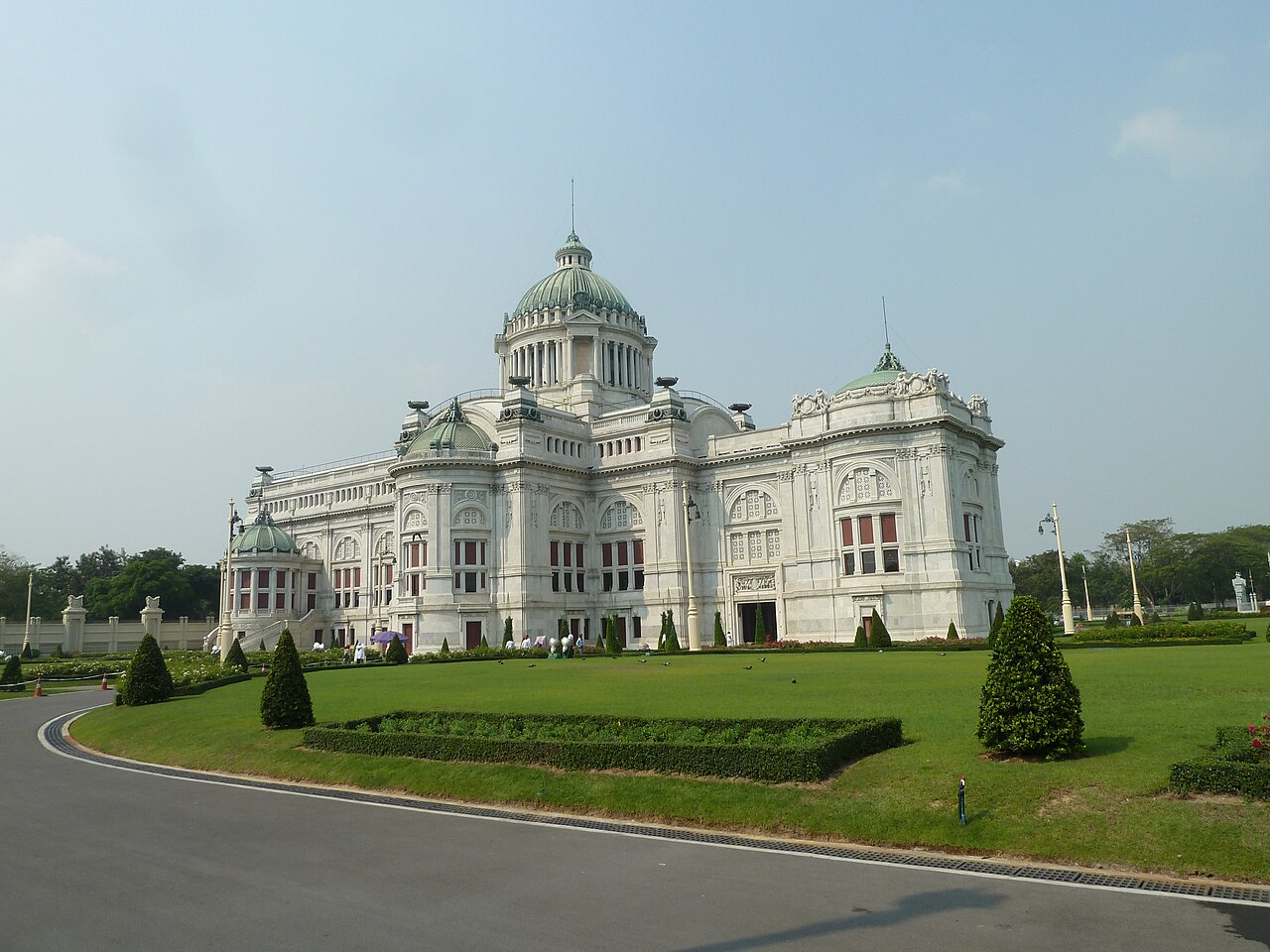
It was built in the Italian Neoclassical architecture style.
It was designed by Narisara Nuwattiwong.
It is built of marble.
It carries the registered Thai historic site heritage designation.
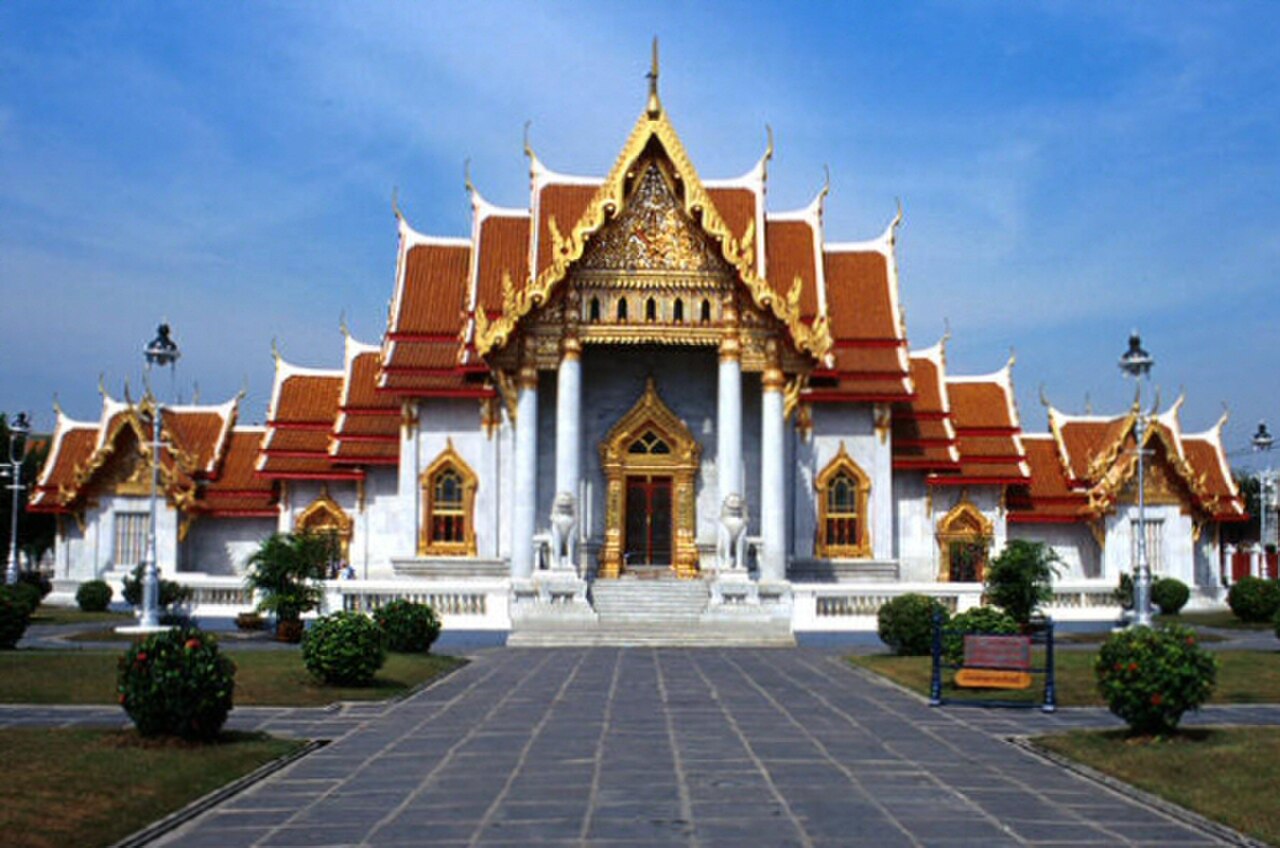
Wat Benchamabophit is Rama V's marble temple, built in 1900 as part of the Dusit district he laid out for himself, and the clearest surviving statement of what the Thai monarchy meant by modernisation. Its ordination hall was designed by Prince Naris on a cruciform plan that fuses Thai and Khmer form, faced in Carrara marble imported from Italy and lit through stained glass — materials no Thai temple had used before. Rama V's ashes lie beneath the principal image. Monday–Saturday 08:00–17:00; Sunday and Thai public holidays 10:00–17:00. No full-day weekly closure is listed; Sundays and public holidays use the later opening time.
The ubosot is the object. White marble, symmetrical, cross-shaped, with the roof lines and gables of a Thai temple executed in a European material and finished to European tolerances — the joints are tight, the surfaces are flat, and the effect at midday is glare rather than gilding. Inside sits Phra Buddhajinaraja, a cast replica of the revered image at Phitsanulok, and the windows are stained glass rather than shutters, which gives the interior a colour no other Bangkok ordination hall has. No full-day weekly closure is listed; Sundays and public holidays use the later opening time.
Allow 40 minutes. That covers the ordination hall, a slow circuit of the cloister of Buddha images — which is where the time actually goes, if the images are read rather than passed — and the canal courtyard behind. The figure is judgement; the temple publishes no suggested visit length, as it publishes nothing else. Nobody needs more than an hour here unless they are photographing the cloister image by image. Thai nationals enter free; foreign visitors pay THB 50.
Come at about 06:30, for the alms round. That hour is judgement and may fall before whatever opening hour the temple observes; the alms round happens on the public street, not inside the compound, so the gate is not the constraint. Midday is also when the white stone glares hardest. Monday–Saturday 08:00–17:00; Sunday and Thai public holidays 10:00–17:00. From MRT Sam Yot, continue by taxi, tuk-tuk or bus because the temple remains some distance from the station. Bus routes 72, 157, 503 and 510 serve the area. Parking is available beside the temple.
No admission figure is recorded for Wat Benchamabophit, because nothing the temple publishes could be found. The temple runs no website. The address carried as its website is its own Facebook page, and Facebook serves an automated fetch nothing but the page name; both the page and its about tab were tried. Thai nationals enter free; foreign visitors pay THB 50. The main courtyard and cloister gallery have flat, smooth marble surfaces suitable for wheelchairs. The ordination hall has entrance steps and no dedicated wheelchair ramp, so wheelchair users need assistance to enter.
Dusit is the part of central Bangkok the rail network does not reach: no BTS or MRT station is within walking distance, and the nearest line is roughly two kilometres away. A private car is still not required. From MRT Sam Yot, continue by taxi, tuk-tuk or bus because the temple remains some distance from the station. Bus routes 72, 157, 503 and 510 serve the area. Parking is available beside the temple. The ordination hall has entrance steps and no dedicated wheelchair ramp, so wheelchair users need assistance to enter.
The temple dress code applies in full — shoulders and knees covered, shoes off in the ordination hall — and is the same one described at length in the Wat Suthat guide. Two things are specific to Wat Benchamabophit. The main courtyard and cloister gallery have flat, smooth marble surfaces suitable for wheelchairs. The ubosot is clad inside and outside with white marble imported from Italy. The principal image is a replica of Phra Buddha Chinnarat shown in the Maravijaya, or earth-touching, posture. The cloister contains 52 Buddha images representing traditions including Sukhothai, Lopburi, Lanna, Khmer, Burmese and Chinese styles.
This is a temple that photographs badly at the hour most people arrive. White Carrara marble in vertical Bangkok sun blows out the highlights and flattens every carved line the building has, so midday exteriors come back as a white shape. Early morning is the answer twice over: the low light rakes across the gables and picks out the relief, and the alms round is happening at the same time. The principal image is a replica of Phra Buddha Chinnarat shown in the Maravijaya, or earth-touching, posture. The cloister contains 52 Buddha images representing traditions including Sukhothai, Lopburi, Lanna, Khmer, Burmese and Chinese styles.
The ubosot is clad inside and outside with white marble imported from Italy.
Which Buddha image is inside the ubosot?
The principal image is a replica of Phra Buddha Chinnarat shown in the Maravijaya, or earth-touching, posture.
How many Buddha images are displayed in the cloister?
The cloister contains 52 Buddha images representing traditions including Sukhothai, Lopburi, Lanna, Khmer, Burmese and Chinese styles.
What clothing is appropriate?
Visitors should dress modestly and avoid sleeveless shirts, shorts and flip-flops.
When does the morning alms-giving take place?
The temple schedules alms-giving every day from 06:00 to 07:00.
Is photography permitted?
Photography is permitted outdoors; some interiors may restrict it, and visitors must follow the signs at each building.
What are the 52 Buddha images in the cloister?
A comparative survey assembled by Prince Damrong Rajanubhab, gathering images in different mudras and regional styles so they can be read against one another. It is the reason the visit takes longer than the small ordination hall suggests.
Nothing non-essential is set before you choose, in regions where consent is required. If you decline, ads still appear and analytics is switched off entirely.