
3 min walk · เขตพระนคร
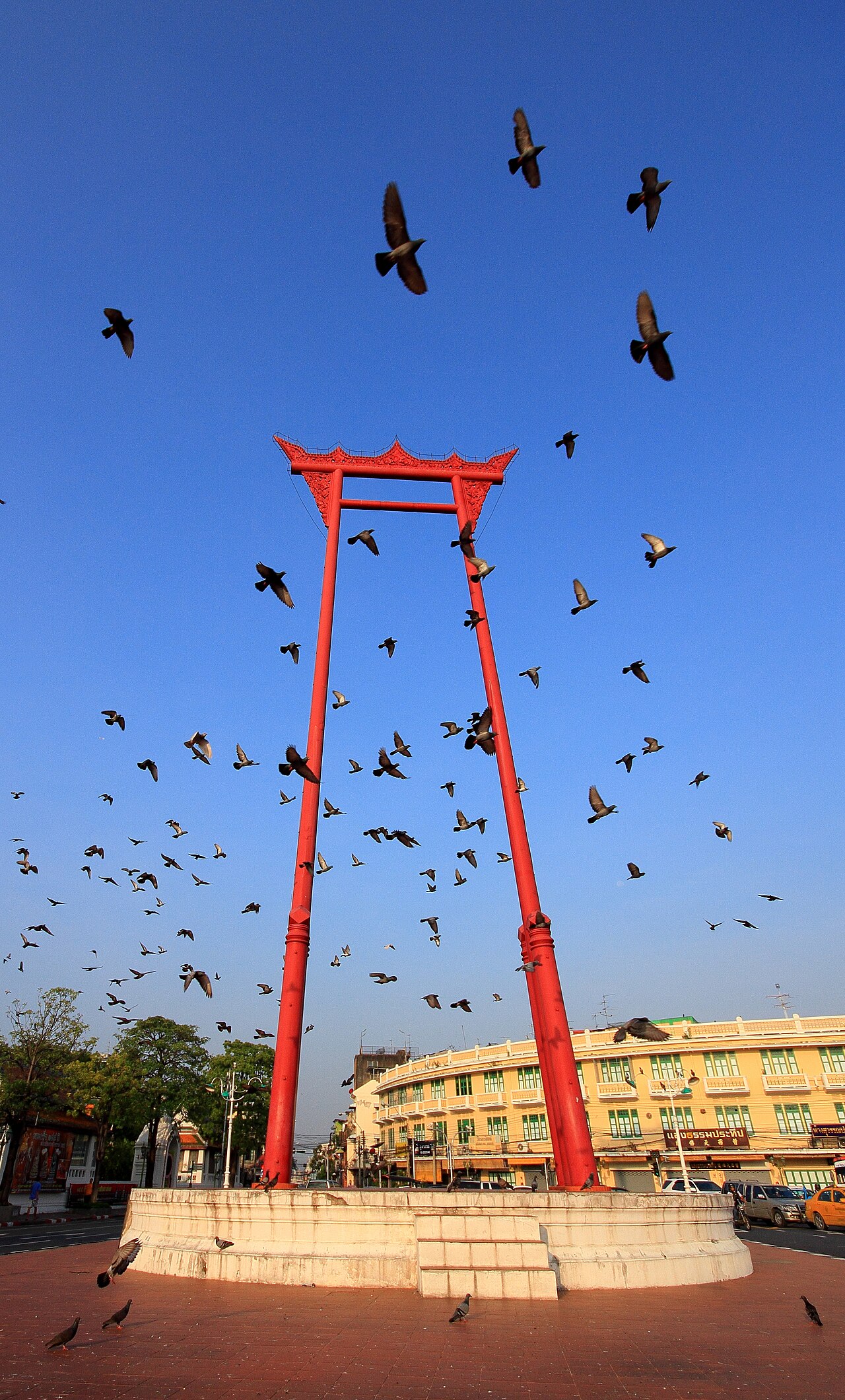
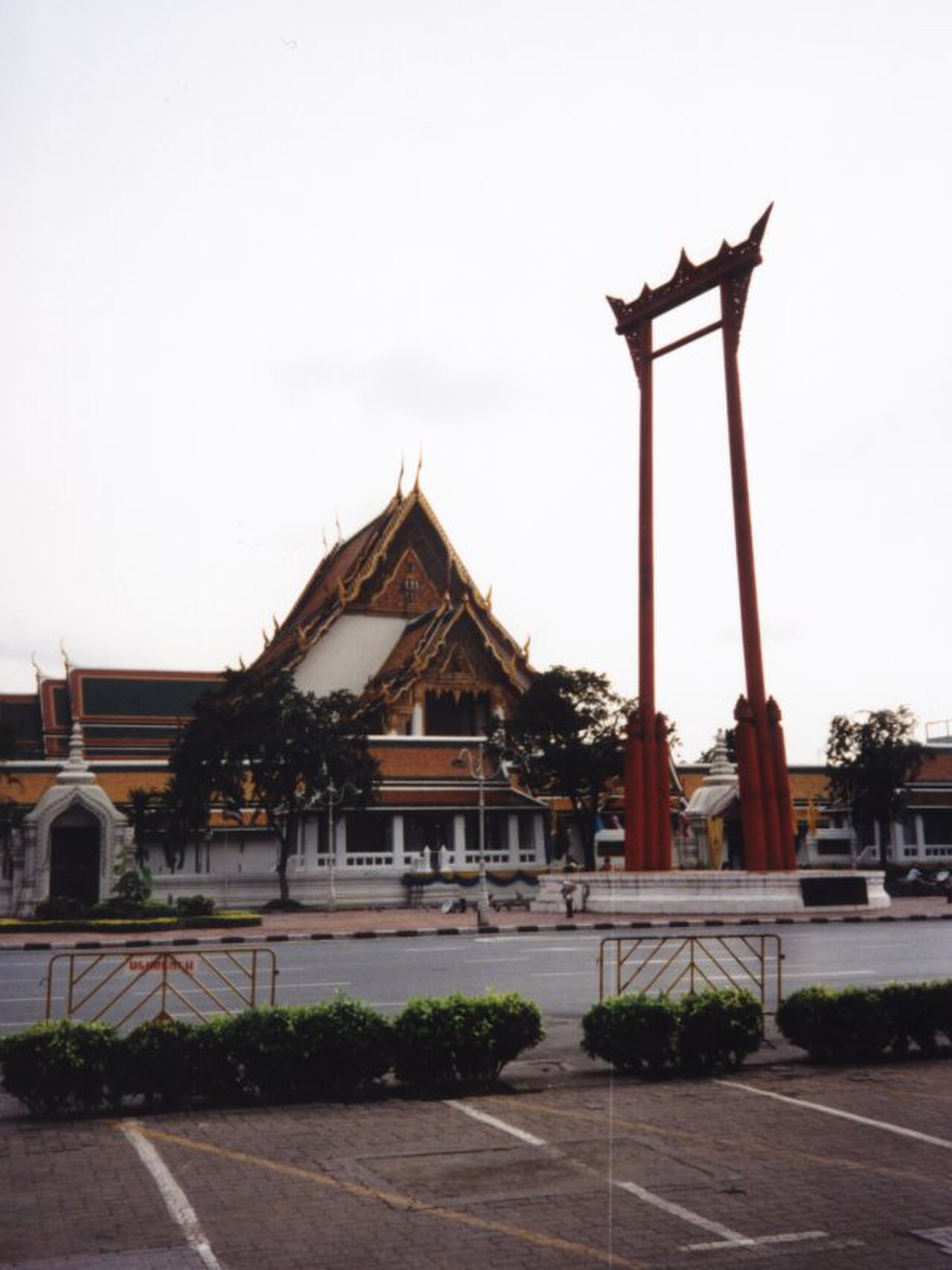
Sao Chingcha
- Must see · Heritage site
- Historic monument
Language · 11 published
Historic monument · เขตพระนคร, Bangkok
วัดสุทัศนเทพวรารามราชวรมหาวิหาร
Reviewed by Elena Voss · Roavina Travel Editor
| Monday | 08:30 – 16:00 |
|---|---|
| Tuesday | 08:30 – 16:00 |
| Wednesday | 08:30 – 16:00 |
| Thursday | 08:30 – 16:00 |
| Friday | 08:30 – 16:00 |
| Saturday | 08:30 – 16:00 |
| Sunday | 08:30 – 16:00 |
Checked 2026-08-31 · Source
Read from the OpenStreetMap access tags; anything not listed has no tag recorded.
Set the group type to family in the planner and the day window contracts to about three quarters of a solo day.
This place is a Attraction. It was established in 1807. It carries the registered Thai historic site heritage designation.
Wat Suthat Thepwararam is one of only ten first-class royal temples in Bangkok, and the one written into the city's original plan rather than added beside it. Rama I began the temple in 1807 to house Phra Si Sakyamuni, a Sukhothai-period bronze Buddha brought down by river from the great vihara of Wat Mahathat in Sukhothai; the work outlasted him and was finished under Rama III. Monday–Sunday 08:30–16:00. Open daily, with no regular weekly closure day. General admission is free for Thai nationals and THB 100 for foreign visitors.
Checked 2026-08-31 · Source
The wihan is the reason to come. It is a tall, dim hall on a raised terrace, ringed by a gallery of seated Buddha images, and Phra Si Sakyamuni sits at the end of it above a base in which the ashes of Rama VIII were placed. The ubosot behind it is the long one, and its own principal image and murals are worth the walk even after the wihan. Open daily, with no regular weekly closure day. General admission is free for Thai nationals and THB 100 for foreign visitors.
Checked 2026-08-31 · Source
Allow 45 minutes. That covers the wihan at an unhurried pace, the ordination hall behind it, a circuit of the gallery of Buddha images and a few minutes at the Giant Swing across the road. The figure is this page's judgement, not an operator statement: Wat Suthat publishes no suggested visit length anywhere. Visitors who read murals closely can spend the full 45 minutes inside the wihan alone. General admission is free for Thai nationals and THB 100 for foreign visitors.
Checked 2026-08-31 · Source
November to February is the season to plan around: Bangkok's cool dry months, which matter here because the wihan is unairconditioned and the courtyard between the halls is open to the sun with almost no shade. Arrive at 08:30, close to the recorded opening time. Monday–Sunday 08:30–16:00. Take the MRT Blue Line to Sam Yot station, use Exit 3, turn right and follow Unakan Road for about 750 metres. Alternatively, Chao Phraya Express Boat passengers can alight at Tha Tien and connect to bus 12; buses 12, 42 and 508 serve Bamrung Mueang Road near the Giant Swing.
Checked 2026-08-31 · Source
No admission figure is recorded for Wat Suthat, because nothing the temple publishes could be found. Carry small notes and expect that a fee may be collected at the wihan. The hours this page records are 08:30 to 21:00 daily, and they should be treated as the recorded value rather than as a figure the temple has confirmed. General admission is free for Thai nationals and THB 100 for foreign visitors. A firsthand accessibility inspection records a step at the Bamrung Mueang Road entrance. Several steps lead into the main viharn, so its visitor route is not fully step-free.
Checked 2026-08-31 · Source
No car is needed. The Giant Swing is the landmark to steer by: it is visible from several streets away and the temple gate faces it. Take the MRT Blue Line to Sam Yot station, use Exit 3, turn right and follow Unakan Road for about 750 metres. Alternatively, Chao Phraya Express Boat passengers can alight at Tha Tien and connect to bus 12; buses 12, 42 and 508 serve Bamrung Mueang Road near the Giant Swing. Several steps lead into the main viharn, so its visitor route is not fully step-free.
Checked 2026-08-31 · Source
Dress as for any active Thai temple: shoulders and knees covered, shoes off before entering the wihan and the ubosot, no pointing the soles of the feet towards a Buddha image, and no walking in front of someone who is praying. The courtyard stone is fierce underfoot in the afternoon, so socks are worth having when the shoes come off. A firsthand accessibility inspection records a step at the Bamrung Mueang Road entrance. Wat Suthat opens daily from 08:30 to 16:00, so it has no regular weekly closure day. Thai nationals enter free; foreign visitors pay THB 100.
Checked 2026-08-31 · Source
The wihan is the difficult and rewarding shot. It is dim, the murals are high, and flash is both intrusive and useless at that distance, so the workable approach is a wide lens braced against a door frame or a pillar and a raised ISO. Morning light enters the eastern doors and falls across the floor of the hall in a way that lasts about an hour after opening, and that is the window worth arriving for. Thai nationals enter free; foreign visitors pay THB 100. Visitors must dress respectfully, with shoulders and knees covered.
Checked 2026-08-31 · Source
Wat Suthat opens daily from 08:30 to 16:00, so it has no regular weekly closure day.
Thai nationals enter free; foreign visitors pay THB 100.
Visitors must dress respectfully, with shoulders and knees covered.
Phra Si Sakyamuni is the bronze Sukhothai-style principal image in the royal viharn; it was transferred from the main viharn of Wat Mahathat in Sukhothai.
King Rama I initiated the temple in 1807, and construction was completed under King Rama III in 1847.
King Rama VIII's royal ashes were enshrined in 1950 at the decorative cloth panel on the throne base of Phra Si Sakyamuni; a royal merit-making ceremony is held there each year on 9 June.
MRT Sam Yot is about a ten-minute walk along Bamrung Mueang Road. From the Chao Phraya piers at Tha Tien or Tha Chang it is roughly a kilometre and a half on foot. Taxi drivers know the temple as Sao Ching Cha, the Giant Swing.
Loading the interactive map…
The interactive map could not be loaded.
Last updated:
Source: OpenStreetMap contributors, Wikidata ·