.jpg)
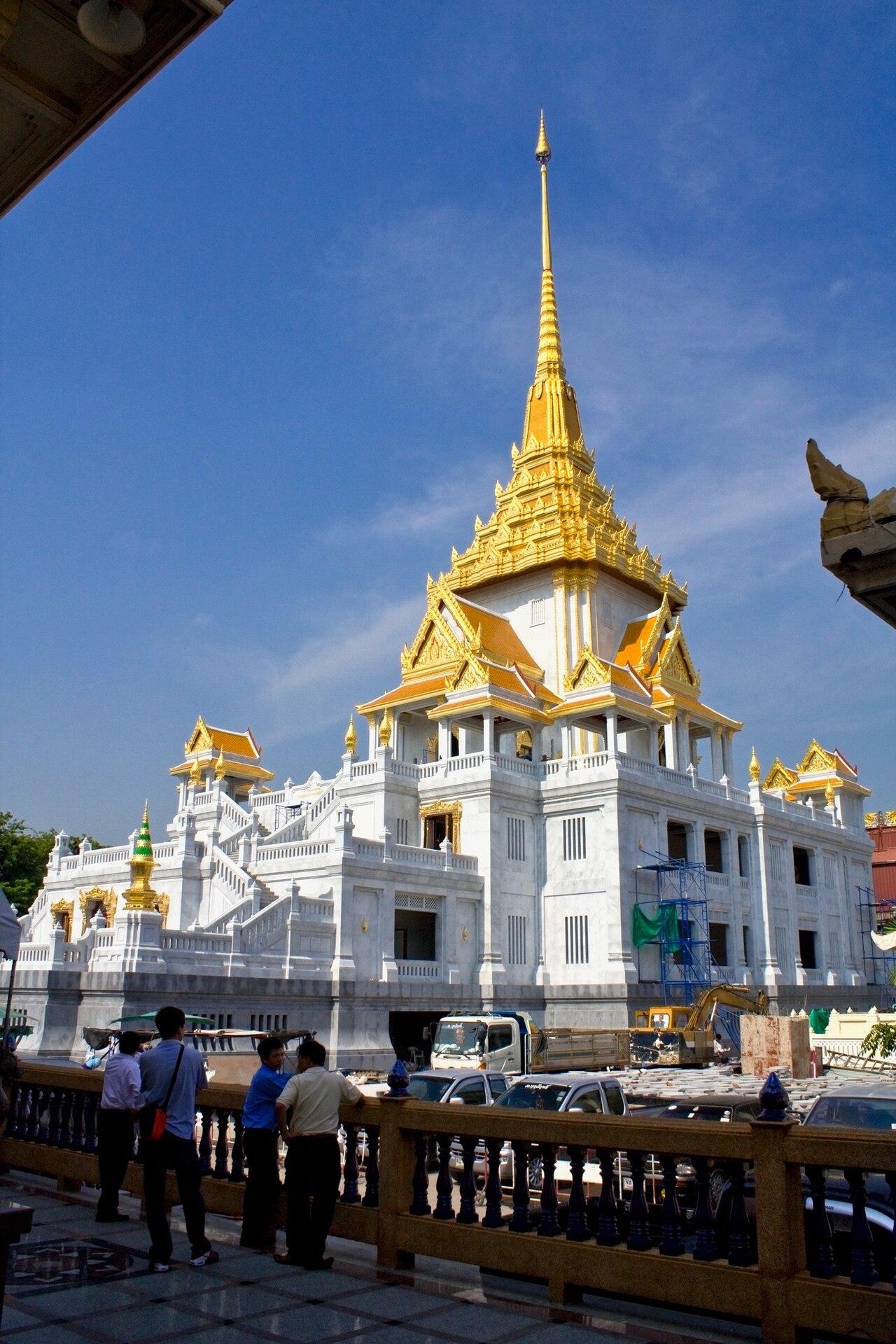
3 min walk · เขตสัมพันธวงศ์
Wat Traimit
- Must see · Heritage site
- Place of worship
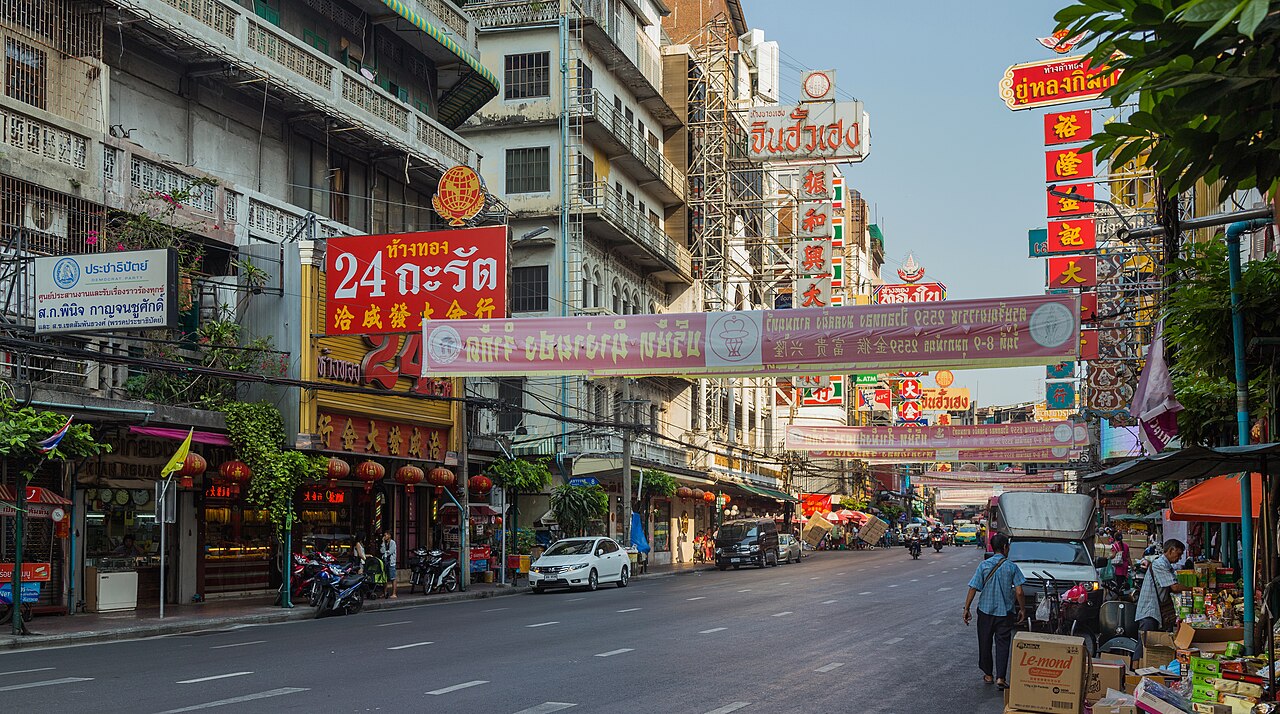
Historic monument · เขตสัมพันธวงศ์, Bangkok
ถนนเยาวราช
| Monday | 00:00 – 23:59 |
|---|---|
| Tuesday | 00:00 – 23:59 |
| Wednesday | 00:00 – 23:59 |
| Thursday | 00:00 – 23:59 |
| Friday | 00:00 – 23:59 |
| Saturday | 00:00 – 23:59 |
| Sunday | 00:00 – 23:59 |
Checked 2026-08-31 · Source
| Per person | Free entry |
|---|
Checked 2026-08-31 · Source
Read from the OpenStreetMap access tags; anything not listed has no tag recorded.
Set the group type to family in the planner and the day window contracts to about three quarters of a solo day.
Yaowarat Road is the mile and a half of Chinatown that records the commercial history of Bangkok, as against the royal history a few streets north. When Rama I took Rattanakosin Island for the Grand Palace in 1782, the Chinese traders already settled there were moved downriver to this stretch of ground, and the junk-trade network they ran from it built the district. Daily, 24 hours. Yaowarat Road is a functioning public road without attraction gates or a weekly closure day. Shops, food stalls and nearby attractions keep independent hours; official events can temporarily alter traffic access.
Checked 2026-08-31 · Source
Two things run along Yaowarat and a third runs off it. The first is gold: a line of shops with red and gold frontage trading bullion chains by weight, which is why the road is lit the way it is and why it looks prosperous at ten in the morning when nothing else is happening. The third is the alleys. Yaowarat Road is a functioning public road without attraction gates or a weekly closure day. Shops, food stalls and nearby attractions keep independent hours; official events can temporarily alter traffic access.
Checked 2026-08-31 · Source
Allow two hours. That is the length of the road at a walking pace with stops, plus one of the side alleys and a couple of things eaten standing up. It is judgement, not a published figure — a public street has no operator to publish one. Anyone treating the evening as dinner rather than as a walk should plan three hours and eat at four or five places rather than one. Free access; there is no admission ticket for the public road. Food, shopping and separately operated attractions cost extra.
Checked 2026-08-31 · Source
Yaowarat has two good hours and they are not the same hour. From 18:00 the food stalls take the pavements and the street becomes what most people come for — crowded, loud, brilliantly lit, and best after dark rather than at dusk. Daily, 24 hours. Wat Mangkon MRT station provides elevators and ramps at exits 1, 2 and 3; Exit 1 serves Yaowarat Road. Yaowarat is an outdoor street environment rather than a managed, uniformly accessible attraction. Bangkok Metropolitan Administration identifies Yaowarat among routes undergoing sidewalk improvements and describes problems addressed by the programme, including uneven or overly narrow pavements.
Checked 2026-08-31 · Source
There is nothing to pay and nothing recorded. Yaowarat is a public road: it has no operator, no gate and no admission, so this page records no figure rather than a zero, because the absence of a fee is not the same thing as a sourced free entry. The same applies to hours. Free access; there is no admission ticket for the public road. Food, shopping and separately operated attractions cost extra. Wat Mangkon MRT station provides elevators and ramps at exits 1, 2 and 3; Exit 1 serves Yaowarat Road.
Checked 2026-08-31 · Source
MRT Wat Mangkon opens directly onto the Yaowarat area and is the only sensible way to arrive, particularly in the evening when the road is effectively impassable to traffic. Take the MRT Blue Line to Wat Mangkon station (BL29). Exit 1 is signed for Yaowarat Road, Plaengnam Road, Phadung Dao Road and the Old Market; BEM lists elevators and ramps at all three exits. The Tourism Authority of Thailand describes Yaowarat as about a five-minute walk from the station. Bangkok Metropolitan Administration also lists Ratchawong Pier and bus routes 1, 4, 7, 25, 35, 37, 40, 49, 53, 73, 204, 501, 507, 529 and 3-53 for the Yaowarat area.
Checked 2026-08-31 · Source
The traffic is the hazard people underestimate. Yaowarat is a live road with a narrow pavement that the stalls occupy, so walkers end up in the carriageway among motorbikes that do not slow down and do not always come from the direction expected. Pickpocketing works well in the evening crush — bag in front, nothing loose. Wat Mangkon MRT station provides elevators and ramps at exits 1, 2 and 3; Exit 1 serves Yaowarat Road. Bangkok Metropolitan Administration identifies Yaowarat among routes undergoing sidewalk improvements and describes problems addressed by the programme, including uneven or overly narrow pavements.
Checked 2026-08-31 · Source
This is Bangkok's best night street and it wants a fast lens rather than a tripod. After dark the light comes from neon signs, stall bulbs and the gold shops, all of it different in colour temperature and none of it strong, so raise the ISO, open the aperture, fix the white balance somewhere and stop chasing it. In daylight the shophouse facades and the shutters of Talat Noi reward an unhurried walk more than the main road does. Food stalls and other activity occupy parts of the sidewalks, so a continuous unobstructed step-free route cannot be assumed throughout the district.
Checked 2026-08-31 · Source
The Tourism Authority of Thailand identifies Yaowarat Road as Bangkok Chinatown’s high street and a major evening street-food destination.
Visit in the evening: the Tourism Authority of Thailand says vendors set up after daytime business hours and that street-side food is offered during the evening.
Wat Mangkon station on the MRT Blue Line is in the heart of Chinatown; Exit 1 is specifically signed for Yaowarat Road.
Yes. BEM lists elevators and ramps at Wat Mangkon station exits 1, 2 and 3, although conditions along Yaowarat’s busy outdoor sidewalks remain variable.
The Tourism Authority of Thailand specifically highlights dim sum, noodles and omelettes among Yaowarat’s evening street-side foods.
The Chinatown Gate marks the entrance at one end of Chinatown and was built in 1999 to commemorate King Rama IX’s 72nd birthday.
It is busy rather than dangerous, and the risks are practical: motorbikes in a carriageway that walkers are pushed into, pickpockets in the evening crush, and street food that rewards choosing stalls with visible turnover. Keep bags in front and step into doorways rather than racing a motorbike in the narrow alleys.
Loading the interactive map…
The interactive map could not be loaded.
Last updated:
Source: OpenStreetMap contributors, Wikidata ·