

4 min walk
Lism Cafe
- Notable
- Nightlife venue
Place of worship · Chiang Mai
วัดเจ็ดยอด
| Monday | 08:00 – 17:00 |
|---|---|
| Tuesday | 08:00 – 17:00 |
| Wednesday | 08:00 – 17:00 |
| Thursday | 08:00 – 17:00 |
| Friday | 08:00 – 17:00 |
| Saturday | 08:00 – 17:00 |
| Sunday | 08:00 – 17:00 |
Checked 2026-08-31 · Source
| Per person | Free entry |
|---|
Checked 2026-08-31 · Source
Read from the OpenStreetMap access tags; anything not listed has no tag recorded.
Set the group type to family in the planner and the day window contracts to about three quarters of a solo day.
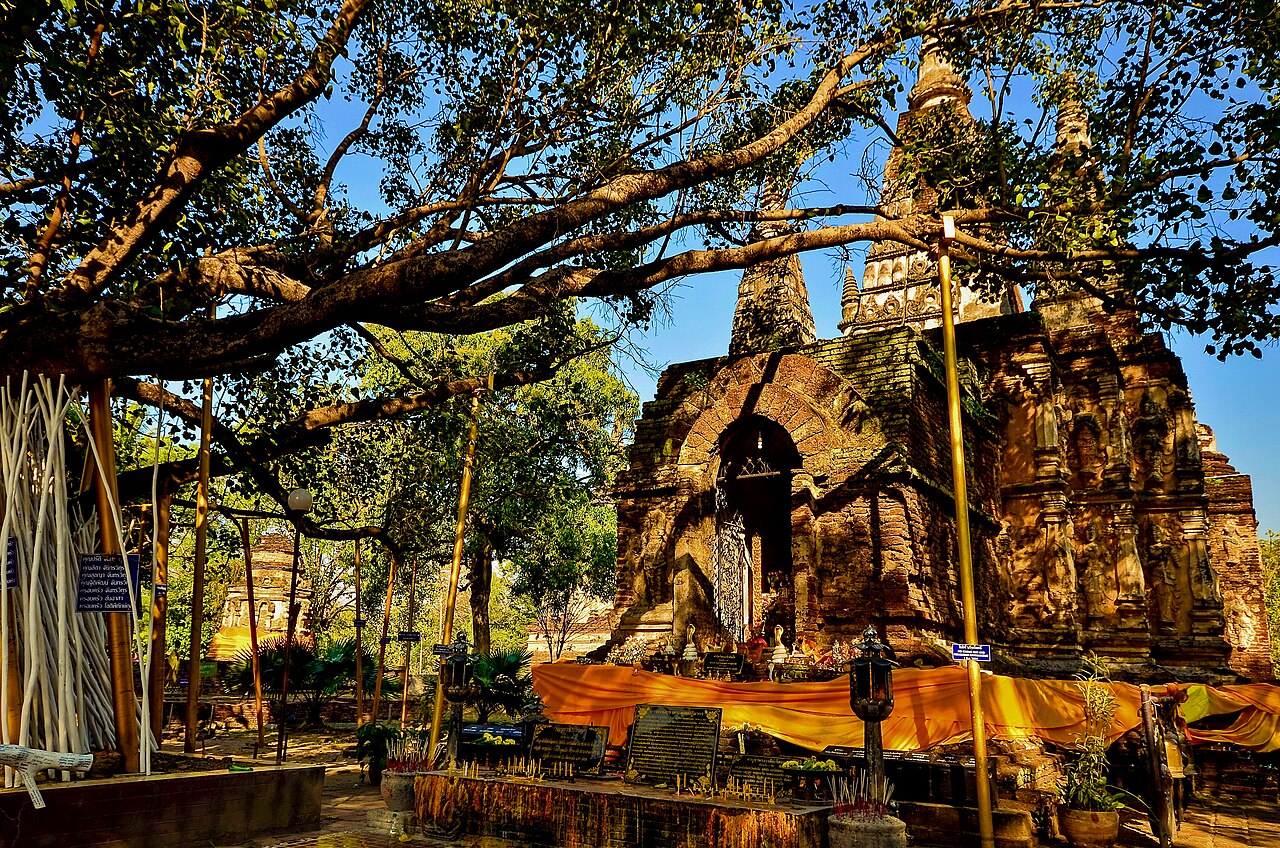
Wat Chet Yot is a Buddhist temple in Chiang Mai, northern Thailand. The temple is known for its distinctive architectural style that reflects influences from multiple periods and regions. It stands as one of the meaningful visitor landmarks retained in the breadth-first top 100 for Chiang Mai. The site holds religious significance for Buddhist practitioners and attracts visitors interested in Thai temple architecture and cultural heritage. 08:00–17:00. The Tourism Authority of Thailand publishes one visitor schedule and no weekly closure day. Free general admission; the official listing describes worship and entry as free.
Checked 2026-08-31 · Source
The temple complex contains structures and features typical of Thai Buddhist religious sites. Visitors can observe architectural elements that demonstrate historical building techniques and stylistic developments. The grounds include spaces for religious practice and contemplation. Visitors should expect standard temple components such as viharn, chedi, or other religious structures common to northern Thai temple design. The Tourism Authority of Thailand publishes one visitor schedule and no weekly closure day. Free general admission; the official listing describes worship and entry as free.
Checked 2026-08-31 · Source
The duration of a visit to Wat Chet Yot depends on individual interests and the depth of exploration undertaken. Casual visitors typically spend between thirty minutes to one hour observing the exterior architecture and main structures. Those with specific interest in Buddhist art, architectural history, or photography may extend their stay. The temple grounds appear compact enough for efficient viewing, though thorough examination of details could lengthen the experience. Free general admission; the official listing describes worship and entry as free.
Checked 2026-08-31 · Source
Visitors should verify current opening times through direct contact with temple staff or official local tourism channels before planning their visit. Seasonal considerations for Chiang Mai generally apply, with the cool dry season from November to February offering comfortable temperatures for outdoor temple exploration. 08:00–17:00. Take a songthaew from central Chiang Mai; the Tourism Authority of Thailand estimates 10–20 minutes. The temple is on the Chiang Mai–Lampang Super Highway in Chang Phueak. Ground-level areas provide the accessible portion of the visit. The rooftop and seven spires are reached by narrow staircases beside the Buddha image, so the complete visitor route is not step-free.
Checked 2026-08-31 · Source
Many Thai temples operate on voluntary donation systems rather than fixed admission fees, though some sites serving significant tourist interest may implement entry charges. Visitors should carry small denomination cash for potential donations or fees. Some temples charge separate fees for camera use or entry to particular buildings within complexes. Free general admission; the official listing describes worship and entry as free. Ground-level areas provide the accessible portion of the visit. The rooftop and seven spires are reached by narrow staircases beside the Buddha image, so the complete visitor route is not step-free.
Checked 2026-08-31 · Source
Wat Chet Yot is located within Chiang Mai city, accessible by various transportation methods common in the urban area. Songthaews, the red shared pickup trucks, serve as a typical public transport option for reaching temple locations. Tuk-tuks and motorcycle taxis provide alternative motorized access. Take a songthaew from central Chiang Mai; the Tourism Authority of Thailand estimates 10–20 minutes. The temple is on the Chiang Mai–Lampang Super Highway in Chang Phueak. The rooftop and seven spires are reached by narrow staircases beside the Buddha image, so the complete visitor route is not step-free.
Checked 2026-08-31 · Source
Visitors to Thai temples must observe appropriate dress and behavior standards. Shoulders and knees should be covered as a sign of respect for sacred spaces. Shoes are removed before entering temple buildings. Photography restrictions may apply in certain interior spaces; visitors should observe posted signs or request guidance. Sun exposure and hydration merit attention during outdoor exploration. Ground-level areas provide the accessible portion of the visit. Its official name is Wat Maha Photharam, also rendered Wat Photharam Maha Viharn; Wat Chet Yot refers to the seven chedis crowning the principal vihara.
Checked 2026-08-31 · Source
Photography opportunities at Wat Chet Yot include architectural details, chedi structures, and temple grounds. Visitors should verify whether camera fees apply, as some temples implement such charges. Interior photography may be prohibited or require permission, particularly in spaces containing revered Buddha images. Tripod use and commercial photography typically require advance arrangement with temple authorities. Morning and late afternoon light potentially offers favorable conditions for capturing architectural features. King Tilokaraj commissioned it in 1455, during the Lanna Kingdom. The Maha Bodhi vihara reproduces the form and plan of India’s Mahabodhi Temple at Bodh Gaya at approximately one-third scale.
Checked 2026-08-31 · Source
Its official name is Wat Maha Photharam, also rendered Wat Photharam Maha Viharn; Wat Chet Yot refers to the seven chedis crowning the principal vihara.
King Tilokaraj commissioned it in 1455, during the Lanna Kingdom.
The Maha Bodhi vihara reproduces the form and plan of India’s Mahabodhi Temple at Bodh Gaya at approximately one-third scale.
The temple hosted the eighth Buddhist council in 1477, the first such council held in Thailand.
The laterite building measures 17.24 by 31.56 metres, carries seven chedis and has exterior walls decorated with standing and seated deva stucco figures.
Yes. About 30 monks reside there, and the national ancient monument is protected by the Fine Arts Department’s 7th Regional Office in coordination with the monastic community and temple committee.
Loading the interactive map…
The interactive map could not be loaded.
Last updated:
Source: OpenStreetMap contributors, Wikidata ·