
3 min walk
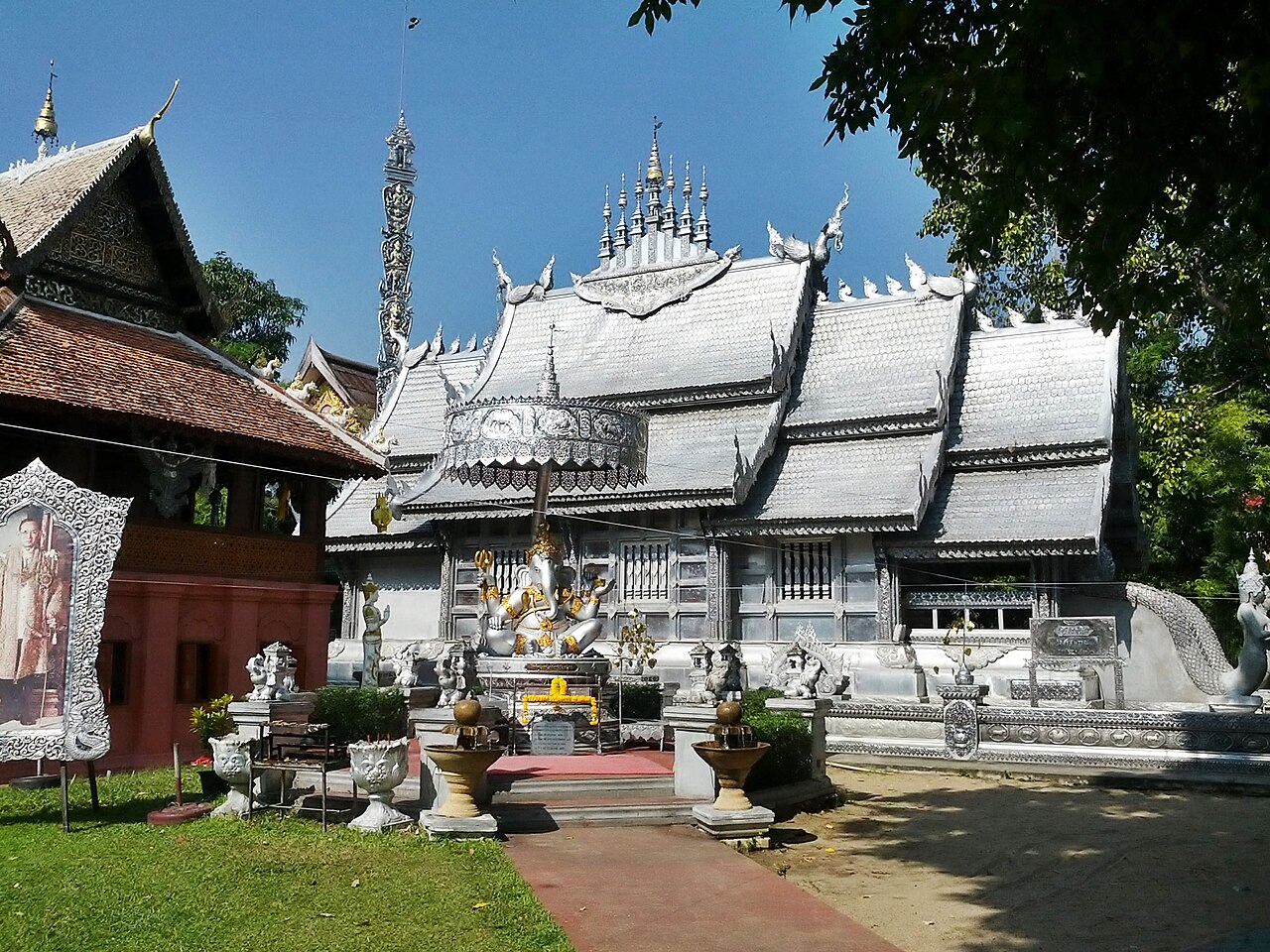
Wat Si Suphan
- Must see
- Place of worship
Place of worship · Chiang Mai
| Per person | Free entry |
|---|
Checked 2026-08-31 · Source
Read from the OpenStreetMap access tags; anything not listed has no tag recorded.
Set the group type to family in the planner and the day window contracts to about three quarters of a solo day.
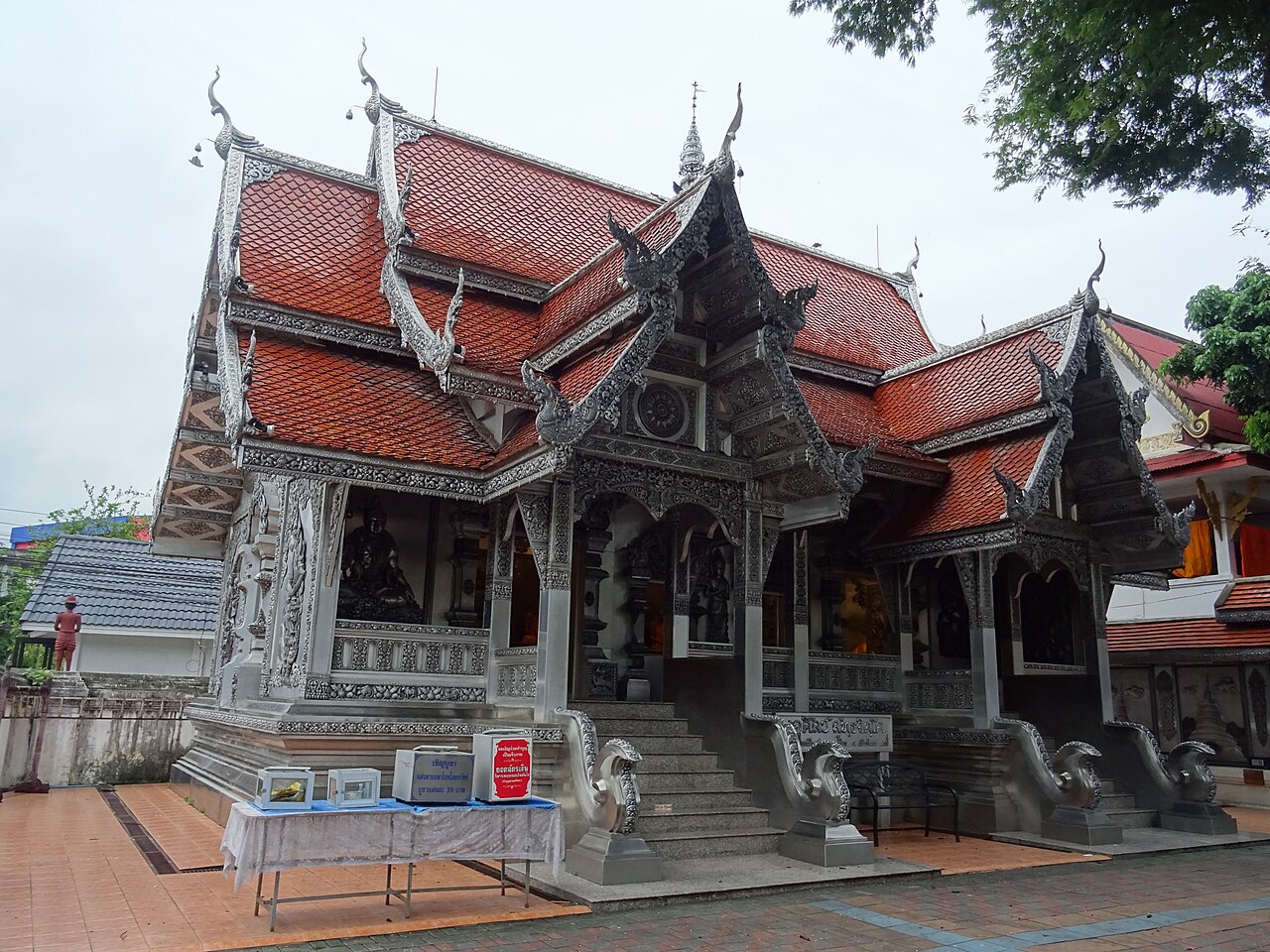
Wat Muen San is a Buddhist temple situated in Chiang Mai, the largest city in northern Thailand. Chiang Mai was founded in 1296 as the capital of the Lanna Kingdom and remains a major cultural and religious centre with over three hundred temples. Wat Muen San forms part of this extensive temple heritage, contributing to the city's reputation as a destination for visitors interested in Thai Buddhism, traditional architecture, and the historical layers of northern Thai civilisation. Daily during Thai government office hours.
Checked 2026-08-31 · Source
Chiang Mai temples typically contain Buddha images, chedis or stupas, viharn assembly halls, and decorative elements reflecting Lanna stylistic traditions. Some temples incorporate mural paintings, manuscript libraries, or bell towers. Without dedicated documentation for Wat Muen San, visitors should anticipate a configuration consistent with neighbourhood temples in the city, possibly including resident monks, devotional spaces, and architectural components that may range from modest to elaborately ornamented depending on community support and historical development phases. The published schedule specifically covers the Wua Lai Silverware Museum and Suthajitto Gallery inside Wat Muen San; it states that there is no weekly closure day.
Checked 2026-08-31 · Source
The appropriate duration for visiting Wat Muen San depends on individual interests and the complexity of features encountered on site. Neighbourhood temples in Chiang Mai generally require between fifteen minutes and one hour for a respectful circumambulation and interior observation. Visitors with specific interests in Buddhist iconography, architectural details, or photographic documentation may wish to allocate additional time. Free general admission to the Wua Lai Silverware Museum and Suthajitto Gallery. Suthajitto Gallery incorporates a decorated staircase, so the complete gallery route is not step-free. The accessibility limitation concerns the raised and stair-served visitor areas rather than the temple's outdoor compound.
Checked 2026-08-31 · Source
Optimal timing for visiting Wat Muen San involves considerations of climate, daylight, and temple activity patterns. Chiang Mai experiences a tropical wet and dry climate with a cool season from November to February generally considered most comfortable for outdoor exploration. Morning hours often coincide with alms-giving and monastic routines, offering observational opportunities for respectful visitors. Daily during Thai government office hours. Suthajitto Gallery incorporates a decorated staircase, so the complete gallery route is not step-free. The accessibility limitation concerns the raised and stair-served visitor areas rather than the temple's outdoor compound.
Checked 2026-08-31 · Source
Many neighbourhood temples in Chiang Mai operate without formal admission charges, relying instead on community support and voluntary donations. Some prominent temples implement entry fees for foreign visitors to fund maintenance and restoration. Visitors should carry small denomination currency for potential donations or incidental contributions. Free general admission to the Wua Lai Silverware Museum and Suthajitto Gallery. Suthajitto Gallery incorporates a decorated staircase, so the complete gallery route is not step-free. The accessibility limitation concerns the raised and stair-served visitor areas rather than the temple's outdoor compound.
Checked 2026-08-31 · Source
Wat Muen San is located within Chiang Mai's urban area, which offers multiple transportation modalities. The city operates songthaew shared trucks, tuk-tuk three-wheeled vehicles, and conventional taxis. Many visitors rent bicycles or motorbikes for independent exploration. Ride-hailing applications serve the city with variable coverage. Ask a red songthaew for Chiang Mai Gate, then cross to Wua Lai Road and walk south to Wat Muen San in Hai Ya. On Saturdays, Wua Lai Road becomes a walking street from approximately 17:00 to 22:00; use the Chiang Mai Gate end as the arrival point and continue on foot.
Checked 2026-08-31 · Source
Visitors to Wat Muen San should observe standard protocols for Thai Buddhist temple entry. Appropriate dress covering shoulders and knees is typically expected. Footwear removal is required before entering sacred buildings. Behaviour should remain quiet and respectful, particularly during prayer or ceremonial activity. Photography restrictions may apply in certain areas. Visitors should be attentive to uneven surfaces, steps, and thresholds. Suthajitto Gallery incorporates a decorated staircase, so the complete gallery route is not step-free. The Wua Lai Silverware Museum and Suthajitto Gallery open daily during Thai government office hours, with no weekly closure day.
Checked 2026-08-31 · Source
Chiang Mai's northern light and temple aesthetics can produce visually compelling images. Visitors should exercise restraint and obtain implicit or explicit permission before photographing monks, worshippers, or restricted interior spaces. Flash photography may damage sensitive materials and should be avoided unless confirmed permissible. Tripod use may attract scrutiny or restriction. Visitors should observe posted signage and defer to resident guidance, prioritising respectful documentation over comprehensive photographic coverage of all site features. General admission to the Wua Lai Silverware Museum and Suthajitto Gallery is free. The museum displays donated silver household objects and jewellery, including inherited pieces preserved in registered glass cases.
Checked 2026-08-31 · Source
The Wua Lai Silverware Museum and Suthajitto Gallery open daily during Thai government office hours, with no weekly closure day.
General admission to the Wua Lai Silverware Museum and Suthajitto Gallery is free.
The museum displays donated silver household objects and jewellery, including inherited pieces preserved in registered glass cases.
The gallery contains wax figures of Khruba Siwichai, Khruba Inta Inthapanyo and Khruba Bunpan Punyakamo, alongside large repoussé-metal panels depicting Lanna history.
No. Suthajitto Gallery includes a staircase, making step-free access limited rather than continuous through all visitor areas.
The Wua Lai Silverware Museum at Wat Muen San officially opened on 9 November 2013 as a community centre for preserving and presenting Wua Lai silver craftsmanship.
Loading the interactive map…
The interactive map could not be loaded.
Last updated:
Source: OpenStreetMap contributors, Wikidata ·