

5 min walk
Wat Chiang Yuen
- Must see · Heritage site
- Place of worship
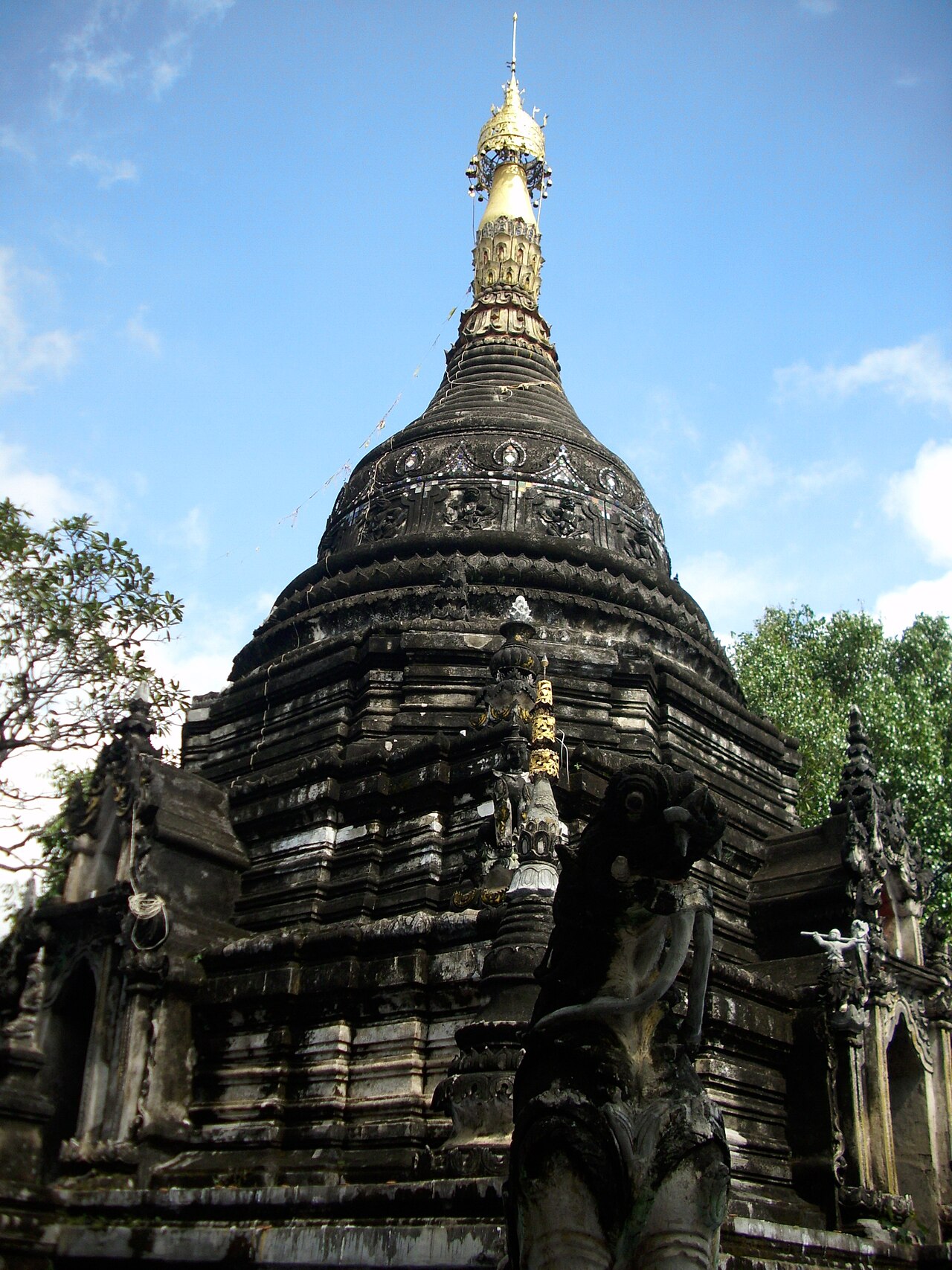
Place of worship · Chiang Mai
| Monday | 08:00 – 17:00 |
|---|---|
| Tuesday | 08:00 – 17:00 |
| Wednesday | 08:00 – 17:00 |
| Thursday | 08:00 – 17:00 |
| Friday | 08:00 – 17:00 |
| Saturday | 08:00 – 17:00 |
| Sunday | 08:00 – 17:00 |
Checked 2026-08-31 · Source
| Per person | Free entry |
|---|
Checked 2026-08-31 · Source
Read from the OpenStreetMap access tags; anything not listed has no tag recorded.
Set the group type to family in the planner and the day window contracts to about three quarters of a solo day.
Wat Pa Pao is a Buddhist temple in Chiang Mai, northern Thailand. It stands as one of the notable religious sites within the historic city, which served as the capital of the Lanna Kingdom. Chiang Mai's temple landscape comprises numerous wats that reflect diverse architectural influences and historical periods. Wat Pa Pao contributes to this rich cultural tapestry. The temple represents the enduring Buddhist tradition that has shaped northern Thai identity for centuries. Daily 08:00–17:00. No weekly closure day is listed. Free general admission.
Checked 2026-08-31 · Source
Chiang Mai temples typically contain Buddha images, sermon halls, and chedis or stupas, though individual configurations vary considerably. Some temples house significant artworks or historical relics, while others maintain simpler devotional spaces. The Wikipedia source for Chiang Mai provides general city information without detailed inventory of this particular temple's contents. Visitors should approach with appropriate expectations for a functioning religious site rather than a curated museum environment. Respectful observation of any visible architectural or artistic elements is advised. No weekly closure day is listed. Free general admission.
Checked 2026-08-31 · Source
The duration of a visit to Wat Pa Pao depends on individual interest and the extent of accessible areas. Typical temple visits in Chiang Mai range from fifteen minutes for exterior observation to forty-five minutes for more thorough exploration including interior spaces. Factors influencing visit length include personal contemplation time, photography, and any ongoing religious activities that visitors may observe respectfully. Without specific site dimensions or feature density recorded, visitors should allocate flexible time. Free general admission. The exterior courtyard is accessible without entering the raised historic buildings.
Checked 2026-08-31 · Source
Optimal visiting conditions for Chiang Mai temples generally occur during the cooler dry season months from November to February, when temperatures are moderate and rainfall minimal. The hot season from March to May and rainy season from June to October present more challenging conditions. Morning hours typically offer quieter atmospheres and softer light. Daily 08:00–17:00. The exterior courtyard is accessible without entering the raised historic buildings. The principal viharn and monastic building stands above a high undercroft and requires stairs, so its interior is not step-free. Founded in 1883, it was Chiang Mai’s first temple established for the city’s Shan community.
Checked 2026-08-31 · Source
Admission arrangements for Chiang Mai temples vary significantly. Some temples charge modest entry fees, particularly those with notable historical or artistic significance, while others operate without charge and rely on donations. The Wikipedia source for Chiang Mai does not specify ticketing for Wat Pa Pao individually. Visitors should carry small denomination cash for potential donations or fees. Free general admission. The exterior courtyard is accessible without entering the raised historic buildings. The principal viharn and monastic building stands above a high undercroft and requires stairs, so its interior is not step-free.
Checked 2026-08-31 · Source
Wat Pa Pao is located within Chiang Mai city, accessible by the transportation options available throughout the urban area. Chiang Mai offers songthaew shared trucks, tuk-tuks, motorbike taxis, and increasingly ride-hailing services. Visitors should consult current local maps or accommodation staff for precise directions. Wat Pa Pao is on Manee Nopparat Road outside the northern moat, near Si Phum Corner. RTC Chiang Mai City Bus services call at the named Chang Phuak Gate stop; from there, continue east along Manee Nopparat Road for approximately 800 metres. Red songthaews and tuk-tuks can use the destination name “Wat Pa Pao, Manee Nopparat Road.”.
Checked 2026-08-31 · Source
Visitors to Thai temples must observe behavioral protocols regardless of specific site regulations. Shoes must be removed before entering any building housing Buddha images. Shoulders and knees must be covered; revealing clothing causes offense and may result in denied entry. Women should never touch monks or hand objects directly to them. Physical fitness for steps or uneven surfaces should be considered. The exterior courtyard is accessible without entering the raised historic buildings. Founded in 1883, it was Chiang Mai’s first temple established for the city’s Shan community. Mom Bualai, the Shan consort of Chiang Mai ruler Inthawichayanon, and members of the Shan community established the temple.
Checked 2026-08-31 · Source
Photography policies at Thai temples vary by individual site and governing body. Some temples permit unrestricted photography in exterior areas with restrictions on flash or tripod use indoors. Others prohibit photography entirely within certain buildings, particularly where revered images or active worship occurs. Visitors should observe posted signage and follow guidance from temple staff or resident monks. When in doubt, refrain from photographing. Mom Bualai, the Shan consort of Chiang Mai ruler Inthawichayanon, and members of the Shan community established the temple.
Checked 2026-08-31 · Source
Founded in 1883, it was Chiang Mai’s first temple established for the city’s Shan community.
Mom Bualai, the Shan consort of Chiang Mai ruler Inthawichayanon, and members of the Shan community established the temple.
The complex includes a teak viharn, an ubosot, a dhamma hall, a scripture-house chedi and a principal chedi.
Its buildings combine Shan and Burmese work associated with Mandalay and Bassein, while the chedi incorporates late-Bagan forms.
The temple hosts Poi Sang Long, the Shan novice-ordination tradition, around April.
It remains a Shan cultural centre and supports Shan-language teaching for local children.
Loading the interactive map…
The interactive map could not be loaded.
Last updated:
Source: OpenStreetMap contributors, Wikidata ·