
.jpg)
.jpg)
.jpg)
.jpg)
.jpg)
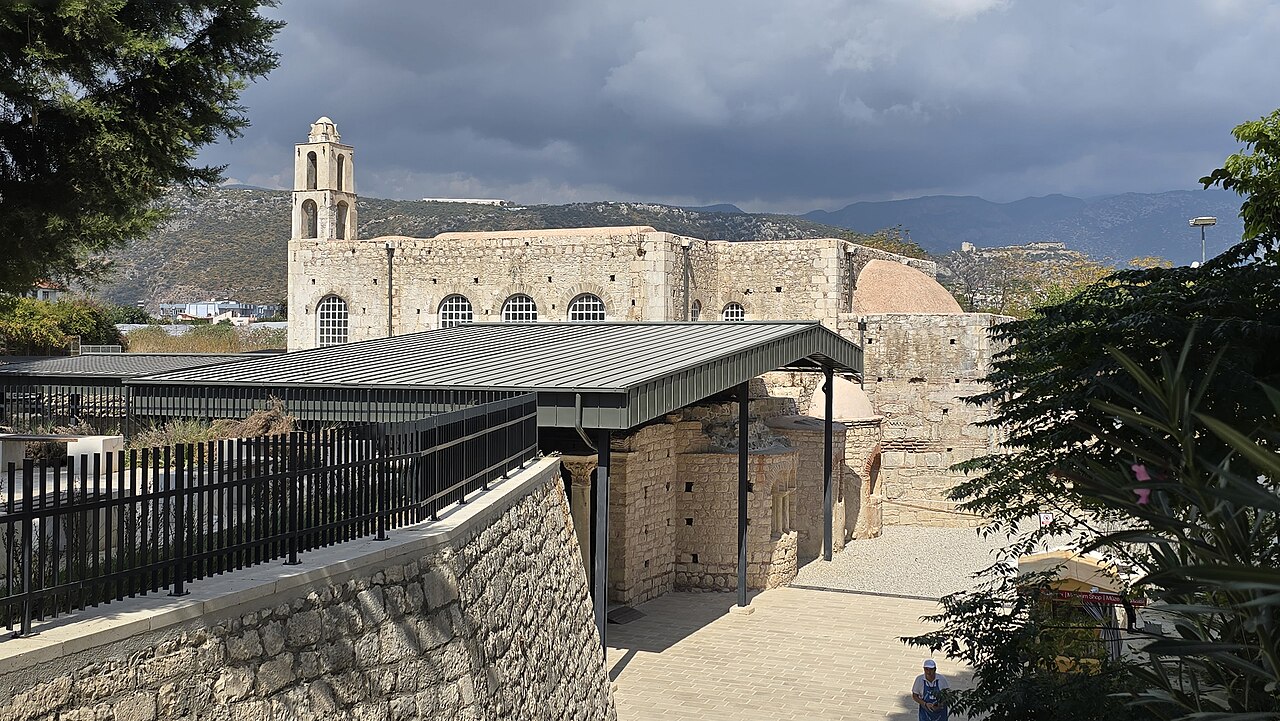
20 min walk
St. Nicholas Church, Demre
- Must see · Heritage site
- Museum
Historic monument · Antalya
Myra Antik Kenti
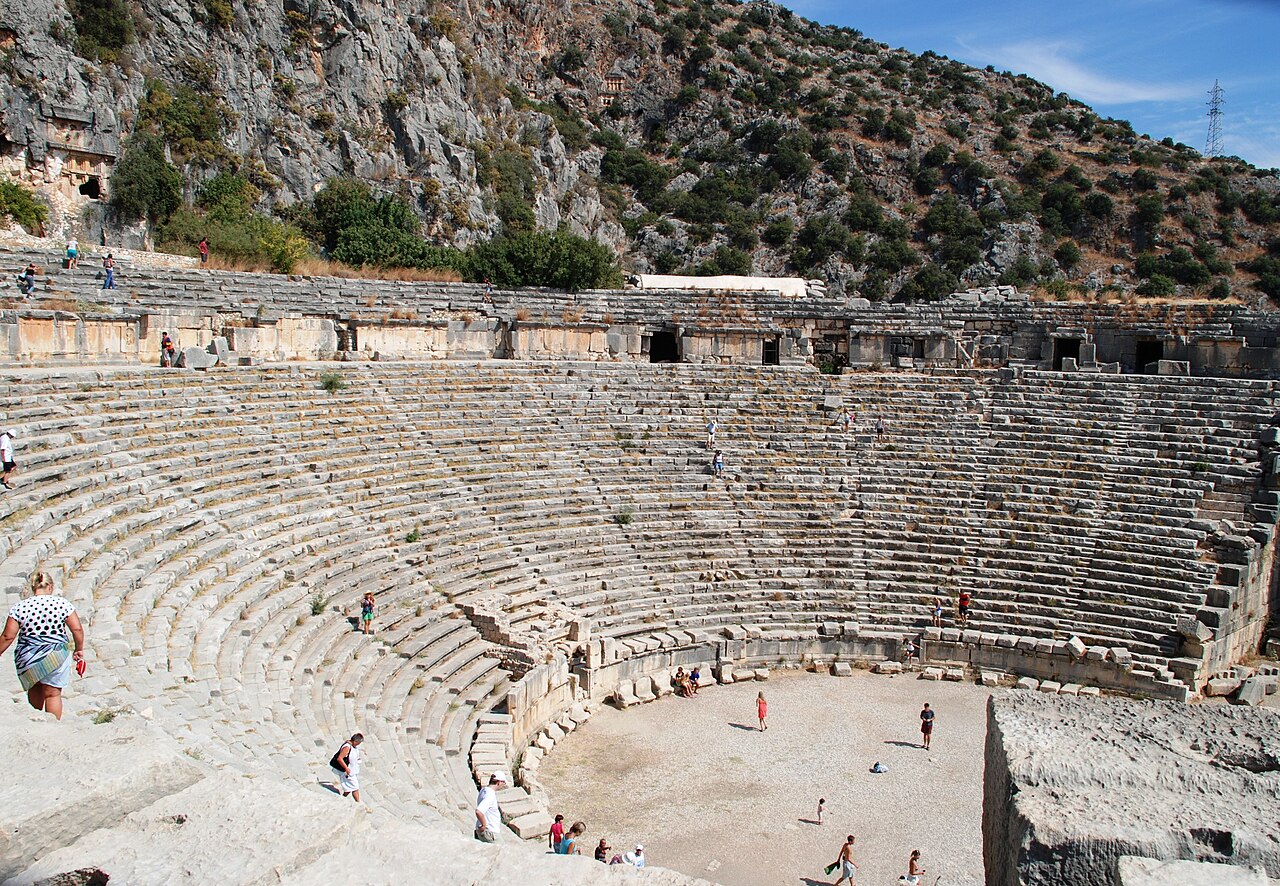
Myra’s ancient theatre is a Roman-era performance building within Myra Antik Kenti, near Demre in Antalya province. Its semicircular cavea is carved into the hillside, placing the surviving public architecture directly beneath the rock-cut necropolis. That relationship is central to the visit: the theatre represents civic and communal life, while the tombs above express Lycian funerary traditions. Myra was a major city of ancient Lycia and a leading member of the Lycian League. The theatre is not Saint Nicholas Church; the two are separate monuments in Demre and should be treated as different stops. The combination of performance architecture and cliff tombs gives this site its particular character.
Checked 2026-08-26 · Source
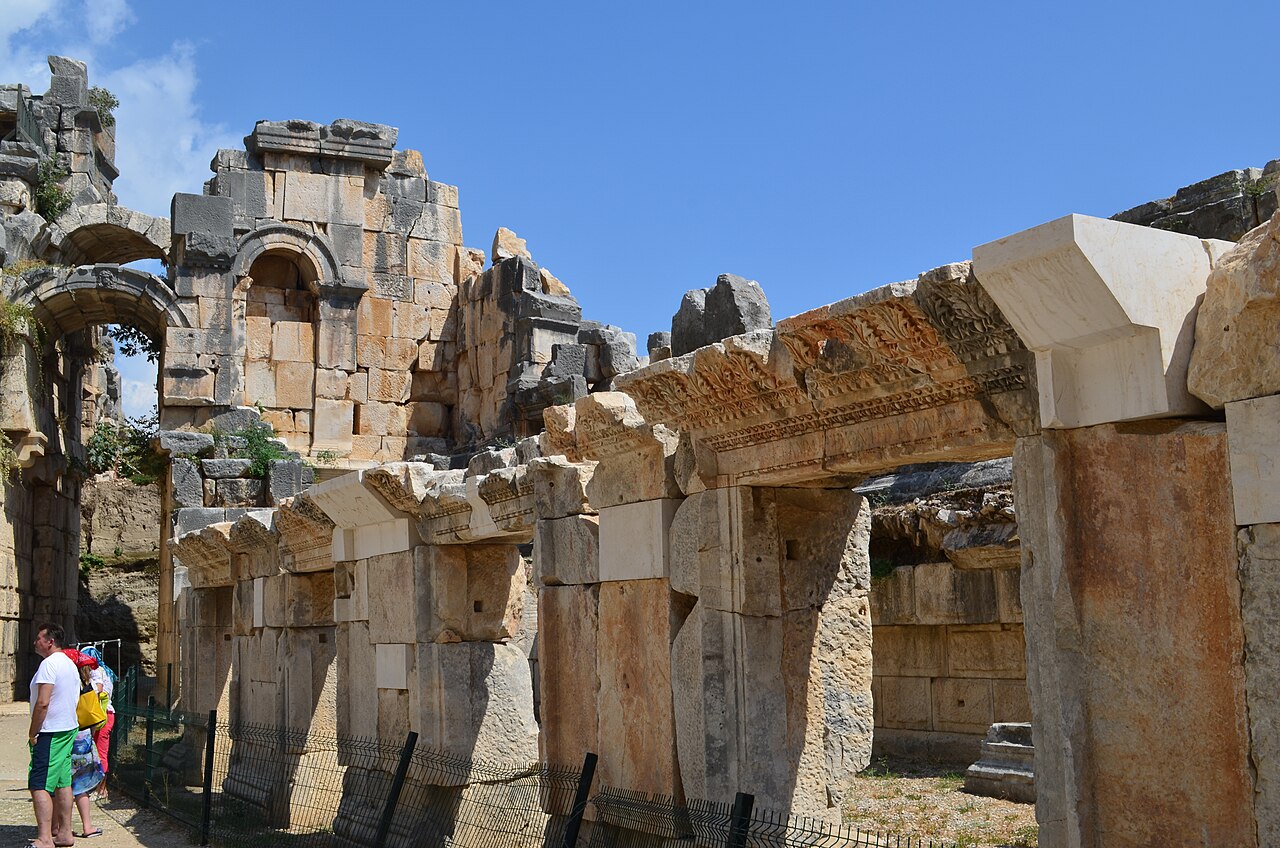
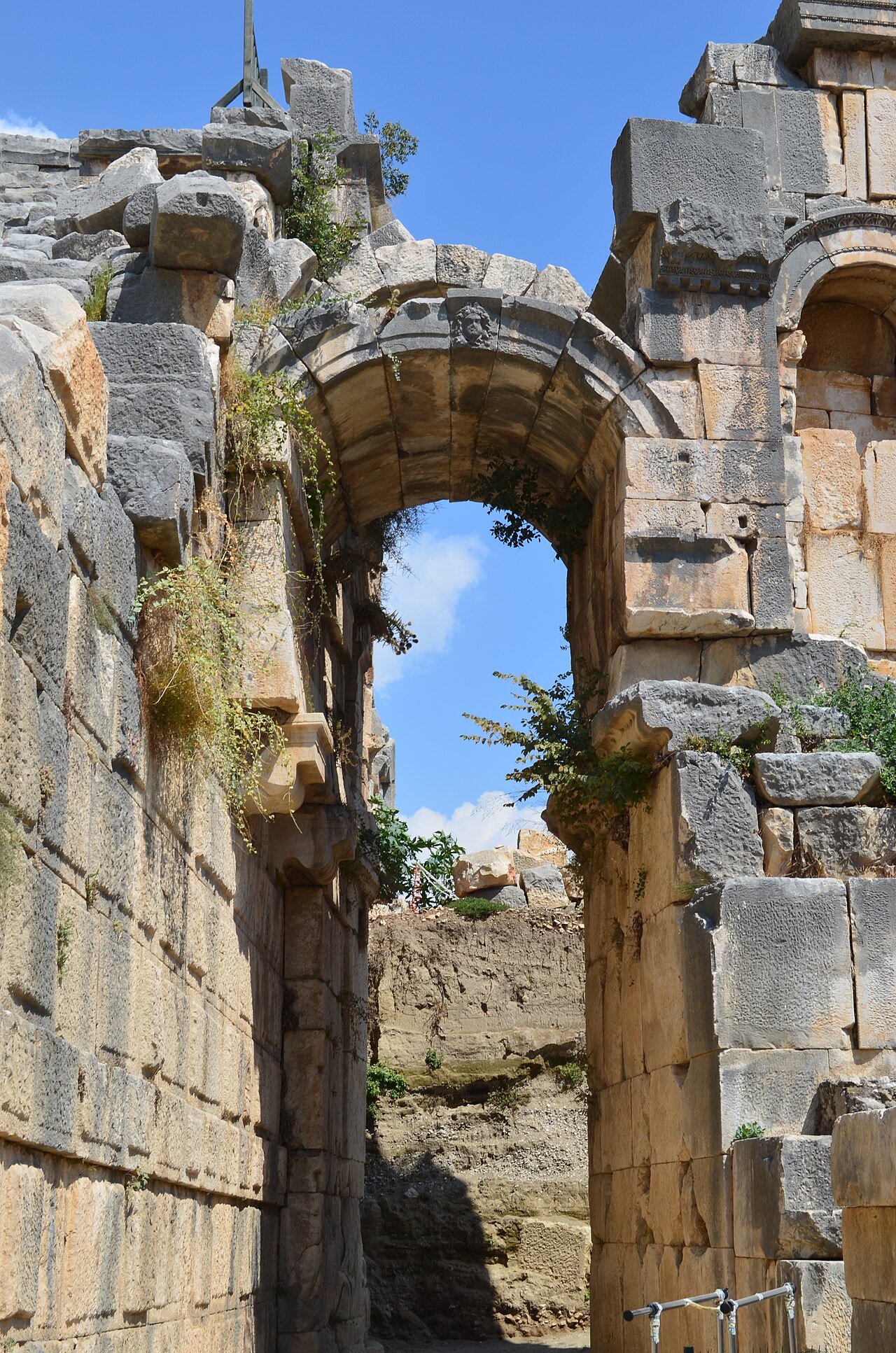
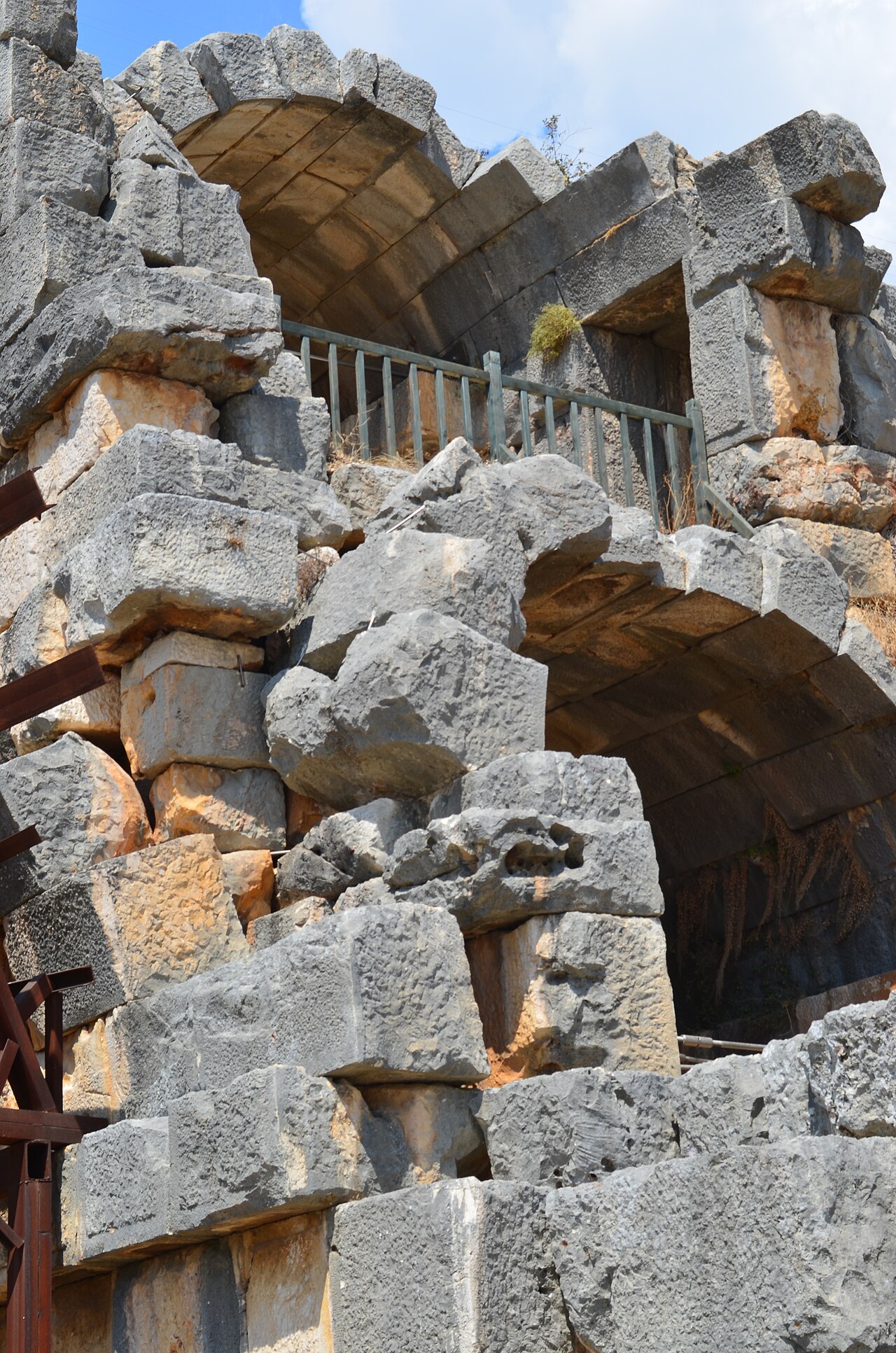
The archaeological area brings together curved seating tiers, dividing walkways, remains of the stage building and surviving architectural fragments. Looking upward, the necropolis adds house-shaped and temple-like Lycian tomb façades cut into the cliff. Their stone forms imitate timber construction, creating a distinctive contrast with the theatre’s ordered rows and performance space. The most rewarding route alternates between reading the theatre as a designed civic building and examining the tombs as individually carved memorial façades. The setting also makes the hillside itself part of the experience, because the monuments are understood in relation to their vertical landscape. Visitors can compare the regular geometry of the cavea with the more varied forms carved into the rock above.
Checked 2026-08-26 · Source
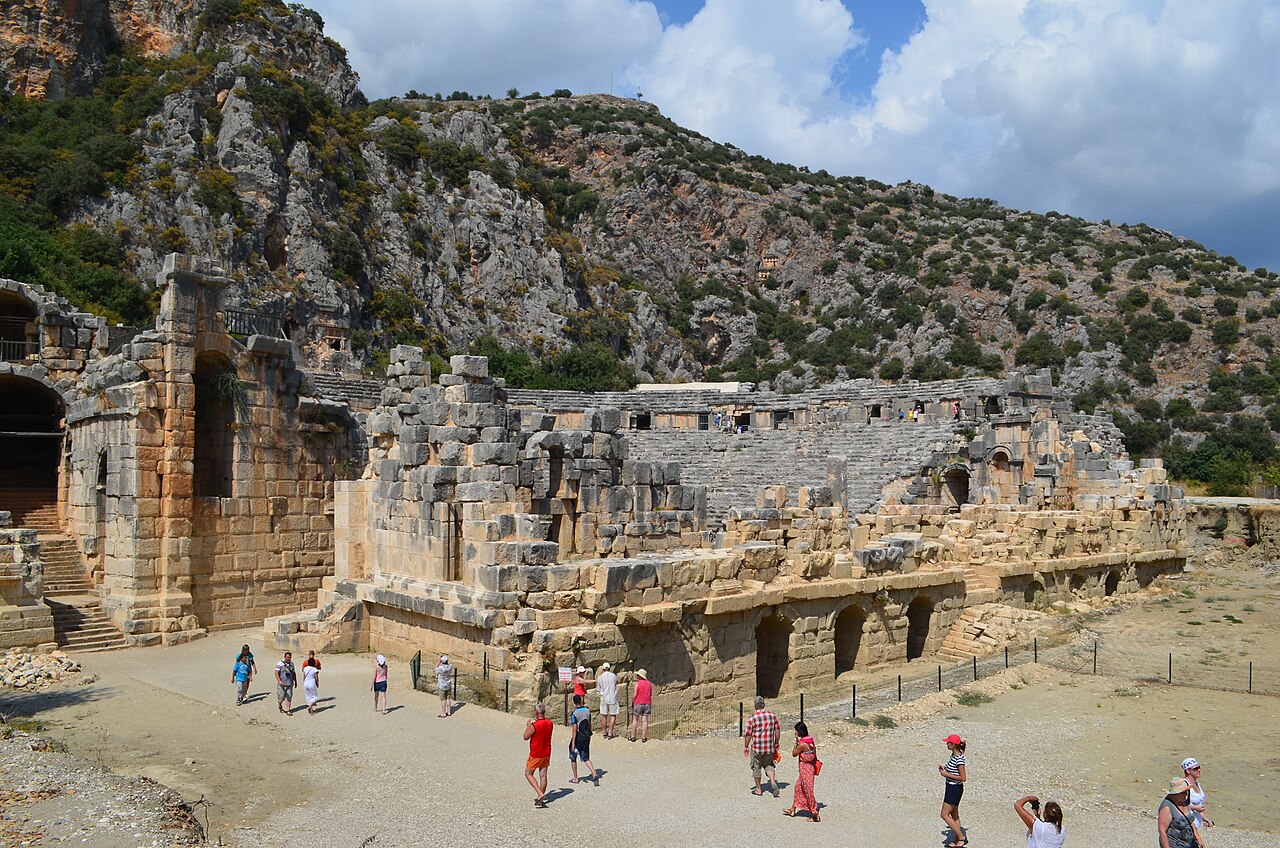
Allow approximately 90 minutes to two hours for the theatre and the immediately associated tombs. That duration suits a visitor who pauses to understand the seating arrangement, stage remains, carved façades and changing levels rather than taking only a quick photograph. Uneven stone and steps can slow the walk, particularly when ascending toward viewpoints of the necropolis. Add transport time when coming from Antalya city, Kaş or another base, and allow extra time if the outing also includes Saint Nicholas Church or another Demre-area sight. Visitors interested in architectural details or photography may need the longer end of this estimate.
Checked 2026-08-26 · Source
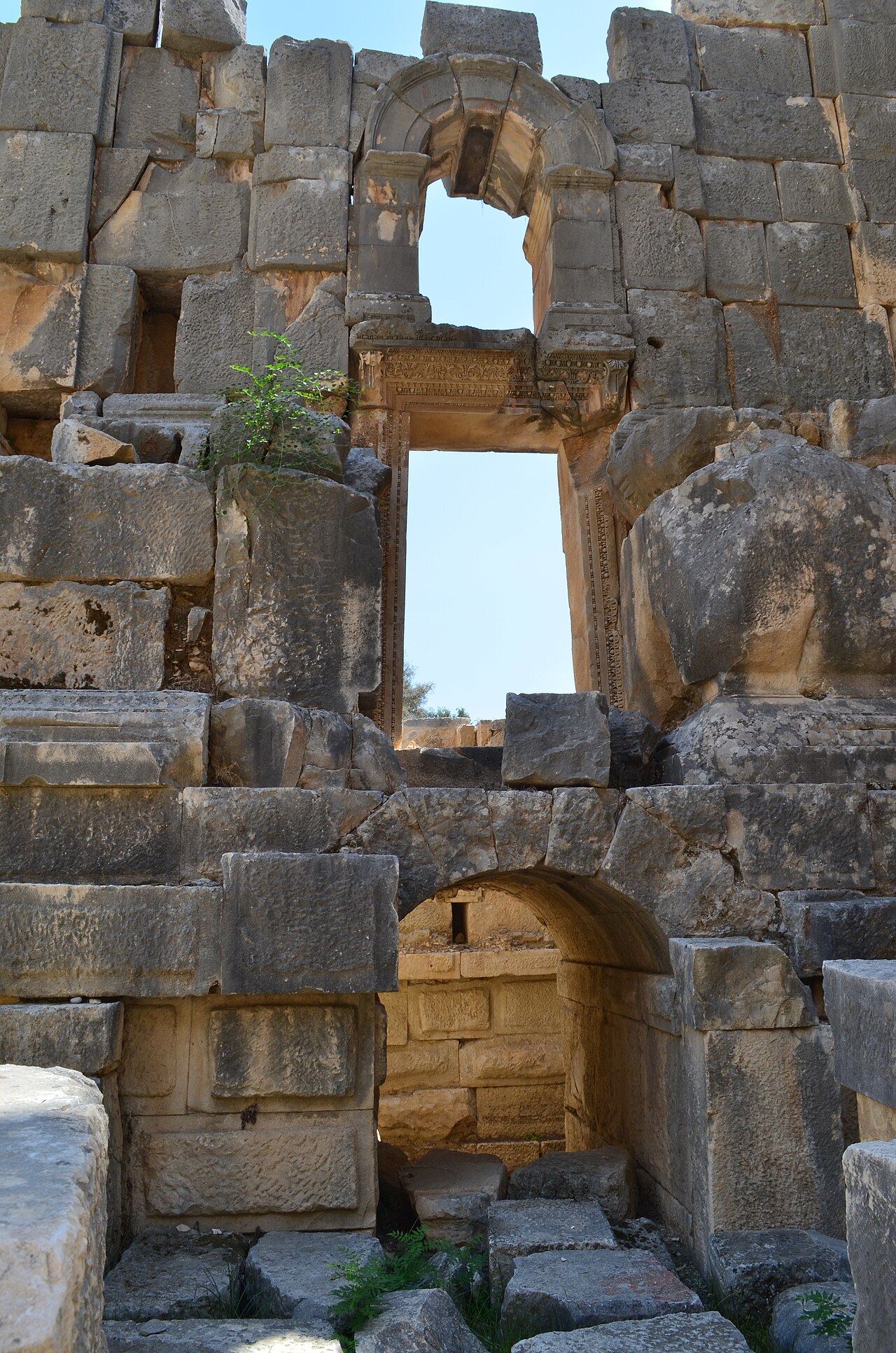
The theatre and tombs are exposed archaeological remains, so heat and weather shape the comfort of the visit. During hot periods, early morning or later afternoon is generally more comfortable than the middle of the day because the open stone landscape provides little shade. Spring and autumn usually offer milder walking conditions. After rain, worn or uneven stone may become slippery. A secure sole, sun protection and enough water for the outing are practical choices when exploring this hillside archaeological setting. Cooler conditions also make it easier to take time with the upper tomb façades and uneven approaches.
Checked 2026-08-26 · Source
The theatre and necropolis are described as parts of the Myra Antik Kenti archaeological setting, but that description does not establish whether access is combined, separated, paid or free. This guide therefore makes no pricing promise and does not infer a Museum Pass arrangement or payment method from general practice at other Turkish archaeological sites. The absence of a recorded price should not be read as confirmation that entry is free.
Checked 2026-08-26 · Source
Myra Antik Kenti lies near Demre, approximately 140 kilometres southwest of Antalya city centre. By car, follow the D400 coastal highway westward toward Demre; the site is signposted from the town centre. Travellers using public transport can take a regional bus from Antalya bus terminal to Demre, then arrange the final approach by local taxi or an organised excursion. The route includes winding sections through the mountainous coastal landscape. Tours from Antalya or Kaş often combine Myra with other Lycian attractions in the region.
Checked 2026-08-26 · Source
Expect uneven archaeological ground, steps and changes in level around the theatre and necropolis. Steep drops and cliff-edge areas may lack protective barriers, so children require close supervision. Wet or polished stone can be slippery, while summer exposure is strong and shade is limited. Bring water for the journey and wear suitable footwear. The rock-cut tombs and carved surfaces are fragile archaeological fabric: do not climb on them, touch them unnecessarily or use them as seating. Visitors with mobility limitations may find upper levels difficult, particularly where the route rises toward the cliff façades.
Checked 2026-08-26 · Source
The theatre’s curved seating creates strong lines and a natural sense of depth, especially when framed with the hillside and surrounding landscape behind it. The necropolis offers a contrasting subject: vertical cliff façades, house-like tomb forms and carved architectural details. Softer morning or late-day light can reveal texture across the stone, while the bright open setting may produce hard contrast around midday. Compose from available paths and viewing areas, keeping people out of fragile zones and avoiding contact with the carved remains. The vertical relationship between theatre and tombs is particularly distinctive in wider compositions, while closer views can emphasise the tombs’ carved construction.
Checked 2026-08-26 · Source
No. The theatre and necropolis belong to Myra Antik Kenti near Demre. Saint Nicholas Church is a separate monument in the town. They can be combined in one outing, but they are different historic sites with different physical settings and visitor experiences.
No. The carved façades are fragile archaeological surfaces, and climbing or unnecessary contact can cause damage. Stay on available paths and viewing areas, observe the tombs from a respectful distance, and do not use the carved stone as a handhold, seat or climbing route.
Visitors may explore independently or arrive with a pre-arranged tour group from Antalya, Kaş or Demre.
Children may find the theatre and tombs compelling, but the terrain requires close supervision. Uneven surfaces, steep drops and areas without protective barriers create hazards, while inclines may be tiring. Keep children beside you, choose stable footing and prevent access to fragile carved surfaces throughout the visit.
Demre is the nearby service centre, so visitors who need food or drinks should arrange them before entering. Carrying water is sensible because the open archaeological ground and uneven walking can make the outing exerting.
Myra was a principal city of ancient Lycia, and its theatre illustrates the civic infrastructure of that regional culture.
Loading the interactive map…
The interactive map could not be loaded.
Last updated:
Source: OpenStreetMap contributors, Wikidata ·