
2 min walk
Antalya Mosque
- Must see · Heritage site
- Place of worship
Language · 11 published
Historic monument · Antalya
Saat Kulesi
Reviewed by Elena Voss · Roavina Travel Editor
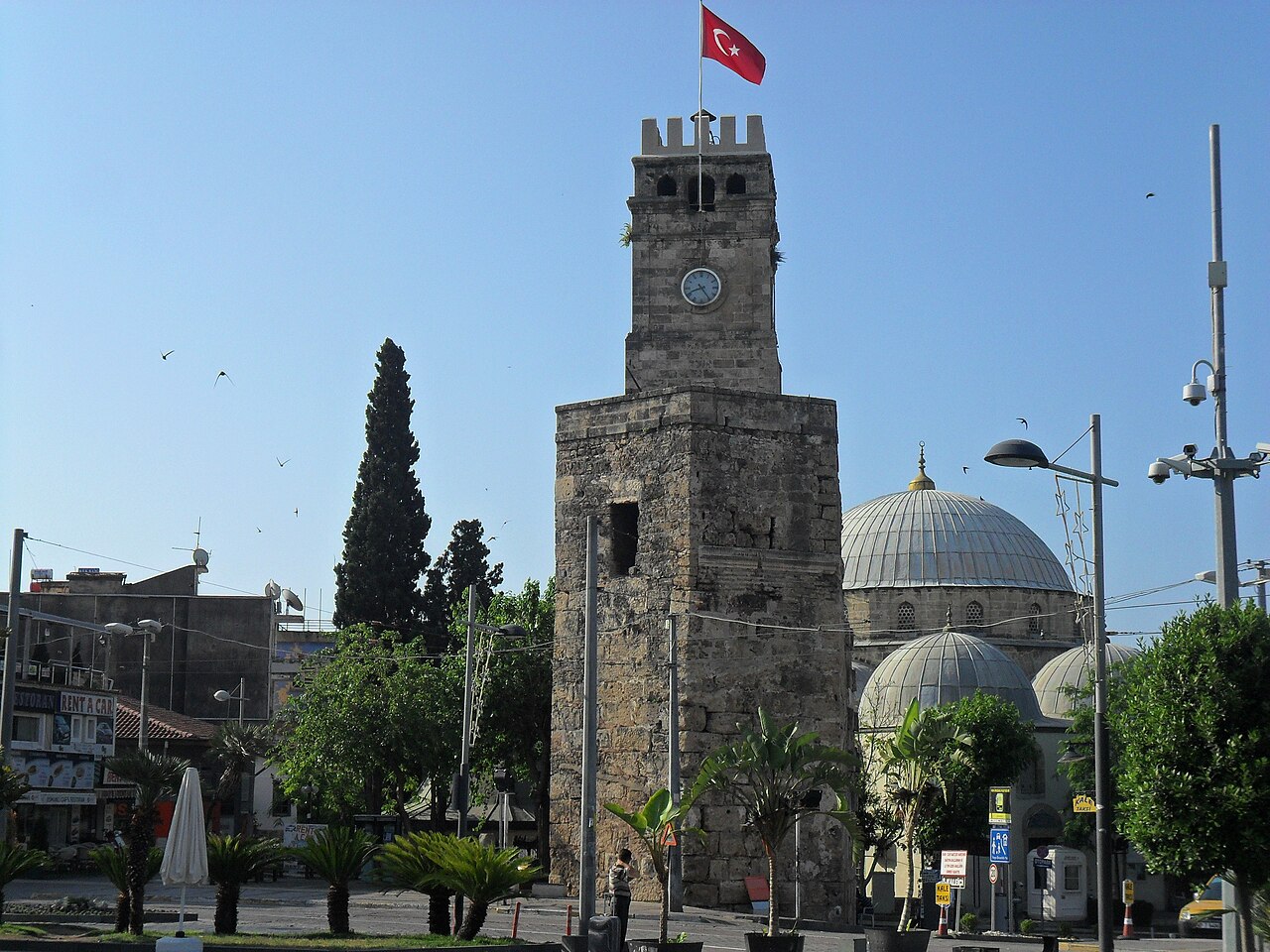
This place is a Monument. It was built in the Ottoman architecture style.
Antalya Clock Tower, also called Saat Kulesi, is a prominent historic marker at the edge of Kaleiçi, Antalya’s old town. Its position beside the routes into the district helps visitors recognise the transition from the modern city into the older street network. The tower is best understood as an exterior urban monument, valued for its silhouette, clock faces, masonry and relationship with Kaleiçi’s historic streets. It also provides a practical orientation point for visitors beginning a walk through the old town. The Antalya Clock Tower, locally known as Saat Kulesi, stands as a historic landmark in the heart of Antalya's old city centre. This Ottoman-era clock tower represents an important piece of the city's architectural heritage and serves as a recognizable meeting point for visitors exploring the Kaleiçi district. There are no recorded access points or permitted climbing opportunities within the Antalya Clock Tower for visitors. The structure is appreciated from ground level.
Checked 2026-08-26 · Source
The Antalya Clock Tower is an exterior monument rather than an enclosed attraction arranged around galleries or visitor rooms. Visitors approach it from the surrounding public streets and open spaces, where the main experience is seeing how the tower stands above the routes leading into Kaleiçi. Examine its visible masonry, clock faces, proportions and relationship with the historic urban setting. The tower’s appeal comes from close observation outdoors and from placing the structure within the wider old-town streetscape.
Checked 2026-08-26 · Source
Allow about ten to twenty minutes for a focused stop to look at the tower and take photographs. That is enough time for the monument itself while leaving room to continue into Kaleiçi rather than treating it as a separate half-day attraction. Extend the stop if you enjoy architectural details or want to frame the tower from several approaches. The surrounding old town can turn this brief visit into a longer outing through historic lanes, viewpoints, shops, cafés and other sights included in your route.
Checked 2026-08-26 · Source
The clock tower is encountered outdoors during a Kaleiçi walk, so comfortable timing depends on weather and the rest of your route. Earlier or later hours can make walking easier during Antalya’s hotter periods, while daylight helps you read the surrounding street pattern and inspect the structure clearly. An evening pass offers a different atmosphere within the old town. Plan the tower as a flexible waypoint within your stroll, with the pedestrian environment shaping the experience more than a timed attraction schedule.
Checked 2026-08-26 · Source
Antalya Clock Tower is viewed from the surrounding public streets and open spaces as part of a walk through Kaleiçi. It is a walk-by landmark rather than an attraction organised around a documented ticket desk or timed entry. Paid museums, historic sites, tours, cafés and other businesses elsewhere in Kaleiçi are separate experiences and should not be treated as charges for viewing the tower. The monument fits easily into a self-guided old-town route without adding a ticket stop.
Checked 2026-08-26 · Source
Antalya Clock Tower stands in Kaleiçi, the historic old town of Antalya. Once you are in the district, walking is the practical way to approach it: the surrounding network includes narrow streets and pedestrian-focused passages where a car is not useful. From modern Antalya, use a public bus, tram or taxi to reach the old town’s periphery, then continue on foot. The tower’s height and distinctive appearance help with orientation, while signs or local directions can assist through the irregular street pattern. Visitors staying nearby can fold it naturally into a broader Kaleiçi walk.
Checked 2026-08-26 · Source
Treat the approach as a historic-district walk rather than as a level, purpose-built visitor complex. Kaleiçi’s routes can be narrow and uneven, with cobbled surfaces and inclines, so secure footwear and careful attention to the ground are useful. Passing pedestrians and occasional vehicles may share parts of the old-town network. During hotter weather, carry water and protect yourself from the sun; the tower is an exposed outdoor stop. Keep the route flexible where streets become crowded or difficult to negotiate.
Checked 2026-08-26 · Source
Photograph Antalya Clock Tower as part of the Kaleiçi streetscape, not only as an isolated vertical subject. Use a wider approach to show how its height marks the entrance to the old town, then try closer views of the visible clock faces, masonry and proportions. Morning or late-afternoon light can give surface texture more definition, while an evening composition can place the tower within the atmosphere of the historic district. Stay clear of pedestrian movement, avoid blocking narrow passages and use a tripod only where it will not obstruct others.
Checked 2026-08-26 · Source
The tower is an exterior landmark viewed from ground level during a Kaleiçi walk. No visitor access point or permitted climbing opportunity is identified, so plan to appreciate its structure from outside.
Antalya Clock Tower is viewed from the surrounding public streets and open spaces. Nearby museums, historic sites, tours and businesses may have separate charges, but those are not charges for viewing the tower.
Walk into Kaleiçi from its periphery and use the tower’s height and distinctive appearance as an orientation point. Signs or local directions can help when the old town’s irregular streets make the route less direct.
The tower works naturally as a stop within a broader walking visit to Kaleiçi and its historic streets. Plan around the district’s wider route rather than expecting a tower-only visitor programme.
The approach through Kaleiçi includes narrow, uneven historic streets, cobbled surfaces and inclines. These conditions can make the route difficult for wheelchairs and mobility devices, so choose the approach carefully.
The current operation of the clock mechanism is not stated. The tower can still be appreciated for its visible form, clock faces and position within Kaleiçi’s historic streetscape.
Loading the interactive map…
The interactive map could not be loaded.
Last updated:
Source: OpenStreetMap contributors, Wikidata ·