
1 min walk · Fatih
Basilica Cistern
- Must see
- Historic monument
Historic monument · Fatih, Istanbul
Milyon Taşı
| Monday | 00:00 – 23:59 |
|---|---|
| Tuesday | 00:00 – 23:59 |
| Wednesday | 00:00 – 23:59 |
| Thursday | 00:00 – 23:59 |
| Friday | 00:00 – 23:59 |
| Saturday | 00:00 – 23:59 |
| Sunday | 00:00 – 23:59 |
Checked 2026-08-31 · Source
| Per person | TRY 0.00 |
|---|
Checked 2026-08-31 · Source
Read from the OpenStreetMap access tags; anything not listed has no tag recorded.
Set the group type to family in the planner and the day window contracts to about three quarters of a solo day.
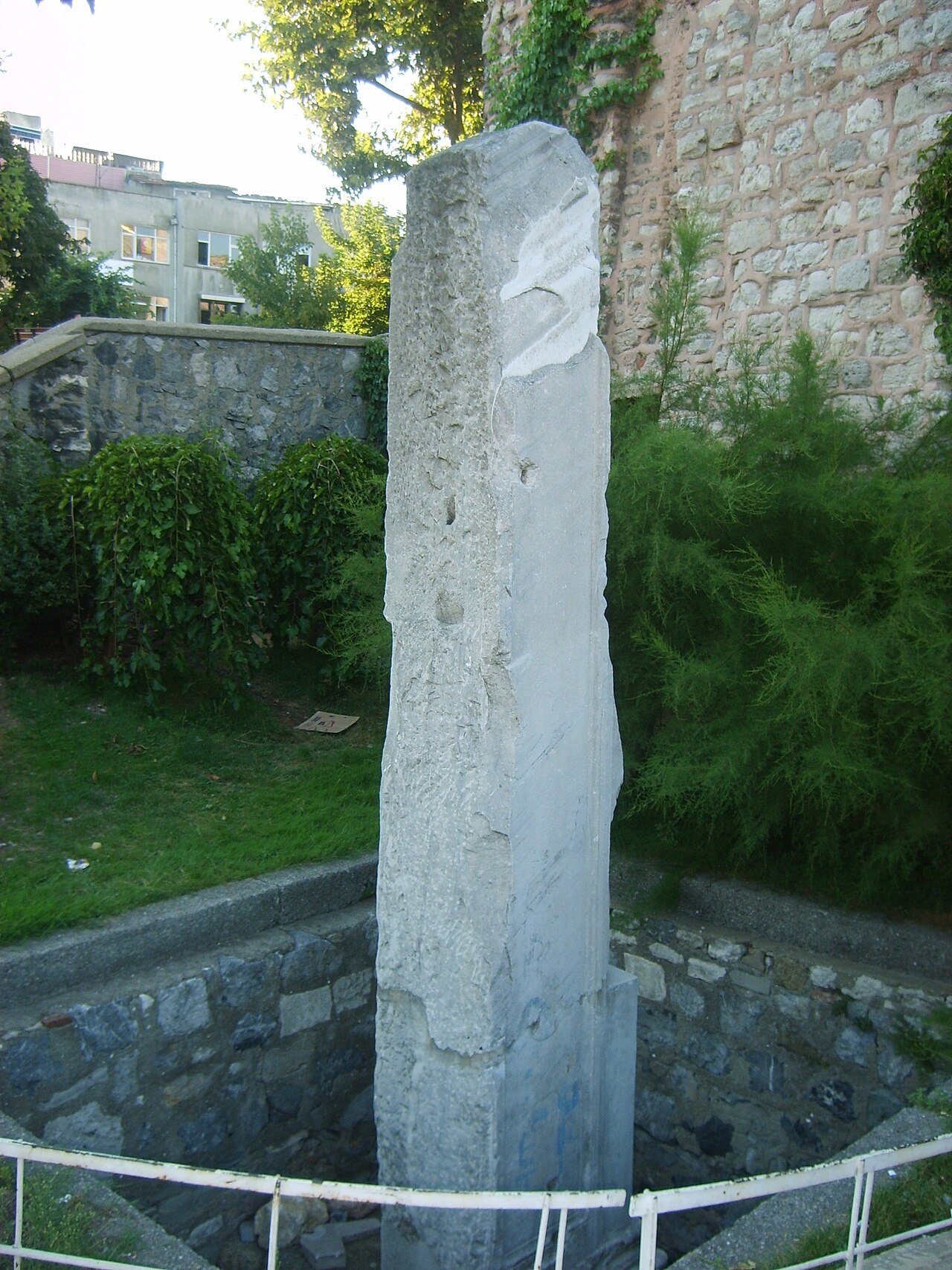
What survives is a single weathered pillar fragment standing in a sunken plot beside the street, and it is the remnant of the Milion — the point from which the Eastern Roman Empire measured itself. The monument was erected by Septimius Severus in the third century AD in the city of Byzantium, and after Constantinople was founded in 330 it became the reference from which the distances of every road running to the cities of the Eastern Roman Empire were reckoned. That makes it Constantinople's answer to the Golden Milestone of Rome. Yes. Level pavement and curb ramps reach the protective barrier; the stone is viewed rather than entered. Yes. No regular hours apply. Yes from the pavement. No. A barrier protects the fragment. The Milion was Constantinople's ceremonial road-distance origin. Sultanahmet on T1. The surviving Milion fragment stands outdoors beside Yerebatan Caddesi and is visible 24 hours daily; public works can temporarily fence it. Viewing is free. Level pavement and curb ramps reach the protective barrier; the stone is viewed rather than entered. T1 Sultanahmet is about three minutes away; the fragment is at the start of Yerebatan Caddesi opposite Hagia Sophia's southwest corner. Yes. No regular hours apply. Yes from the pavement. No. A barrier protects the fragment. The Milion was Constantinople's ceremonial road-distance origin. Sultanahmet on T1. The surviving Milion fragment stands outdoors beside Yerebatan Caddesi and is visible 24 hours daily; public works can temporarily fence it. Viewing is free. Level pavement and curb ramps reach the protective barrier; the stone is viewed rather than entered. T1 Sultanahmet is about three minutes away; the fragment is at the start of Yerebatan Caddesi opposite Hagia Sophia's southwest corner. Yes. No regular hours apply. Yes from the pavement.
Checked 2026-08-31 · Source
There is nothing to enter — but there was. The Milion was a tetrapylon, a four-arched structure crowned with a dome, and successive emperors loaded it with sculpture until it functioned as a public monument as much as a measuring point. It carried statues of Constantine and his mother Helena holding a cross, and a statue of the Tyche of the City. Justinian I added a sundial. Equestrian sculptures of Trajan, Hadrian and Theodosius II stood on it, along with a bronze quadriga of Helios. All of that is gone. No regular hours apply. T1 Sultanahmet is about three minutes away; the fragment is at the start of Yerebatan Caddesi opposite Hagia Sophia's southwest corner.
Checked 2026-08-31 · Source
Ten minutes, and that includes reading the panel twice. This is a passing stop rather than a visit: there is no enclosure to walk round, no interior, no route through anything. Five minutes covers looking at the stone, understanding what it was, and turning to face the direction the roads once ran. The value here is entirely in knowing what the object is — a visitor who arrives without that context sees a broken block and leaves in thirty seconds. Yes from the pavement.
Checked 2026-08-31 · Source
The surviving Milion fragment stands outdoors beside Yerebatan Caddesi and is visible 24 hours daily; public works can temporarily fence it. Dated event, worship, restoration, weather or security notices from the responsible operator take priority over the ordinary schedule. Arrive with enough time to complete the public route before the final admission period.
Checked 2026-08-31 · Source
Viewing is free. The base admission does not include independently priced tours, events, transport or restricted sections unless the operator explicitly lists them. Carry the identity or concession document required by the published tariff. This price record distinguishes free public space from any paid interior or optional experience.
Checked 2026-08-31 · Source
T1 Sultanahmet is about three minutes away; the fragment is at the start of Yerebatan Caddesi opposite Hagia Sophia's southwest corner. Use the named stop and entrance because steep streets, controlled compounds and separate exits can change the practical route. Allow extra time for the final walk and security where applicable.
Checked 2026-08-31 · Source
Level pavement and curb ramps reach the protective barrier; the stone is viewed rather than entered. Yes. No regular hours apply. Yes from the pavement. Historic surfaces, crowds and security remain relevant. The surviving Milion fragment stands outdoors beside Yerebatan Caddesi and is visible 24 hours daily; public works can temporarily fence it.
Checked 2026-08-31 · Source
This is one of the harder subjects in the old city, because the stone is grey, low, weathered and surrounded by railings, parked vehicles and street furniture that all photograph better than it does. A straight eye-level shot produces an image nobody can identify. Two approaches work. Get low, close to the railings, and shoot slightly upwards so the fragment gains height against the sky rather than being lost in pavement clutter. Viewing is free.
Checked 2026-08-31 · Source
Yes.
No regular hours apply.
Yes from the pavement.
No. A barrier protects the fragment.
The Milion was Constantinople's ceremonial road-distance origin.
Sultanahmet on T1.
Loading the interactive map…
The interactive map could not be loaded.
Last updated:
Source: OpenStreetMap contributors, Wikidata ·