
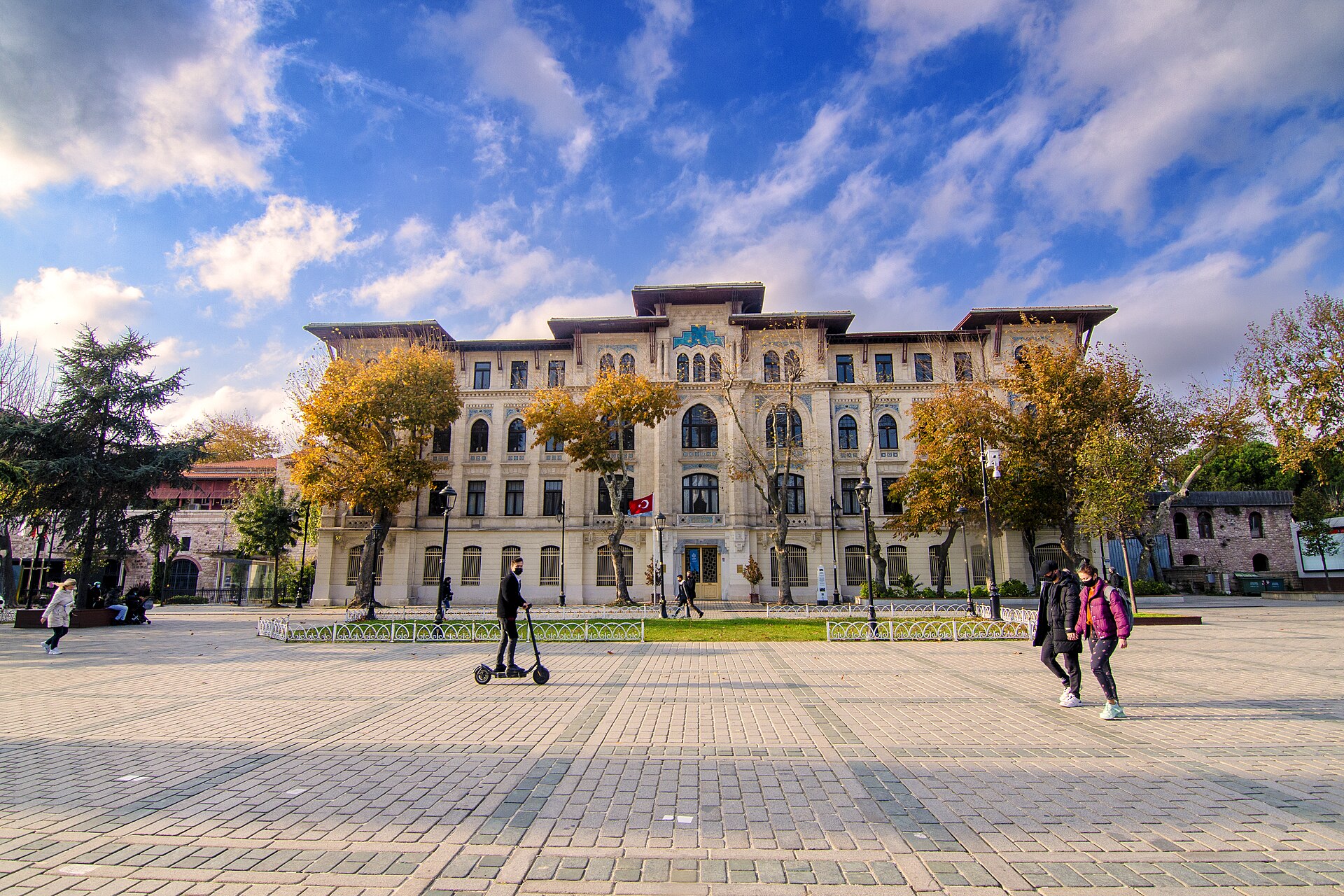
1 min walk · Fatih
Hagia Sophia History and Experience Museum
- High
- Museum
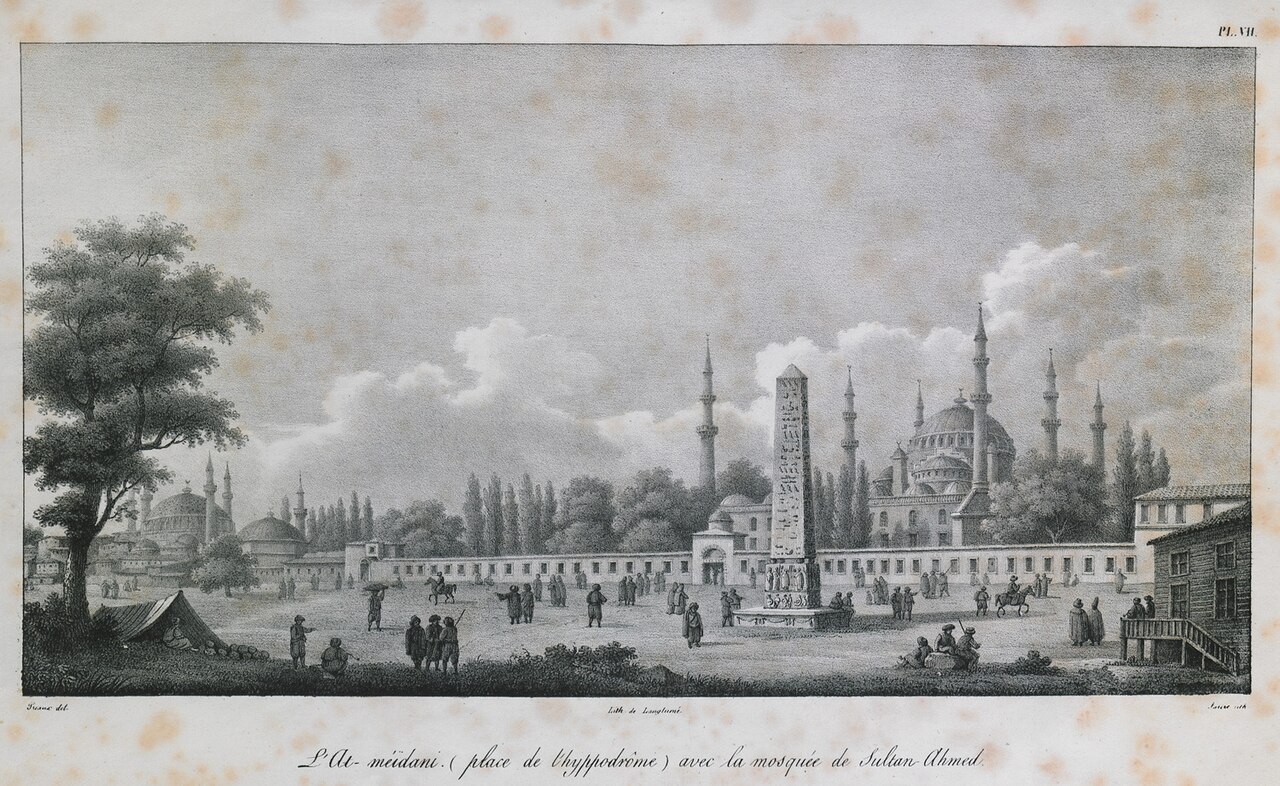
Historic monument · Fatih, Istanbul
Sultanahmet Meydanı
| Monday | 00:00 – 23:59 |
|---|---|
| Tuesday | 00:00 – 23:59 |
| Wednesday | 00:00 – 23:59 |
| Thursday | 00:00 – 23:59 |
| Friday | 00:00 – 23:59 |
| Saturday | 00:00 – 23:59 |
| Sunday | 00:00 – 23:59 |
Checked 2026-08-31 · Source
| Per person | TRY 0.00 |
|---|
Checked 2026-08-31 · Source
Read from the OpenStreetMap access tags; anything not listed has no tag recorded.
Set the group type to family in the planner and the day window contracts to about three quarters of a solo day.
The Hippodrome was where Constantinople did its politics. Septimius Severus endowed the city with one in AD 203; Constantine the Great rebuilt it when he refounded Byzantium in AD 324, at about 450 m long and 130 m wide, holding around 100,000 people. Chariot racing was the surface of it. The real business was the factions, and in 532 the Nika riots — which began here — killed an estimated 30,000 people and destroyed much of the city, including the church that Hagia Sophia replaced. The track is gone. Yes. It is an open public square. Broad paved pedestrian routes and curb ramps cross the square. Some monument plinths, sunken archaeological fragments and garden edges are not directly wheelchair reachable. Hippodrome of Constantinople: At Meydanı is an open public square accessible 24 hours daily. Temporary ceremonies, rallies, security cordons and conservation work can restrict individual monuments or paths. The square and its outdoor monuments are free. Nearby museums and guided tours charge separately. Broad paved pedestrian routes and curb ramps cross the square. Some monument plinths, sunken archaeological fragments and garden edges are not directly wheelchair reachable. T1 tram stops at Sultanahmet beside the northern end of the former racecourse. The square runs south between the Sultan Ahmed Mosque and Museum of Turkish and Islamic Arts.
Checked 2026-08-31 · Source
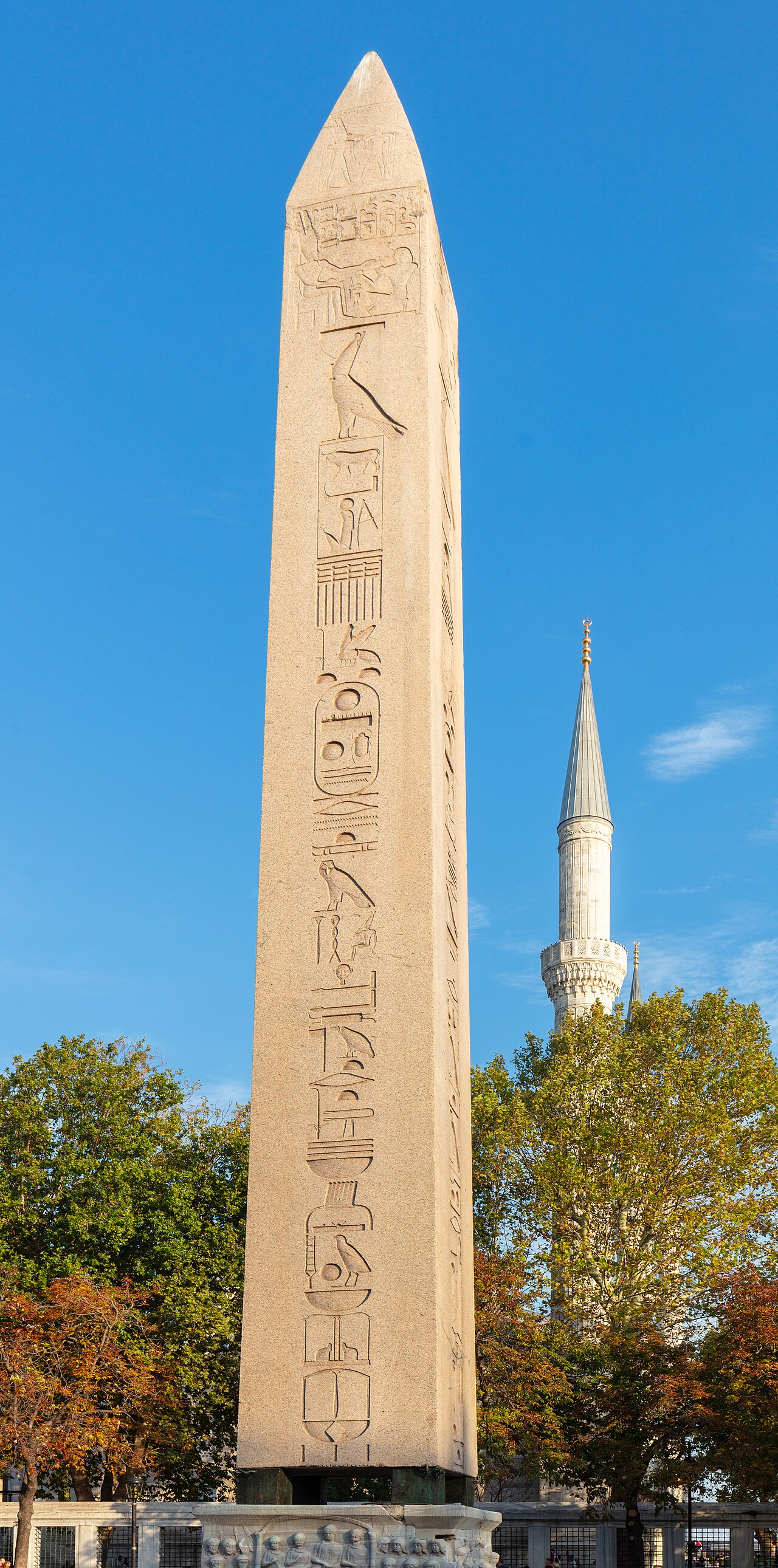
Four monuments in a row, and three of them were already old when they were put here. The Obelisk of Theodosius is Egyptian granite cut for Thutmose III at Karnak around 1490 BC and brought here by Theodosius the Great in 390. It has survived nearly 3,500 years in good condition, which is more than can be said for anything around it. The Serpent Column is fifth-century BC bronze, cast to celebrate the Greek victory over the Persians and taken from Delphi. No. The public square is accessible around the clock. T1 tram stops at Sultanahmet beside the northern end of the former racecourse. The square runs south between the Sultan Ahmed Mosque and Museum of Turkish and Islamic Arts.
Checked 2026-08-31 · Source
Twenty minutes, and it is on the way to everything else. The four monuments stand in a line along a pedestrian square and reading them takes as long as walking the length of it. There is no building to enter and nothing to queue for. The square runs along the western side of the Blue Mosque, with Hagia Sophia at the far end, so it is walked through rather than visited. Twenty minutes of attention is what it needs and rarely gets. The Obelisk of Theodosius, Serpent Column and Walled Obelisk stand along the former spina.
Checked 2026-08-31 · Source
At Meydanı is an open public square accessible 24 hours daily. Temporary ceremonies, rallies, security cordons and conservation work can restrict individual monuments or paths. Prayer, maritime weather, conservation, security and dated events can replace ordinary access. Yes on the main paved route, though some plinths and archaeological fragments cannot be approached without steps.
Checked 2026-08-31 · Source
The square and its outdoor monuments are free. Nearby museums and guided tours charge separately. The base amount and currency follow the official operator tariff. Transport, inner sections, evening programmes and separately operated venues remain excluded unless named. No. The ancient seating and track lie largely below the modern square.
Checked 2026-08-31 · Source
T1 tram stops at Sultanahmet beside the northern end of the former racecourse. The square runs south between the Sultan Ahmed Mosque and Museum of Turkish and Islamic Arts. Use the named gate, pier or stop because the historic peninsula, hills and controlled compounds can separate entrances and exits. Sultanahmet on T1 is beside the square.
Checked 2026-08-31 · Source
Broad paved pedestrian routes and curb ramps cross the square. Some monument plinths, sunken archaeological fragments and garden edges are not directly wheelchair reachable. Yes. It is an open public square. No. The public square is accessible around the clock. The Obelisk of Theodosius, Serpent Column and Walled Obelisk stand along the former spina. Worship, shoe removal, crowds and historic surfaces remain relevant. At Meydanı is an open public square accessible 24 hours daily. Temporary ceremonies, rallies, security cordons and conservation work can restrict individual monuments or paths.
Checked 2026-08-31 · Source
The line is the picture: three monuments receding along the axis of the old track with the Blue Mosque's minarets behind them. Stand at the southern end early in the day. The Obelisk of Theodosius is best photographed with its fourth-century marble base in frame — the carved reliefs on it show the emperor in his box watching the races, which is the only surviving picture of the Hippodrome in use. The pits are awkward: the monuments stand below you and the light rarely reaches their bases. No photography restriction applies to a public square. The square and its outdoor monuments are free. Nearby museums and guided tours charge separately.
Checked 2026-08-31 · Source
Yes. It is an open public square.
No. The public square is accessible around the clock.
The Obelisk of Theodosius, Serpent Column and Walled Obelisk stand along the former spina.
Yes on the main paved route, though some plinths and archaeological fragments cannot be approached without steps.
No. The ancient seating and track lie largely below the modern square.
Sultanahmet on T1 is beside the square.
Loading the interactive map…
The interactive map could not be loaded.
Last updated:
Source: OpenStreetMap contributors, Wikidata ·