143 min walk
Sustainability & Innovation Centre
- High
- Historic monument
Language · 11 published
Historic monument · Dubai
Al-Oshoosh Archeological Site
Reviewed by Elena Voss · Roavina Travel Editor
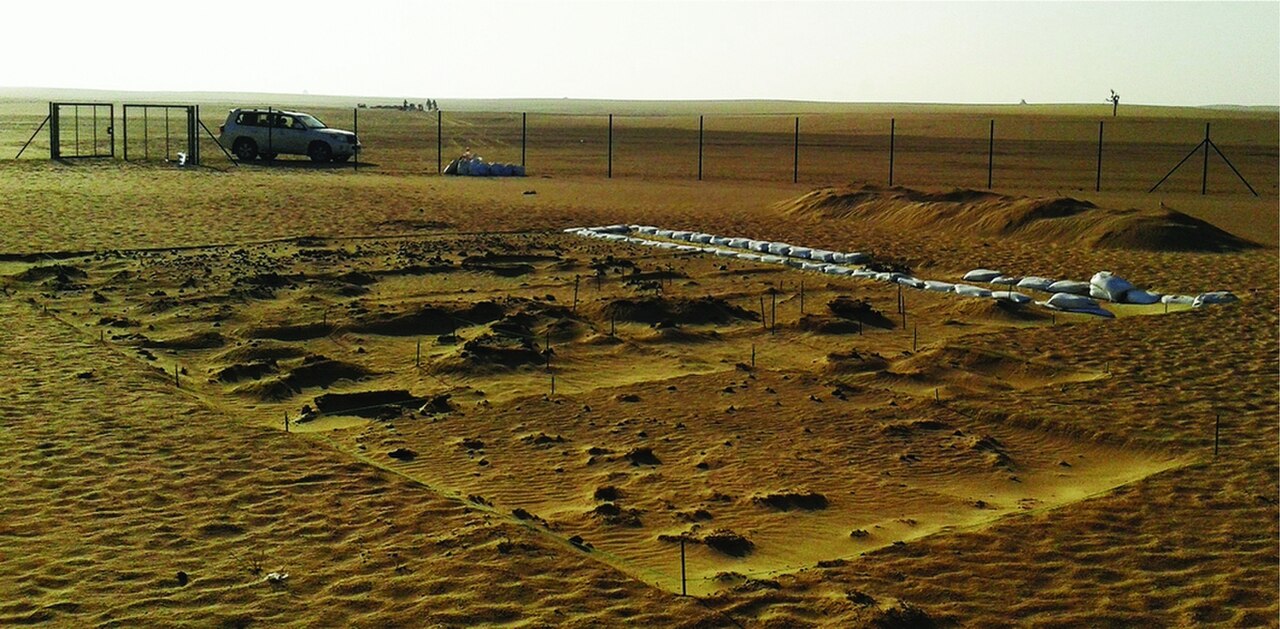
This place is a Archaeological site.
Al-Ashoosh, locally known as the Al-Oshoosh Archeological Site, is an archaeological location in the Dubai emirate. The site represents part of the UAE's prehistoric heritage, situated within the desert landscape that characterizes much of the region beyond the coastal urban development. Archaeological investigations in the Al-Ashoosh area have contributed to understanding early human settlement patterns in southeastern Arabia. The site forms part of the broader network of archaeological interests across Dubai and the wider Emirates, where numerous ancient settlements, burial sites, and occupational areas have been identified through systematic survey and excavation programs conducted over recent decades.
Checked 2026-08-26
The Al-Oshoosh Archaeological Site contains the physical remains of ancient occupation, which may include structural foundations, artifact scatters, and other material evidence of past human activity. Specific features visible at ground surface depend on preservation conditions and previous archaeological work. Visitors should not expect reconstructed buildings, interpretive signage, or visitor center facilities typical of developed heritage attractions. The site presents primarily as a landscape with archaeological potential rather than a curated exhibition space. Any artifacts recovered through legitimate excavation are typically removed to secure storage or museum facilities for conservation and study, not left in situ for casual viewing.
Checked 2026-08-26
A visit to Al-Oshoosh requires careful planning due to its undeveloped nature and remote desert location. Visitors should allocate sufficient time for travel to and from the site, which lies outside Dubai's primary tourist corridors. The actual time spent at the archaeological location itself may be relatively brief, perhaps thirty minutes to one hour for observation and photography, assuming safe access is achievable. However, the overall excursion, including navigation through desert terrain, potential vehicle recovery scenarios, and exploration of surrounding areas, could extend to half a day or longer. Self-sufficiency in supplies and communication equipment is essential.
Checked 2026-08-26
The optimal period for visiting desert archaeological sites in the Dubai region falls during cooler months, typically November through March, when daytime temperatures permit extended outdoor activity. Summer months from June to September present extreme heat conditions that create serious health risks for unprepared visitors in remote locations without shelter or services. Early morning visits during any season help avoid peak temperatures. The site lacks posted opening times, staffed entry points, or official visitor management. Any access arrangements require advance verification through appropriate authorities or land management entities with jurisdiction over the area. Check the operator's own site for the travel date before relying on a schedule or fare.
Checked 2026-08-26
Al-Ashoosh does not operate as a commercial tourist attraction with standardized admission procedures. No ticket booth, entry gate, or payment system exists at this undeveloped archaeological location. Visitors should not expect to encounter fee structures comparable to Dubai's major museums or heritage villages. Any costs associated with visiting would derive from transportation arrangements, guide services if legally required for access, or permits that may be necessary from relevant authorities. Prospective visitors must independently establish whether access permissions, fees, or formal advance notification apply through direct contact with Dubai's heritage management authorities or municipal departments. Check the operator's own site for the travel date before relying on a schedule or fare.
Checked 2026-08-26
Al-Ashoosh lies in desert terrain distant from Dubai's urban core and public transportation networks. Private four-wheel-drive vehicle transport is essential; standard rental cars are unsuitable for desert track conditions. Visitors unfamiliar with desert driving require experienced guidance due to risks of vehicle entrapment in soft sand, disorientation in featureless terrain, and communication dead zones. No marked roads lead directly to this specific archaeological location. GPS coordinates and detailed local knowledge are necessary. Self-driving without adequate preparation, recovery equipment, and emergency communication capability is inadvisable. Organized desert driving groups or professional guides with heritage site experience represent safer access options for most visitors.
Checked 2026-08-26
Desert environment hazards demand serious respect: extreme temperatures, sudden weather changes, limited water sources, and challenging terrain. Vehicle breakdown or entrapment in remote locations creates genuine emergency situations. Wildlife including snakes and scorpions may be present. The archaeological site itself contains fragile, irreplaceable cultural heritage; walking on structural remains, removing artifacts, or disturbing deposits causes permanent damage and may violate UAE heritage protection laws with significant penalties. No emergency services, medical facilities, or supplies exist at the location. Visitors must carry adequate water, food, first aid, communication equipment, and inform others of their intended route and return time before departure.
Checked 2026-08-26
Photography at Al-Oshoosh presents opportunities for documenting desert archaeological landscapes, though expectations should remain modest given the site's subtle surface remains. Natural lighting conditions during early morning and late afternoon enhance landscape photography through reduced glare and improved shadow definition. Drone operation requires awareness of UAE aviation regulations and restricted zones. Flash photography is irrelevant for outdoor archaeological remains. Tripods and standard equipment face no practical restrictions beyond personal carrying capacity across terrain. Respectful photography excludes handling or repositioning artifacts for compositional purposes. Commercial or publication use of images may require permits from heritage authorities depending on intended application and scale.
Checked 2026-08-26
Public access status is not formally documented. The site lacks developed visitor infrastructure, and access may involve crossing land with various ownership or management arrangements. Visitors should verify current access permissions through appropriate Dubai authorities before attempting to visit.
No commercial tour operators are documented as offering regular scheduled visits to this specific archaeological site. Specialized heritage or desert excursion providers may accommodate custom requests, but this requires direct inquiry and cannot be assumed available.
Essential items include abundant water, sun protection, appropriate clothing for desert conditions, reliable navigation equipment, communication devices, vehicle recovery gear if driving, first aid supplies, and emergency provisions. Self-sufficiency is mandatory as no services exist at the location.
No facilities of any kind exist at Al-Ashoosh. The site is undeveloped desert terrain without restrooms, drinking water, food services, shelter, or waste disposal. Visitors must carry in and carry out all necessities and waste.
Removing artifacts from archaeological sites violates UAE heritage protection legislation. All material remains at Al-Ashoosh must be left undisturbed. Penalties for unauthorized removal or damage to archaeological resources can be severe under federal and emirate-level laws.
The remote desert location, lack of facilities, challenging terrain, and environmental hazards make this site generally unsuitable for young children, elderly individuals, or anyone with mobility limitations or medical conditions that could be exacerbated by heat, exertion, or emergency evacuation difficulties.
Loading the interactive map…
The interactive map could not be loaded.
Last updated:
Source: OpenStreetMap contributors, Wikidata ·