
5 min walk
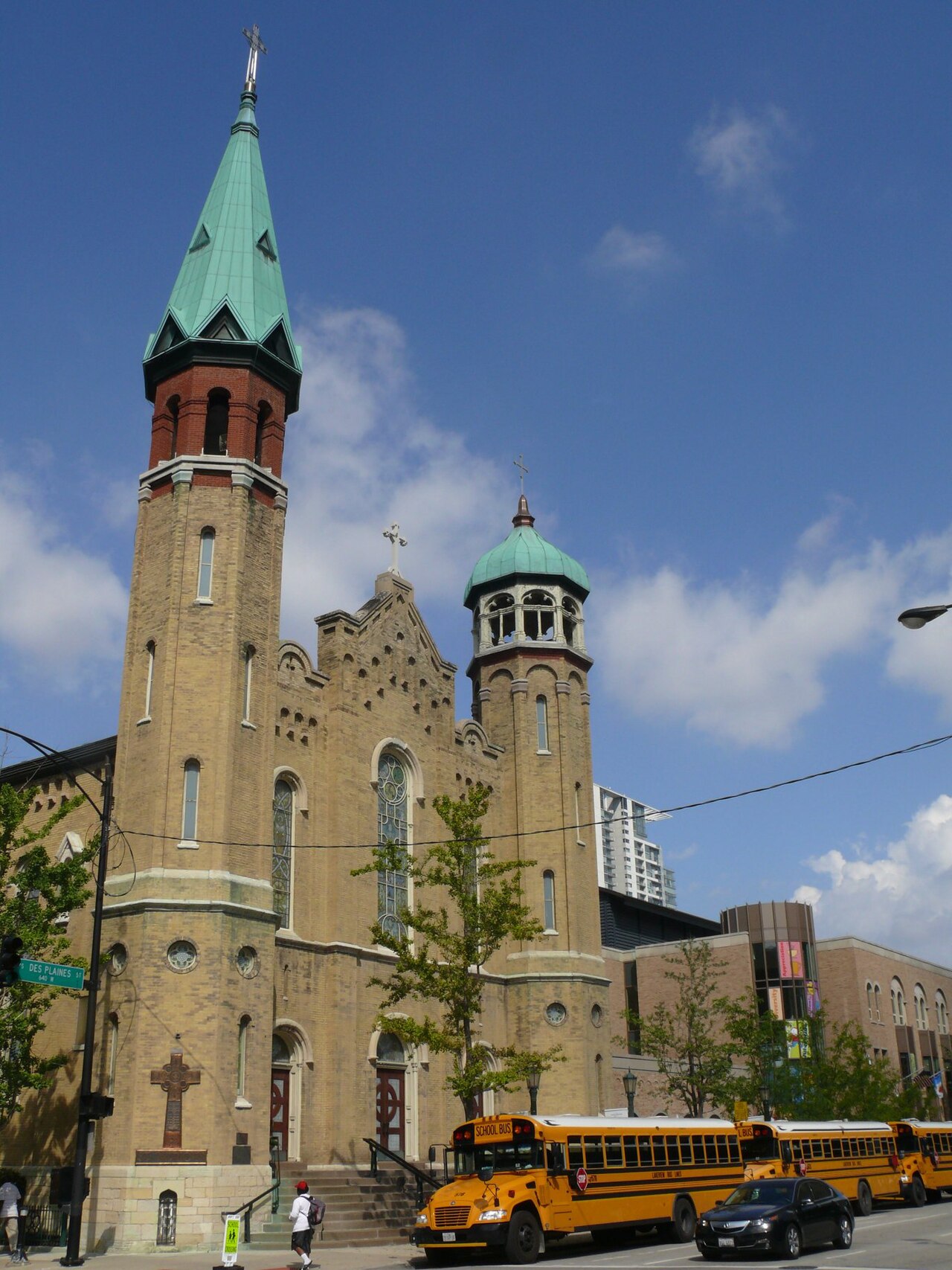
Old St. Patrick's Church
- High · Heritage site
- Place of worship
Language · 11 published
Historic monument · Chicago
Reviewed by Elena Voss · Roavina Travel Editor
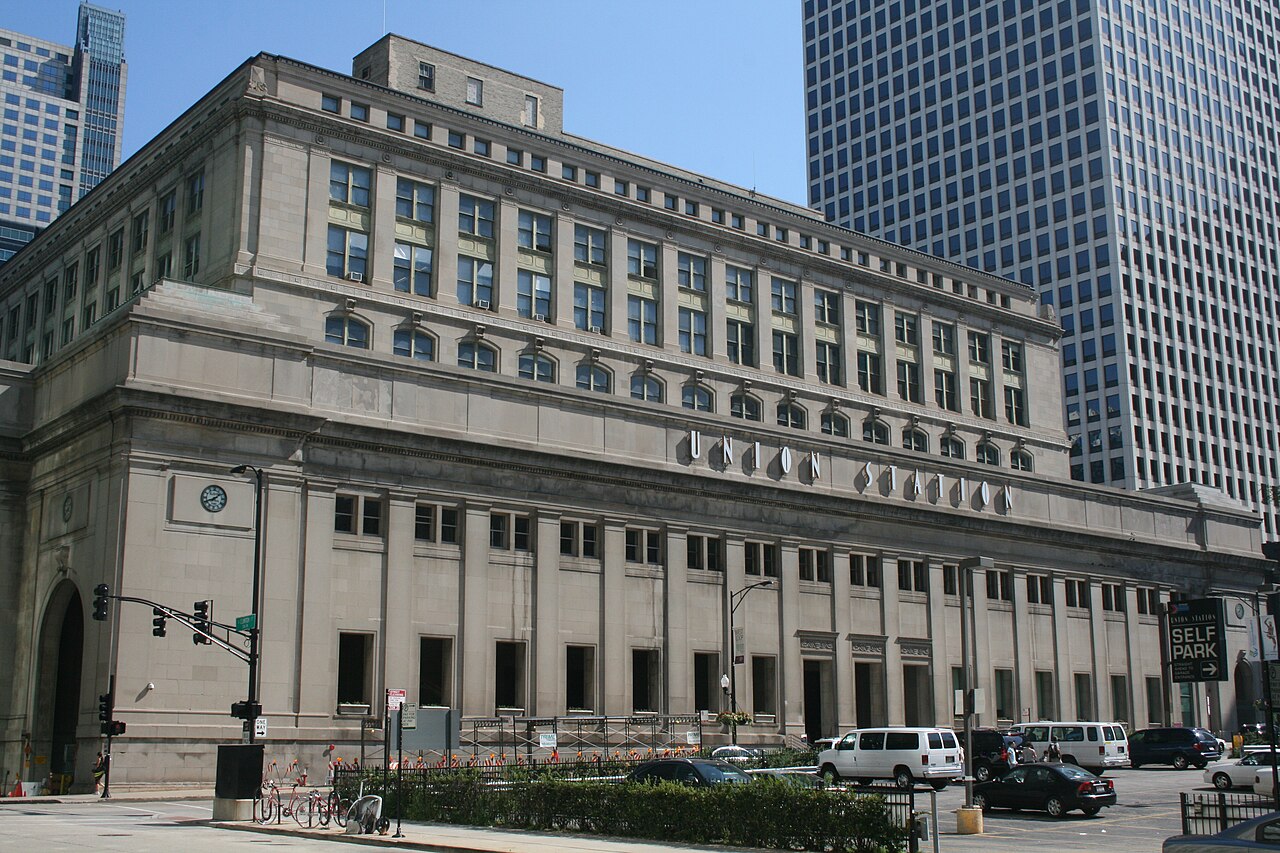
It opened in 1925. It was designed by Daniel Burnham.
Chicago Union Station is a major intercity rail terminal in Chicago, Illinois. It serves as the primary hub for Amtrak long-distance and Midwest corridor trains, as well as Metra commuter rail services. The station opened in 1925 and features a celebrated Great Hall with a dramatic vaulted ceiling. It stands as one of the last great railway stations built in the United States during the golden age of rail travel, occupying a full city block in the West Loop Gate neighborhood near the Chicago River.
Checked 2026-08-26
The station's centerpiece is the Great Hall, a grand waiting room with a soaring 110-foot barrel-vaulted skylight ceiling supported by massive Corinthian columns. The space features benches, a large clock, and classical architectural details in Beaux-Arts style. The facility contains multiple passenger concourses, ticket counters, baggage services, retail shops, food vendors, and restrooms. Underground platforms and tracks extend beneath the station and adjacent office buildings. The building also incorporates substantial commercial office space above the rail facilities.
Checked 2026-08-26
Visitors exploring the Great Hall and main public areas typically spend 15 to 30 minutes. Passengers connecting between trains should allow additional time for navigating to platforms, which may require descending to underground concourses. Those with interest in architectural photography or railway history may wish to allocate 45 to 60 minutes. The station functions primarily as a transportation hub rather than a destination museum, so extended visits depend on individual interest in the building's design and atmosphere.
Checked 2026-08-26
The Great Hall is accessible to the public during station operating hours. Peak passenger activity occurs during weekday morning and evening rush periods when Metra commuter traffic is heaviest. The hall tends to be quieter mid-morning and mid-afternoon on weekdays. Weekend volumes are generally lower except when Amtrak long-distance trains arrive or depart. Natural light through the skylight creates different atmospheric conditions throughout the day. Chicago Union Station also earns time in a chicago itinerary because Major intercity rail terminal with a celebrated Great Hall. Its value becomes clearer when the stop is compared with the surrounding streets and the other ranked places nearby. Check the operator's own site for the travel date before relying on a schedule or fare.
Checked 2026-08-26
Access to the Great Hall and public concourses requires no ticket. Amtrak and Metra train fares vary by destination, service class, and ticket type. Amtrak reservations are typically purchased in advance online, by phone, or at station counters. Metra tickets may be bought at vending machines, through mobile applications, or from conductors onboard with potential surcharge. Special excursion or tour programs are not known to be offered. A flexible visit lets travellers connect Chicago Union Station with the rest of the day without treating one room, viewpoint or photograph as the whole experience. The useful pace depends on personal interest and conditions on arrival. Check the operator's own site for the travel date before relying on a schedule or fare.
Checked 2026-08-26
The station occupies several square blocks bounded by Canal Street, Jackson Boulevard, Clinton Street, and Adams Street in downtown Chicago. Multiple CTA bus routes serve adjacent streets. The nearest CTA L train stations are Clinton on the Green and Pink lines, and Quincy on the Brown, Orange, Pink, and Purple lines, each requiring several minutes of walking. Taxis, rideshare services, and bicycle lanes provide additional access. The station connects to Chicago's pedestrian pedway system in some directions.
Checked 2026-08-26
The underground platform areas can be confusing for first-time visitors; signage should be followed carefully. The station serves high passenger volumes, so personal belongings require attention. Some surrounding streets experience heavy vehicle traffic. The Great Hall, while publicly accessible, is a working transportation facility where passengers have priority for seating. Construction or renovation activities may affect access routes or available amenities without advance notice. Winter weather conditions can impact connecting travel to and from the station. The strongest visit keeps attention on what is distinctive here while leaving room for the next stop. That approach makes Chicago Union Station useful in both a focused first visit and a slower return to the city.
Checked 2026-08-26
The Great Hall offers exceptional architectural photography opportunities, particularly the vaulted ceiling, column details, and natural light effects. Tripod use may attract security attention in active transportation facilities. The grand scale benefits from wide-angle lenses. Morning and afternoon light through the skylight creates varying moods. The large central clock provides a classic compositional element. Platform photography requires valid travel tickets and awareness of operational safety boundaries. Commercial or staged photography may require advance permission from station management.
Checked 2026-08-26
Yes, the Great Hall is publicly accessible without a train ticket.
Not recorded.
Beaux-Arts with a barrel-vaulted skylight ceiling and Corinthian columns.
Platforms are located underground, accessible via concourses and stairways from the main hall.
Yes, food vendors and retail shops are present in the facility.
Yes, connections exist in some directions from the station.
Loading the interactive map…
The interactive map could not be loaded.
Last updated:
Source: OpenStreetMap contributors, Wikidata ·