
2 min walk
Millennium Park
- Must see
- Nature site
Language · 11 published
Nature site · Chicago
Reviewed by Elena Voss · Roavina Travel Editor
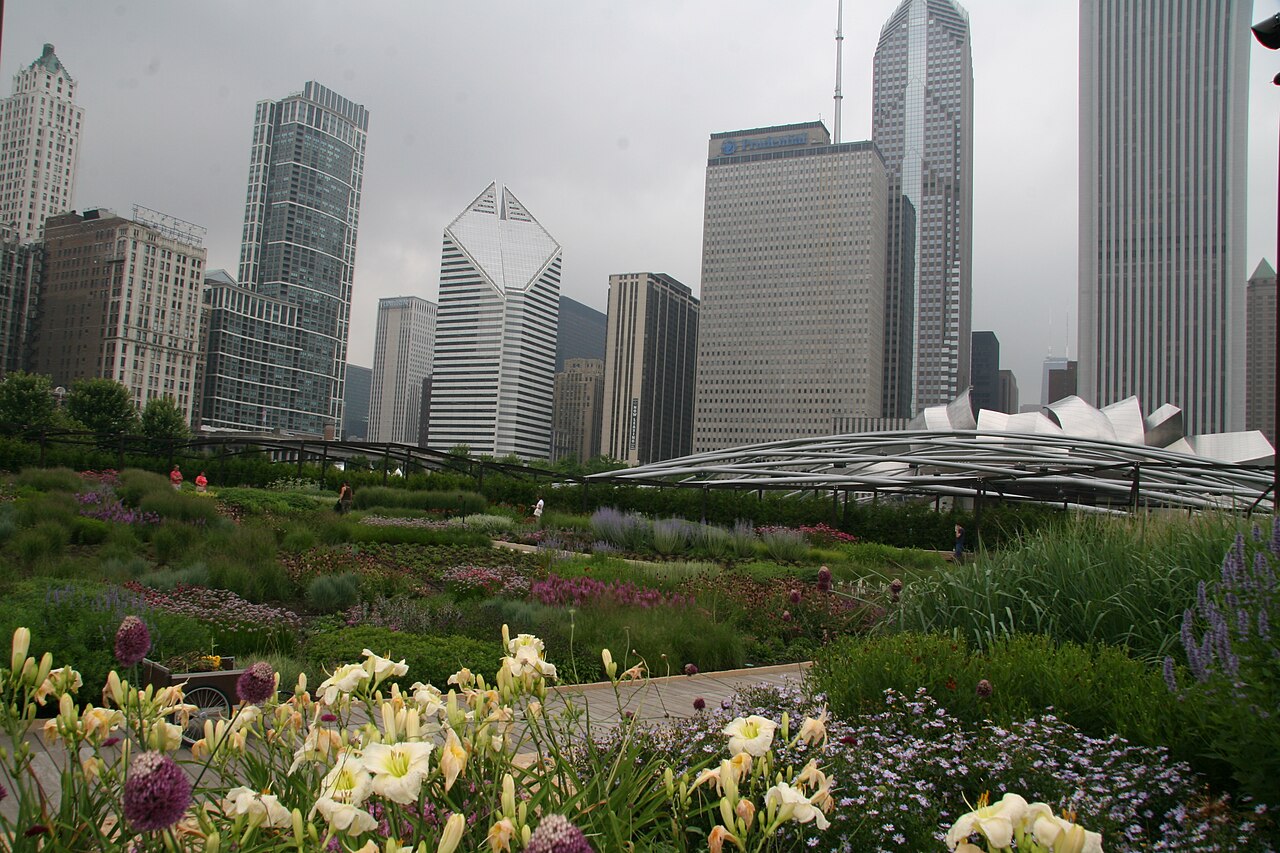
This place is a Garden. It was established in 2004.
Lurie Garden is a public garden within Millennium Park in downtown Chicago. Named for philanthropist Ann Lurie, it occupies the park’s northwest section and creates a planted refuge among the city’s buildings, public art, and busy pedestrian routes. Its contemporary landscape design combines ecological planting with carefully shaped spaces, making it a useful stop for travelers who want a quieter, greener part of Millennium Park. Lurie Garden is a public garden and planted landscape situated within Millennium Park in downtown Chicago. Named for philanthropist Ann Lurie, the garden occupies a significant footprint in the northwest section of the park. It represents a contemporary approach to urban horticulture, combining ecological principles with designed landscape. The garden serves as a free public space for visitors to experience nature amid the dense city environment, offering a contrast to the surrounding architectural and cultural attractions of Millennium Park. No admission fee is required. The garden operates as a free public space within Millennium Park.
Checked 2026-08-26 · Source
The garden is arranged around perennial planting beds, naturalistic drifts, paths, and water features. A distinctive shoulder hedge forms a tall planted edge that gives parts of the garden a sense of enclosure. The planting changes through the year, while the surrounding hardscape connects the garden to Millennium Park. Travelers can move through the landscape, pause among the beds, and view the contrast between living plants and Chicago’s architectural setting. The garden features a diverse collection of perennial plants arranged in designed beds and naturalistic drifts. A notable design element is the shoulder hedge, a tall planting that creates spatial enclosure within the garden. Water features contribute to the sensory experience. The planting design emphasizes seasonal variation, with species selected for ecological appropriateness to the regional climate. Hardscape elements including pathways allow visitor circulation through the planted areas. The garden integrates with the larger Millennium Park context while maintaining its own distinct character.
Checked 2026-08-26 · Source
Allow about fifteen to twenty minutes for a short walk through the garden and around forty-five minutes to an hour for a more attentive visit. Plant enthusiasts and photographers may linger longer to study seasonal changes, water, textures, and the relationship between the planted beds and nearby buildings. Because Lurie Garden sits inside Millennium Park, it also works well as a brief stop between major downtown sights.
Checked 2026-08-26 · Source
Each season gives Lurie Garden a different character. Spring brings new growth and early flowers, summer offers the fullest planting display, autumn highlights seed heads and late color, and winter exposes the structure of dormant plants. Daylight visits make the landscape easiest to experience. Weather affects comfort, while Millennium Park events can change the atmosphere and the amount of space available around the garden.
Checked 2026-08-26 · Source
Lurie Garden is a free public space within Millennium Park, so travelers do not need an admission ticket to enter the garden. This makes it easy to add to a walking route through the Loop without reserving a separate attraction. Costs connected with transport, meals, or other Chicago activities are separate from the garden itself. The garden’s free access also suits travelers building a low-cost day in central Chicago.
Checked 2026-08-26 · Source
The garden lies inside Millennium Park, bounded by Michigan Avenue, Columbus Drive, Randolph Street, and Monroe Street. Travelers can reach the park through Chicago’s downtown pedestrian network and nearby CTA bus and rail connections, then continue on foot to the northwest part of the park. The Loop location places Lurie Garden near hotels, cultural institutions, and other Millennium Park landmarks. Driving is less convenient because central Chicago parking is limited and costly.
Checked 2026-08-26 · Source
Treat the planted beds and water features as protected parts of the landscape: stay on paths and leave plants, soil, and installations undisturbed. Wet surfaces can be slippery. Dense planting and the shoulder hedge can narrow sightlines, so keep children close in busy periods. Downtown traffic, event activity, and crowds may reduce the garden’s quiet atmosphere. Pollen and insects are natural parts of the outdoor setting, especially during the growing season.
Checked 2026-08-26 · Source
Lurie Garden offers close-up subjects in its perennial beds, water features, hedge, and seasonal plant textures, as well as wider compositions framed by Chicago’s buildings. Morning and evening light can soften the urban contrast, while overcast conditions reduce strong shadows on foliage. Keep equipment within the paths and avoid blocking other visitors. The garden’s combination of ecological planting and dense city architecture gives photographers varied compositions within a compact area.
Checked 2026-08-26 · Source
Yes. Lurie Garden is a free public space within Millennium Park, so no admission ticket is required for the garden itself.
A brief visit takes about fifteen to twenty minutes. Travelers interested in planting design, photography, or seasonal detail may spend forty-five minutes to an hour or more.
It is in the northwest section of Millennium Park in the Loop, within the area bounded by Michigan Avenue, Columbus Drive, Randolph Street, and Monroe Street.
The garden contains perennial beds, naturalistic planting, a shoulder hedge, water features, paths, and changing seasonal plant displays set against Chicago’s downtown architecture.
Yes. Its position inside Millennium Park makes it practical as a fifteen- to twenty-minute stop between nearby attractions, while the planted landscape also rewards a longer visit.
Spring, summer, autumn, and winter each reveal different aspects of the perennial landscape, from flowers and fresh growth to seed heads and dormant plant structure.
Loading the interactive map…
The interactive map could not be loaded.
Last updated:
Source: OpenStreetMap contributors, Wikidata ·