
4 min walk
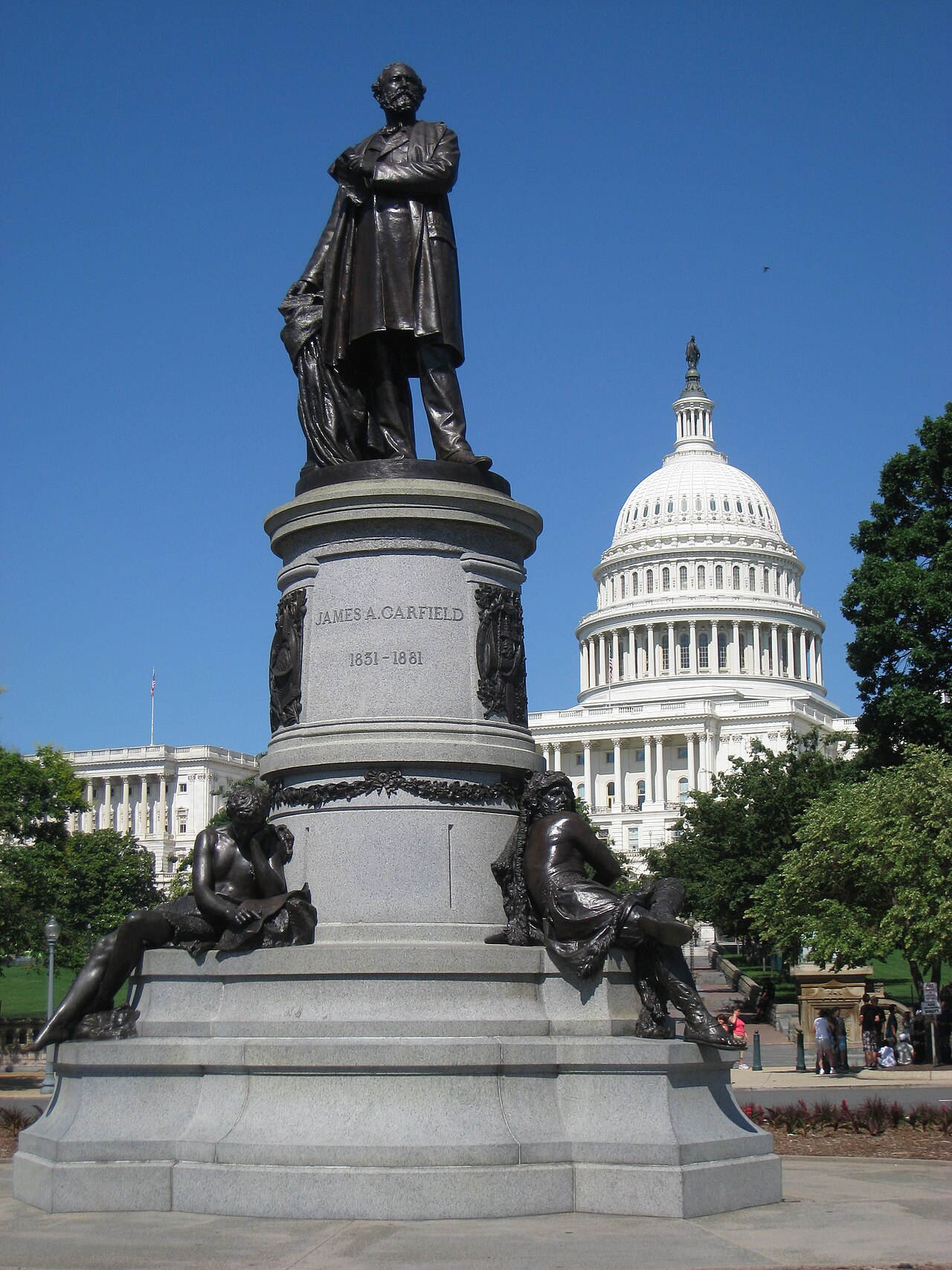
James A. Garfield Monument
- Notable
- Art and culture venue
Historic monument · Washington
Closed today, Sunday. Next open Monday at 08:30 — the planner will not place a stop here on a Sunday.
Plan around it| Monday | 08:30 – 16:30 |
|---|---|
| Tuesday | 08:30 – 16:30 |
| Wednesday | 08:30 – 16:30 |
| Thursday | 08:30 – 16:30 |
| Friday | 08:30 – 16:30 |
| Saturday | 08:30 – 16:30 |
| Sunday | Closed |
Checked 2026-08-31 · Source
| Per person | Free entry |
|---|
Checked 2026-08-31 · Source
Read from the OpenStreetMap access tags; anything not listed has no tag recorded.
Set the group type to family in the planner and the day window contracts to about three quarters of a solo day.
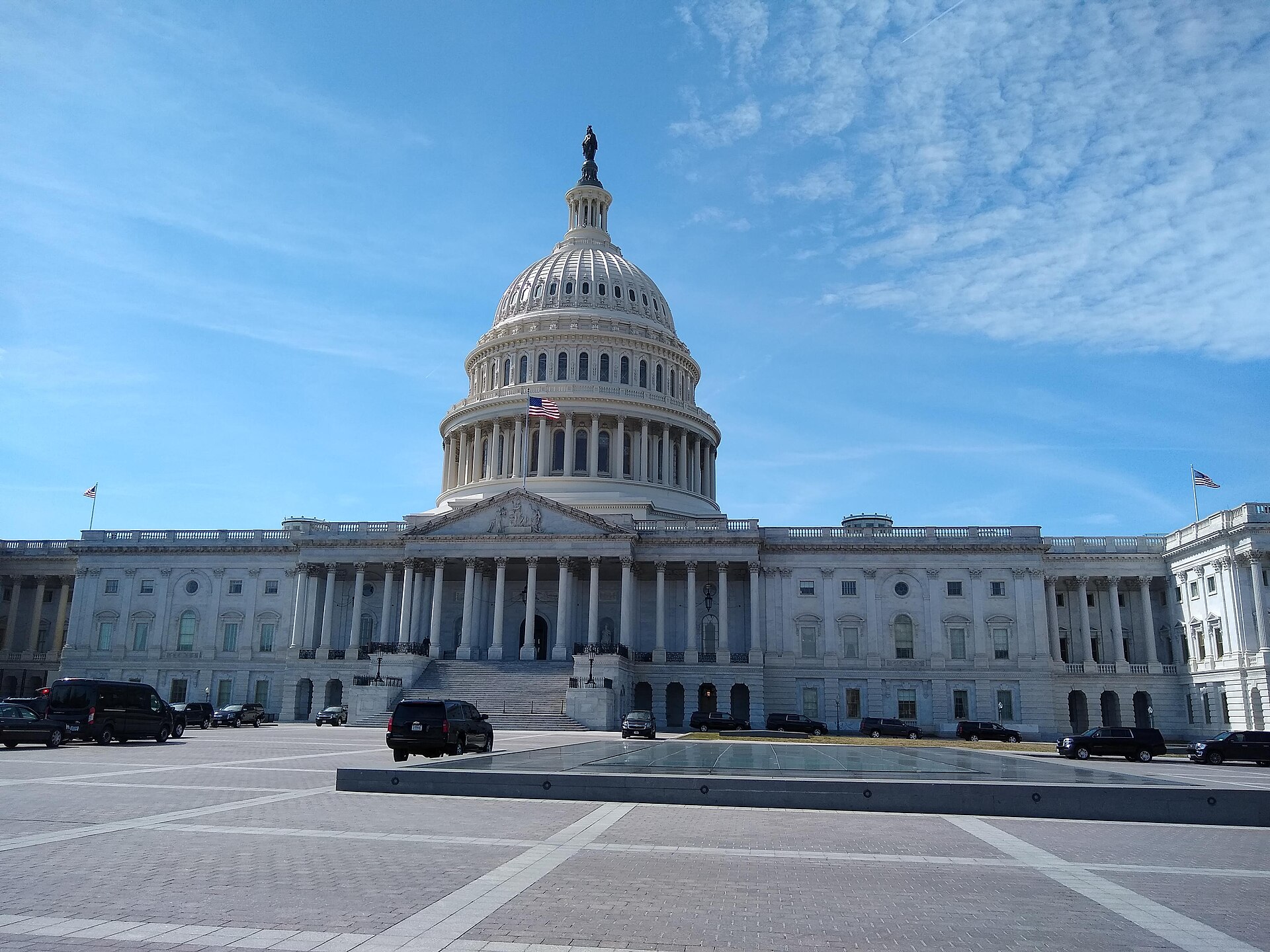
The United States Capitol is the working seat of the United States Congress, a civic building whose public meaning is inseparable from its active role on Capitol Hill in Washington. Visitors enter through the Capitol Visitor Center beneath the East Front plaza, so the experience begins underground before reaching the monumental interior. That route makes the Capitol distinct from a simple exterior viewpoint: it introduces the institution through controlled movement, architectural scale and spaces connected with representative government. The dome and façades matter, but the defining experience is seeing how a functioning national legislature presents itself to the public.
Checked 2026-09-02 · Source
The visit’s principal sequence includes the Crypt, Rotunda and National Statuary Hall, while Exhibition Hall in the underground Visitor Center supplies context about the Capitol, Congress and the development of representative government. These spaces work best as a connected narrative rather than as separate photo stops. The Crypt establishes a sense of structural scale, the Rotunda provides the ceremonial centre, and National Statuary Hall links the building to the states represented in Congress. Begin with Visitor Center orientation, then give the guided route your full attention. Congressional business, security requirements and temporary access conditions can change which areas are available.
Checked 2026-09-02 · Source
Allow about two to three hours for the complete experience, including the approach to the Visitor Center, security screening, orientation, a guided route and time around the East Front. This is a planning range rather than a guaranteed duration. Queues, school groups, accessibility needs, the pace of reading Exhibition Hall and temporary changes to the public route can extend the stop. Protect the Capitol’s essential sequence before adding another landmark. Visitors who linger over the exhibitions or architectural details will need the longer end of the range, while a tightly scheduled group may spend less time in each space.
Checked 2026-09-02 · Source
The recorded operator schedule is Monday through Saturday, 08:30–16:30, with Sunday closed. Use that schedule as the framework for planning, while allowing for the fact that the Capitol is a working congressional building. Official business, security controls and special circumstances can affect the public route or the pace of entry. A morning arrival leaves more room for screening and orientation before nearby sightseeing. Saturday can fit a flexible Capitol Hill day, while a weekday visit may make the building’s institutional character especially vivid. Build in margin rather than treating the closing time as the moment you should arrive.
Checked 2026-09-02 · Source
Admission and tours are free per person according to the official visitor information. Free admission removes the ticket cost, but the visit still needs to be planned around the operator’s entry process and any timed tour arrangement shown for the day. Capacity, screening and congressional activity can shape when visitors move through the building, so do not build a tightly timed Capitol Hill itinerary around an assumed walk-in. Treat the recorded fare as admission only; it does not establish prices for commercial tours, parking, special programmes or services outside the official visit. The operator’s reservation instructions govern the practical entry process.
Checked 2026-09-02 · Source
Enter through the Capitol Visitor Center beneath the East Front plaza. Capitol South and Union Station are the most useful nearby Metrorail stations, while public transport and walking avoid the Capitol’s extremely limited parking. Allow extra time for the final approach: central Washington blocks, security perimeters and major-event controls can make the route longer than a map suggests. The entrance is below the plaza, so an exterior view of the dome is not the same as the visitor access point. Plan to arrive with a buffer before any timed entry, especially when crossing the busy streets and open spaces around Capitol Hill.
Checked 2026-09-02 · Source
Expect security screening before entering and plan around the restrictions of a working government building. Food and beverages are prohibited inside, bag storage is not provided, and official business or congressional activity can change access. Keep belongings minimal, allow queue time and follow staff instructions throughout the route. Crowd controls, prohibited objects and temporary closures are part of the Capitol’s operating context. Rules at another Washington attraction do not establish permission here, so read the posted instructions at this site. A light day bag and an unhurried arrival make screening simpler and reduce the risk of reaching the entrance with unsuitable items.
Checked 2026-09-02 · Source
The West Front offers the classic long view from the National Mall, while the East Front shows the visitor approach and the dome’s relationship to Capitol Hill. Inside, photograph only where staff and room-specific rules permit; keep security points, thresholds and active visitor routes clear. Compact equipment is easier to manage through screening and crowded interior spaces. Exterior light changes across the broad Mall, whereas interior rooms combine monumental scale, shadow and reflective surfaces. Make photography secondary to respectful conduct, public access and staff instructions, particularly in a building where ceremonial spaces and daily government work share the same visitor environment.
Checked 2026-09-02 · Source
Visit to understand the working seat of Congress through its public route, from the underground Visitor Center beneath the East Front plaza to the Crypt, Rotunda and National Statuary Hall. The Capitol combines active civic purpose with monumental architecture, so it rewards attention to both what the building represents and how visitors are guided through it.
Allow about two to three hours for the approach, security screening, Visitor Center, guided route and time around the East Front. Queues, school groups, accessibility needs, reading pace and temporary route changes can extend the visit, so avoid placing a tightly timed second attraction immediately afterward.
Yes. The recorded official admission is free per person, including the public visit and tours described by the operator. Plan around the operator’s current timed-entry or tour arrangements, because free admission does not mean that every arrival can be accommodated immediately.
The recorded schedule is Monday through Saturday, 08:30–16:30, and closed on Sunday. Because this is a working congressional building, official business, security controls or special circumstances may affect access. The official directions and hours page records the schedule used for this guide.
Enter through the Capitol Visitor Center beneath the East Front plaza. Capitol South and Union Station are the most useful nearby Metrorail stations. Public transport and walking are practical because parking is extremely limited, and the final approach may take longer than expected because of security perimeters or major events.
Build a Capitol Hill sequence around the visit by adding the Library of Congress exterior, the Supreme Court, the United States Botanic Garden or Eastern Market. Keep the Capitol’s two-to-three-hour allowance protected, then choose one nearby addition according to current access, walking time and your remaining energy.
Loading the interactive map…
The interactive map could not be loaded.
Last updated:
Source: OpenStreetMap contributors, Wikidata ·