.jpg)
4 min walk
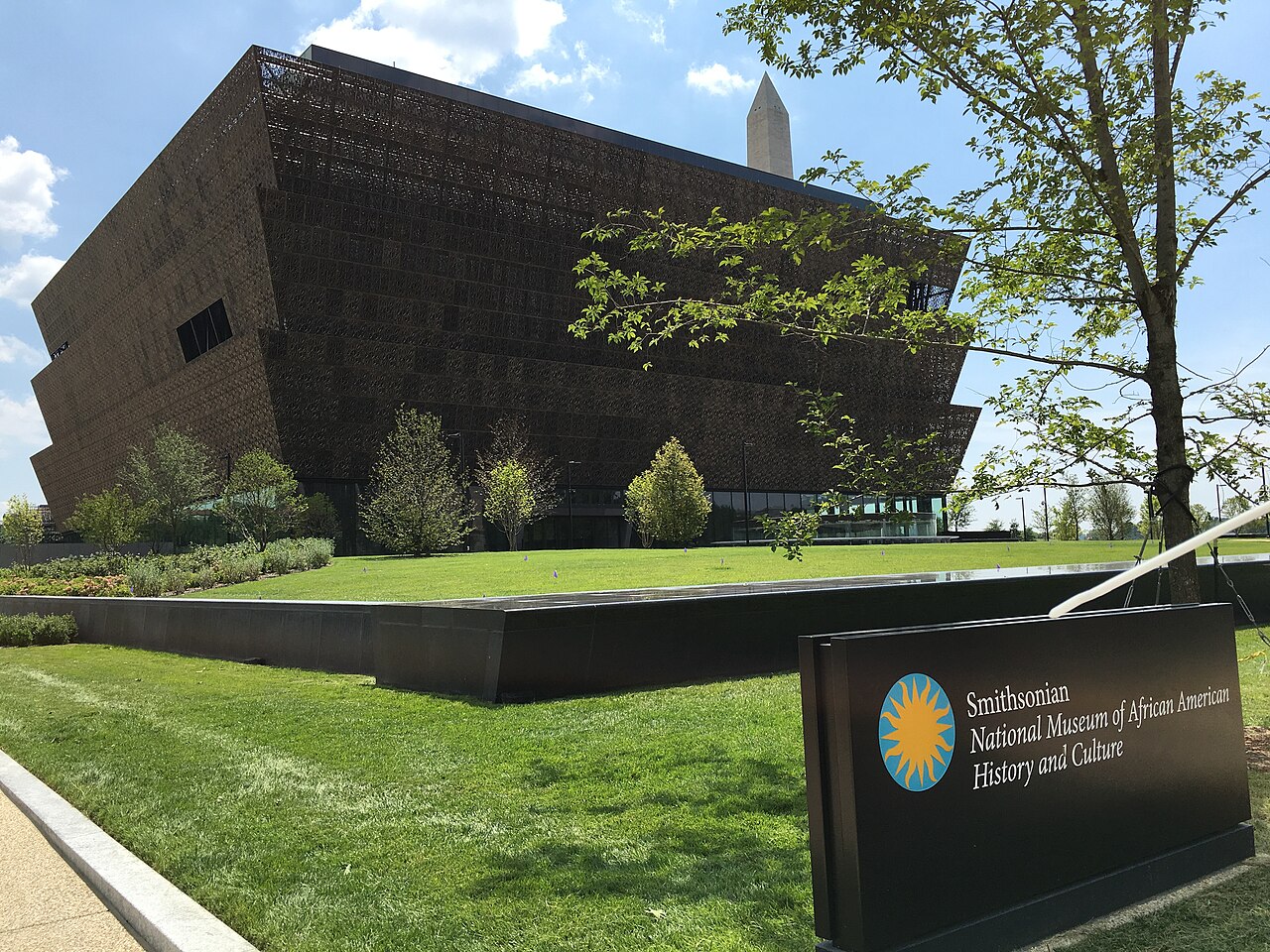
National Museum of African American History and Culture
- Must see
- Museum
Language · 11 published
Historic monument · Washington
Reviewed by Elena Voss · Roavina Travel Editor

| Monday | 09:00 – 17:00 |
|---|---|
| Tuesday | 09:00 – 17:00 |
| Wednesday | 09:00 – 17:00 |
| Thursday | 09:00 – 17:00 |
| Friday | 09:00 – 17:00 |
| Saturday | 09:00 – 17:00 |
| Sunday | 09:00 – 17:00 |
Checked 2026-08-31 · Source
Read from the OpenStreetMap access tags; anything not listed has no tag recorded.
Set the group type to family in the planner and the day window contracts to about three quarters of a solo day.
This place is a Attraction. It opened in 1885. It was built in the Egyptian Revival architecture style. It was designed by United States Army Corps of Engineers. It is built of marble. It carries the National Register of Historic Places listed place heritage designation. It is run by National Park Service.
The Washington Monument is the marble, granite, and bluestone-gneiss obelisk commemorating George Washington, the first president of the United States. Its visible change in stone records the interruption in construction, giving the otherwise simple form a distinctive material story. The monument also has a precise position within the National Mall: its solitary shaft anchors long views toward the Capitol and Lincoln Memorial. Read it from the open grounds before entering, comparing its four-sided geometry with the broad civic landscape. The combination of national symbolism, unusual scale, and visible construction history makes Washington Monument a place to examine as well as photograph.
Checked 2026-09-02 · Source
The interior visit follows screening and an elevator ascent to the observation level. Windows provide views toward the Capitol, White House, Lincoln Memorial, Jefferson Memorial, Arlington, and the Potomac, while interpretive displays explain construction and preservation. The route is compact, but the elevated viewpoint reveals the Mall’s ceremonial geometry in a way the exterior lawn cannot. After descending, walk around the monument to connect the city views with the stone walls and the obelisk’s changing surface. The interior and grounds offer different experiences: one is controlled and vertical, the other open and expansive. Allow time for both rather than treating the elevator ride as the entire visit.
Checked 2026-09-02 · Source
Plan roughly 45 minutes to one hour for the timed interior visit, then add time for security screening and the surrounding grounds. This is an editorial planning estimate, not an operator-stated admission duration. The visit may take longer if you pause at observation windows, read the interpretation, or photograph the monument from several sides. Keep the interior appointment as the fixed point in the day and leave a buffer before it for arrival and screening. Walking between Mall landmarks also takes longer than a compact map view suggests because lawns and controlled approaches widen the route. Visitors moving slowly or travelling with children should preserve additional margin.
Checked 2026-09-02 · Source
The recorded operator schedule lists Washington Monument as open from 09:00 to 17:00 every day of the week. Choose a time that protects the timed interior entry while leaving daylight for the exposed Mall grounds. Morning light can sharpen the obelisk’s vertical outline and make the surrounding lawns feel quieter; a later visit can fit a route toward nearby memorials. The schedule is the recorded starting point, not a promise that every access arrangement will remain unchanged. Check the National Park Service information for the specific travel date, then allow margin for weather, maintenance, security activity, and events. If conditions shift, prioritize the booked interior sequence and keep the exterior plan flexible.
Checked 2026-09-02 · Source
The National Park Service records admission as free per person. Free admission does not mean unrestricted interior access: entry is organised through timed access, screening, and any current capacity controls. The surrounding Mall grounds can be enjoyed as public open space, while entering the monument requires following the visitor process in force for the day. Keep the recorded admission separate from commercial tours, booking charges, parking, or special programmes; those external prices do not change the monument’s free admission. Use the official fees page for current reservation details and arrive prepared for the operator’s instructions if availability or booking procedures change.
Checked 2026-09-02 · Source
Washington Monument stands on the Mall between 15th and 17th Streets. Smithsonian and Federal Triangle Metro stations are practical approaches, followed by a walk across open, exposed grounds. The final segment may feel longer than a map suggests because broad lawns, central Washington blocks, and security perimeters shape the route. Public transport and walking usually make more sense than relying on scarce nearby parking. Leave extra time before timed entry, particularly when crossing the Mall from another museum or memorial. Station closures and major events can alter the approach, so check current National Park Service directions and local travel conditions before setting out.
Checked 2026-09-02 · Source
The Mall approach is exposed to heat, cold, wind, and storms, so weather can affect the visit before you reach the entrance. Security screening may add time during busy periods or large events in central Washington. Maintenance, weather, or security activity can affect access even when the normal schedule is recorded. Keep the timed entry as the day’s fixed appointment and bring only what the site permits. Follow staff instructions and current National Park Service notices rather than relying on yesterday’s conditions. Avoid blocking entrances, screening points, or narrow interior spaces, and preserve a flexible surrounding itinerary so delays do not jeopardise the main visit.
Checked 2026-09-02 · Source
Washington Monument rewards photographs that show both its extraordinary verticality and its place within the Mall’s ceremonial axis. The Circle of Flags provides a formal exterior setting, while wider views can include the Capitol, Lincoln Memorial, or other landmarks. Walk around the grounds to compare upward-looking compositions with frames that reveal the changing stone surface above and below the visible construction break. Observation-level windows offer directional city views, although reflections and limited room affect framing. Morning or late-day light can separate the pale shaft from the sky. Keep equipment clear of entrances, screening points, and visitors, and obey every posted restriction or staff instruction.
Checked 2026-09-02 · Source
It combines a distinctive obelisk commemorating George Washington, an elevator ascent, observation-level views, and a direct relationship with the National Mall’s major landmarks. The marble, granite, and bluestone-gneiss construction, including its visible change in stone, rewards close exterior attention.
Allow about 45 minutes to one hour for the timed interior visit, plus time for screening and the grounds. Add more for exterior photographs, interpretation, or a connected walk to nearby Mall landmarks.
The recorded National Park Service admission is free per person. Interior access still follows timed-entry and screening procedures, so free admission does not necessarily mean unrestricted walk-in entry.
The recorded operator rows show opening from 09:00 to 17:00 every day of the week. Check the National Park Service page for the travel date because weather, maintenance, security activity, or other conditions can affect access.
Approach via the Mall between 15th and 17th Streets. Smithsonian and Federal Triangle Metro stations are practical starting points, followed by an exposed walk across the grounds. Leave margin for the final distance and screening before timed entry.
Pair it with nearby Mall landmarks such as the World War II Memorial, Lincoln Memorial, Jefferson Memorial, or National Museum of African American History and Culture. Keep the sequence realistic and protect time for the timed interior visit.
Loading the interactive map…
The interactive map could not be loaded.
Last updated:
Source: OpenStreetMap contributors, Wikidata ·