
3 min walk
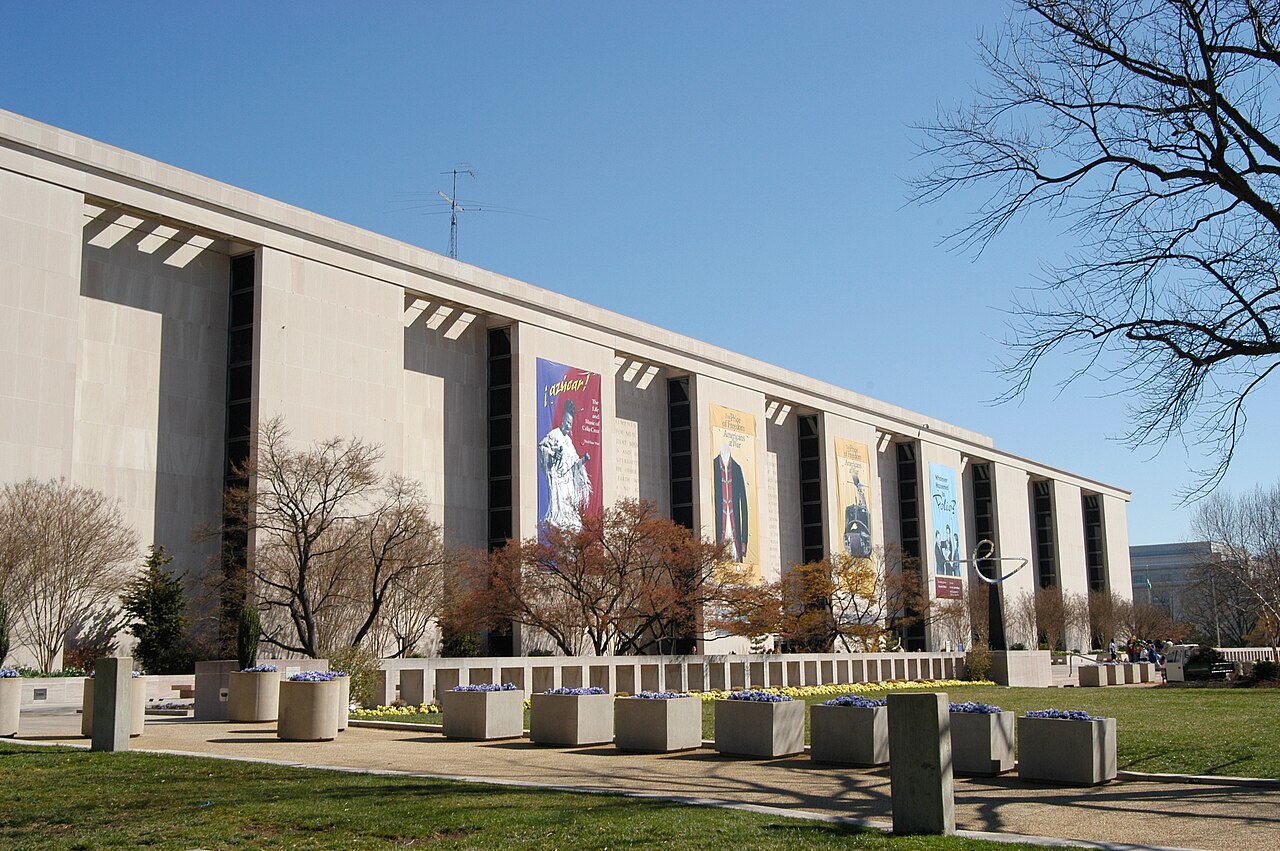
National Museum of American History
- Must see
- Museum
Museum · Washington
| Monday | 12:00 – 17:30 |
|---|---|
| Tuesday | 10:00 – 17:30 |
| Wednesday | 10:00 – 17:30 |
| Thursday | 10:00 – 17:30 |
| Friday | 10:00 – 17:30 |
| Saturday | 10:00 – 17:30 |
| Sunday | 10:00 – 17:30 |
Checked 2026-08-31 · Source
| Per person | Free entry |
|---|
Checked 2026-08-31 · Source
Read from the OpenStreetMap access tags; anything not listed has no tag recorded.
Set the group type to family in the planner and the day window contracts to about three quarters of a solo day.
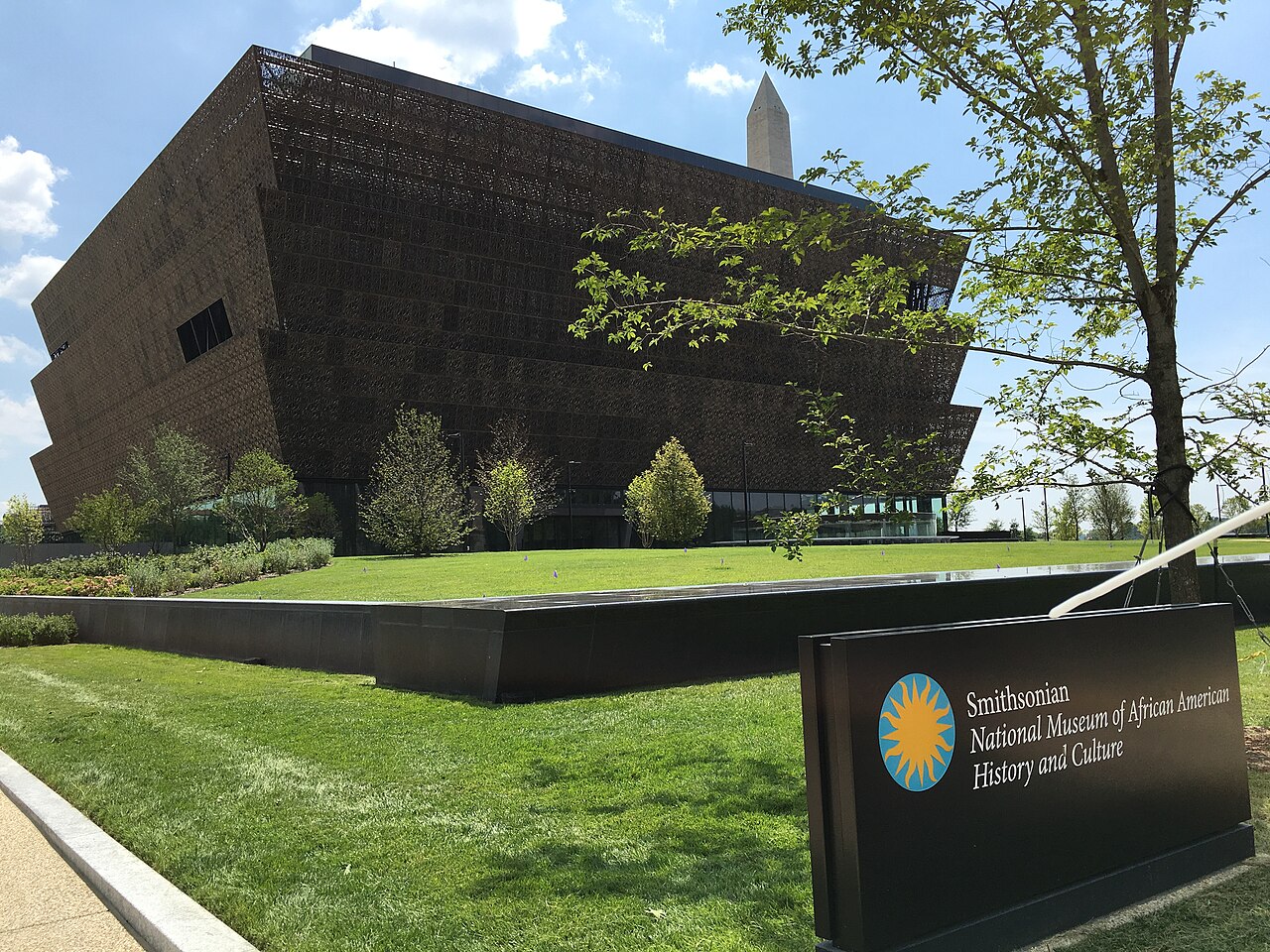
The National Museum of African American History and Culture is the Smithsonian’s purpose-built museum of African American life, history, and culture on the National Mall. Its exhibitions connect slavery and emancipation with segregation, civil rights, community, music, visual culture, performance, and achievement. The building’s bronze-coloured corona and stepped form give the institution a distinctive civic presence, but the museum’s importance is experienced through its collections and the stories they place in conversation. Plan for a serious, sustained visit rather than a quick landmark stop. This is a place where architecture, objects, testimony, and historical interpretation are designed to be read together.
Checked 2026-09-02 · Source
Begin with the lower History Galleries, which trace African American experiences through slavery, freedom, segregation, civil rights, and continuing change. The upper floors broaden the visit into community life, music, visual culture, performance, and achievement. This vertical sequence is part of the museum experience: it moves from foundational historical forces toward the many ways people have shaped American culture. The galleries are information-rich and emotionally demanding, so an orientation panel or museum map helps you protect the essential route before exploring additional rooms or temporary displays. Allow the sequence to unfold instead of treating every floor as an interchangeable gallery.
Checked 2026-09-02 · Source
Allow three to four hours for a substantial visit covering the History Galleries and selected culture floors. The operator notes that the History Galleries alone take about two hours and involve roughly one mile of walking. Your actual time may expand with queues, school groups, accessibility needs, reading pace, or pauses after difficult material. Protect the History Galleries first, then choose upper-level areas according to your remaining energy and time. A rushed visit can become a checklist; a paced visit leaves room for reflection and context. Families and mixed-interest groups should agree on a meeting point before separating across the building.
Checked 2026-09-02 · Source
The recorded operator schedule is Monday noon to 5:30 p.m. and Tuesday through Sunday from 10 a.m. to 5:30 p.m. Check the museum’s official visit page for your date before setting the rest of a Washington itinerary, because access arrangements and capacity controls can change. A morning arrival from Tuesday through Sunday gives you more room for the long historical route; on Monday, treat the shorter opening window as a reason to make this the day’s principal stop. Leave flexibility around the timed pass and screening. Earlier arrival also gives you more time to pause without sacrificing the final galleries.
Checked 2026-09-02 · Source
General admission is free, but visitors generally need a free timed-entry pass. Advance and same-day passes are released by the museum under its current availability rules, so the pass is the practical constraint even though the admission charge is zero. Use the official Smithsonian museum page for the reservation process and current capacity information. Do not treat commercial tours, parking, or separately presented programmes as evidence of an admission fee: the recorded operator admission is free per person in USD. Keep the pass details available when approaching the entrance, since screening and timed access shape the start of the visit.
Checked 2026-09-02 · Source
Timed-pass visitors enter from Madison Drive or Constitution Avenue after screening and exit on Constitution Avenue. Smithsonian and Federal Triangle stations are practical approaches to the Mall-side location. Central Washington blocks, security perimeters, and the final walk can take longer than a map estimate suggests. Public transport and walking usually avoid scarce parking, while station closures or major events may alter the best route. Build in margin before timed entry, and confirm the final approach on the operator’s directions information. The exit on Constitution Avenue may leave you on a different side of the Mall from where you began.
Checked 2026-09-02 · Source
Expect screening and allow time for queues before the galleries. The History Galleries contain sustained, traumatic subject matter, so plan pauses and avoid packing the day too tightly around the visit. Eat and hydrate beforehand, carry only what screening permits, and follow staff instructions about bags, food, movement, and photography. Accessibility needs, school groups, temporary closures, and crowd controls can change the pace. Treat the museum as a place of learning and remembrance: patience, quiet attention, and respect improve the experience for everyone. Build emotional space into the day, especially if travelling with children or visitors encountering this history for the first time.
Checked 2026-09-02 · Source
The bronze-coloured corona and stepped landscape make the exterior especially distinctive from the Washington Monument grounds and the surrounding National Mall. Inside, keep photography secondary to visitor privacy, exhibition rules, and the atmosphere of reflective galleries. Use compact equipment, obey posted restrictions, and follow staff instructions; do not block thresholds, routes, screening points, or visitors engaged with difficult material. Exterior light can shift quickly across the Mall, while interior reflections and mixed brightness reward patient framing. A respectful photograph records the architecture without turning the museum into a backdrop. The stepped exterior is particularly effective when framed with open Mall space rather than crowded foregrounds.
Checked 2026-09-02 · Source
Visit for a Smithsonian experience organised around African American history, culture, and community rather than a single monument or collection. The lower History Galleries connect slavery, freedom, segregation, and civil rights with continuing change; upper floors explore music, visual culture, performance, and achievement. The building’s architecture adds a memorable setting, but the museum’s defining strength is the way its collections connect national history with lived experience.
Allow three to four hours for the History Galleries and selected culture floors. The operator notes that the History Galleries alone take about two hours and roughly one mile of walking. Queues, reading pace, school groups, accessibility needs, and pauses after difficult material can extend the visit, so protect the core galleries before adding other Washington attractions.
Admission is free per person, but visitors generally need a free timed-entry pass. The museum releases advance and same-day passes under its current availability rules. Check the official visit page for the reservation process and capacity information before travelling, because a free admission charge does not guarantee that entry is available without the required pass.
The recorded operator hours are Monday 12:00–17:30 and Tuesday through Sunday 10:00–17:30. Tuesday through Sunday offers the longer opening window for a full historical visit, while Monday is better treated as the day’s main stop because it opens at noon. Confirm the official schedule and timed-entry availability for your date before fixing nearby plans.
Timed-pass visitors enter from Madison Drive or Constitution Avenue after screening and exit on Constitution Avenue. Smithsonian and Federal Triangle stations are practical approaches. Allow extra time for the final walk, security perimeter, and screening, since the route from a station can take longer than a simple map estimate. Major events or station closures may alter the best approach.
Combine it with a nearby National Mall stop only if you protect three to four hours for the museum. The Washington Monument, National Museum of American History, and a White House viewpoint are plausible additions, but the museum’s History Galleries alone take about two hours and roughly one mile of walking. Place the museum first when its timed pass is fixed, then use remaining energy for nearby sights.
Loading the interactive map…
The interactive map could not be loaded.

Last updated:
Source: OpenStreetMap contributors, Wikidata ·