
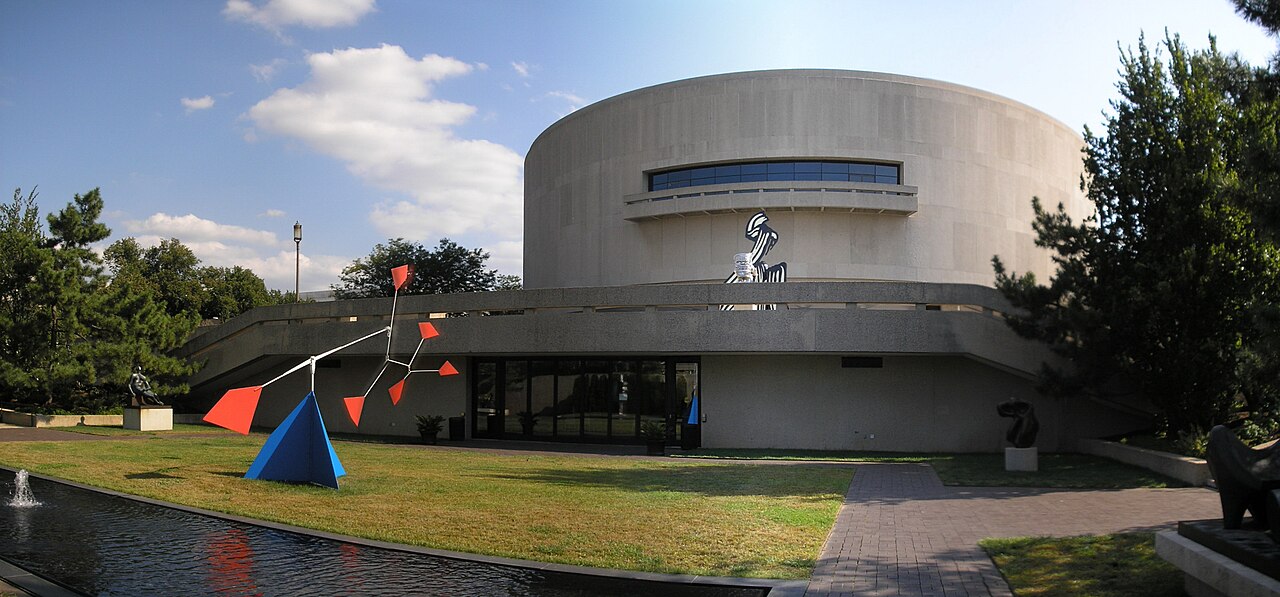
4 min walk
Hirshhorn Museum and Sculpture Garden
- Must see
- Museum
Museum · Washington
| Monday | 10:00 – 17:30 |
|---|---|
| Tuesday | 10:00 – 17:30 |
| Wednesday | 10:00 – 17:30 |
| Thursday | 10:00 – 17:30 |
| Friday | 10:00 – 17:30 |
| Saturday | 10:00 – 17:30 |
| Sunday | 10:00 – 17:30 |
Checked 2026-08-31 · Source
| Per person | Free entry |
|---|
Checked 2026-08-31 · Source
Read from the OpenStreetMap access tags; anything not listed has no tag recorded.
Set the group type to family in the planner and the day window contracts to about three quarters of a solo day.
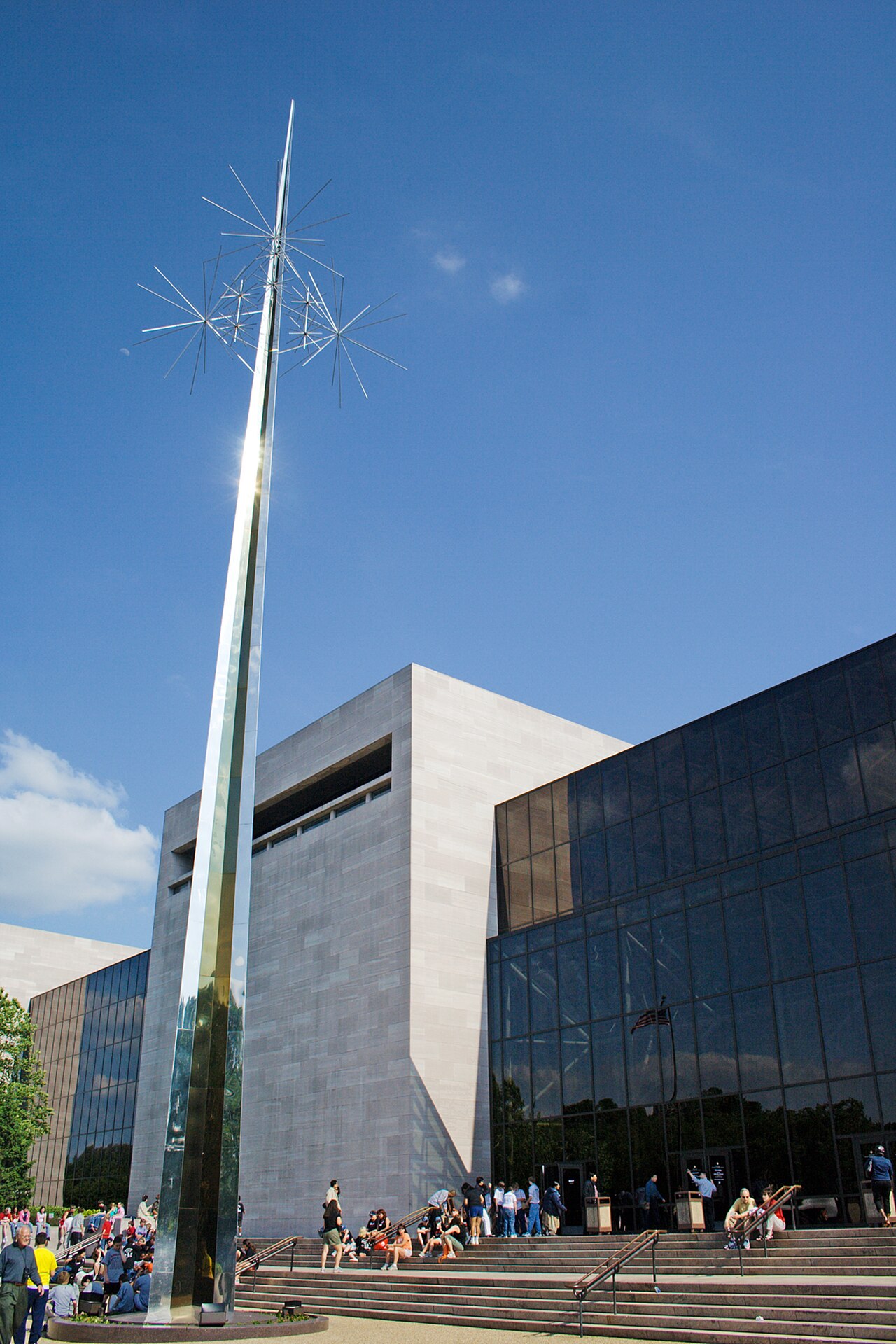
The National Air and Space Museum is a Smithsonian institution on Washington’s National Mall devoted to the history and technology of flight. Its subject is unusually broad but its identity is precise: visitors move from the earliest powered aircraft through military and civilian aviation to the machines that carried people beyond Earth. The museum is especially valuable for seeing famous objects at human scale, including aircraft whose names are familiar from textbooks but whose construction, size and engineering become clearer in person. Its location also makes it part of a civic museum district, yet the collection has a distinct narrative focused on how flight changed science, travel, war and everyday life.
Checked 2026-09-02 · Source
Plan around the museum’s defining artefacts rather than trying to read every label. The 1903 Wright Flyer represents the breakthrough of controlled powered flight, while Apollo 11 command module Columbia brings the story into the space age. Friendship 7 adds the perspective of early human orbital flight, and other aircraft and spacecraft connect those milestones to navigation, propulsion and exploration. Galleries pair original objects with interpretation, demonstrations and changing exhibitions, so the exact route can vary as work continues in parts of the building. An orientation panel or current gallery map helps you identify the essential displays first, then spend longer wherever the engineering, personal stories or historical context catches your attention.
Checked 2026-09-02 · Source
Allow two to three hours for the principal open galleries. That is enough for a purposeful first visit centred on the Wright Flyer, Columbia, Friendship 7 and the surrounding interpretation, but it is not a promise that every exhibition can be covered at the same pace. Add time if you choose an IMAX film, planetarium programme or guided activity, or if you enjoy reading the technical and historical labels in depth. Security screening, queues, school groups, accessibility needs and photography pauses can all lengthen the visit. Protect the museum’s core route before adding another Mall stop, because the collection rewards attention more than a rushed checklist.
Checked 2026-09-02 · Source
The operator records daily hours of 10:00 to 17:30 for the Washington museum, but a travel day can still be affected by capacity controls, security operations, renovation work or a special event. Check the official museum page before setting a tightly packed Mall itinerary, especially if you have reserved timed entry or a separate programme. Arriving near opening gives you more control over the essential galleries and leaves room for slower stops later. Midday can work well when your wider route already places you on the eastern Mall, although crowds, school visits and seasonal tourism may change the pace inside.
Checked 2026-09-02 · Source
Recorded general admission is free, with a per-person charge of 0 USD. The Washington museum also uses free timed-entry passes, so “free” does not mean that an unplanned walk-in is guaranteed entry when capacity is controlled. Treat the pass as an access requirement rather than a paid ticket, and separate it from any independently priced theatre, planetarium or special programme product. Reserve through the operator’s current visitor information and carry the relevant confirmation if one is issued. Commercial tour listings cannot replace the museum’s own admission rules, and no additional admission price should be inferred from them.
Checked 2026-09-02 · Source
Use the Jefferson Drive entrance on the south side of the National Mall. L’Enfant Plaza and Smithsonian stations offer practical rail approaches, followed by a walk across the Mall; the final distance can feel longer than a map suggests because of broad avenues, security perimeters and the museum’s entrances. Public transport and walking are usually easier to plan than relying on scarce central parking. Leave margin for screening and for the approach itself if your timed-entry window is fixed. Station closures, demonstrations and major Washington events can alter the most convenient last segment, so use the operator’s directions page for the final approach.
Checked 2026-09-02 · Source
Expect visitor screening and build that pause into the day. Renovation work can change which galleries or objects are available, making the current operator information more useful than an older itinerary. Outside food is restricted and only bottled water is permitted according to the supplied visitor research, so plan refreshments around those rules rather than assuming normal picnic access. Crowds, school groups, prohibited objects and temporary closures can affect the sequence even when the museum is open. Follow staff directions, posted collection rules and any access-control instructions, and keep the main routes clear for other visitors and mobility devices.
Checked 2026-09-02 · Source
The museum’s aircraft and spacecraft are compelling photographic subjects because their scale, surfaces and suspended positions are difficult to appreciate in a small image. Look for balconies and open sightlines that show the relationship between an object and the surrounding gallery, then wait for a clear moment rather than blocking a circulation route. Reflections and mixed interior lighting may favour patient framing over flash-heavy shooting. Keep equipment compact, respect posted restrictions and follow staff instructions. Personal photography should never interfere with screening, thresholds, accessible paths, school groups or another visitor’s attempt to study an artefact up close.
Checked 2026-09-02 · Source
It brings the history of aviation and spaceflight together through original objects such as the 1903 Wright Flyer, Apollo 11 command module Columbia and Friendship 7. Those artefacts make technological milestones easier to understand as physical machines, not only as names in a timeline.
Allow two to three hours for the principal open galleries. Add more time for an IMAX film, planetarium programme or guided activity, and allow extra margin for screening, queues, school groups, accessibility needs and a slower reading pace.
General admission is recorded as free at 0 USD per person, but the Washington museum uses free timed-entry passes. A pass is therefore an access requirement when capacity controls apply, while theatre, planetarium and special-program products should be treated separately.
The operator records daily hours of 10:00 to 17:30. Check the official visitor page for your date because capacity controls, renovation work, security operations and special events can affect the practical route even when the regular schedule is unchanged.
Use the Jefferson Drive entrance on the south side of the Mall. L’Enfant Plaza and Smithsonian stations are practical rail approaches, followed by a walk. Leave extra time for the broad Mall paths, security perimeter and visitor screening.
The National Museum of the American Indian, United States Capitol and Hirshhorn Museum form a realistic eastern Mall cluster. Combine them only after protecting enough time for the Air and Space Museum’s essential galleries, since the main collection rewards an unhurried visit.
Loading the interactive map…
The interactive map could not be loaded.

Last updated:
Source: OpenStreetMap contributors, Wikidata ·