
1 min walk · Mariahilf
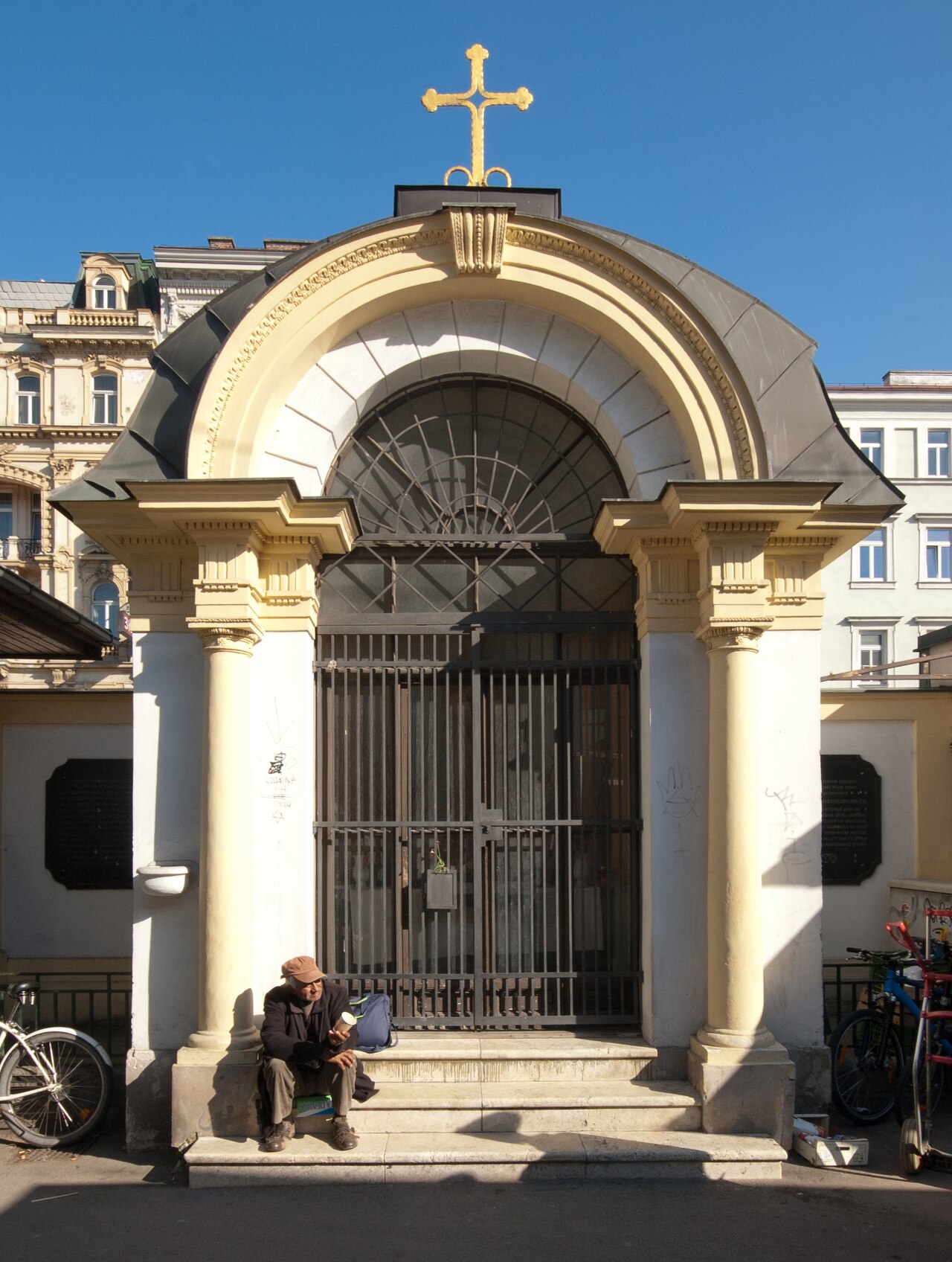
Naschmarktkapelle
- Notable
- Place of worship
Language · 11 published
Historic monument · Mariahilf, Vienna
Reviewed by Elena Voss · Roavina Travel Editor
| Monday | 06:00 – 23:00 |
|---|---|
| Tuesday | 06:00 – 23:00 |
| Wednesday | 06:00 – 23:00 |
| Thursday | 06:00 – 23:00 |
| Friday | 06:00 – 23:00 |
| Saturday | 06:00 – 23:00 |
| Sunday | 09:00 – 21:00 |
Checked 2026-08-31 · Source
Read from the OpenStreetMap access tags; anything not listed has no tag recorded.
Set the group type to family in the planner and the day window contracts to about three quarters of a solo day.
This place is a Attraction. It carries the Listed objects in Austria heritage designation.
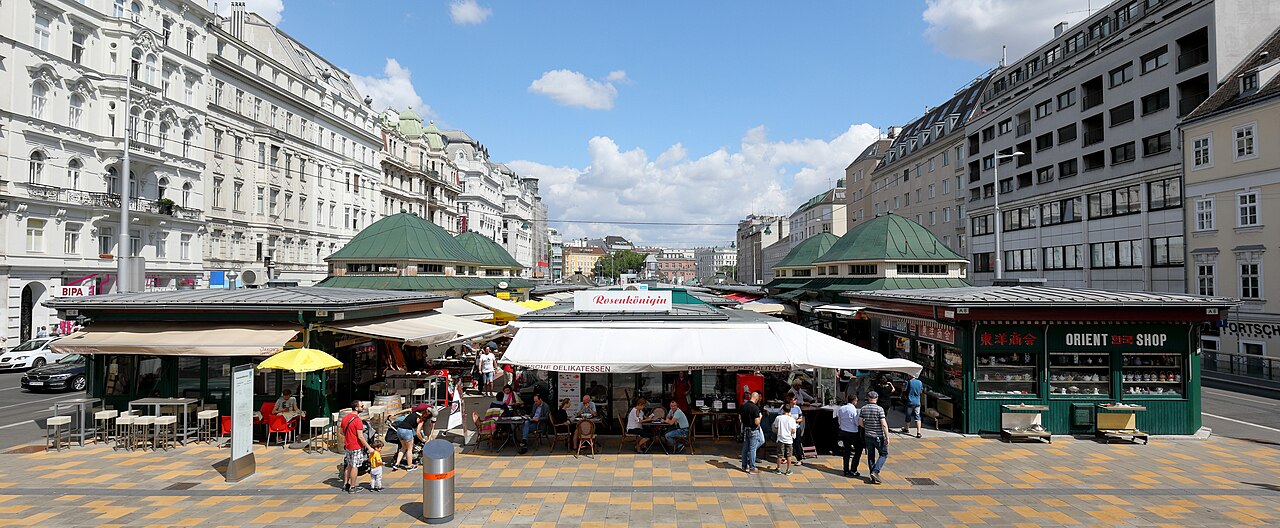
The Naschmarkt is Vienna's largest and oldest continuously running market, a roughly 1.5-kilometre strip of stalls running along the covered-over bed of the Wien River between Karlsplatz and Kettenbrückengasse.
Its name comes from 'naschen', to snack or nibble, and the market has traded on this line since at least the eighteenth century, moving from a milk and farm-produce market into today's mix of fresh produce, spice traders, cheese counters and small eat-in stalls.
Since the covering of the Wien River around 1900, the market has run directly above the tunnel that still carries the river beneath the city.
The market has grown steadily more international over recent decades, with stalls selling Middle Eastern, South Asian and East Asian ingredients now standing alongside the older Austrian produce trade.
Checked 2026-08-24 · Source
Over a hundred stalls and small restaurants line the two rows, split roughly between produce and grocery stands at the Karlsplatz end and a denser strip of ready-to-eat and international food stalls further along.
The market runs beneath two of Otto Wagner's Jugendstil apartment buildings on the flanking Linke and Rechte Wienzeile — the gilded Majolikahaus and the medallion-fronted building next to it — both visible from the market itself without stepping off the row of stalls.
At the western end, past Kettenbrückengasse, a flea market takes over on Saturdays, separate from the food stalls and running to a different rhythm entirely.
Between the two rows of stalls, a narrow central aisle carries most of the foot traffic, while a service lane behind the stands is used for deliveries and is generally off-limits to browsing visitors.
Checked 2026-08-24 · Source
An hour covers a walk through the whole length with a stop or two; a proper lunch at one of the stalls adds another thirty to forty-five minutes on top.
Saturday mornings, with the flea market running alongside the food stalls, can easily fill two hours for anyone browsing both.
Checked 2026-08-24 · Source
Treat the when to go details as provisional when arranging this stop in Vienna. Check the operator's own site for the travel date before relying on a schedule, fare or closure notice. Keep enough flexibility to move the visit within the same area if current conditions differ from the plan. This guide does not infer practical facts from the venue category, nearby attractions or an aggregator. Check the operator's own site for the travel date before relying on a schedule or fare.
Checked 2026-08-26
There is no admission charge; the Naschmarkt is a public market and anyone can walk through without buying anything.
Prices at individual stalls vary by trader and are not fixed or posted centrally, so this page does not reproduce them, and the same produce can carry different prices from one stand to the next along the same row.
Eating at one of the sit-down stalls is paid per order, the same as any restaurant, rather than through a market-wide ticket.
Checked 2026-08-24 · Source
Karlsplatz station (U1, U2, U4) sits at the eastern end of the market; Kettenbrückengasse (U4) sits at the western end near the Saturday flea market.
Several tram lines along the Wienzeile stop at intervals along the market's full length, so it is possible to join or leave the walk partway through rather than committing to the full 1.5 kilometres on foot.
Bicycle lanes run along both flanking streets, and many visitors arrive that way rather than by transit or on foot.
Checked 2026-08-24 · Source
Prices at tourist-facing stalls near the Karlsplatz end run noticeably higher than further along the market; checking a price before ordering avoids surprise.
The surface is uneven cobble in places and the aisle narrows during busy periods, which matters for wheelchairs, pushchairs and anyone carrying shopping bags at the same time.
Most stalls are cash-friendly but not all take cards, particularly the smaller produce stands.
Some stalls weigh loose produce and charge by weight rather than by piece, which can surprise a visitor picking up a handful of fruit expecting a flat price.
Checked 2026-08-24 · Source
The two Otto Wagner buildings on the Linke Wienzeile are the market's best photograph, and shooting from the stalls directly opposite the Majolikahaus in morning light catches the gilded floral relief at its clearest.
Stallholders generally allow photographs of produce displays but not always of themselves without asking first.
The densely packed spice and produce displays along the central stretch make for close-in shots that read well even without any of the surrounding architecture in frame.
Checked 2026-08-24
Vienna's largest and oldest market, a 1.5-kilometre strip of food stalls running above the covered-over Wien River between Karlsplatz and Kettenbrückengasse.
No, the market is closed on Sundays.
A separate Saturday market past Kettenbrückengasse, at the western end of the food stalls, running on its own schedule.
Otto Wagner's Majolikahaus and its neighbouring medallion-fronted building, Jugendstil apartment blocks on the Linke Wienzeile facing the market.
No, the market is public and free to walk through; only what is bought at the stalls costs anything.
Weekday afternoons; Saturday mornings, when the flea market runs alongside the food stalls, are the busiest.
Loading the interactive map…
The interactive map could not be loaded.
Last updated:
Source: OpenStreetMap contributors, Wikidata ·