
1 min walk · Landstraße
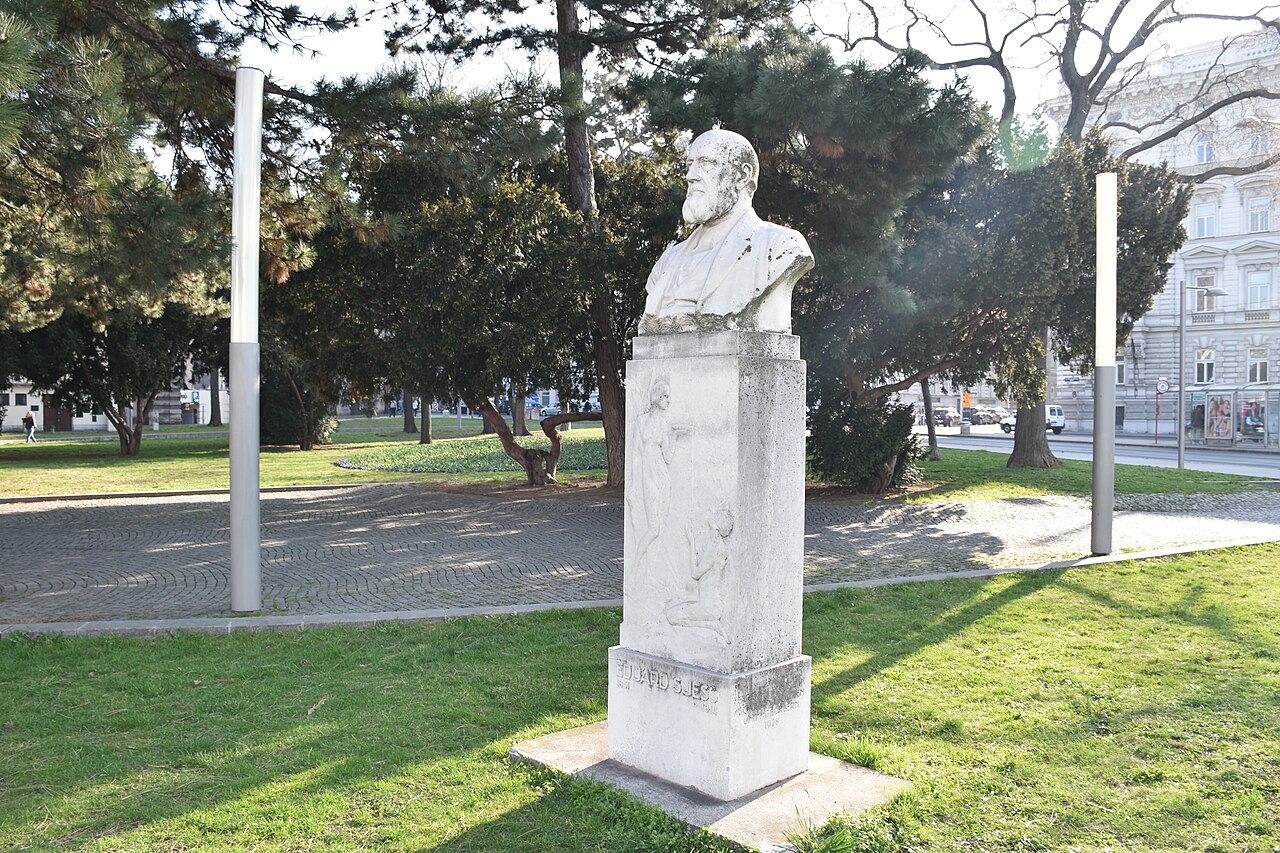
Eduard-Suess-Denkmal, Schwarzenbergplatz
- High
- Historic monument
Language · 11 published
Historic monument · Landstraße, Vienna
Heldendenkmal der Roten Armee
Reviewed by Elena Voss · Roavina Travel Editor
| Monday | 00:00 – 23:59 |
|---|---|
| Tuesday | 00:00 – 23:59 |
| Wednesday | 00:00 – 23:59 |
| Thursday | 00:00 – 23:59 |
| Friday | 00:00 – 23:59 |
| Saturday | 00:00 – 23:59 |
| Sunday | 00:00 – 23:59 |
Parsed from OpenStreetMap opening hours on 2026-09-09.
Read from the OpenStreetMap access tags; anything not listed has no tag recorded.
Set the group type to family in the planner and the day window contracts to about three quarters of a solo day.
This place is a Memorial. It was established in 1945. It carries the Listed objects in Austria heritage designation.
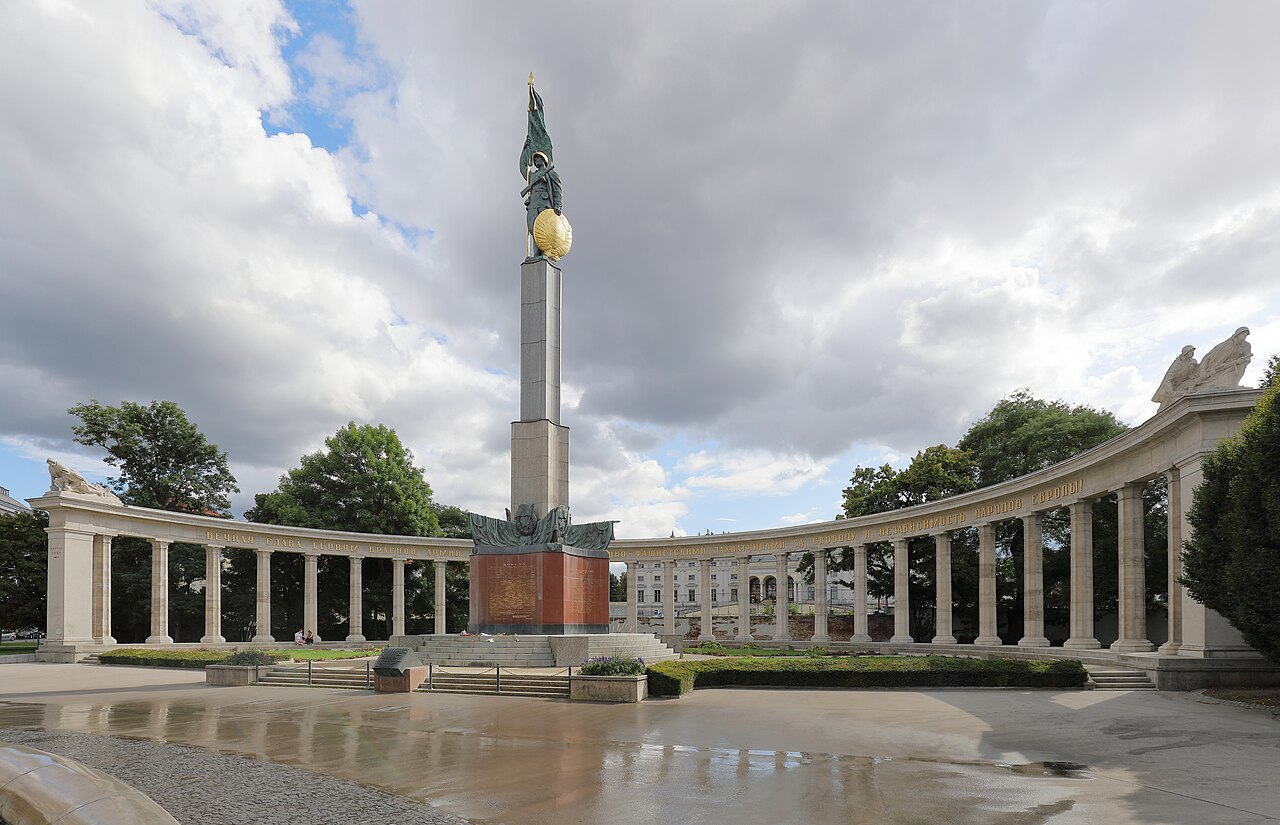
The Soviet War Memorial on Schwarzenbergplatz commemorates the Red Army soldiers killed during the Vienna Offensive of April 1945, and was built and unveiled by Soviet authorities the same year, within months of the city's capture.
A colonnaded screen frames a bronze statue of a Red Army soldier carrying a shield bearing the hammer and sickle, set on a high plinth above the square.
Under the 1955 Austrian State Treaty, Austria is obliged to maintain Soviet war memorials on its territory, which is why the monument has remained in place, largely unaltered, through the decades since.
It is one of several Soviet memorials that remain in central Vienna, but by far the largest and most visible, standing on one of the widest squares along the Ringstrasse's southern arc.
Checked 2026-08-24 · Source
The memorial reads as a single composition rather than a set of separate elements: the curved colonnade, inscriptions in Russian commemorating the fallen, and the soldier figure above it all face down the length of Schwarzenbergplatz toward the Ringstrasse.
The Hochstrahlbrunnen, a large jetting fountain, stands in the square directly in front of the memorial and is frequently photographed together with it, though the fountain predates the monument and was not built as part of it.
There is no visitor centre or interpretive panel on site explaining the memorial's history to a passing visitor.
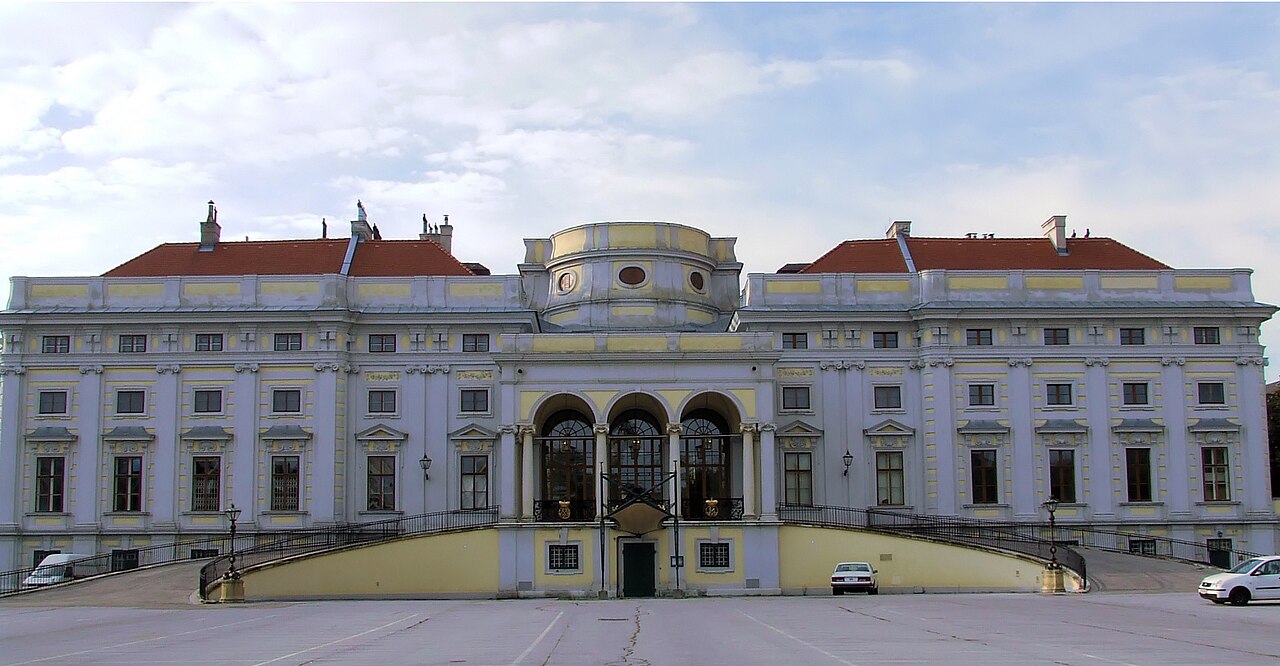
The square around the memorial carries the wider name Schwarzenbergplatz, shared with the nearby Palais Schwarzenberg, and the two sights sit within a few minutes' walk of each other despite having no connection beyond location.
Checked 2026-08-24 · Source
Ten minutes covers a look at the memorial and the fountain in front of it; it is a square-level monument rather than a site with an interior or a ticketed route.
It is usually seen in passing on a longer walk between the Ringstrasse and the Belvedere gardens rather than visited as a standalone destination, and most visitors reach it on foot as part of that longer route rather than making a dedicated trip.
Checked 2026-08-24 · Source
The Hochstrahlbrunnen fountain is illuminated at night, which changes the whole square's character and is worth timing a visit around for anyone photographing the scene.
The memorial itself is unshaded and can be seen equally well at any time of day; there is no seasonal closure.
May 9, marking the Soviet Union's Victory Day, draws official wreath-laying and a larger-than-usual crowd around the monument.
Checked 2026-08-24 · Source
There is no admission fee. The memorial and the square around it are open public space at all hours, with no gate, no ticket booth and no closing time.
Nothing at the site itself is for sale; it is a monument and a public square, not a visitor attraction with a shop.
No guided tour is run by any official body at the memorial itself; general city walking tours sometimes include it as one stop among several.
Checked 2026-08-24 · Source
Tram lines D and 71 stop directly at Schwarzenbergplatz, beside the memorial.
Karlsplatz station (U1, U2, U4) is about a ten-minute walk away.
The square sits directly on the Ringstrasse route, so it is easily folded into a longer walk or tram ride along the Ring rather than visited as a separate trip.
Checked 2026-08-24 · Source
The memorial has been a recurring site of vandalism and protest, particularly since Russia's 2022 invasion of Ukraine, and its upkeep and future have been debated in Vienna's city politics; the monument's condition on any given day can reflect that.
As a war memorial it is treated with the same expectation of respectful behaviour as any grave site, even though it stands in an open public square rather than a cemetery.
Schwarzenbergplatz is a major traffic junction, and the memorial sits on a central island reached by pedestrian crossings rather than directly off the surrounding pavement, so crossing to it needs care.
Checked 2026-08-24 · Source
The classic frame is the colonnade and soldier statue with the Hochstrahlbrunnen's water jets in front, shot from the Ringstrasse side of the square.
At night, with the fountain lit and the memorial floodlit behind it, the composition changes entirely and is the version most photographed after dark.
A close-in shot of the soldier figure alone, from below on the plinth's axis, is the only angle that reads the shield's hammer-and-sickle relief clearly.
Checked 2026-08-24
The memorial generates ongoing public debate, with perspectives divided between viewing it as liberation monument or occupation legacy. This controversy reflects broader Austrian discourse regarding World War II memory and Soviet influence.
Red Army soldiers killed in the Vienna Offensive of April 1945, which ended Nazi control of the city.
It was built and unveiled by Soviet authorities in 1945, within months of Vienna's capture.
The 1955 Austrian State Treaty obliges Austria to maintain Soviet war memorials on its territory.
No, the Hochstrahlbrunnen fountain predates the monument and stands in front of it as a separate structure, though the two are usually photographed together.
No, it stands in an open public square with no admission charge.
Loading the interactive map…
The interactive map could not be loaded.
Last updated:
Source: OpenStreetMap contributors, Wikidata ·